
Reviewed · SCUBA DIVING
PADI Scuba Diver (PSD)
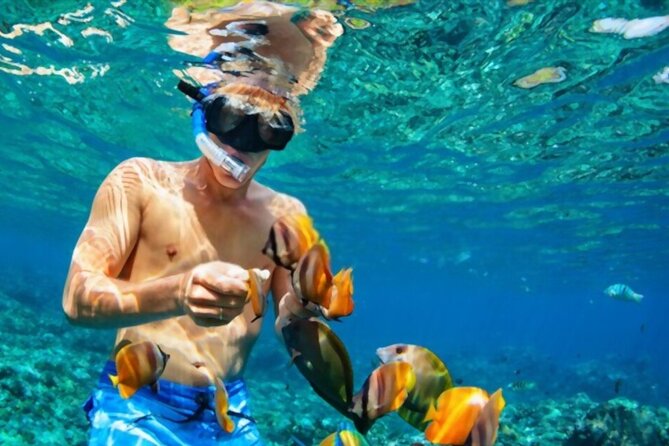
Sharm el Sheikh makes a fine classroom for new scuba students, with warm Red Sea water, coral gardens, and the chance to spot large fish such as Napoleon wrasse. I like the PADI instruction and the fact that the course includes both pool or confined-water practice and real open-water sessions. I also like the practical extras: hotel transfers, equipment, snacks, drinks, and a boat lunch.
The main catch is that this is not a full Open Water certification. Your depth is limited to 12 meters, and after finishing, you must use a private guide for guided outings. At $319.87, it offers a lot for a short course, but you should confirm exactly which course materials and certification fees are included before booking.
Key points for your two days underwater
- Three confined-water sessions: Learn equipment use, breathing, movement, and basic safety before heading into the Red Sea.
- Two open-water sessions: Practice the skills in real conditions with a PADI instructor.
- 12-meter depth limit: Suitable for an introduction, but not the same freedom as a full Open Water certification.
- Hotel pickup and return: Transfers are included, with an advertised start around 8:00 am.
- Boat food and equipment included: Snacks, hot and cold drinks, diving equipment, and buffet lunch are supplied.
- Experienced instructors: Hani, Farid, Mena, Mustafa, Ahmed, and others are named by the center as active instructors and guides.
What this PADI course really gives you
The PADI Scuba Diver is a shortened part of the PADI Open Water Diver course. It is designed for you if time is tight but you still want formal training rather than a one-off introductory swim with an air tank.
Over about two days, you complete three knowledge sessions, three confined-water sessions, and two open-water sessions in the Red Sea. That order matters. You first learn the basic ideas on land, then practice in controlled water, and only after that use the skills in a genuine marine setting.
You will learn how scuba equipment works, how to move while wearing it, and how to manage the basic techniques needed underwater. The instructor supervises each stage, so you are not expected to arrive knowing how to assemble equipment or control your breathing.
This is a proper training course, not simply a sightseeing trip with a short briefing. Still, it is not the full Open Water qualification. The 12-meter limit is the key difference. If you plan to take guided outings after the course, you must arrange a private guide.
That restriction may sound limiting, but it can be useful for a first step. You gain structured instruction without committing the time needed for full certification. If you later want to progress, ask the center how your completed sessions can count toward the full PADI Open Water course.
More Scuba Diving in Sharm El Sheikh
- Discover Scuba Diving
★ 5.0 · 1,676 reviews - Sharm El Sheikh: Ras Mohamed & White Island Dive & Snorkel
★ 4.9 · 1,280 reviews - PADI Open Water Diver Course
★ 5.0 · 626 reviews
Starting at 8:00 am in Sharm el Sheikh
The day begins around 8:00 am, with pickup offered from your hotel. Return transport is included, which removes one of the more annoying parts of arranging a water activity in an unfamiliar resort area.
Exact pickup timing can depend on your hotel and the day’s operation, so keep your morning flexible. Have your passport ready, since a current valid passport is required on the day.
The center is near public transportation, but the included transfer is the simpler choice for most people. It also means you do not need to find your own way to the boat or training location.
Bring a towel. That sounds obvious, but it is easy to forget when equipment is provided. You should also arrive ready for a health questionnaire. Some medical conditions, including asthma and heart conditions, may prevent you from taking part, so consult your doctor before booking if you have any concern.
Learning the basics before entering the Red Sea
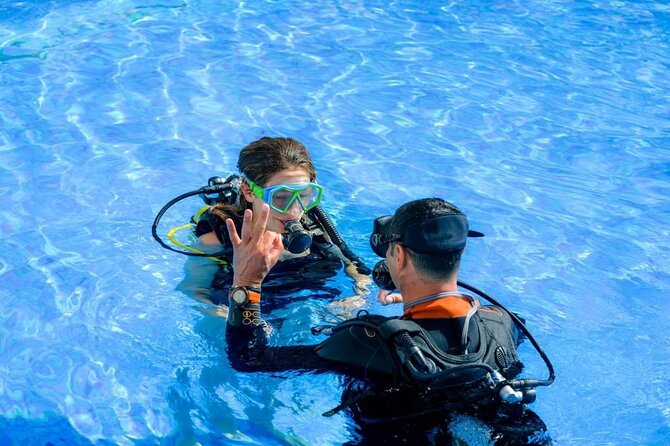
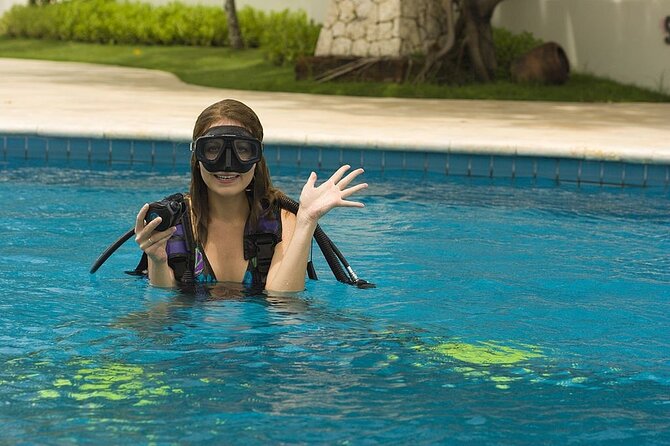
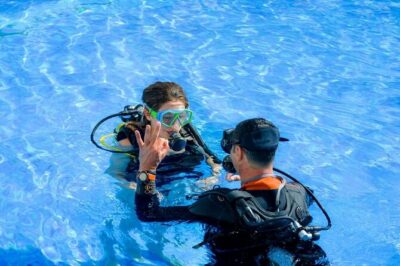
The confined-water sessions are where you get comfortable with the gear. This part is especially valuable if you feel nervous about breathing through a regulator, wearing a mask, or controlling your position in the water.
A calm instructor makes a real difference here. The center’s instructors include Hani, Farid, Mena, Mustafa, Ahmed, and others. Their teaching styles may differ, but the useful pattern is clear: the strongest reports describe instructors who explain things calmly, check comfort and safety, and give clear directions before each session.
Hani is noted for a calm, professional approach, including with people returning to scuba after a long break. Farid is described as relaxed and clear when explaining what to do. Mena is praised for helping newer students feel less nervous. These names can be useful when booking, though instructor assignments depend on availability.
Your first sessions are about control rather than scenery. You practice the skills that let you stay calm and solve small problems underwater. That preparation may feel slower than a standard tourist activity, but it is exactly what makes the later Red Sea sessions more enjoyable.
Two Red Sea sessions with a 12-meter ceiling
Once you have completed the knowledge and confined-water work, you move to two open-water sessions. This is the moment when the course changes from a lesson into a genuine Red Sea experience.
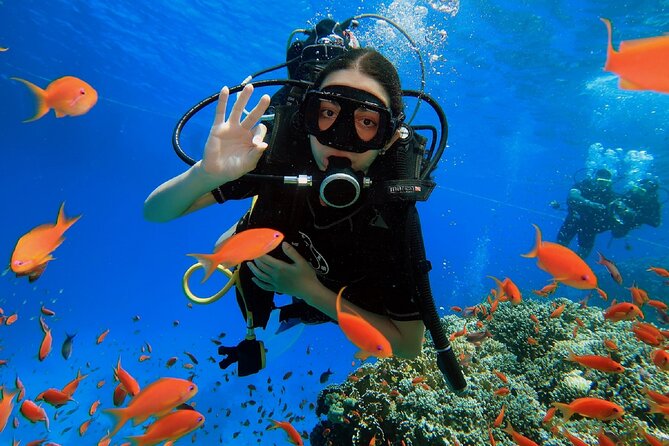
Sharm el Sheikh is known for coral sites and varied marine life. Specific locations can change with weather and operating conditions, but the center works around sites such as White Knight and areas connected with Ras Muhammad. You might see coral formations, large fish, stingrays, and Napoleon wrasse.
The 12-meter limit keeps the course within an introductory range. You will not be taking part in an advanced technical session, and this is not intended for people seeking serious depth or specialty training. For a first taste, though, the shallow limit can help you concentrate on buoyancy, breathing, and communication.
The open-water sessions are also where the instructor’s briefing matters most. Before entering the water, you should receive an explanation of the plan, expected conditions, and safety procedures. The center’s instructors are frequently described as clear and reassuring during these briefings.
Do not expect every session to feel like a postcard. Weather can affect the schedule, and conditions may vary. The operator can cancel for poor weather and offer another date or a full refund. Since the booking itself is otherwise non-refundable and cannot be changed for personal reasons, check your dates carefully before paying.
A completely different sort of day in Sharm el Sheikh:
- Sharm El-Sheikh: Ultimate ATV Quad, Stargazing & BBQ Dinner
★ 4.7 · 4,084 reviews - Sharm El-Sheikh: Jeep Adventure to Blue Hole, Canyon & Dahab
★ 4.7 · 3,759 reviews - From Sharm: White Island and Ras Mohamed Snorkeling Trip
★ 4.7 · 3,194 reviews - Sharm El Sheikh: White Island and Ras Mohamed Cruise Adventure
★ 4.5 · 1,824 reviews
The boat, food, and equipment
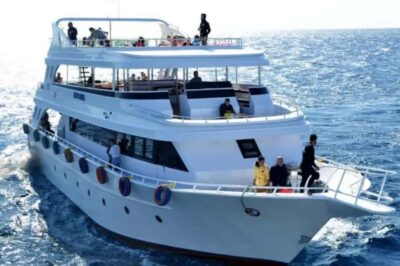
The boat is more than a way to reach the water. It is your base between sessions, where you can rest, eat, and prepare for the next entry.
Equipment is included, so you do not need to pack your own tank, regulator, mask, or other standard scuba gear. The center is described as using well-maintained, good-quality equipment, which is important for a beginner who may not know how to assess gear independently.
You should still speak up if something feels wrong. A mask that leaks or equipment that does not fit can distract you from learning. Ask the instructor to check the setup before entering the water.
The food package includes buffet lunch, snacks, and hot and cold drinks. That is worthwhile on a full day at sea, when you may be away from your hotel for many hours. Soft drinks are also supplied.
The boat experience can vary depending on the vessel and the day’s group. The maximum group size is 35 people, which is large enough to create a lively atmosphere and small enough to remain workable, but it is not a private charter. If you prefer quiet space or personal attention, ask how many people are booked and how groups are divided among instructors.
What the center does especially well
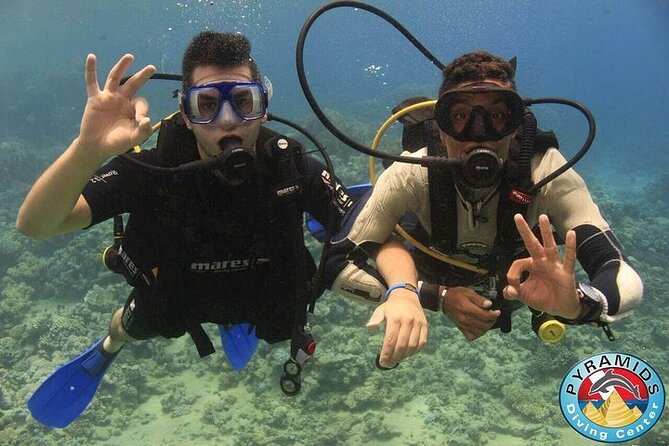
The strongest part of this experience is the human support. Names such as Hani, Farid, Mena, Mustafa, Ahmed, and Amr Kandel come up repeatedly in connection with calm instruction, friendly service, and attention to safety.
That matters more than fancy boat features when you are learning to breathe underwater. A patient instructor can help you manage nerves, correct a small technique problem, and keep the session enjoyable instead of stressful.
The practical organization is another plus. Hotel pickup, equipment preparation, boat arrangements, food, and instruction are brought together in one booking. You do not need to arrange separate transportation or rent gear from another operator.
The center also appears comfortable working with different levels of experience. Its staff handle new students, refresher sessions, advanced courses, and regular boat outings. For you, that means the operation is not built only around first-time customers, even though this particular course is suitable for beginners.
Communication is another useful feature. Staff are described as speaking multiple languages, which can help when safety instructions need to be understood precisely. Do not hesitate to ask for a slower explanation or a demonstration.
Where the price offers good value
At $319.87 per person, this is not the cheapest way to see the Red Sea. But price alone gives the wrong picture because this package includes instruction across two days, equipment, hotel transfers, snacks, drinks, and a buffet lunch.
You are paying for training, not just for time on a boat. The instructor’s supervision and confined-water practice are the most valuable parts for a first-time student.
There are still extra costs to watch. National Park fees are not included. The PADI manual and electronic certificate are also excluded, and underwater DVDs and souvenir photos cost extra if you want them.
The phrase electronic certificate deserves a close look. Since the course is a limited part of the Open Water program, ask what document you receive after completion and what additional payment is needed for PADI materials. You do not want to assume you are buying a full certification when the activity description says you are not.
For a visitor already planning a two-day water activity, the bundle is sensible. For someone who wants only a brief underwater introduction, it may be more training and expense than necessary.
Who should choose this course
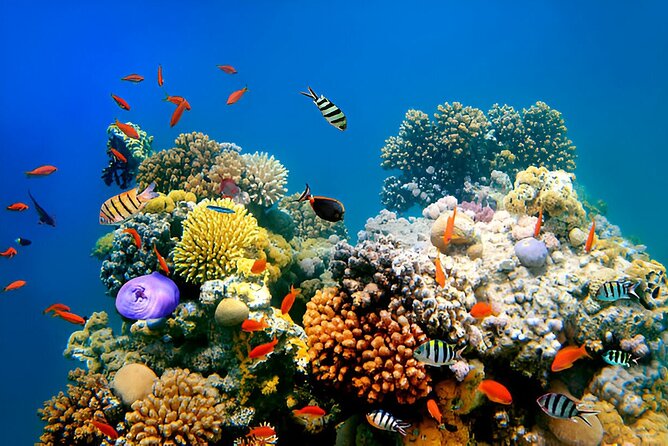
I would choose this for you if you want more than a single supervised underwater outing but do not have enough vacation time for the full PADI Open Water course.
It suits:
- First-time scuba students aged 10 or older
- People who want structured instruction before exploring the Red Sea
- Families or couples who value hotel transport and supplied equipment
- Nervous beginners who want a patient instructor nearby
- Visitors who may later continue toward full Open Water certification
It is less suitable if you want unrestricted depth, independent guided outings, or a full certification in two days. The 12-meter ceiling and private-guide requirement after completion are important limits.
It may also be a poor fit if your schedule includes a flight within 24 hours after the course. Scuba activity close to flying is not recommended, so plan your final session with your departure time in mind.
Practical preparation for a smoother course
Bring your passport and towel. Wear comfortable swim clothing, and keep your morning free from other fixed plans because pickup times and water operations can change.
Complete the health questionnaire honestly. If you have asthma, heart problems, or another medical concern, speak with a doctor before booking rather than hoping the issue will not arise at check-in.
Ask these questions before you pay:
- Is the PADI manual included in the price?
- Is the electronic certificate included?
- Are National Park fees payable locally?
- How many students will be assigned to one instructor?
- Which instructor is scheduled for your course?
- How does this course lead into full Open Water certification?
The cancellation rule is strict. The booking is non-refundable and cannot be changed for personal reasons. Only a cancellation caused by poor weather brings the choice of another date or a full refund.
Choosing an instructor and managing nerves
You cannot always select your instructor, but it is reasonable to request one if a particular teaching style matters to you. Hani is associated with a calm and professional approach. Farid is known for relaxed explanations and careful briefings. Mena is a good name to request if you are worried about feeling tense underwater.
Mustafa, Ahmed, and Amr Kandel are also associated with positive instruction and attentive service. These names do not guarantee availability, but they give you a useful starting point when speaking with the center.
Your first goal should not be to look graceful underwater. It should be to stay calm, listen carefully, and ask for help early. The course is designed to teach you the basics, not to test whether you can perform like an experienced scuba enthusiast on your first morning.
Should you book the PADI Scuba Diver course?
Book it if you want a real introduction to scuba, appreciate formal PADI teaching, and can accept the 12-meter limit. The included transport, equipment, food, and two Red Sea sessions make the $319.87 price reasonable for a compact two-day course.
Skip it if you want a full Open Water qualification, have a tight flight schedule, or prefer a simple sightseeing trip with no classroom work. Before committing, confirm the extra costs for the PADI manual, electronic certificate, and National Park fees.
For the right person, this is a useful middle ground: more serious than a one-time underwater taster, but shorter and less demanding than full certification.
FAQ
How long does the PADI Scuba Diver course take?
The course lasts approximately two days.
What does the course include?
It includes a PADI instructor, scuba equipment, return transfers, snacks, hot and cold drinks, and a buffet lunch on the boat.
How deep can I go during the course?
The stated depth limit is 12 meters.
Is this a full scuba certification?
No. The PADI Scuba Diver is part of the PADI Open Water Diver course and is not the full Open Water certification.
How many open-water sessions are included?
You complete two open-water sessions in the Red Sea, along with three confined-water sessions and three knowledge-development sessions.
What age is required?
The minimum age is 10 years.
Do I need to bring my passport and towel?
Yes. You must bring a current valid passport and a towel on the day of the activity.
Can I take part if I have a medical condition?
All participants complete a health questionnaire before scuba activity. Conditions such as asthma and heart problems may prevent participation, so consult your doctor if you have a concern.
Just added in Sharm el Sheikh
- Overnight Tour Moses Mountain St. Catherine Monastery from Cairo★ 5.0 · 21 reviews
- Trip To Mount Sinai & St Catherine From Cairo★ 5.0 · 23 reviews
- Tiran Island: Full-day Snorkeling, Diving Boat Trip★ 3.5 · 15 reviews
- Sharm: Introductory Dive from the Shore & PADI Courses★ 4.4 · 19 reviews
- Sharm El Sheikh: Saint Catherine’s Monastery Private Tour★ 4.8 · 20 reviews
- Sharm El Sheikh: Ras Mohamed Cruise with Snorkeling & Lunch★ 4.6 · 89 reviews
- Sharm el-Sheikh: Ras Mohammed Elite VIP Cruise and BBQ Lunch★ 4.4 · 96 reviews
- From Sharm El-Sheikh: Sharm El-Maya Parasailing Adventure★ 4.7 · 19 reviews
Scuba Diving, compared.
Snorkeling 6 x 1 to Orange Bay w Diving & Massage
Read our review →
Intro Diving 2 Stops For Beginners with Pick-up and Lunch – Hurghada
Read our review →
Intro Diving Beginner and Discover Red Sea Underwater
Read our review →
Scuba Diving Full Day Boat Trip for beginners With Lunch & Transfer – Hurghada
Read our review →
Red Sea Diving Trip from Hurghada: Beginner to Advanced Divers
Read our review →Browse the lists this tour appears in