
Reviewed · 4-DAY EXPERIENCES
Aswan to Luxor: 4-Day Private Nile Journey
The best part of this four-day journey is the rhythm: ancient temples by day, a comfortable Nile boat by night. You move from Aswan to Luxor without repacking every morning, while an Egyptologist guide such as Tamer explains the carvings, gods, and royal ambitions behind the stones.
I like the small maximum group of 10 and the fact that meals, transfers, cruise excursions, and site entrance fees are bundled into the main price. I also like the route itself: Philae, Kom Ombo, Edfu, Karnak, Luxor Temple, and the Valley of the Kings form a strong first visit to southern Egypt.
The main consideration is the schedule. Four days is efficient, not slow, and several sightseeing days begin early or include long transfers. Abu Simbel is an excellent optional addition, but the road trip takes about three and a half hours each way.
Key points at a glance
- Three nights on the Nile: Travel from Aswan to Luxor aboard a five-star standard cruise with breakfast, lunch, and dinner included.
- A compact group: The tour has a maximum of 10 people, making guide time more practical than on a large coach tour.
- Philae requires a boat: You reach the island temple of Isis by motorized boat, then continue to the Unfinished Obelisk.
- Abu Simbel is optional: The twin temples of Ramses II and Queen Nefertari require a separate road trip from Aswan.
- The final day covers Luxor’s west bank: See the Colossi of Memnon, Hatshepsut’s temple, the Valley of the Kings, and possibly Tutankhamun’s tomb for an extra charge.
- The price includes the main framework: At $840 per person, the fare includes the cruise, meals, guides, transport, excursions, and stated entrance fees, but not flights, drinks, tipping, or optional tours.
Why this Nile route works so well
This trip connects the major ancient sites between Aswan and Luxor in a tidy northbound route. Instead of arranging separate taxis, trains, hotels, and guides, you have one moving base for three nights.
That matters in Egypt. The distances between sites are not always obvious on a map, and independent arrangements can take time. Here, a modern air-conditioned vehicle handles airport transfers and shore excursions, while the boat carries you between port stops.
The $840 price is not cheap, but it covers the parts that can quickly add up: three nights aboard the cruise, nine included meals, an Egyptologist guide, site visits, and transfers. You still need to budget for domestic flights, drinks on board, tips for the cruise crew, guides and drivers, plus optional experiences.
The small group size is another real advantage. A group capped at 10 people should make it easier to hear explanations in crowded temple courtyards and ask questions without waiting behind a full-size coach group. The tour has a 4.9 out of 5 rating from 152 ratings and a 99 percent recommendation figure, which points to strong satisfaction with the overall organization and onboard service.
A few more days out in Luxor to weigh up
- Luxury Cruise from Aswan to Luxor 4 Days with Abu Simble Temple
★ 5.0 · 60 reviews - 4 Days Private Egypt Tour to Cairo Luxor and Aswan
★ 5.0 · 19 reviews - 4 Days Aswan Luxor Cruise with Visit in the Famous Attractions
★ 5.0 · 19 reviews
Day 1: Philae, the Unfinished Obelisk, and settling aboard
Your journey begins in Aswan. At the airport exit, a Journey to Egypt representative meets you with a sign bearing your name. From there, you begin sightseeing rather than spending the first day simply checking into the boat.
Philae is a fine opening stop. The temple complex sits on Agilika Island, so you reach it by motorized boat. That short ride gives the visit a sense of occasion, with the water forming a natural approach to a sacred site devoted to Isis.
The temple reflects Egyptian, Greek, and Roman building traditions. You will see how different rulers added to the same holy place over time. The site also tells a modern engineering story: when the Aswan High Dam threatened to flood the original island, the complex was dismantled and rebuilt on Agilika.
I like this stop because it combines setting, architecture, and a clear explanation of modern preservation. It is not only a collection of columns. You can see how a major construction project changed the Nile and forced Egypt and international partners to move an entire temple complex stone by stone.
The next stop is the granite quarry and the Unfinished Obelisk. The huge monolith remains attached to the bedrock, giving you a useful look at how ancient stoneworkers shaped monuments before transport and polishing. Its planned size would have made it roughly one-third taller than any other ancient Egyptian obelisk.
The day includes about two hours at the main stop, though the airport arrival and transfers add to the total. Admission fees are described as included in the tour package, despite individual stop descriptions not showing a separate ticket price. It is sensible to confirm the exact inclusions at booking, especially if the operator updates the package.
You then settle into the boat. The standard is described as a five-star standard cruise, with full-board dining. The onboard meals include three breakfasts, three lunches, and three dinners. Drinks are not included, so bring extra money for beverages.
Day 2: Abu Simbel or Kom Ombo
Day 2 gives you the trip’s biggest optional decision. You can leave early from Aswan for Abu Simbel by car, or remain with the main cruise program and continue toward Kom Ombo.
Abu Simbel is far from a minor add-on. Ramses II’s temple has a facade dominated by four statues of the pharaoh, each described as 70 feet tall. Beside it is the temple of Queen Nefertari. Both monuments were moved to higher ground to protect them from the rising waters created by the Aswan High Dam.
The road journey takes about three and a half hours each way. That means a long day in a vehicle, but the temples are among Egypt’s most dramatic sights. I would consider Abu Simbel a strong choice if this is your main Egypt trip and you may not return to Aswan. I would skip it only if you know that long road transfers make you miserable or you prefer a slower cruise day.
The Abu Simbel excursion is not included in the $840 price. The same applies to other optional activities, including a hot-air balloon ride in Luxor.
The regular cruise route continues to Kom Ombo, called the hill of gold. The temple here is unusual because it is dedicated to two gods: Haroeris, linked with the sun, and Sobek, the crocodile god. Sobek was connected with creation in some ancient Egyptian beliefs.
Kom Ombo is a good stop for understanding how Egyptian religion could accommodate different gods and traditions in one complex. The temple also gives you a change of scale after Philae. It is not as vast as Karnak, but its two-part dedication makes it especially easy for a guide to explain.
You should expect shore visits to feel warm, bright, and exposed, particularly in the middle of the day. Wear practical shoes and carry water, although drinks purchased on the boat are extra. The cruise schedule gives you a comfortable base, but sightseeing still involves walking over ancient stone and uneven ground.
Day 3: The Temple of Horus, Karnak, and Luxor Temple
The itinerary includes a visit to the Temple of Horus before the ship continues toward Luxor. This is the exceptionally well-preserved temple associated with Horus, the falcon-headed god of the sky, and it was built in 230 BC by Ptolemy III.
Its relatively late construction date helps explain its condition. You can see a temple where walls, columns, and carved scenes remain unusually clear. It is an important contrast to older sites that have suffered more from time, weather, and later building.
After the cruise reaches Luxor, the focus shifts to the east bank and two of Egypt’s great temple complexes.
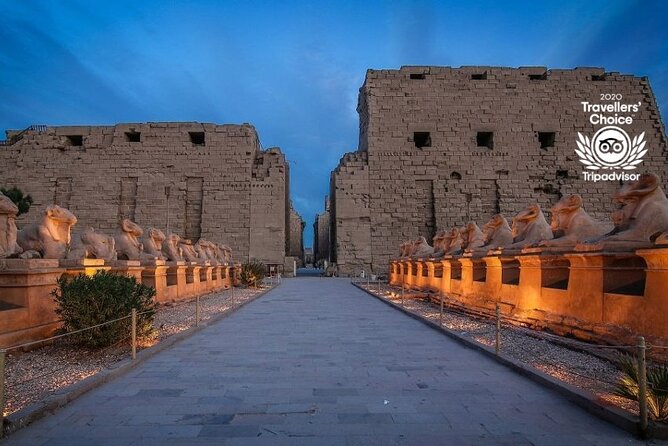
Karnak is enormous and was expanded by generations of pharaohs who wanted their names and achievements recorded there. The Great Hypostyle Hall is the main visual event, with columns rising about 80 feet above you. Walking among them gives you a better feel for the ambition of the site than a quick photograph can.
This is where having an Egyptologist guide makes a practical difference. Without context, a huge field of columns can blur into one grand view. A guide can point out changes in rulers, religious scenes, and the way the temple grew over time.
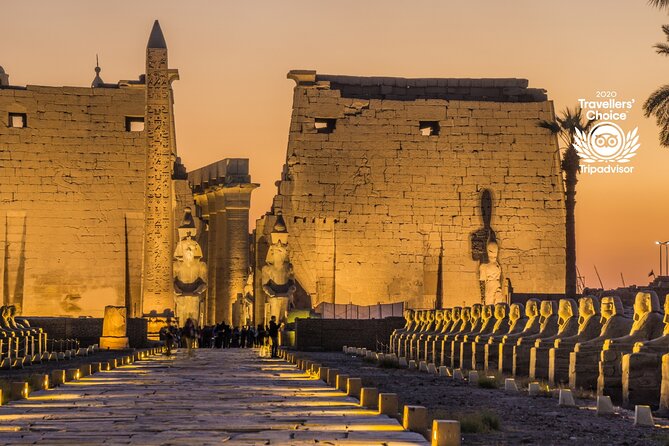
The tour then continues to Luxor Temple. Look for the three large statues of Ramses II at the front, the Courtyard of Ramses II, and the Colonnade of Amenhotep III, with its tall rows of columns.
Karnak and Luxor Temple are close enough in theme to visit on the same day, but they do not feel identical. Karnak is sprawling and ceremonial, while Luxor Temple has a more focused sequence of courtyards and colonnades. Together, they make the east bank portion of the trip especially strong.
The day is also likely to be the most demanding for temple fatigue. You will have already seen Philae, the Unfinished Obelisk, Kom Ombo, and perhaps Abu Simbel. I recommend saving a little energy for the evening and listening closely to the guide rather than trying to inspect every carved surface.
A completely different sort of day in Luxor:
- Hurghada: Luxor Valley of the Kings & Tutankhamun Tomb Trip
★ 4.7 · 13,208 reviews - Luxor Day Trip from Hurghada Small Group & Tutankhamun Tomb
★ 4.8 · 5,366 reviews - Hot Air Balloon Ride in Luxor Egypt with Transfers Included
★ 5.0 · 4,319 reviews - Small group Hurghada to Luxor, Valley of the Kings by Van
★ 4.5 · 2,470 reviews
Day 4: The Valley of the Kings and Luxor’s west bank
The final sightseeing day crosses the Nile to Luxor’s west bank. The first major landmark is the Colossi of Memnon, followed by the Temple of Hatshepsut.
Hatshepsut was Egypt’s first female pharaoh and is regarded as one of its most successful rulers. Her temple has a strong architectural profile, with broad terraces built into the side of the cliffs. It is a fitting stop before the Valley of the Kings because it connects royal power with the burial grounds nearby.
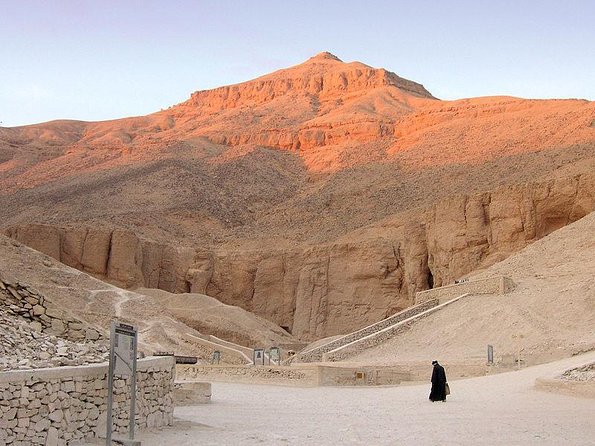
The Valley of the Kings served as a burial area for pharaohs and nobles for about 500 years, beginning in the 16th century BC. Unlike a grand temple on an open plain, the valley draws you into tomb interiors cut into the rock.
Your itinerary includes the Valley of the Kings, but individual tomb access can be subject to separate ticket rules. Tutankhamun’s tomb specifically requires an extra ticket purchased on the spot. That additional cost is worth considering if seeing the boy king’s burial chamber is important to you.
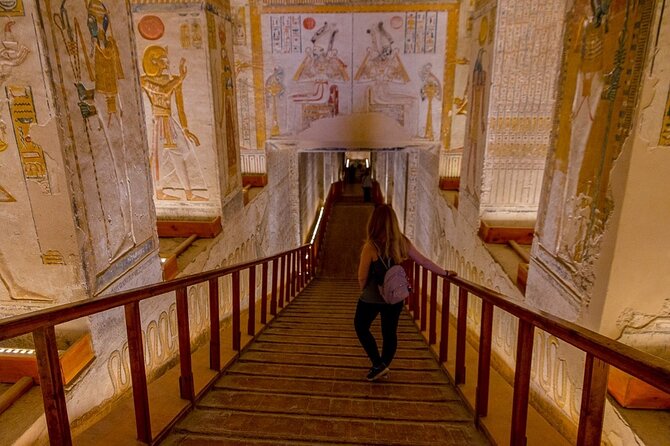
Tutankhamun’s tomb was found in 1922 by British archaeologist and Egyptologist Howard Carter. The chamber is famous not simply because of the young ruler, but because the discovery helped make his name known around the world. The extra ticket gives you the chance to enter the tomb itself, rather than only hearing about the discovery from outside.
Four hours are allocated to the west bank portion of the day. That gives you time for several stops, but you should not expect a slow, private examination of every tomb. The day ends with a transfer to Luxor Airport, so your departure time matters. Make sure your flight schedule leaves enough room for the final excursion and transfer.
What the cruise and meals add
The cruise is the practical backbone of this experience. You spend three nights aboard a five-star standard vessel on a full-board basis, with breakfast, lunch, and dinner included each day.
The onboard food is buffet-style, with plenty of choices according to the available trip feedback. That is useful after long sightseeing stops because you do not have to arrange a separate restaurant every evening.
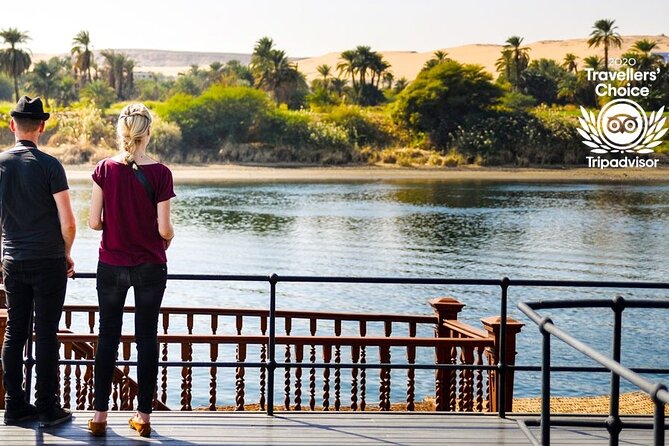
The boat also gives you changing views of the Nile and desert scenery between temples. You are not simply moving through Egypt by road. The river becomes part of the trip, and the three-night format provides a break from constant hotel changes.
Still, the word five-star standard does not tell you everything about the particular ship, cabin size, or onboard facilities. Those details are not specified, so I would ask the operator for the vessel name and cabin information before paying if the ship itself is a major part of your decision.
Service is another strong point of the experience. The crew is described as polite and attentive, and the onboard organization receives especially high praise. Guide Tamer is also specifically singled out for excellent work. If you value clear explanations and orderly excursions, those details matter.
What is included, and what will cost extra
At $840 per person, the package includes:
- Meet-and-assist service at arrival and departure
- A qualified Egyptologist guide
- Three nights aboard the cruise
- Breakfast, lunch, and dinner for three days
- Transport in a modern air-conditioned vehicle
- The Nile cruise excursions listed in the program
- Entrance fees to the stated sites
- Assistance during the stay and excursions
You pay separately for domestic flights, drinks on the boat, tips for the cruise crew, guides and drivers, Abu Simbel, and a Luxor hot-air balloon ride. Tutankhamun’s tomb also requires an extra ticket on the spot.
Tipping deserves attention because it is not included. You do not need to decide the exact amount here, but you should set aside cash for the people who make the cruise and road transfers work.
Who should book this four-day journey
I would recommend this trip to a first-time visitor who wants Egypt’s essential southern sights with less daily planning. It suits you if you prefer a guided schedule, want meals handled, and like the idea of sleeping on a boat while moving between Aswan and Luxor.
The maximum group of 10 is a good fit if you want more personal contact with the guide without paying for a completely private trip. The tour is also useful for people arriving in Aswan and departing from Luxor, since the route naturally connects those two cities.
You should think twice if you want long, unstructured hours at each site. The program packs a great deal into four days, and the Abu Simbel option adds a very long road day. It is also not the right choice if you want a completely independent schedule or need every cruise expense, including drinks and tips, included in the original fare.
Booking is usually done well ahead, with an average booking time of about 60 days. Cruises depart every Friday, Monday, or Wednesday, so check that your flight plans match one of those start days.
Should you book it?
Book this Nile journey if you want a well-organized first look at ancient Egypt, especially if Philae, Abu Simbel, Karnak, Luxor Temple, and the Valley of the Kings are high on your list. The combination of a small group, an Egyptologist guide, full-board cruising, and included transport gives the $840 fare solid value.
I would choose the Abu Simbel option if this may be your only visit to southern Egypt, but I would plan for the long drive. I would also confirm the ship name, the exact entrance-fee arrangements, and your flight timing before booking.
Free cancellation is available up to 24 hours before the start time. After that point, cancellation or changes are not accepted for a refund.
FAQ
Where does the Nile journey begin?
The journey begins in Aswan, Aswan Governorate, Egypt. Airport pickup is offered, and a representative meets you at the exit door with a sign showing your name.
Where does the tour end?
The tour ends in Luxor, with a transfer to Luxor Airport on the final day.
How long is the cruise?
The experience lasts about four days and includes three nights aboard the Nile cruise.
Which days do the cruises depart?
Cruises depart every Friday, Monday, or Wednesday.
Is Abu Simbel included?
No. Abu Simbel is an optional excursion from Aswan by car and is not included in the main price. The drive takes about three and a half hours each way.
Is Tutankhamun’s tomb included?
The Valley of the Kings visit is part of the itinerary, but entry to Tutankhamun’s tomb requires an extra ticket purchased on the spot.
What is not included in the $840 price?
Domestic flights, optional tours, drinks aboard the cruise, and tips for the cruise crew, guides, and drivers are not included.
Just added in Luxor
- Private Trip To Luxor from Cairo by Plane★ 5.0 · 22 reviews
- Luxor Private Day Trip from Cairo by Plane★ 4.5 · 69 reviews
- Private Day Tour To Luxor from Cairo by Plane,Tours,Sailing Felucca,Camel&Lunch★ 5.0 · 45 reviews
- Private Day Tour To Luxor from Cairo by Plane★ 4.5 · 41 reviews
- Package 8 Days 7 Nights To Jewels of Egypt, Luxor & Aswan Tour★ 5.0 · 29 reviews
- Package Cairo & Alexandra & Luxor & Aswan★ 5.0 · 39 reviews
- Overnight Luxor Tours by train from Cairo with Hot Air Balloon and much more★ 5.0 · 29 reviews
- Private Luxor Day tour from Cairo by Flight★ 5.0 · 25 reviews
4-Day Experiences, compared.
4-Day 3-Night Nile Cruise from Aswan to Luxor&Abu Simbel+Balloon
Read our review →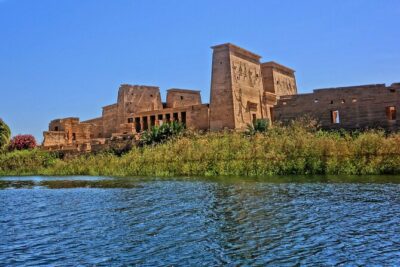
Private 04 Days Days Nile Cruise from Aswan to Luxor
Read our review →
4 Days Nile Cruise with Guided Tours & Abu Simbel
Read our review →Browse the lists this tour appears in