
Reviewed · NILE CRUISES
Private Tour: 10 Days Pyramids ,Nile Cruise & Hurghada by Air from Cairo
Egypt’s greatest hits arrive in a tight, well-planned ten days: the Pyramids of Giza, royal tombs, grand temples, Abu Simbel, and a few quiet hours beside the Red Sea. The best part is the private touring format, which gives your group its own guide and vehicle instead of sending you through Egypt in a large coach.
I especially like the combination of Cairo, Nile cruise, and Hurghada. You get serious ancient sites, a slower stretch on the river, and two nights to rest. The main caution is communication: daily timing and transfers can change, so you’ll want a local SIM card and clear pickup details.
Key points to know before booking
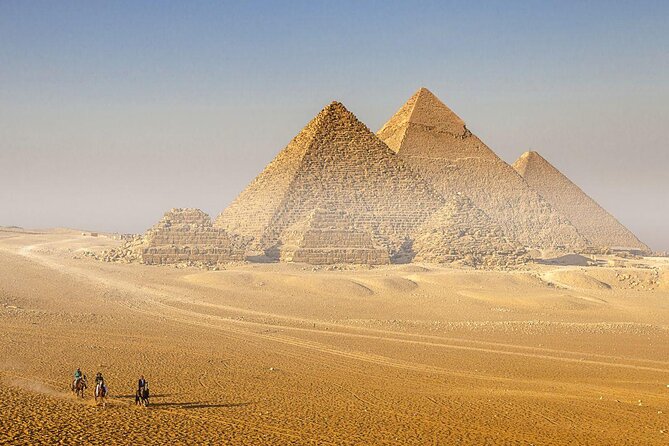
- Cairo begins with the Pyramids and Egyptian Museum, including the Giza Plateau, Sphinx, Valley Temple, and Tutankhamun collection.
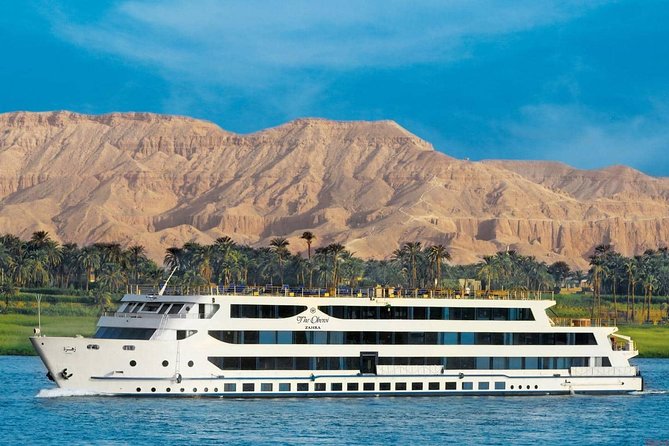
- The Nile section covers Aswan, Kom Ombo, Edfu, and Luxor, with three nights on a five-star full-board cruise.
- Abu Simbel is a long day, about eight hours, and its admission fee is not included.
- Hurghada gives you two all-inclusive nights, with a free day for the beach, city sightseeing, or a submarine tour.
- Domestic flights and airport transfers are included, but international airfare, visa, tipping, and personal costs are extra.
- Guide quality can shape the trip, with Amir, Ahmed Hassam, and Waleed named in connection with different parts of the journey.
Why this ten-day Egypt route works
This is a good choice if you want Egypt’s major ancient sights without arranging the moving parts yourself. You change cities several times, but the route uses domestic flights, a river cruise, and private road transfers to cover a lot of ground.
The plan is not a slow cultural holiday. It is a busy sightseeing trip with early starts, hotel changes, airport transfers, and long drives. Still, the variety helps. Cairo gives you the modern capital and its famous monuments, the Nile cruise links the major temples, and Hurghada provides a useful pause at the end.
At $1,900 per person, the price needs to be judged as a package rather than as a simple sightseeing tour. It includes domestic flights, accommodation, many entrance tickets, guides, airport and hotel transfers, meals listed in the schedule, a three-night cruise, and two all-inclusive nights in Hurghada. That can represent solid value if you would otherwise pay separately for flights, guides, taxis, hotels, and cruise arrangements.
You still need to budget for the Egyptian entry visa, international flights, tips, personal expenses, optional activities, and the Abu Simbel admission fee. The package is convenient, but it is not an entirely cash-free holiday.
More multi-day Egypt packages:
- 6 Days Hypnotic Cairo & Nile Cruise Tour Package
★ 5.0 · 248 reviews - 8-Day Private Tour Cairo, Aswan, Luxor and Nile Cruise Including Air Fare
★ 5.0 · 142 reviews - Egypt on Budget – 8 Days ( Cairo , Aswan , Nile Cruise – Luxor ) Sleeper Train
★ 4.5 · 121 reviews
Cairo: pyramids first, museum second
Your arrival day is deliberately light. A representative meets you at Cairo International Airport, drives you to your hotel in an air-conditioned vehicle, helps with check-in, and discusses the pickup schedule for the next tours. That personal welcome matters in Cairo, where airport transfers and hotel locations can feel confusing after a long international flight.
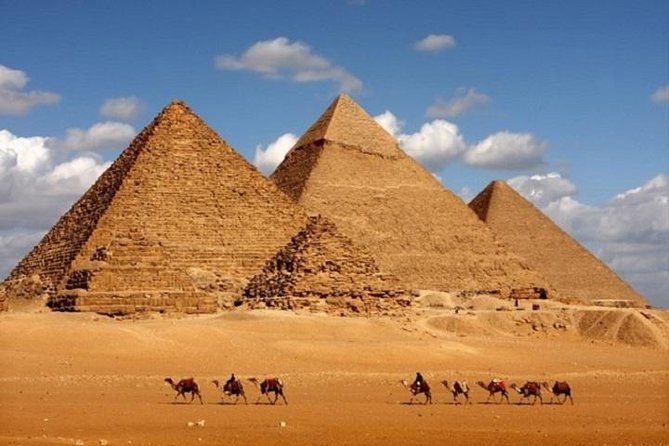
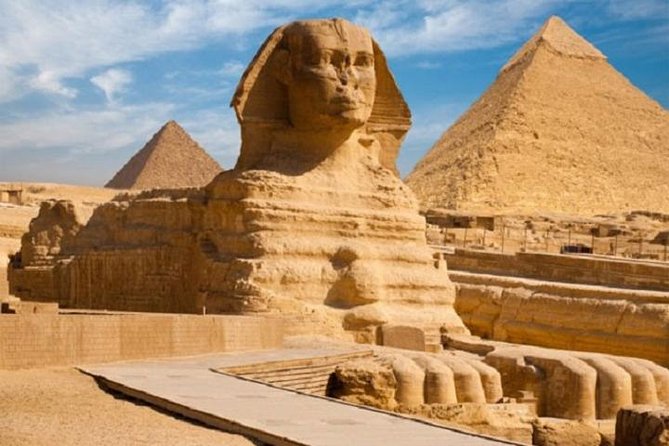
The next morning begins at the Giza Plateau. You’ll see the pyramids of Cheops, Chephren, and Mykerinus, then continue to the Sphinx and Valley Temple. The visit lasts about three hours, enough for a guided overview and time to take in the scale of the monuments.
The Pyramids of Giza are not a quick photo stop. Your guide can explain how the three main pyramids relate to different rulers and how the Sphinx fits into the ceremonial area. The Valley Temple adds useful context because it shows the working side of the complex, not just the famous triangular profiles.
Expect heat, dust, uneven ground, and plenty of people offering extra services around the plateau. Wear sensible shoes, carry water, and keep your plans clear if you do not want additional shopping stops. One weakness reported about the Cairo portion is that some unnecessary shop visits can appear, so tell your guide early that you prefer more time at the monuments.
After lunch, you visit the Egyptian Museum. The collection covers artifacts from the Pharaonic period, including the famous Tutankhamun treasures. The museum can feel crowded and visually overwhelming, so a guide is useful for separating major objects from the thousands of less familiar pieces.
The Cairo guide Amir has been praised for clear English and strong explanations at the main sites. Assignments can vary, but that gives you a useful standard to expect: a good guide should explain what you are seeing rather than simply lead you from room to room.
Flying to Aswan and meeting the Nile
After breakfast on day three, you check out and transfer to Cairo International Airport for the flight to Aswan. A local guide meets you on arrival and takes you to the High Dam, the Unfinished Obelisk, and Philae Temple.
The High Dam is a modern engineering project rather than an ancient monument. It changed Egypt’s control of the Nile and helped protect the country from the river’s annual floods. It also altered parts of the old river valley, which gives the visit more meaning than a quick stop for photographs.
At the Unfinished Obelisk, you can see how stoneworkers began cutting a huge monument directly from the bedrock. The cracks that stopped the project are part of the story. The site makes ancient construction easier to picture because the work was abandoned before the stone was removed.
Philae Temple is the most atmospheric stop of the day. Dedicated to Isis, it preserves temples, columns, reliefs, and inscriptions connected with one of ancient Egypt’s major religious centers. The tour information says you will be transferred to your hotel after the visit, while the cruise portion is also listed as three nights. Confirm the exact hotel and cruise sequence with the operator before departure, since the day-by-day arrangements may be adjusted.
Abu Simbel: the longest day of the tour
Abu Simbel takes about eight hours and should be treated as a major expedition, not a short add-on. You travel by private air-conditioned vehicle with an Egyptologist guide after breakfast and check out from your Aswan accommodation.
The two temples were built during the New Kingdom and are associated chiefly with Ramesses II and Queen Nefertari. The huge seated statues at the entrance are the obvious draw, but the interior chambers, wall scenes, and hieroglyphics reward careful attention.
The temples were moved in a major preservation effort when the Aswan High Dam threatened to flood the original site. That connection makes Abu Simbel especially valuable on this route: you first see the dam’s modern impact, then visit monuments saved from the water.
Admission to Abu Simbel is not included, unlike most of the other listed sites. Ask for the current fee before setting out, and keep some Egyptian currency available. The long road day can be tiring, especially in heat, but skipping Abu Simbel would remove one of the most memorable parts of the southern Nile itinerary.
More Nile cruises to weigh up:
- 4-Days Nile Cruise From Aswan To Luxor including Abu Simbel and Hot Air Balloon
★ 5.0 · 3,142 reviews - 4-Day 3-Night Nile Cruise from Aswan to Luxor&Abu Simbel+Balloon
★ 5.0 · 2,023 reviews - 4-Day 3-Night Nile Cruise from Aswan to Luxor including Abu Simbel, Air Balloon
★ 4.5 · 612 reviews - From Aswan: 4-Day Nile Cruise from Aswan to Luxor with Guide
★ 4.1 · 593 reviews
Cruising north through Kom Ombo and Edfu
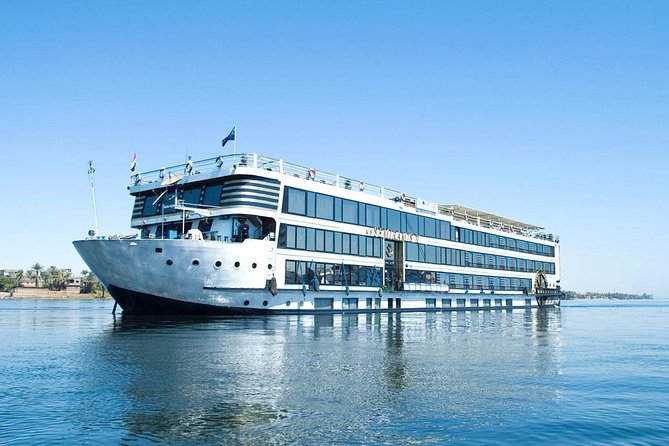
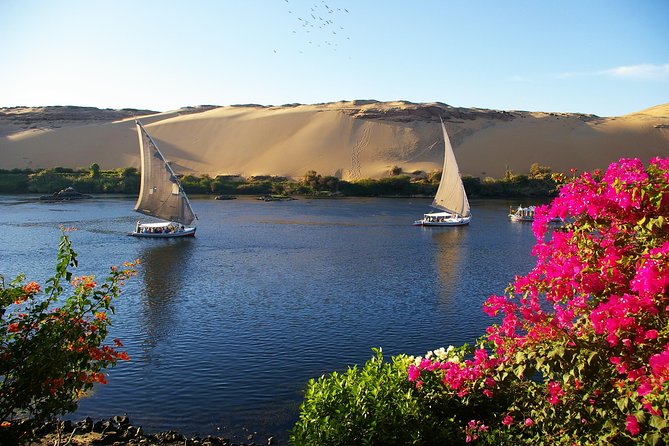
The Nile cruise is the trip’s natural change of pace. Three nights are included on a five-star cruise with full board. Instead of packing and unpacking for every temple visit, you return to the same ship as it moves between Aswan and Luxor.
At Kom Ombo, the temple is shared by Sobek, the crocodile god associated with the Nile, and Horus, linked with the sky and kingship. The unusual double layout makes the site easy to understand: two sets of rooms and religious spaces were planned for two divine traditions.
Edfu follows as the ship sails onward. The Temple of Horus is one of the major stops on the cruise, with inscriptions and scenes connected to the conflict between Horus and Seth. Its scale and preserved carvings help you picture how a functioning temple might have looked before centuries of weather and damage took their toll.
Cruise schedules can make these visits feel brisk. You are fitting temple tours around sailing times, meals, and docking arrangements. I recommend listening closely to the guide’s meeting instructions and returning to the ship on time. The river is the relaxing part, but the shore visits still run on a schedule.
Luxor’s east bank: Karnak and Luxor Temple
Karnak is one of the biggest religious complexes in Egypt, and two hours gives you enough time for a guided introduction without trying to see every corner. The temple area was dedicated to Amun and his associated deities, including Mut.
The columns, pylons, courts, and inscriptions are the point here. A guide can explain that Karnak was developed over long periods rather than built in one single campaign. That layered construction helps make sense of the site’s enormous size.
Luxor Temple follows, with about an hour scheduled for the visit. It was begun under Amenhotep III and completed in part by Ramesses II. The obelisk of Ramesses II in front of the first pylon is one of the most recognizable features.
The two temples complement each other. Karnak feels like a vast religious precinct, while Luxor Temple is more compact and easier to read as a ceremonial monument. You will want water, sun protection, and shoes that can handle stone paving.
Luxor’s west bank: tombs and royal monuments
Day seven crosses to the west bank, beginning at the Valley of the Kings. You explore royal tombs cut into the valley walls, with painted scenes and inscriptions leading into the world of ancient burial customs.
The admission arrangement generally allows entry to a set number of tombs, while special tombs can require extra payment, but the supplied tour details do not specify the exact ticket rules. Ask your guide which tombs are included on the day. Photography rules may also vary inside the tombs, so follow the site instructions.
The Temple of Hatshepsut at Deir el Bahari is next. Its broad terraces and cliff setting create a very different view from the enclosed tombs. Hatshepsut ruled Egypt for about two decades during the 18th Dynasty, and the guide’s explanation is important here because the monument’s story is tied to royal power, trade, and the unusual position of a woman pharaoh.
The final stop is the Colossi of Memnon, two large statues of Amenhotep III. The stop is short and admission is listed as free, making it an easy final look before the road transfer to Hurghada.
The transfer from Luxor to Hurghada takes about four hours. After a morning of monuments, this is a substantial road journey. The advantage is that you reach the Red Sea without another flight or a return trip to Cairo.
Hurghada: two nights to slow down
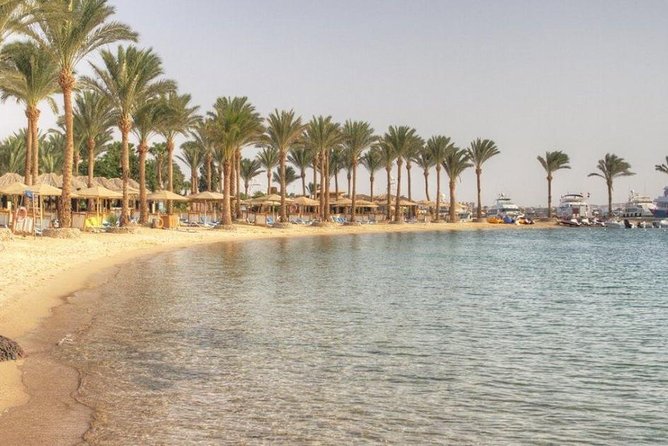
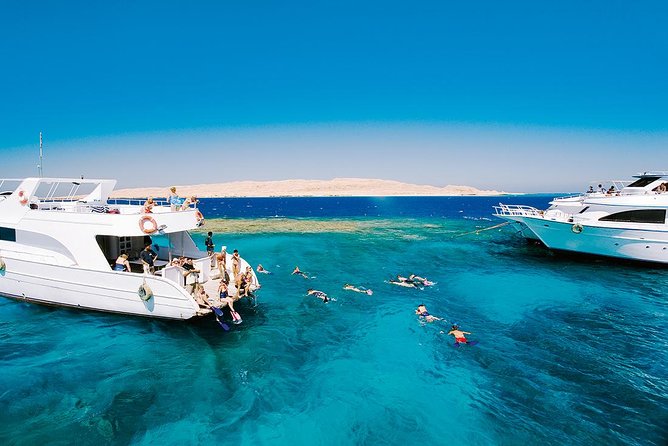
Hurghada is your rest period. Two nights are included at a hotel with all-inclusive soft drinks, and day eight is left open for a beach day, city sightseeing, or a submarine tour.
The free day is useful because the first week is packed. You can stay close to the hotel, arrange an optional water activity, or explore Hurghada at your own pace. Optional tours are not included, so check the cost and schedule before committing.
Do not expect this portion to have the same guided structure as Cairo or Luxor. The value is the pause. After flights, temples, tombs, and the Abu Simbel road trip, a day without a fixed ancient site can make the whole itinerary more manageable.
On day nine, you check out after breakfast and transfer to Hurghada International Airport for the flight back to Cairo. The last night is in Cairo, followed by a transfer to Cairo International Airport on day ten.
Guides, communication, and the private format
The private setup is one of the strongest reasons to choose this trip. Only your group participates, and the package includes Egyptologist guides for the scheduled tours. That gives you room to ask questions and request a little more time at a site, though airport and cruise schedules still limit flexibility.
Several guide names have been associated with different parts of the route. Amir handled Cairo for one party and was praised for his English and explanations. Waleed guided the four-day Aswan to Luxor section and was praised for his knowledge and enthusiasm. French-speaking guides have also been available for some groups.
The less reliable part is communication between transfers and daily tours. One practical fix is to buy a local SIM card so you can contact guides directly. Ask for each day’s pickup time, the guide’s name, the vehicle details, and whether lunch or entrance fees are included for that specific outing.
A private tour does not mean every detail is flexible. Flights, cruise docking times, hotel check-ins, and temple opening hours shape the day. But it does mean you have one point of contact and do not need to arrange every taxi and ticket yourself.
What is included, and what you still pay
The package includes:
- Three nights in Cairo with breakfast
- Three nights on a five-star Nile cruise with full board
- One night in Aswan
- Two nights in Hurghada with all-inclusive soft drinks
- Domestic flights involving Cairo, Aswan, and Hurghada
- Transfers by modern air-conditioned vehicle
- Airport and hotel pickup and return
- Egyptologist guiding
- Listed entrance tickets, including Giza, the Egyptian Museum, Karnak, Luxor Temple, the Valley of the Kings, Hatshepsut Temple, Edfu, Kom Ombo, Philae, the High Dam, and the Unfinished Obelisk
- Breakfast each day
- Five dinners and six lunches
- A Cairo lunch, bottled water, service charges, and taxes
International flights, the Egypt entry visa, tips, personal expenses, optional tours, and Abu Simbel admission are extra. The listing also identifies a noon start time, but your airport arrival and the exact pickup schedule should be confirmed before you fly.
Free cancellation is available up to 24 hours before the experience starts. Changes made inside that period are not accepted, so make any corrections to names, arrival details, or flight plans early.
Who should book this Egypt tour?
I would choose this trip if you want the major sights in one organized package and do not want to manage Egypt’s internal transport yourself. It suits first-time visitors, families with a wide age range, and anyone who values private guides over independent navigation.
It is also a good fit for people who want a Nile cruise but do not want to spend their entire holiday on a ship. The Hurghada nights give you a proper break, while the Cairo and Luxor sections provide the essential ancient monuments.
I would hesitate if you prefer long, unstructured stays in each city. The schedule is full, Abu Simbel is tiring, and communication may require some persistence. You should also be comfortable with domestic flights, road transfers, early starts, and changing hotels.
At $1,900 per person, the trip offers a reasonable all-in-one structure for the number of sights, nights, flights, meals, and transfers included. Book it if convenience and coverage matter most. If you want complete control over timing, restaurants, and hotel choices, build the route yourself instead.
FAQ
How long is the tour?
The tour lasts approximately ten days, including arrival in Cairo, sightseeing in Cairo, the Aswan and Luxor portion, two nights in Hurghada, the return flight to Cairo, and final departure.
Is this a private tour?
Yes. Only your group participates in the private tour or activity.
Are airport pickups included?
Yes. Pickup and return services from airports and hotels are included, along with meet-and-assist service from representatives.
Are domestic flights included?
Yes. Domestic flights involving Cairo, Aswan, and Hurghada are included. International flights into Egypt are not included.
Is the Nile cruise included?
Yes. The package includes three nights on a five-star Nile cruise with full board.
Are meals included?
Breakfast is included for nine days. The package also includes five dinners and six lunches, plus a Cairo lunch and bottled water during the trip.
Is Abu Simbel admission included?
No. The Abu Simbel visit is included in the route, but the admission ticket is not included.
Is the Egypt entry visa included?
No. The Egypt entry visa is not included in the tour price.
What is the cancellation policy?
You can cancel for a full refund up to 24 hours before the experience start time. Cancellations or changes made less than 24 hours before the start time are not accepted.
Just added in the Nile Valley
- Egypt 8 Days Cairo,Nile cruise,Luxor,Aswan from Cairo airport★ 5.0 · 79 reviews
- Private Tour: 7 Nights Pyramids & Nile Cruise +Flights from Cairo★ 4.5 · 157 reviews
- 8 Day Cairo Pyramids and Nile cruise and Alexandria All inclusive Private Tour★ 5.0 · 23 reviews
- 7 Days Egypt Tour Package to Cairo and Nile Cruise★ 5.0 · 62 reviews
- 6-Day Egypt Package, Nile Cruise from Aswan to Luxor by Flights★ 5.0 · 18 reviews
- Private 6-Days Egypt Tour Package with Nile Cruise by Flights★ 4.0 · 59 reviews
- Egypt in 9 Days from Saturday to Sunday including tours and Dahabeya Nile trip.★ 5.0 · 21 reviews
- From Cairo 4-Day Nile Cruise to Aswan by Flights& Hot Air Balloon★ 4.5 · 44 reviews
Nile Cruises, compared.
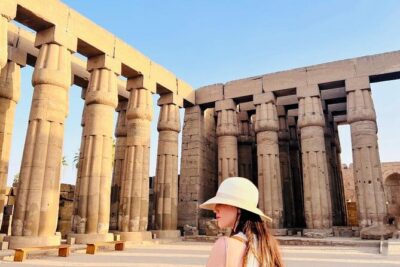
4-Days Nile Cruise From Aswan To Luxor including Abu Simbel and Hot Air Balloon
Read our review →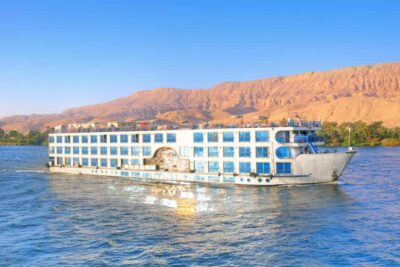
4-Day Nile Cruise from Aswan to Luxor with Guide
Read our review →Browse the lists this tour appears in