
Reviewed · LUXOR TOURS
Luxor’s East & West Bank Highlights Tour
Luxor’s best ancient sights are spread across both sides of the Nile, and this private day tour tackles the big names in one long sweep. You’ll visit royal tombs, a cliff-backed temple, giant statues, and the vast Karnak complex with an Egyptologist explaining what you are seeing.
I like the private vehicle and guide, since you are not tied to a large group’s pace. I also like the hotel pickup, lunch, bottled water, and the chance to cover the West and East Banks in one day. The main caution is the price: $107.70 per person is reasonable for private transport and guiding, but entry tickets are not included, despite the attraction descriptions referring to admission.
Key points to know
- The Valley of the Kings takes about two hours, giving you the most time at the day’s headline site.
- Hatshepsut Temple sits below a dramatic cliff, with reliefs and damaged images tied to the later campaign against her memory.
- The Colossi of Memnon is a quick stop, useful for photos and context rather than a long visit.
- Karnak gets about two hours, enough to appreciate its scale without trying to see every corner.
- Hotel pickup and a private car simplify the day, especially when crossing between Luxor’s two banks.
- Lunch and bottled water are included, but tips and entry tickets are extra.
Why this Luxor day works best as a private tour
Luxor is not one compact archaeological site. Ancient Thebes spread along both banks of the Nile, with royal tombs on the West Bank and major religious centers on the East Bank. Seeing the main sights in one day requires driving, planning, and a sense of order.
That is where this tour makes sense. You are collected from your hotel, meet an Egyptologist guide in Luxor, and travel in a private vehicle between the stops. You do not need to arrange separate taxis or work out the order of the sites yourself.
I especially like the private format for Luxor because the sites call for explanation. A tomb can look like a series of painted walls if you do not know what the scenes mean. Karnak can feel like a forest of columns unless someone points out how the complex developed and how it was used.
The published duration is about eight hours. The listed sightseeing times total roughly five hours and 15 minutes, leaving the rest for driving, hotel transfers, lunch, and the normal pauses that come with a full day. Exact transfer times depend on traffic and the time of day.
A few more days out in Luxor to weigh up
- Hurghada: Luxor Valley of the Kings & Tutankhamun Tomb Trip
★ 4.7 · 13,208 reviews - Luxor Day Trip from Hurghada Small Group & Tutankhamun Tomb
★ 4.8 · 5,366 reviews - Hot Air Balloon Ride in Luxor Egypt with Transfers Included
★ 5.0 · 4,319 reviews
Valley of the Kings: the day’s main attraction
The first major stop is the Valley of the Kings, where pharaohs were buried after royal tomb building moved away from the pyramids of northern Egypt. The setting is stark and dry, with tomb entrances cut into the hills rather than displayed as monumental buildings.
You have about two hours here, the longest scheduled visit of the day. That is appropriate. The valley deserves more than a rushed photo stop, and the guide can help you understand why the tombs were built, what their decoration meant, and how royal burial customs changed.
Your admission ticket is listed as extra, so confirm exactly what your price covers before you arrive. Entry arrangements can matter here, since the ticket may determine which tombs you can enter. The supplied tour information does not specify a particular set of tombs, so do not assume every famous tomb is part of the basic admission.
The practical challenge is heat. Much of the appeal comes from the tomb interiors, but you still spend time outside among exposed rock and dust. Bring water, use the supplied bottle as a start, and wear shoes that are comfortable on uneven ground.
I would treat the Valley of the Kings as the emotional center of the tour. The later stops are impressive in different ways, but this is where the royal story becomes personal. You move from the idea of pharaohs to the actual spaces built for their death and afterlife.
Hatshepsut Temple below the cliffs
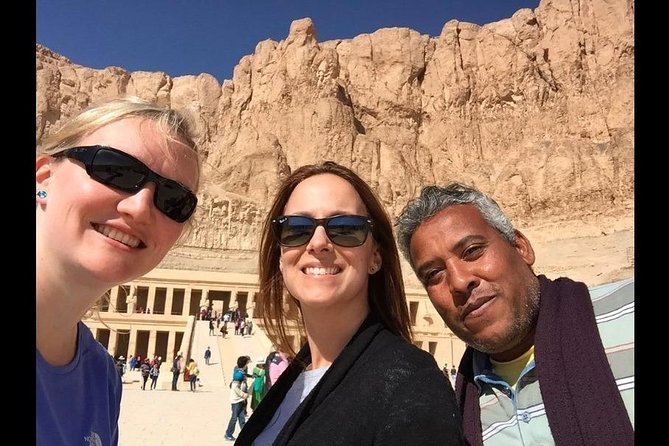
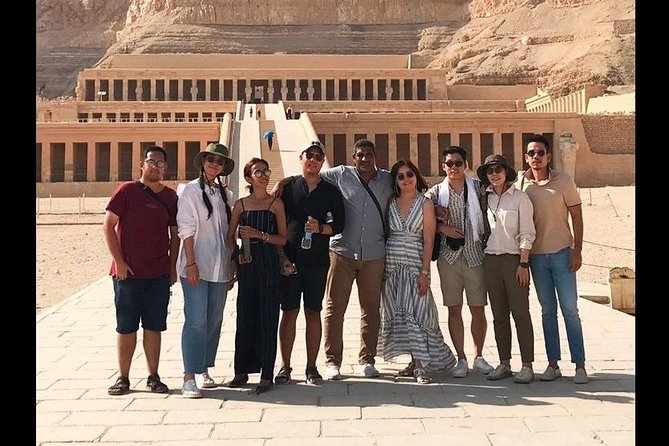
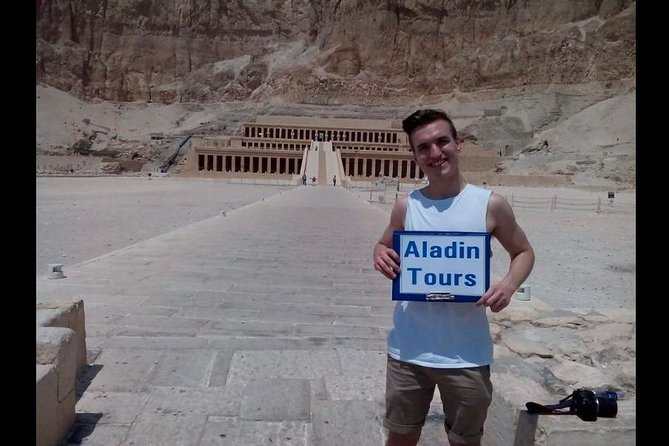
Next comes the Memorial Temple of Hatshepsut at Deir el-Bahari, scheduled for about one hour. The temple is built against a tall natural cliff, and its terraces create a strong contrast between straight stone lines and the rugged rock behind them.
The setting is one of the most memorable parts of the day. From the approach, the temple appears tied to the cliff rather than simply placed beside it. Your guide can help explain its purpose and Hatshepsut’s rule as one of Egypt’s most important female pharaohs.
The surviving wall scenes show aspects of her reign and Egypt’s strength during that period. Some images of Hatshepsut were later damaged, linked here to the efforts of Thutmose III to remove her representation. That detail gives the temple a political edge. It is not just a beautiful building, but also evidence of a struggle over royal memory.
One hour is enough for a clear introduction, though it will not allow a slow study of every relief. I would listen closely to the guide here, then use any free time for the overall view, the terraces, and the cliff face. The architecture is easier to understand from a distance than when you are standing beside one wall.
Colossi of Memnon: a brief stop with a large presence
The two Colossi of Memnon are the shortest scheduled stop, at about 15 minutes. That tells you how to approach them: this is a quick look and photo opportunity, not a full site visit.
The statues once guarded the memorial temple of Amenhotep III, a huge complex where the ruler was worshipped as a god. Earthquakes and floods destroyed much of the temple, leaving the two seated figures as the main visible reminder of its scale.
The statues were also linked to an old story about one colossus making a sound at sunrise after an earthquake in 27 BC. Restoration work later ended the sound. Your guide can place that story in its Roman-era setting and explain how natural damage shaped the legend.
Fifteen minutes may feel brief, but it keeps the day moving. You get the essential context and a close view of the statues without spending time at a largely open archaeological area. If you prefer long visits at every site, this stop may feel thin. If you want the major Luxor sights in one day, the short timing is practical.
A completely different sort of day in Luxor:
- Small group Hurghada to Luxor, Valley of the Kings by Van
★ 4.5 · 2,470 reviews - Luxor: Shared Full-Day Tour to Luxor West and East Banks
★ 4.5 · 1,812 reviews - Luxor: Hot Air Balloon Ride over Luxor Relics
★ 4.8 · 1,681 reviews - Luxor Day Tour: Valley of Kings & Queens & Hatchepsut Temples
★ 5.0 · 1,496 reviews
Lunch and the move to Luxor’s East Bank
Lunch at a local restaurant is included. The information provided does not name the restaurant or specify the menu, so I would see this as a convenient midday meal rather than a reason to book the tour on its own.
The break matters because this is a long day. After the West Bank sites, you still have Karnak ahead, and a seated meal gives you a chance to rest before the largest complex of the tour.
Hotel pickup and drop-off also have real value here. Luxor sightseeing involves crossing between separate areas, and arranging transport for each leg can eat into your day. A private vehicle lets your group move according to the tour plan instead of waiting for other passengers.
One warning is worth keeping clear: the service is described as hotel pickup and drop-off, not guaranteed airport pickup. A supplied complaint describes an airport pickup failure, so I would not assume airport collection is included unless the provider confirms it directly. If you are arriving at Luxor airport on the same day, clarify this before booking.
Karnak Temple: columns, processions, and sheer scale
Karnak is the East Bank finale, with about two hours scheduled. It was the main temple center for the Theban triad of Amun, Mut, and their son Khonsu. The complex developed over many centuries, which helps explain why it feels less like a single building and more like a city of sacred spaces.
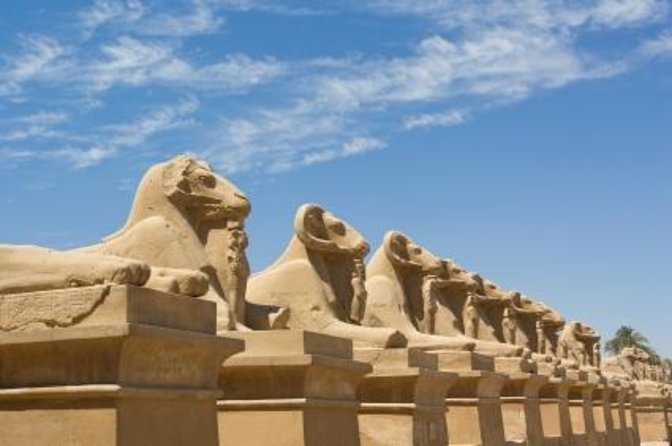
The tour explains the link between Karnak and Luxor Temple through the avenue of sphinxes. During the Opet Festival, statues of the Theban gods were carried in procession between the two temple areas. The religious story connected Amun in Karnak with his form at Luxor Temple, giving the route meaning beyond its impressive appearance.
The supplied description focuses on Karnak and does not clearly list a separate visit inside Luxor Temple. Do not assume both temples are included simply because the two are discussed together. If Luxor Temple matters to you, ask the provider whether it is part of your exact schedule.
Karnak’s scale can be hard to grasp at first. I would use the guide to identify the main sections, the role of the Amun precinct, and the way religious processions shaped the complex. The public route includes only part of the ancient area, with the Amun precinct identified as the section open to visitors on this tour.
Two hours gives you time to walk, listen, and take in the major forms without turning the visit into a marathon. Still, Karnak is large and the day has already been busy. If you want detailed architectural study, you could easily use more time. For a first visit to Luxor, the scheduled stop offers a solid introduction.
What the guide and private format add
The tour’s strongest feature is not simply the list of monuments. It is the Egyptologist guide who connects them.
At the Valley of the Kings, the guide can explain why the royal burial ground moved from the pyramid fields. At Hatshepsut Temple, the guide can connect the damaged images to the later attempt to erase her rule. At Karnak, the guide can turn columns, courtyards, and processions into a readable story.
A private tour also gives you more room to ask questions. You can pause for clarification, adjust your attention, and avoid being pulled along by a large group. The information does not promise unlimited flexibility or a custom itinerary, so I would not treat the tour as completely open-ended. It is better understood as a planned private day with some personal attention.
No guide name is provided, so you cannot choose a particular Egyptologist in advance based on the supplied details. The guide’s skill will still have a major effect on the day, especially at Karnak and in the Valley of the Kings.
Is $107.70 a fair price?
At $107.70 per person, this is not the cheapest way to see Luxor. You are paying for a private vehicle, an Egyptologist guide, hotel transfers, bottled water, lunch, and the convenience of combining both banks in one day.
The value improves if you are traveling with a small group, since the service is private and group discounts may be available. It also improves if you would otherwise need to arrange several separate rides and hire a guide independently.
The price needs a careful reading because entry tickets and tipping are not included. That means your actual cost will be higher. The attraction details refer to admission being included at some stops, but the explicit inclusion list says entry tickets are excluded. I would ask for a written clarification before paying, especially for the Valley of the Kings and Karnak.
For a solo visitor, the price may feel high once tickets and gratuities are added. For two or more people sharing a private vehicle and guide, it can be a practical way to cover a lot of ground without the strain of arranging each transfer yourself.
Who should book this Luxor tour?
I would recommend it to you if you have one full day in Luxor and want the major East and West Bank sights in a single organized outing. It is also a good match if you prefer a private setting, want historical explanation, or do not want to negotiate local transport.
It suits first-time visitors especially well. The sites are important but not always easy to read on your own, and the guide can provide a clear thread from royal tombs to temples and religious processions.
I would think twice if you want a slow, highly specialized archaeological visit. The schedule covers four major stops in about eight hours, so the pace is full. I would also reconsider if you are looking for an airport transfer, since airport pickup is not clearly included.
Free cancellation is available if you cancel at least 24 hours before the start time. Changes or cancellations inside that window are not accepted for a refund, and poor weather can lead to a new date or a full refund.
Should you book it?
Book this tour if your priority is efficient coverage of Luxor’s major monuments with a private guide and hotel transport. The Valley of the Kings, Hatshepsut Temple, Colossi of Memnon, and Karnak make a strong first-day plan.
Before booking, confirm three points: the exact pickup location, which entry tickets you must pay for, and whether Luxor Temple is included in addition to Karnak. If those details match your plans, the tour offers a sensible way to see both banks without spending your day arranging transport.
FAQ
How long does the Luxor highlights tour last?
The tour lasts about eight hours, although transfer times can vary with traffic and the time of day.
Is hotel pickup included?
Yes. Hotel pickup and drop-off are included. Airport pickup is not clearly included, so confirm this directly if you need collection from Luxor airport.
Which major sites are visited?
The scheduled stops are the Valley of the Kings, Hatshepsut Temple at Deir el-Bahari, the Colossi of Memnon, and Karnak Temple.
Is the tour private?
Yes. Only your group participates in the private tour or activity.
Are entry tickets included?
The inclusion information says entry tickets are not included. Confirm the exact ticket requirements before the tour, since some attraction descriptions refer to admission differently.
Is lunch provided?
Yes. Lunch at a local restaurant and bottled water are included.
Can I cancel for a full refund?
Yes, if you cancel at least 24 hours before the experience start time. Cancellations or changes made less than 24 hours in advance are not accepted for a refund.
Just added in Luxor
- Private Trip To Luxor from Cairo by Plane★ 5.0 · 22 reviews
- Luxor Private Day Trip from Cairo by Plane★ 4.5 · 69 reviews
- Private Day Tour To Luxor from Cairo by Plane,Tours,Sailing Felucca,Camel&Lunch★ 5.0 · 45 reviews
- Private Day Tour To Luxor from Cairo by Plane★ 4.5 · 41 reviews
- Package 8 Days 7 Nights To Jewels of Egypt, Luxor & Aswan Tour★ 5.0 · 29 reviews
- Package Cairo & Alexandra & Luxor & Aswan★ 5.0 · 39 reviews
- Overnight Luxor Tours by train from Cairo with Hot Air Balloon and much more★ 5.0 · 29 reviews
- Private Luxor Day tour from Cairo by Flight★ 5.0 · 25 reviews
Luxor Tours, compared.

Luxor Valley of the Kings & Tutankhamun Tomb Trip
Read our review →
Hot Air Balloon Ride in Luxor Egypt with Transfers Included
Read our review →
Small group Hurghada to Luxor, Valley of the Kings by Van
Read our review →
Shared Full-Day Tour to Luxor West and East Banks
Read our review →
Luxor Day Tour: Valley of Kings & Queens & Hatchepsut Temples
Read our review →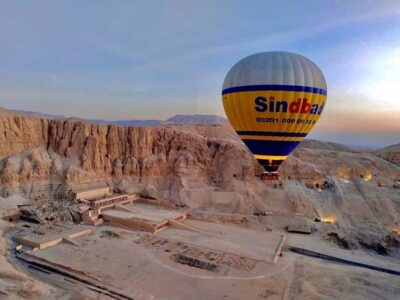
2-Day Luxor Tour with Hotel, Balloon, & Boat Ride
Read our review →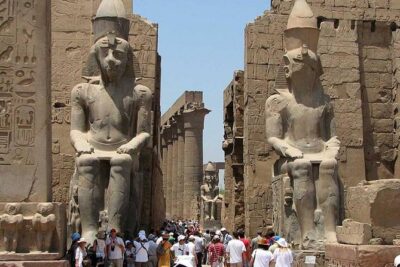
VIP Luxor Day Tour from Hurghada, Small group the top operator
Read our review →Browse the lists this tour appears in