
Reviewed · GUIDED
Luxor: East and/or West Banks Guided Tour with Lunch
Luxor’s great advantage is scale: in one long day, you can cross the Nile from the royal tombs of the West Bank to the temple avenues of the East Bank. I like the included air-conditioned transport and lunch, and I like having an Egyptologist guide to explain what you are looking at rather than leaving you with a pile of stones and a camera roll. The main caution is pace. The full route can feel rushed, especially when all five major sites are packed into one outing.
I also like the choice of focusing on one side of the river if you prefer a shorter day. A strong guide, such as Mohamed, can add real value with clear explanations, but guide quality matters here. Be firm about unwanted shopping stops, extra charges for photos, or any personal invitations after the tour.
Key points to know before booking
- Three famous royal tombs: The West Bank visit includes the tombs of Ramesses III, Ramesses VI, and Merenptah, subject to the entrance option booked.
- Two banks in one day: The full route combines the Valley of the Kings, Hatshepsut, and the Colossi of Memnon with Karnak and Luxor Temple.
- Lunch is included: You stop at a local restaurant, but drinks cost extra.
- East Bank pickup only: Hotels on the West Bank use the El Mesala Hotel meeting point, while airport transfers cost extra.
- A felucca is optional: The boat add-on depends on wind. If the river is calm, a motorboat may replace the traditional sailboat.
- Expect substantial walking: Bring comfortable shoes, a hat, sunscreen, and water-friendly clothing for the heat.
Why this Luxor day works best as a carefully chosen route
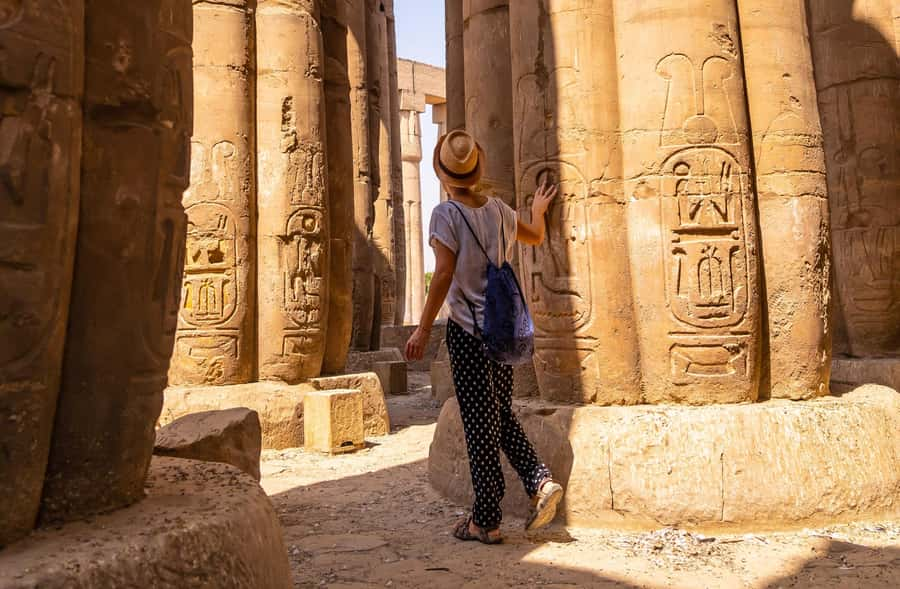
Luxor is split by the Nile, and each bank tells a different part of ancient Egypt’s story. The West Bank is tied to death and burial, with royal tombs cut into the dry hills. The East Bank centers on temples used for worship, ceremony, and public life.
This tour lets you see both sides without arranging separate taxis, drivers, tickets, and meals. That is its strongest practical benefit. You are collected from an East Bank hotel in an air-conditioned vehicle, then guided between the sites with mineral water provided during the drives.
The day can last from five to eight hours, depending on the option and schedule. A West Bank or East Bank visit alone is more manageable. The full-day plan gives you the broadest picture of Luxor, but it also asks you to keep moving. If your priority is careful photography, long explanations, or a slower look inside each tomb, choose one bank rather than trying to collect every major sight in one sweep.
A few more days out in Luxor to weigh up
- Hurghada: Luxor Valley of the Kings & Tutankhamun Tomb Trip
★ 4.7 · 13,208 reviews - Luxor Day Trip from Hurghada Small Group & Tutankhamun Tomb
★ 4.8 · 5,366 reviews - Hot Air Balloon Ride in Luxor Egypt with Transfers Included
★ 5.0 · 4,319 reviews
Valley of the Kings: tombs rather than grand monuments
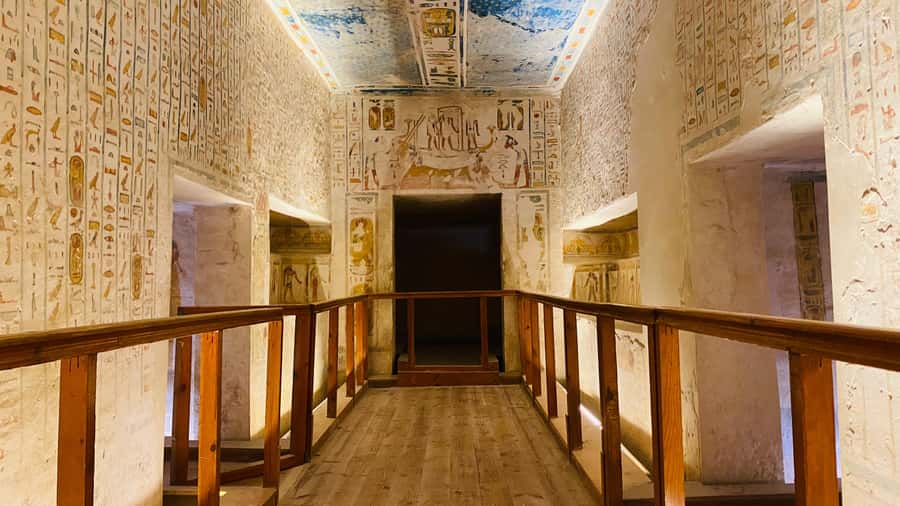
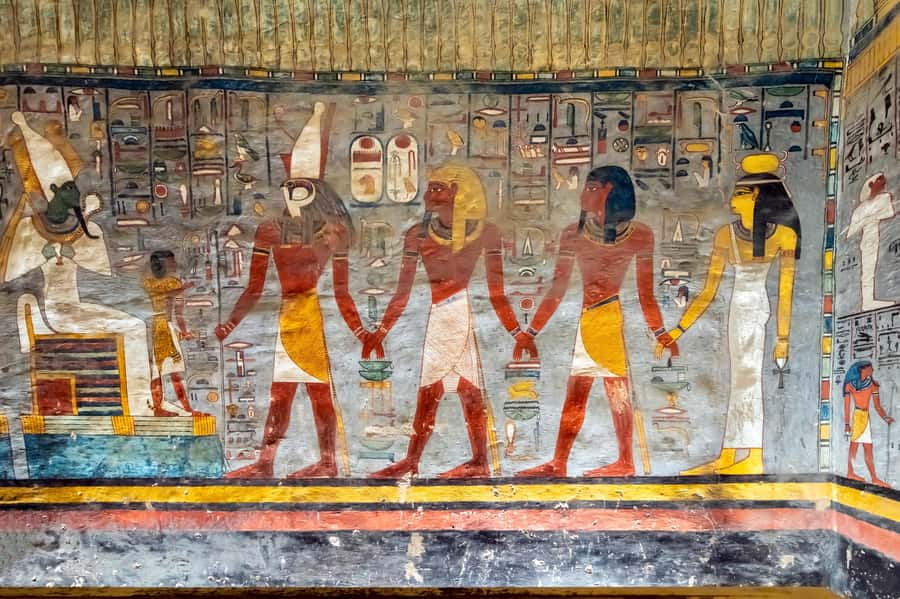
The West Bank begins with the Valley of the Kings, the most important stop for many people. The royal burial ground is not a grand city of pyramids. Its impact comes from the decorated chambers cut into the desert hills.
The visit allows about two hours, including walking and guided sightseeing. The standard plan highlights the tombs of Ramesses III, Ramesses VI, and Merenptah. These names matter because the tombs are not interchangeable. Each gives you a different glimpse of royal decoration, religious scenes, and the way pharaohs prepared for the afterlife.
Your ticket arrangements depend on the option you select. The tour includes entrance tickets to the attractions covered by that option, so check the exact selection before paying. Some tombs can require separate charges, and the supplied information does not promise access to every tomb in the valley.
The site is exposed, hot, and uneven. Comfortable shoes are not a minor suggestion here. Wear a sun hat, use sunscreen, and keep your bag small because large luggage is not allowed.
The guide is especially useful at the Valley of the Kings because the painted scenes can be hard to understand without context. At the same time, one of the useful cautions from past experience with this outing is that some guides may move quickly and show only selected parts. If a particular tomb matters to you, ask early how much time you will have inside.
Hatshepsut’s temple and a powerful royal story
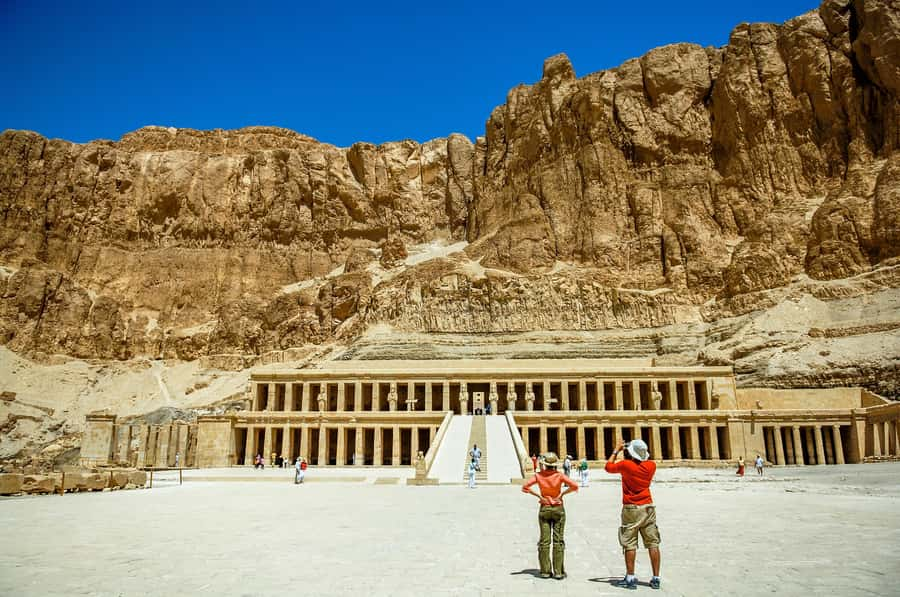
The next stop is the mortuary temple of Queen Hatshepsut, usually planned for about an hour. Its broad terraces rise against the cliffs, creating one of the most recognizable views on the West Bank.
Hatshepsut ruled Egypt for about two decades. Her temple was built to honor her and to support her royal image. The guide can help explain how she presented herself as a legitimate ruler in a system often associated with male pharaohs.
This is a site where a good explanation changes the visit. Without context, you see terraces, columns, and carved walls. With context, you begin to understand the political message behind the building and why Hatshepsut remains one of Egypt’s most important female rulers.
The visit is still largely outdoors, so the heat can shape your experience. The midday sun is not softened by shade across every section. If you choose the full East and West Banks route, this is also one of several major stops competing for your attention and energy.
Colossi of Memnon: a brief stop with a big visual payoff
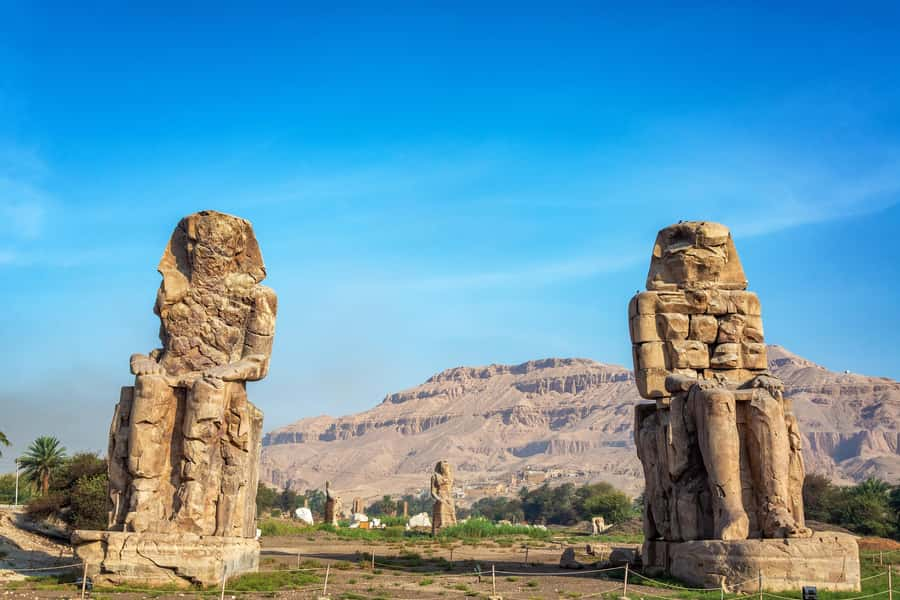
The Colossi of Memnon takes about 30 minutes. That may sound short, but the stop is designed as a quick look at two huge seated statues linked with the mortuary temple of Amenhotep III.
The statues are easy to appreciate without a long walk. You get time for photographs and a short explanation before moving on. Their scale gives you a useful sense of how large the temple complex once was, even though the surviving site is far less complete than Karnak or Luxor Temple.
This is also where expectations matter. Do not treat the Colossi as a full museum visit. It is a compact roadside-style stop, valuable for the statues and the story around them, not for an extended exploration.
A completely different sort of day in Luxor:
- Small group Hurghada to Luxor, Valley of the Kings by Van
★ 4.5 · 2,470 reviews - Luxor: Shared Full-Day Tour to Luxor West and East Banks
★ 4.5 · 1,812 reviews - Luxor: Hot Air Balloon Ride over Luxor Relics
★ 4.8 · 1,681 reviews - Luxor Day Tour: Valley of Kings & Queens & Hatchepsut Temples
★ 5.0 · 1,496 reviews
Lunch in Luxor, with a useful break in the middle
Lunch is planned for about an hour at a local restaurant in Luxor. After the exposed West Bank sites, that pause has real value. It gives you a chance to sit, cool down, and reset before the East Bank temples.
The meal is included, but drinks are not. Keep some Egyptian pounds or another accepted payment method available for beverages, since the supplied details do not state that drinks are covered.
The quality and menu are not specified, so treat lunch as a practical part of the day rather than the main reason to book. The important point is that you do not need to arrange a separate meal while moving between sites.
Karnak Temple: allow your eyes time to adjust
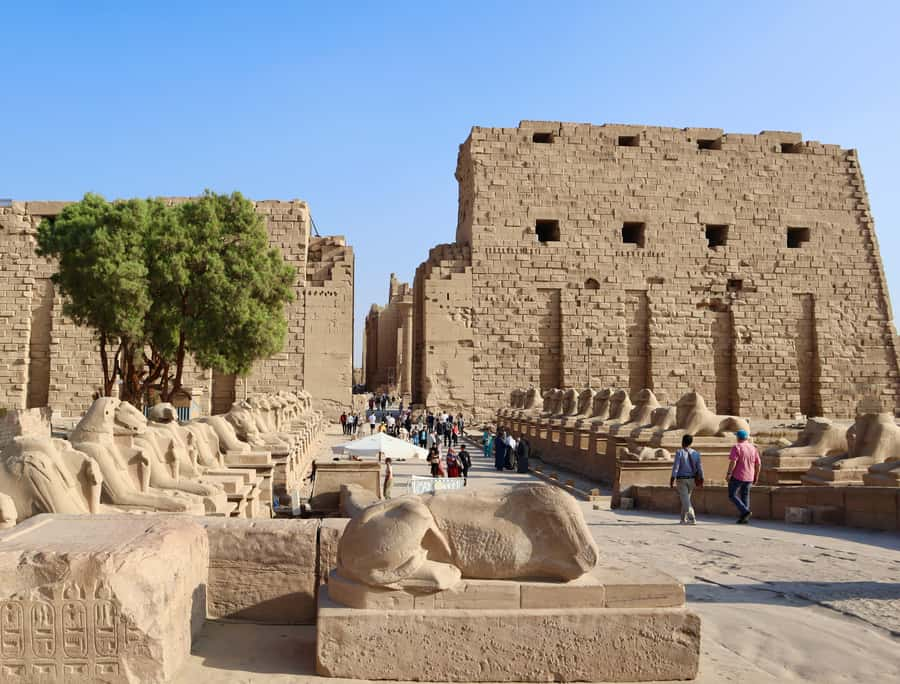
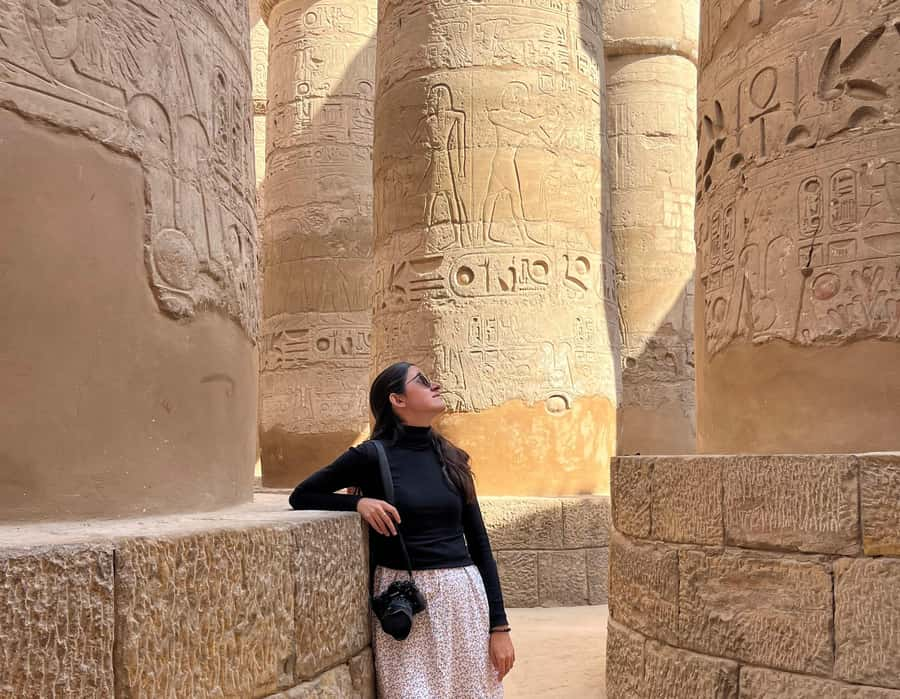
Karnak is scheduled for about an hour on the East Bank. It is the largest temple complex on the route and one of the places where a guide can make the scale easier to grasp.
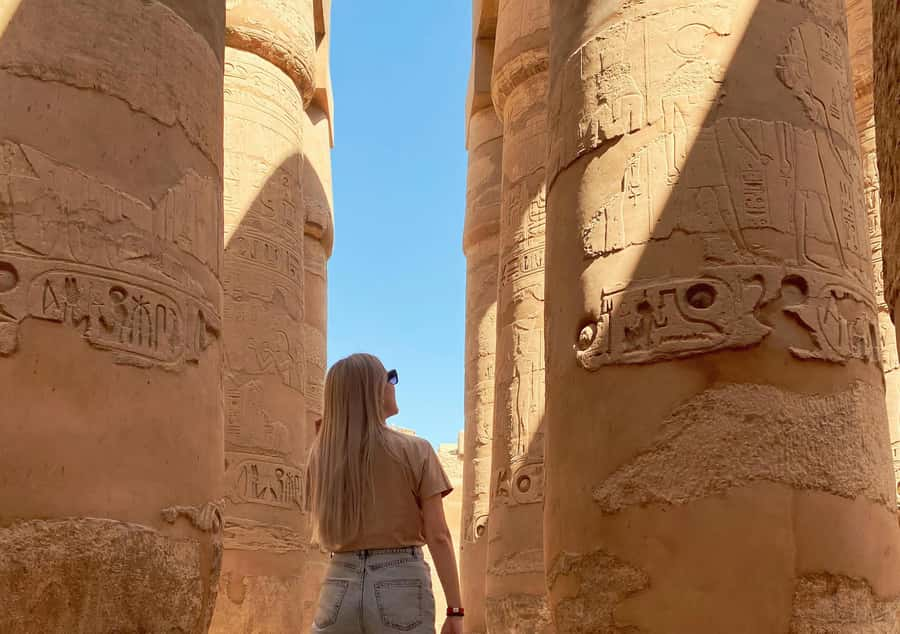
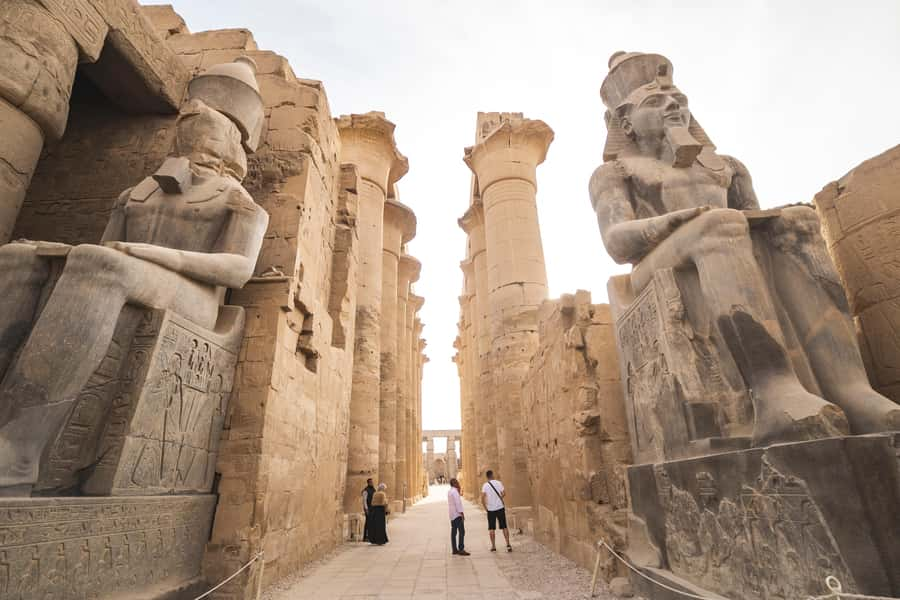
The complex includes huge columns, courtyards, gateways, and religious spaces built and expanded by successive rulers. You may find the site difficult to take in all at once. Look up, then look across. The size of the columns and the long lines of the complex are part of the experience.
The description of the tour calls Karnak the largest temple in the world. More precisely, think of it as a vast temple complex rather than one single building. That distinction helps you understand why an hour can feel brief.
If your guide gives a clear explanation, Karnak can become the strongest stop on the East Bank. Some people have found the commentary very good, with detailed explanations of the temple areas. Others have felt hurried and shown only selected sections. You can improve your visit by asking your guide to identify the parts you should not miss before the walking begins.
Luxor Temple after the heat of the day
Luxor Temple receives another hour. Compared with Karnak, it can feel more focused and easier to read, though that depends on the route and pace set by your guide.
The temple is tied to royal ceremonies and worship on the East Bank. Its columns, statues, and formal spaces show how Egyptian rulers used architecture to present power and order. The temple’s setting in modern Luxor also gives it a different feel from the desert sites across the river.
Seeing Karnak and Luxor Temple on the same day helps you connect them rather than treating them as unrelated stops. They were part of a wider sacred center, and the guide’s job is to explain those links.
An hour is enough for a guided overview, but not for a slow study of every relief. If you are especially interested in temple inscriptions, ask for a little quiet time to look after the main explanation. The day’s schedule is packed, so this is one of the places where you may need to choose between broad coverage and detail.
The boat option: know what is and is not included
The schedule includes time for a boat cruise, but a felucca ride is listed as an add-on rather than part of the standard inclusions. That distinction is important when comparing the price.
A felucca is a traditional Nile sailboat, and the ride depends on wind conditions. If there is not enough wind, the operator may provide a motorboat instead. You should book the add-on for the river setting and views, not for a guaranteed sailing experience.
The route also includes movement across or along the Nile, but the exact boat arrangement may vary by the option selected. Ask what is included before departure if the cruise is a major reason you want this experience.
Guides can make or break the day
The tour provides a professional Egyptologist guide, with English, French, and German options. That is important in Luxor, where the value often comes from understanding what lies behind the monuments.
Mohamed is one guide specifically praised for clear and engaging explanations. A guide who can connect a ruler, a building, and a religious idea gives you far more than a list of dates. The best moments of this tour are likely to come when the commentary helps you see why a scene or structure matters.
Still, the guide experience may not be uniform. Some outings have felt rushed, with only hand-picked areas covered. There have also been complaints about guides steering people toward expensive shops, including souvenir, stone, perfume, or oil stores, and about pressure around paid photos or other purchases.
My advice is simple: decide in advance that you do not need to buy anything. Say no clearly, and keep the focus on the archaeological sites. If a guide makes personal invitations or continues after you refuse, report the conduct to the operator. A solo woman or anyone uncomfortable with that behavior should take this concern seriously and consider booking with a private guide or a different provider.
Is $62 good value for Luxor?
At $62 per person, the price is fair if you use the full package. You receive East Bank hotel pickup and drop-off, an air-conditioned vehicle, a guide, included attraction tickets based on the booked option, mineral water, lunch, and service taxes.
Arranging all of this separately can take time, especially when you are unfamiliar with the Nile crossing and the distances between sites. The value is strongest for first-time visitors who want a clear overview in one day.
The price is less attractive if you only want a slow look at two or three sites. The full route covers a lot, but speed is the trade-off. You may also pay extra for airport pickup, West Bank hotel transport, drinks, and the optional felucca ride.
Before booking, confirm three things: which bank is included, which entrance tickets are covered, and if the boat ride is part of your chosen option or an add-on. Those details affect the real cost.
Who should choose this experience?
This tour suits you if you have limited time in Luxor and want the major sights handled in one organized outing. It is also a good fit if you prefer air-conditioned transport, a provided lunch, and explanations in English, French, or German.
Choose the West Bank option if tombs and royal burial sites are your main interest. Choose the East Bank option if temples are your priority. Pick the full route if this is your only substantial day in Luxor and you accept a quicker pace.
I would hesitate to recommend it to wheelchair users because the experience is not suitable for wheelchair access. I would also think twice if you dislike shopping stops or want total control over the schedule. In that case, a private arrangement may offer better control, though this tour provides a simpler package at a known price.
Cancellation is available up to 24 hours before departure for a full refund, and you can reserve now and pay later. Last-minute bookings within 24 hours may be moved to another day if space is unavailable.
Should you book the Luxor East and West Banks tour?
Book it if you want a practical overview of Luxor’s main sights, especially with limited time. The combination of tombs, Hatshepsut, the Colossi, Karnak, Luxor Temple, transport, lunch, and a guide gives you a lot for $62.
Choose a one-bank option if you prefer less rushing. Before the day begins, confirm the exact inclusions, ask the guide to protect your temple time, and decline shopping stops that do not interest you. The tour can be a strong introduction to Luxor with the right guide and clear boundaries, but it is not the best choice for a slow, highly personal archaeological visit.
FAQ
How long does the Luxor tour last?
The experience lasts between five and eight hours, depending on the option selected and the starting time available.
Which sites are included on the West Bank?
The West Bank option includes the Valley of the Kings, the Temple of Queen Hatshepsut, and the Colossi of Memnon. The Valley visit includes the tombs of Ramesses III, Ramesses VI, and Merenptah, based on the booked option.
Which sites are included on the East Bank?
The East Bank option includes Karnak Temple and Luxor Temple.
Is hotel pickup available?
Pickup and drop-off are available from hotels on Luxor’s East Bank. If you stay on the West Bank, you need to meet the group at El Mesala Hotel. Airport pickup and drop-off are available for an additional cost.
Is lunch included?
Yes. Lunch at a local restaurant is included. Drinks during lunch are not included.
Is the felucca ride included?
The felucca ride is available as an add-on. It depends on wind conditions, and a motorboat may be used if there is not enough wind for sailing.
Just added in Luxor
- Private Trip To Luxor from Cairo by Plane★ 5.0 · 22 reviews
- Luxor Private Day Trip from Cairo by Plane★ 4.5 · 69 reviews
- Private Day Tour To Luxor from Cairo by Plane,Tours,Sailing Felucca,Camel&Lunch★ 5.0 · 45 reviews
- Private Day Tour To Luxor from Cairo by Plane★ 4.5 · 41 reviews
- Package 8 Days 7 Nights To Jewels of Egypt, Luxor & Aswan Tour★ 5.0 · 29 reviews
- Package Cairo & Alexandra & Luxor & Aswan★ 5.0 · 39 reviews
- Overnight Luxor Tours by train from Cairo with Hot Air Balloon and much more★ 5.0 · 29 reviews
- Private Luxor Day tour from Cairo by Flight★ 5.0 · 25 reviews
Guided, compared.
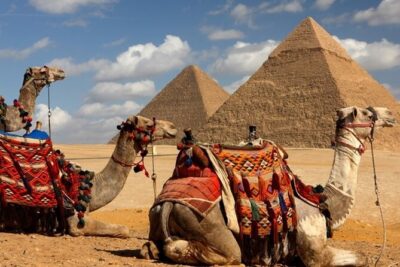
Private guided tour to Giza Pyramids, and Great Sphinx
Read our review →
Morning or Sunset Sights Guided Tour with Shopping
Read our review →
Egyptian Museum, Citadel, and Old Cairo Guided Tour
Read our review →
Private or Shared City Tour with Guide & Shopping
Read our review →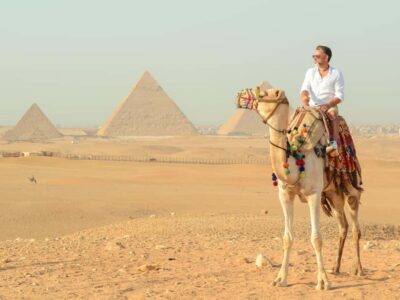
Giza Sunrise Pyramid Guided Tour With Camel Ride & Breakfast
Read our review →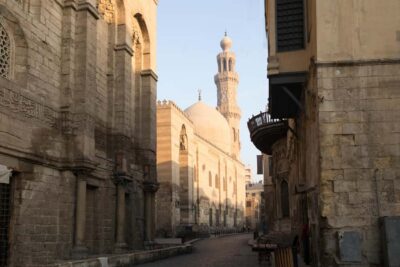
Old Cairo Guided Walk Tour: History, Culture & Street Bites
Read our review →
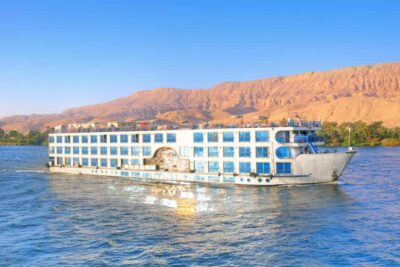
4-Day Nile Cruise from Aswan to Luxor with Guide
Read our review →Browse the lists this tour appears in