Reviewed · GIZA TOURS
Giza pyramids, Sphinx, and the big museumum
The most interesting part of this Cairo day is the story of pyramid design. You begin with Djoser’s six-level Step Pyramid, follow the experiments at Dahshur, and finish with the smooth-sided pyramids at Giza. It is a useful way to see the monuments as a sequence of ideas, not just a row of famous stones.
I like two things here. First, the private vehicle and hotel pickup make a long day far easier. Second, you get three major pyramid areas, Saqqara, Dahshur, and Giza, rather than spending the whole day at one site. The tradeoff is that entrance tickets are not included, and the schedule is ambitious, especially if the museum visit is also part of the day.
Key points at a glance
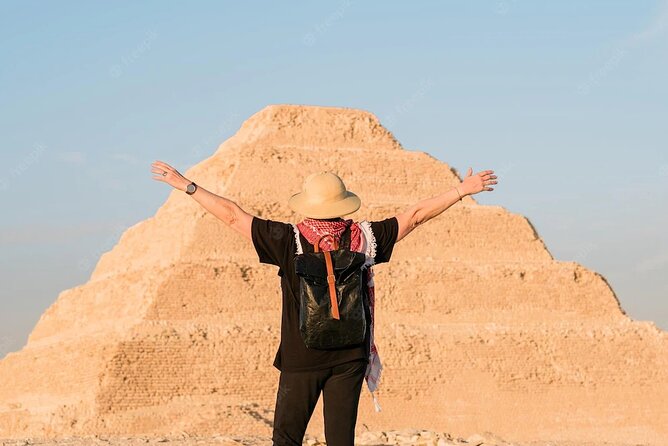
- Three pyramid zones in one day: Visit Djoser’s Step Pyramid at Saqqara, the Bent and Red Pyramids at Dahshur, and the Giza pyramids.
- A private tour for your group: Only your party participates, with a guide, driver, hotel pickup, and drop-off.
- Morsi is a named guide: One detailed account identifies Morsi as a guide who explained the sites and helped with photographs.
- Interior visits may be the highlight: The tour includes access to the inside of the Red Pyramid, while the Giza and other interior entries depend on the tickets you choose.
- Extra costs need planning: Entrance fees and tips are not covered by the $40 price.
- Clarify the museum stop: The tour description promises the big museum, but the timed stop list focuses on the pyramid sites and Sphinx.
Why this Cairo tour works as a pyramid lesson
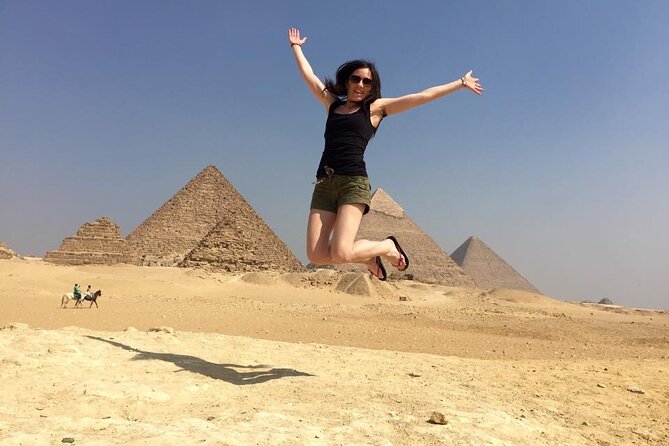
Many Cairo excursions treat the pyramids as isolated wonders. This one has a better organizing idea: royal tombs developed over time. You begin with the first major pyramid form and then see how builders changed the shape when earlier designs did not work as planned.
That approach gives you something to watch for. At Saqqara, the Step Pyramid rises in layers. At Dahshur, the Bent Pyramid changes angle partway up. The Red Pyramid uses a more consistent angle, and the Giza pyramids present the finished smooth-sided form most people picture when they think of ancient Egypt.
Your guide is expected to explain the pyramid shape in connection with Ra, the sun god and creator figure in ancient Egyptian belief. The tour also presents the pyramid as a stable form meant to protect the king’s mummy and help the dead ruler reach the heavens. Some of this is religious interpretation rather than something you can prove by looking at the stones, so listen for the distinction between ancient belief, modern explanation, and tour storytelling.
The $40 price is attractive for a private, full-day outing that includes transport, a guide, hotel pickup, and bottled water. It is not the final cost, though. Admission fees and tipping are separate, and the route covers several paid sites. Ask for the expected entrance total before you go, particularly if you want to enter the Great Pyramid or another pyramid interior.
A few more days out in Giza to weigh up
- Cairo: Pyramids & Great Sphinx Private Tour with Camel Ride
★ 4.9 · 6,335 reviews - Tour to Giza Pyramids and The Egyptian Museum
★ 5.0 · 6,016 reviews - From Hurghada: Cairo and Giza Highlights Full-Day Tour
★ 4.5 · 6,014 reviews
Saqqara and Djoser’s six-step beginning
The first major stop is the Step Pyramid of King Djoser at Saqqara, dated in the tour material to around 3000 BC. It is described as the first pyramid built by Imhotep, the architect associated with this early royal monument.
The importance of Saqqara is not only its age. The Step Pyramid shows an early attempt to move from a traditional flat-roofed tomb toward a taller form that reached upward in stages. The six visible levels make the design easy to understand, even if the monument has suffered damage over time.
Your guide will connect the shape to the idea of reaching Ra. The tour’s explanation says the step form did not yet provide the perfect upward energy or stability associated with the later pyramid. You may find that language simplified, but it gives you a clear theme for comparing Saqqara with Dahshur and Giza.
Plan on about two hours in the Saqqara portion of the day. The time is listed without an admission charge for this stop, although the tour’s general policy says entrance fees are not included. That apparent mismatch is worth clarifying before departure. The description may refer to the guide’s time or a particular viewing area rather than every ticket required at the site.
Saqqara is also the place where the tour promises to discuss some of Egypt’s earliest writing. The supplied details do not name a specific tomb, wall, or inscription, so ask your guide exactly where you will see it. That small question can turn a broad claim into a more useful visit.
Dahshur’s Bent Pyramid and the problem with a perfect angle
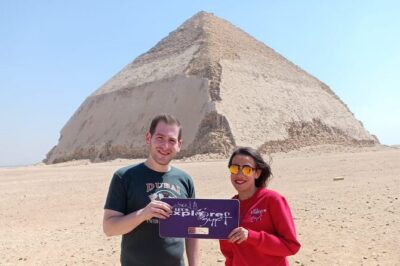
Dahshur gives you the most readable lesson in ancient building experiments. The Bent Pyramid was built for Snefru, father of Khufu, the king usually called Cheops. Its lower section rises at a steep angle, then the angle becomes shallower higher up.
The tour explains this as a construction change made by the architect. The altered profile is why the pyramid looks bent. It is one of the rare ancient monuments where you can see an adjustment in the original design rather than simply hearing about one.
You may also enter the Bent Pyramid’s interior, which the tour says is empty. That matters because the outside gives you the engineering story, while the inside gives you a sense of the practical challenge. Expect confined passages and an austere interior rather than treasure or decoration.
The stop is scheduled for about an hour, and the admission ticket is not included. Since there are several paid sites in the day, make sure you know whether the listed $40 covers only transport and guiding or also any local site charges. The information supplied clearly says entrance fees are extra, so carry money for the tickets and a tip if the service suits you.
The Red Pyramid, Snefru’s successful design
The Red Pyramid is the next important step in the sequence. It was also built for Snefru, and the tour presents it as the first true pyramid with a consistent, successful angle. Its warm stone gives the monument its familiar name.
This is likely the most useful stop for anyone curious about how the Giza pyramids came to be. You see a full pyramid form before reaching Giza, so the later monuments no longer seem to appear from nowhere. The Red Pyramid also lets you compare an early smooth-sided pyramid with the larger, more famous structures across the river valley.
The tour includes the chance to go inside the Red Pyramid. That is a real physical experience, not just a photo stop. You will deal with narrow access and internal passages, and you should be comfortable with that before choosing to enter. The supplied information describes the interior as very cold, but it does not give details about ventilation, lighting, or the length of the passage.
Allow about an hour here. The ticket is extra. If you want to enter both the Red Pyramid and a Giza pyramid, ask which admissions your guide recommends and how much time each interior visit will take. The day has many stops, and every extra entry uses part of the schedule.
A completely different sort of day in Giza:
- VIP All inclusive Best of the best Giza Pyramids,Sakkara,Memphis
★ 5.0 · 3,164 reviews - From Cairo: Pyramids of Giza, Sphinx, Saqqara & Memphis Tour
★ 4.7 · 3,110 reviews - Cairo 8 Hour Private Tour of Pyramids, Egyptian Museum and Bazaar
★ 5.0 · 2,931 reviews - From Cairo: Half-Day Tour to Pyramids of Giza and the Sphinx
★ 4.6 · 2,891 reviews
Giza’s Great Pyramid and the scale of the stones
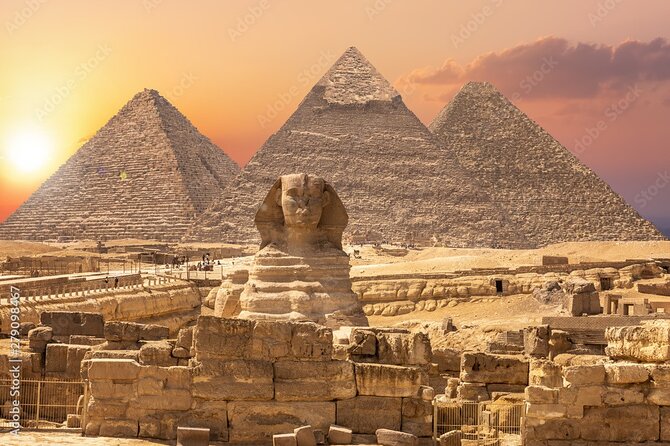
Giza is the grand finale, with about two hours allocated to the pyramid area. King Khufu built the Great Pyramid, called Cheops in the tour description, after the earlier work connected with his father Snefru.
Your guide will discuss the scale of the monument, including the huge number of stone blocks and the work needed to move materials along the Nile. The description gives figures of roughly one million stones and two million tons. Exact estimates vary, so treat these as an explanation of the monument’s size rather than a measurement you need to memorize.
The practical value of a private guide is strongest here. At Giza, you need help turning a massive view into a readable one. Your guide can point out the differences among Khufu’s Great Pyramid, Khafre’s pyramid, and Menkaure’s smaller pyramid, then explain how later builders improved the familiar smooth-sided form.
The tour promises good photo opportunities and discussion of the stone blocks, pillars, and construction methods. It does not state that every pyramid interior entry is included. If entering Khufu’s pyramid is important to you, confirm the ticket and timing before booking, since admission fees are excluded and the itinerary already includes several sites.
The setting can also feel demanding. Two hours may pass quickly when you want photographs, explanations, and an interior visit. If you prefer a slower look at one monument, this schedule may feel rushed. If your priority is seeing the major pyramid stages in one day, the pace is the point.
The Great Sphinx and its mixed symbols
The Great Sphinx gets about an hour. The tour presents it as a guardian of the pyramids, with the body of a lion and the human face of King Khafre, also called Kefren. That combination represents royal intelligence and physical power in the guide’s explanation.
You will hear the familiar story of the Sphinx having been covered by sand, with its nose broken and beard damaged or lost. The site also includes discussion of Khafre’s sun temple, the role of Ra, and a wishing well where you can toss a small coin. These details give the stop a more personal and story-driven feel, though the wishing well should not be confused with a formal ancient ritual.
The Sphinx is one of the best places to take photographs, but an hour is not generous. Use the first part of the stop to listen, then leave time for your own view. The tour’s description says admission is not included, so budget for that separately.
I would also ask the guide to separate what is visible from what is traditional interpretation. The face, lion body, temple remains, damaged features, and surrounding stone are things you can inspect. Claims about energy, wishes, and the monument’s exact spiritual function need more careful explanation.
The big museum, and one point to confirm
The tour description also promises a visit to the big museum, with coffins, jewelry, gold, statues, masks, images of different gods, and many other ancient objects. For a first Cairo visit, this adds a useful indoor counterpoint to the open-air pyramid sites.
Museum collections can make the monuments easier to understand. A coffin or mask shows how ancient Egyptians pictured the dead person. Jewelry and gold reveal the status of royalty. Statues and divine figures help you connect the tombs and temples with the beliefs your guide describes at Saqqara, Dahshur, and Giza.
There is one practical wrinkle: the detailed stop list names Giza, the Sphinx, Saqqara, the Bent Pyramid, and the Red Pyramid, but does not give the museum its own timed stop. If the museum is essential to your plans, confirm that it is included on your date and ask how long you will spend there. An eight-hour day can accommodate a great deal, but it cannot give every site unlimited time.
The museum entrance is also not listed among the included services. Since the general policy excludes admission fees, ask whether the museum ticket is separate from the pyramid tickets.
Transport, guide style, and the pace of the day
This is a private tour, so only your group participates. That is a meaningful advantage in Cairo. You can ask questions, adjust the order if local conditions require it, and avoid waiting for a large group to assemble at every stop.
Hotel pickup and drop-off are included, along with private transportation and bottled water. The listed start time is 8:00 am, and the full outing takes about eight hours. The schedule is long enough that the vehicle becomes part of the experience, giving you a place to rest between Saqqara, Dahshur, and Giza.
Morsi is one guide identified in the tour’s detailed feedback. His strengths were explaining the sights and helping with photographs. If you are assigned another guide, the experience may differ, since private tours depend heavily on the individual guide’s style.
The tour operator is active in confirming arrangements, but communication can be overenthusiastic. One poor account describes repeated messages after a booking confirmation was not answered quickly. If you prefer quiet, direct communication, give the operator one clear reply with your hotel, pickup time, and questions about tickets.
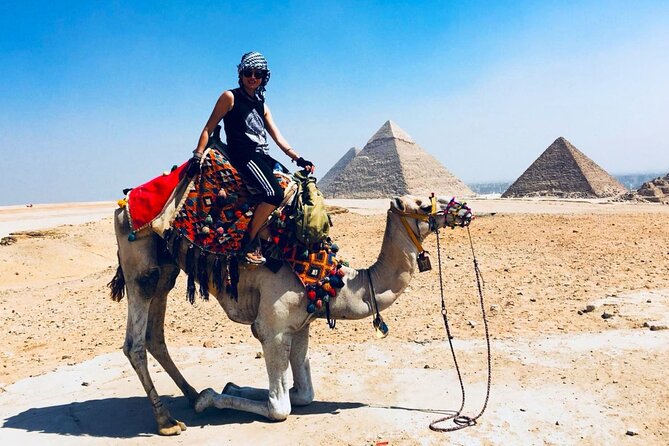
A camel ride and entry into the tunnels of Khufu’s pyramid and the Red Pyramid are also described in one account connected with the experience. Because those activities are not clearly listed in the included services, treat them as options to verify, not guaranteed inclusions.
What the $40 price really buys
At $40 per person, the tour offers good potential value if your aim is broad coverage with private transport. You are paying for a full day of guiding and driving, not for a single monument ticket. Hotel pickup removes the need to arrange separate transport between three archaeological areas.
The price is less simple once you add admissions and tips. The Bent Pyramid, Red Pyramid, Sphinx, museum, and any Giza interior entry may involve separate charges. The supplied information does not provide a ticket total, so ask for a current estimate before you commit.
Group discounts are offered, which can improve the value for a family or small party. Most people can participate, and service animals are allowed according to the booking information. No special mobility details are given, so ask the operator about the conditions at each site if you need that information.
Free cancellation is available until 24 hours before the start time. Changes or cancellations inside that window are not accepted for a refund, and a minimum number of participants is required for the experience to operate. Since this is a private activity, confirm the exact pickup point and museum plan early.
Who should book this experience
I would choose this tour if you have one full day in Cairo and want the complete pyramid progression rather than a slow visit to Giza alone. It suits first-time visitors who want a guide to explain the connection among Saqqara, Dahshur, and Giza.
It is also a good fit if you value a private car, hotel pickup, and the freedom to ask questions. Families and small groups may find the group discount useful, especially when the transport and guide cost is shared.
I would hesitate if you want a carefully paced museum visit with plenty of time for individual galleries. I would also hesitate if your main goal is to enter several pyramids, since the tickets are extra and the day already contains many stops.
Should you book it?
Book this tour if you want a busy, educational day that follows pyramid design from Djoser to Snefru to Khufu. The route gives you more context than a standard Giza-only outing, and private transport makes the long distances manageable.
Before paying, confirm four points: the exact museum included, the admission costs, which pyramid interiors are available, and whether any camel ride is part of the price. If those details suit your plans, the $40 base price can be a sensible way to cover Cairo’s major pyramid sites in one day.
FAQ
How long does the tour last?
The tour lasts approximately eight hours and begins at 8:00 am.
Is hotel pickup included?
Yes. Hotel pickup and drop-off are included, along with private transportation and bottled water.
Is this a private tour?
Yes. Only your group participates in the activity.
Are entrance tickets included?
No. Entrance fees are not included, and tipping is also separate.
Which pyramid sites are included?
The route includes Djoser’s Step Pyramid at Saqqara, the Bent Pyramid, the Red Pyramid, the Giza pyramids, and the Great Sphinx.
Can I cancel for a full refund?
Yes, if you cancel at least 24 hours before the experience begins. Cancellations or changes made less than 24 hours before the start time are not refunded.
Just added in Giza
- Private Tour: Pyramids of Giza Memphis Saqqara with Lunch★ 5.0 · 85 reviews
- Private Pyramids, Saqqara and Memphis full day tour★ 5.0 · 15 reviews
- Pyramids, Sphinx, Memphis and Saqqara Full Day Private Tour★ 5.0 · 21 reviews
- Pyramids of Egypt full day tour: Great Pyramids of Giza, Saqqara & Memphis★ 5.0 · 36 reviews
- Giza Pyramids & sphinx ,Saqqara(step pyramids,Dahshour (red and bent pyramids)★ 5.0 · 28 reviews
- Private Tour to Great Pyramids of Giza and Sphinx★ 5.0 · 15 reviews
- Pyramids, Sphinx, Egyptian Museum And khan El Khalili Day Tour★ 5.0 · 25 reviews
- Full Day Guided tour to the Pyramids, Sphinx, Meidum And Dahshur★ 5.0 · 30 reviews
Giza Tours, compared.

Pyramids & Great Sphinx Private Tour with Camel Ride
Read our review →
Tour to Giza Pyramids and The Egyptian Museum
Read our review →
VIP All inclusive Best of the best Giza Pyramids,Sakkara,Memphis
Read our review →
Pyramids of Giza, Sphinx, Saqqara & Memphis Tour
Read our review →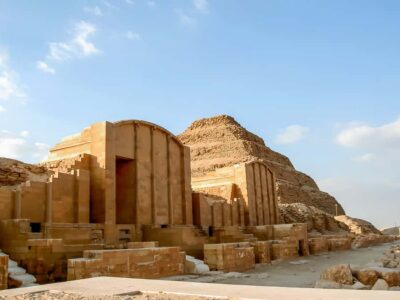
Cairo Pyramids, Sphinx & Egyptian Museum Day Trip
Read our review →