
Reviewed · VALLEY OF THE KINGS TOURS
From Hurghada Individual excursion to Luxor & the Valley of the Kings
Luxor packs some of Egypt’s greatest ancient sites into one long day. From Hurghada, you’ll cross the Nile Valley, walk through the vast Karnak Temple, enter three royal tombs, and finish at Hatshepsut’s striking terrace temple. The early start is tough, but it gives you a full day where the ancient world takes center stage.
I especially like the small group of up to eight and the presence of an Egyptologist from start to finish. I also like that the price includes transport, lunch, and entrance fees, with no scheduled bazaar stop. The main drawback is the four-hour drive each way, so this suits you only if you are ready for a very full day.
Key points
- A 5 a.m. pickup makes Luxor possible in one day from Hurghada, but expect about 14 hours from hotel to hotel.
- Karnak Temple gives you the grandest opening, with two hours to explore Egypt’s largest temple complex.
- Three tombs are included in the Valley of the Kings, where the painted rooms are often more memorable than the famous name alone.
- A German-speaking Egyptologist guides the day, with guides such as Marian, Gerges, Nash, Ismail, Obi, and Naschaat named in past arrangements.
- The group is capped at eight people, offering more room for questions than a large coach excursion.
- The $221 price covers the main costs, including private transport, lunch, entrance fees, local taxes, and hotel pickup.
Why the long road from Hurghada is worth it
The distance is the central fact to understand before booking. You leave around 5 a.m., then spend roughly four hours passing fields, villages, and farmhouses along the Nile Valley. It is not a quick side trip to Luxor. It is a full-day expedition with a long ride on both ends.
I would still choose this tour if Luxor is high on your Egypt list. Hurghada gives you the Red Sea, but Luxor gives you the temples and tombs that explain why ancient Egypt remains so compelling. Seeing both in one holiday makes sense, especially if you do not have time for an overnight stay.
The road journey also gives your guide a useful chance to explain the region and outline the day. Past arrangements have included drivers such as Carlos, Mina, Helal, and others, with two drivers sometimes sharing the long drive. The practical benefit is simple: you can settle in, ask questions, and focus on the sights once you reach Luxor.
The private format is worth clarifying. This is a private activity for your booking party, but the transport can include a small group of up to eight people. That is much more personal than a large sightseeing coach, while still keeping the price below what a completely private car and guide might cost for a couple.
More Valley of the Kings tours in Luxor:
- Hurghada: Luxor Valley of the Kings & Tutankhamun Tomb Trip
★ 4.7 · 13,208 reviews - Luxor Day Trip from Hurghada Small Group & Tutankhamun Tomb
★ 4.8 · 5,366 reviews - Small group Hurghada to Luxor, Valley of the Kings by Van
★ 4.5 · 2,470 reviews
Karnak Temple: begin with Egypt at full scale
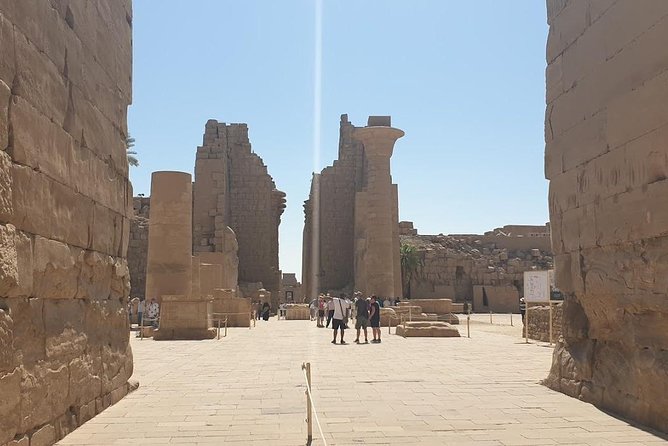
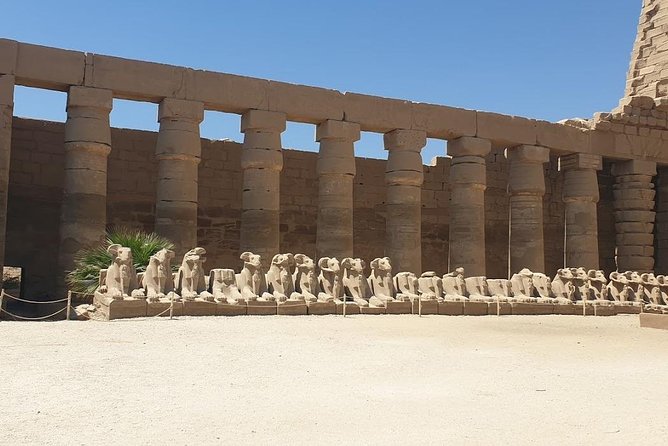
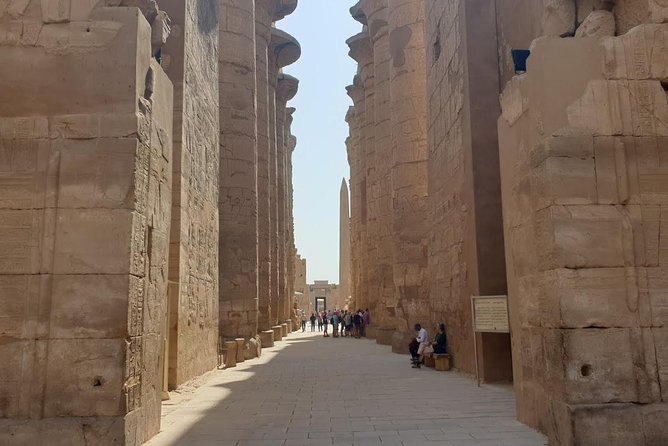
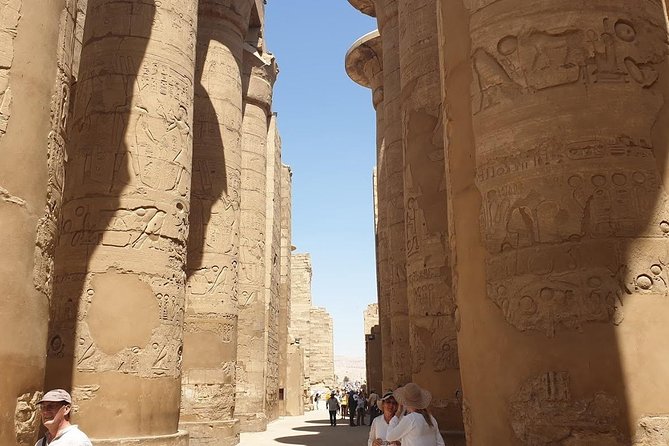
Karnak is the morning’s first major stop, and that is a smart choice. Located on Luxor’s east bank, it is the largest temple complex in Egypt. You need about two hours here, and even that only gives you a strong introduction rather than a complete look at every part.
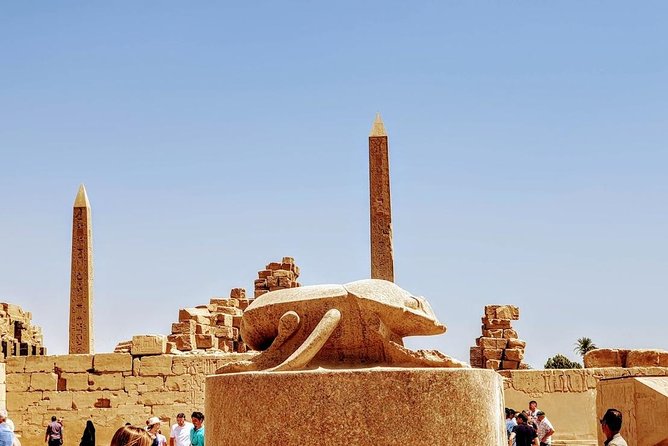
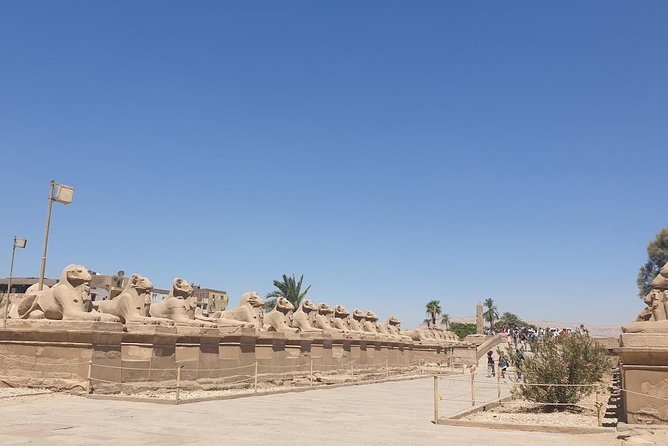
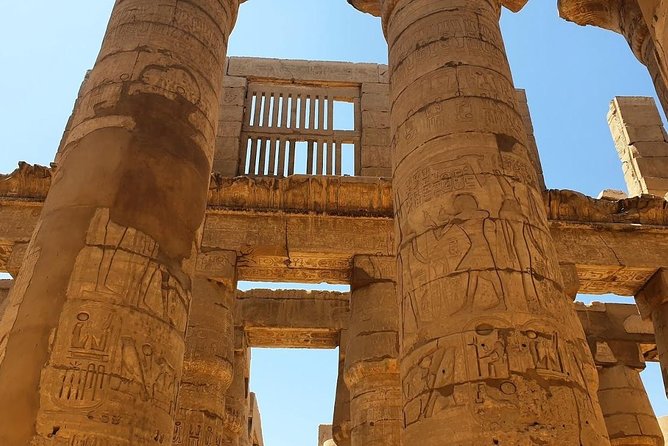
What makes Karnak special is its sheer scale. This is not one isolated building that you view from a single courtyard. It is a large religious complex with multiple areas shaped by generations of Egyptian rulers. Your guide helps turn the columns, gateways, courtyards, and inscriptions into a story instead of a sequence of impressive stones.
I would stay close to the Egyptologist here. A guide such as Gerges, Obi, Ismail, or Naschaat can point out details you could easily miss when moving through the complex alone. The value is not just the facts. It is knowing where to look, what a particular relief represents, and how the temple functioned as a religious center.
Two hours should feel substantial, but Karnak can also leave you wishing for more time. If you like taking photographs slowly or stopping at every carved surface, you may need to accept that this is a highlights visit. The payoff is that the day continues to three other major sites rather than using the whole morning on one complex.
Wear practical shoes and bring water for the walking portions. Drinks are not included at lunch or elsewhere, and personal expenses are your responsibility. Since the day begins early, having water with you from the start is sensible.
Lunch and the rhythm of the day
Lunch is included, which removes one small but annoying decision from a packed schedule. Drinks at the restaurant are not included, so keep some money available if you want something beyond the meal provided.
The exact restaurant details are not specified, and I would not book this expecting a long culinary experience. Think of lunch as a useful break between the east bank and the west bank sights. You can rest, eat, and prepare for the tombs and temples still ahead.
That pause matters. Karnak requires a lot of standing and walking, while the Valley of the Kings and Hatshepsut also involve time outside. A meal in the middle helps divide the day into manageable sections.
The Valley of the Kings: three tombs below the Theban hills
After lunch, you cross to the west bank and head to the Valley of the Kings, about five kilometers northwest of Luxor. The valley contains more than 70 rock-cut tombs, including the burial places of rulers from Egypt’s New Kingdom, roughly 1550 to 1069 BC.
The included admission covers three burial chambers. This is an important detail. You are not simply looking at the valley from outside. You get to enter three tombs, where the painted walls and passages provide the day’s most intimate encounter with ancient Egypt.
Each tomb is a different experience, but the tour does not specify which three are selected. Tutankhamun’s tomb is not listed as an included visit, and any additions not named in the program are excluded. If entering that tomb matters to you, ask about the current arrangement before you go and be prepared for an extra cost if applicable.
The valley’s story adds weight to what you see. Royal burials were placed underground to protect the bodies and grave goods. Many mummies were later removed and hidden elsewhere, helping explain why some tombs were found empty and why Tutankhamun’s discovery in 1922 became so important.
I like having an Egyptologist here more than at almost any other stop. Without context, a tomb can seem like a narrow corridor with faded color. With a good explanation, the painted scenes become a guide to royal beliefs, burial customs, and the journey into the afterlife.
The practical limitation is heat and enclosed space. You will move between open areas and tomb entrances, and the day can feel tiring by this point. Take the time to listen, but do not feel you must study every wall at length. Three tombs provide a good balance for a single-day visit from Hurghada.
A few more days out in Luxor to weigh up
- Hot Air Balloon Ride in Luxor Egypt with Transfers Included
★ 5.0 · 4,319 reviews - Luxor: Shared Full-Day Tour to Luxor West and East Banks
★ 4.5 · 1,812 reviews - Luxor: Hot Air Balloon Ride over Luxor Relics
★ 4.8 · 1,681 reviews - Luxor Day Tour: Valley of Kings & Queens & Hatchepsut Temples
★ 5.0 · 1,496 reviews
The Colossi of Memnon: a brief stop with a big silhouette
The Colossi of Memnon take only about 10 minutes, so keep your expectations in proportion. These two seated statues represent King Amenophis III and rise about 18 meters, including their bases. They face toward the Nile and once formed part of a larger royal complex.
This is mainly a photo and orientation stop. You can get out, see the statues up close, and appreciate their scale without spending another hour on a formal temple visit. After the enclosed tombs, the open space also gives you a quick chance to stretch your legs.
The short timing means you will not study every detail. I see that as a reasonable trade. Luxor has far more important places to give your time to, and the Colossi still earn their place because they provide an immediate sense of the size and ambition of royal monuments.
Hatshepsut’s temple and the final major view
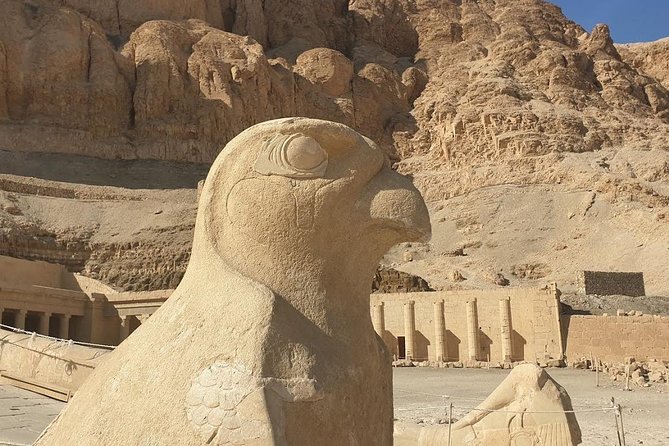
The last main visit is the mortuary temple of Hatshepsut at Deir el Bahari. Built in limestone, it is one of the best-preserved temples on Luxor’s west bank. Its broad terraces and strong horizontal lines make it look very different from Karnak and the rock-cut tombs.
Hatshepsut ruled during Egypt’s 18th Dynasty, traditionally dated to 1479 to 1458 BC. Her temple reflects a royal building program designed to honor her connection with Amun and to establish her place among Egypt’s kings. The site is also a useful reminder that women could hold the highest authority in ancient Egypt.
I like the order of this stop. After the dense carvings at Karnak and the narrow tombs, Hatshepsut’s temple opens the day back into wide terraces, cliffs, and long views. You get about an hour here, enough to understand the design and hear the main story without turning the final stop into another endurance test.
The terrace layout is the visual reward. From below, the temple climbs in ordered levels toward the rock face. It is easy to see why this is one of the west bank’s essential stops, even if you have already visited several monuments that day.
What the guide adds to the experience
The guide is not an optional extra here. The tour is built around an Egyptologist who stays with you throughout the visits and answers questions along the way. A German-speaking guide is specifically described, and past arrangements have included Marian, Gerges, Nash, Ismail, Obi, and Naschaat.
That range of names means you should not book expecting one specific person unless the operator confirms it. What you can reasonably expect is a German-speaking Egyptologist assigned to your departure. The quality of the day depends heavily on how well that person explains the monuments and manages the timing.
A useful feature is the reported lack of forced bazaar stops. The schedule is already tight, so avoiding unrelated shopping visits protects your time at Karnak, the valley, and Hatshepsut’s temple. You can use the day for the places you came to see.
Past arrangements have also allowed individual requests, though the standard program remains fixed around the four main sites. You can ask questions and raise reasonable preferences, but do not assume every change is possible during a 14-hour trip.
Is $221 a fair price?
At $221 per person, this is not the cheapest way to reach Luxor from Hurghada. It is also not an unreasonable price once you count what is included: private transportation, hotel pickup, an Egyptologist guide, lunch, entrance fees to the listed sites, local taxes, and the small-group format.
The value is strongest for couples, families, or small parties that want a guided day without joining a large coach. You are paying for convenience as much as admission. Someone else handles the long road journey, the sequence of stops, and the transfer between Luxor’s east and west banks.
The price is less attractive if you prefer to travel slowly or if you already have transport and a guide arranged. It also does not cover drinks, personal spending, or additions outside the stated program. The three included tombs are part of the value, but extra attractions may cost more.
For a first visit to Luxor from Hurghada, I think the package is sensible. You receive the core sights rather than a thin overview, and the guide helps you understand what you are seeing. The real cost is your energy, not just your money.
Who should book this day trip?
I would recommend it to you if:
- Luxor is a priority, but you do not want to change hotels.
- You want the main ancient sites explained by an Egyptologist.
- You prefer a small group to a large coach.
- You are comfortable with a 5 a.m. start and a long return journey.
- You want entrance fees and lunch handled in advance.
- You have limited time in Egypt and need to cover several major sites in one day.
I would think twice if you dislike long drives, struggle with early mornings, or want to linger at every monument. An overnight Luxor visit would give you a calmer pace, but it would require more time and a different booking.
The tour is suitable for most people according to the supplied participation information, but the day still involves walking, standing, outdoor exposure, and moving through tombs. If anyone in your group has specific mobility needs, ask the operator before booking rather than assuming the schedule will be easy.
Free cancellation is available up to 24 hours before the start time. Changes or cancellations inside that window are not accepted for a refund. Poor weather or failure to meet the minimum number of participants can lead to a different date or a full refund.
Should you book the Hurghada to Luxor tour?
Book it if you want Luxor’s biggest sights in one organized day and you value an Egyptologist more than free time. Karnak, three Valley of the Kings tombs, the Colossi of Memnon, and Hatshepsut’s temple make a strong first look at ancient Luxor.
The decision comes down to stamina. You will leave before sunrise, spend about four hours on the road each way, and return with a head full of temples and tombs. For many people, that is a fair exchange for seeing Luxor without giving up a night on the Red Sea coast.
FAQ
What time does the tour start?
Pickup takes place in the early morning at around 5 a.m. from your hotel in Hurghada.
How long does the experience last?
The full experience lasts approximately 14 hours.
How long is the drive from Hurghada to Luxor?
The journey to Luxor takes about four hours.
Is hotel pickup included?
Yes. Pickup is offered, and private transportation is included.
How many people are in the group?
The small group has a maximum of eight people. The activity is private, meaning only your booking group participates in the private activity arrangement.
Is a guide included?
Yes. An Egyptologist guide accompanies you throughout the day. A German-speaking guide is specified.
Which places are included?
The program includes Karnak Temple, three burial chambers in the Valley of the Kings, the Colossi of Memnon, and the Temple of Queen Hatshepsut.
Are entrance fees included?
Yes. Entrance fees for the listed activities are included.
Is lunch included?
Yes. Lunch is included, but drinks at the restaurant are not included.
Can I cancel for a full refund?
You can cancel up to 24 hours before the experience starts for a full refund. Cancellations or changes made less than 24 hours before the start time are not accepted for a refund.
Just added in Luxor
- Private Trip To Luxor from Cairo by Plane★ 5.0 · 22 reviews
- Luxor Private Day Trip from Cairo by Plane★ 4.5 · 69 reviews
- Private Day Tour To Luxor from Cairo by Plane,Tours,Sailing Felucca,Camel&Lunch★ 5.0 · 45 reviews
- Private Day Tour To Luxor from Cairo by Plane★ 4.5 · 41 reviews
- Package 8 Days 7 Nights To Jewels of Egypt, Luxor & Aswan Tour★ 5.0 · 29 reviews
- Package Cairo & Alexandra & Luxor & Aswan★ 5.0 · 39 reviews
- Overnight Luxor Tours by train from Cairo with Hot Air Balloon and much more★ 5.0 · 29 reviews
- Private Luxor Day tour from Cairo by Flight★ 5.0 · 25 reviews
Valley of the Kings Tours, compared.

Luxor Valley of the Kings & Tutankhamun Tomb Trip
Read our review →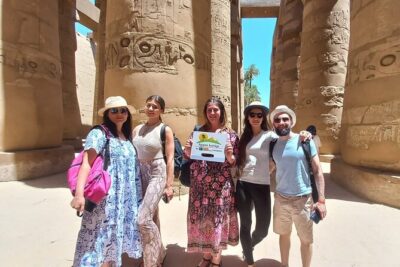
Small group Hurghada to Luxor, Valley of the Kings by Van
Read our review →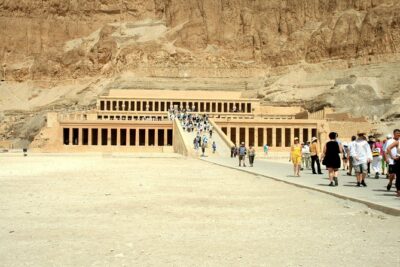
Luxor Day Tour: Valley of Kings & Queens & Hatchepsut Temples
Read our review →
Small-Group Luxor Highlights & Tut Tomb Day Tour
Read our review →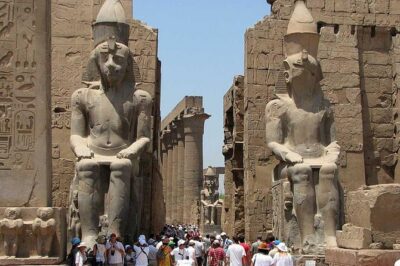
Valley of Kings, Hatchepsut Temple ,Karnak & Luxor-DayTour
Read our review →Browse the lists this tour appears in