
Reviewed · NILE CRUISES
From Cairo: 3-Nights Nile Cruise Luxor, Aswan by Flights
Abu Simbel is the big draw here, but the real pleasure is the steady rhythm of the Nile: temple, river, meal, temple, then another slow stretch of water. I especially like the Aswan to Luxor sailing route, which links several major Pharaonic sites without making you repack every night. The hot-air balloon flight over Luxor adds a rare view of the Valley of the Kings.
I also like the practical mix of flights, transfers, meals, guides, and lodging in one package. Guides such as Mohamed Gobran and Mahmoud have been praised for clear explanations and calm organization. The trade-off is a punishing schedule, with a 4:30 am Abu Simbel departure and a 5:00 am balloon pickup. Flight information can also arrive late, so this trip rewards flexible, patient planners.
Key points to know before booking
- Abu Simbel requires a 4:30 am start, but the early arrival gives you cooler conditions and more room around the temples.
- The cruise sails from Aswan to Luxor, stopping at Kom Ombo and Edfu along the way.
- The hot-air balloon ride lasts about 30 to 45 minutes and offers an aerial view of Luxor’s west bank.
- Mohamed Gobran is a particularly strong guide, praised for his history explanations, humor, and group management.
- The $1,100 price includes domestic flights, three cruise nights, meals, transfers, and guided sightseeing, but entrance fees, drinks, and tips cost extra.
- The four days are tightly packed, so this suits you if you want maximum sightseeing rather than long, lazy mornings.
Why this four-day Nile route works
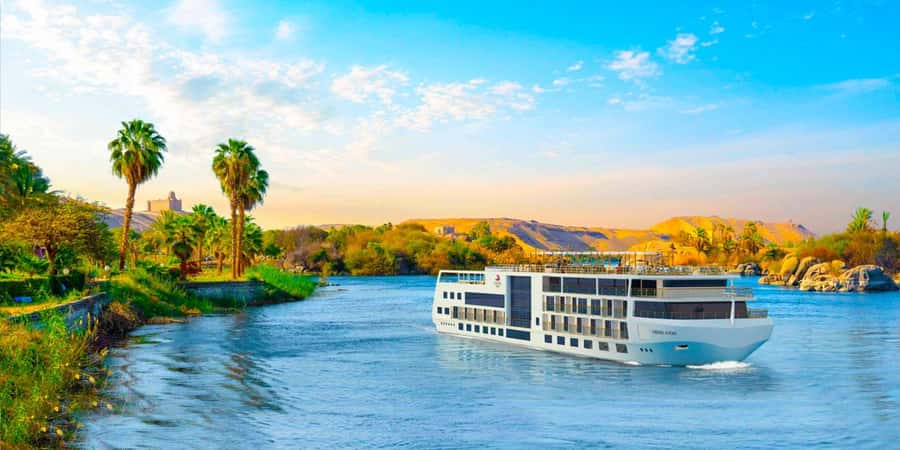
This is a compact Egypt program built around movement by river. You begin in Aswan, board the ship before lunch, sail north through Upper Egypt, and finish with Luxor’s major monuments before flying back to Cairo.
That route matters. Instead of spending four days on roads between separate hotel bases, you keep one cabin and let the Nile carry you between the sites. Your daytime views include riverbanks, villages, desert edges, farmland, and passing boats. The cruise itself becomes part of the sightseeing, not just a place to sleep.
The price is $1,100 per person. That is not a budget trip, but the package includes Cairo to Aswan and Luxor to Cairo flights, three nights on a five-star cruise, full-board meals, air-conditioned transfers, an English-speaking Egyptologist, and the hot-air balloon flight. You still need to budget for entrance fees, tips, drinks, and anything not listed.
One important cost detail came up during the trip: entrance fees were handled at about $105 per person, while cruise crew tips were about $15 per person. Treat those figures as useful planning guidance rather than a guaranteed fixed total.
More Nile cruises to weigh up:
- 4-Days Nile Cruise From Aswan To Luxor including Abu Simbel and Hot Air Balloon
★ 5.0 · 3,142 reviews - 4-Day 3-Night Nile Cruise from Aswan to Luxor&Abu Simbel+Balloon
★ 5.0 · 2,023 reviews - 4-Day 3-Night Nile Cruise from Aswan to Luxor including Abu Simbel, Air Balloon
★ 4.5 · 612 reviews
Day 1: Philae and the first Nile views from Aswan
Your representative meets you at Aswan Airport, the railway station, or your Aswan hotel, then takes you by air-conditioned vehicle to the ship. Check-in is scheduled before lunch, followed by your first meal on board.
The opening visit is the Aswan High Dam, completed in 1960 to control the Nile floods and generate electricity. It is a modern engineering stop, not an ancient monument, but it helps explain why the river looks and behaves differently today. The dam changed farming, settlement, and the yearly flood cycle across Egypt.
Next comes Philae Temple, reached by small motorboat. That boat ride is part of the charm. The temple complex sits on an island and was dedicated mainly to Isis, one of ancient Egypt’s most important goddesses. Its surviving walls combine Egyptian and Greco-Roman work, so you can see the long life of the site in its columns, reliefs, and later additions.
Your guide should help make sense of the carvings rather than simply point out names. Mohamed Gobran has received especially strong praise for explaining the monuments in clear English and adding enough humor to keep a long day moving.
Back on the ship, dinner is followed by a folkloric show. The vessel is described as clean and comfortable, with tidy rooms, friendly crew, and a buffet with good variety. Drinks are not included, including water, so keep some extra cash available on board.
Day 2: Abu Simbel before breakfast, then Kom Ombo
The Abu Simbel morning begins around 4:30 am, with a shared small-group transfer from Aswan. This is the hardest wake-up of the trip, but it serves a purpose. The temples are far from the usual Aswan sightseeing route, and an early start helps you reach them before the worst heat.
You arrive at about 8:00 am for the rock-cut temples of Ramses II and Queen Nefertari. The great seated figures of Ramses II at the entrance are the image most people know, but the inside halls are just as important. Your guide can point out the battle scenes, royal images, and religious figures carved into the walls.
The temple of Nefertari is a rare and valuable part of the visit. It gives the queen an unusually prominent place beside Ramses II, with large figures and carefully decorated rooms. The pair of temples also tells a modern story, since they were moved during the creation of Lake Nasser. The rescue effort is part of why these monuments remain accessible today.
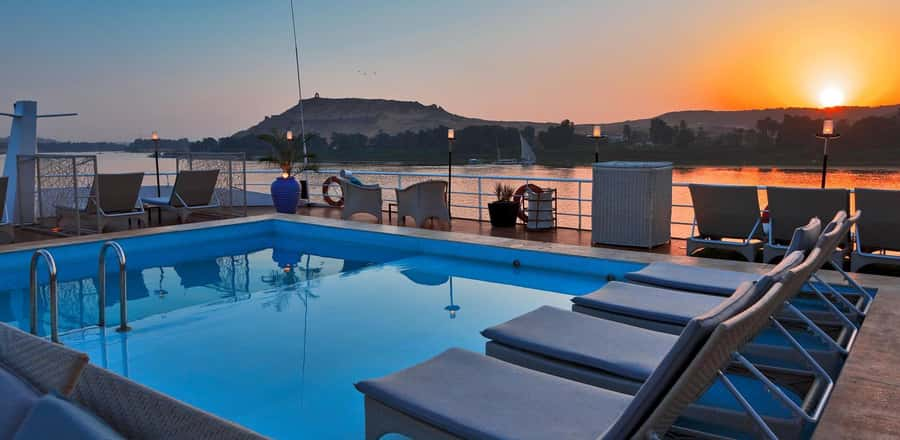
You return to the cruise around noon for lunch, then sail toward Kom Ombo. This change of pace is welcome. After the early start, you can sit on the sundeck, watch the banks slide by, and recover before the afternoon visit.
Kom Ombo is unusual because it is a dual temple. One side is connected with Sobek, the crocodile god, while the other is linked with Horus, the falcon god. The layout gives your guide a useful way to explain how different gods and religious roles could share one complex.
The visit is often timed near the end of the day, when the light is softer. Afterward, the ship continues toward Edfu for the night. This is a full day, but Abu Simbel is the reason many people choose this cruise, and it earns the early alarm.
Day 3: Edfu by horse carriage and the Esna crossing
After breakfast, you travel by horse carriage with your guide to the Temple of Horus at Edfu. The carriage is practical here because the temple is away from the river dock, but the ride can feel rough and busy compared with the calm of the ship.
Edfu is one of Egypt’s best-preserved temples. Its huge entrance pylons, enclosed courtyards, columns, and wall carvings give you a strong sense of what a complete Egyptian temple looked like. Many ancient sites survive as fragments. Edfu lets you see the full sequence from entrance to inner sanctuary.
The temple is dedicated to Horus, shown as a falcon-headed god. The reliefs are detailed, and your guide’s explanations matter because the walls can look like a wall of symbols without context. Mohamed Gobran and Mahmoud have both been praised for giving clear site explanations and helping people make sense of the stories.
Back aboard, the day becomes slower. Lunch is served while you sail toward Luxor, and you can spend time on deck watching the river scenery. The ship crosses the Esna Lock, a piece of working Nile infrastructure that briefly interrupts the journey. Afternoon tea is served on the sundeck before you reach Luxor.
If the ship docks around 3:00 or 3:30 pm, there may be enough time to visit both Karnak and Luxor Temple. If arrival is later, the planned visit is Luxor Temple. This timing is one reason not to treat every advertised stop as a guarantee of equal time. River traffic and the lock can affect the day.
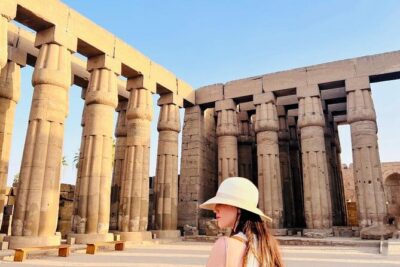
Luxor Temple is especially appealing late in the day. Its columns, statues, and avenue approach are often shown under evening light, and the site has layers beyond the Pharaonic period. Ancient Egyptian, Christian, and Islamic features all appear in and around the monument.
Dinner and a belly-dancing show follow on board. You then spend the night in Luxor, with an early alarm waiting for the next morning.
More boat trips in the Nile Valley:
- From Aswan: 4-Day Nile Cruise from Aswan to Luxor with Guide
★ 4.1 · 593 reviews - 4-Days Nile Cruise From Aswan To Luxor including Abu Simbel and Hot Air Balloon
★ 4.5 · 509 reviews - 4-Day 3-Night Nile Cruise from Aswan to Luxor – Private Tour
★ 5.0 · 369 reviews - 4 Days Nile Cruise from Aswan to Luxor including Abu Simbel and Hot Air Balloon
★ 4.5 · 356 reviews
Day 4: Balloon flight, royal tombs, and Karnak
Pickup for the hot-air balloon flight begins around 5:00 am. The flight itself lasts about 30 to 45 minutes and gives you a view of Luxor’s west bank from above. You can see the fields, desert, temples, and the general shape of the Nile valley in one glance.
Wind can cancel the flight. This happened on one trip, with a refund of $25 per person. That is worth keeping in mind if the balloon is the main reason you book. It is a memorable addition when conditions allow, but it should not be treated as guaranteed.
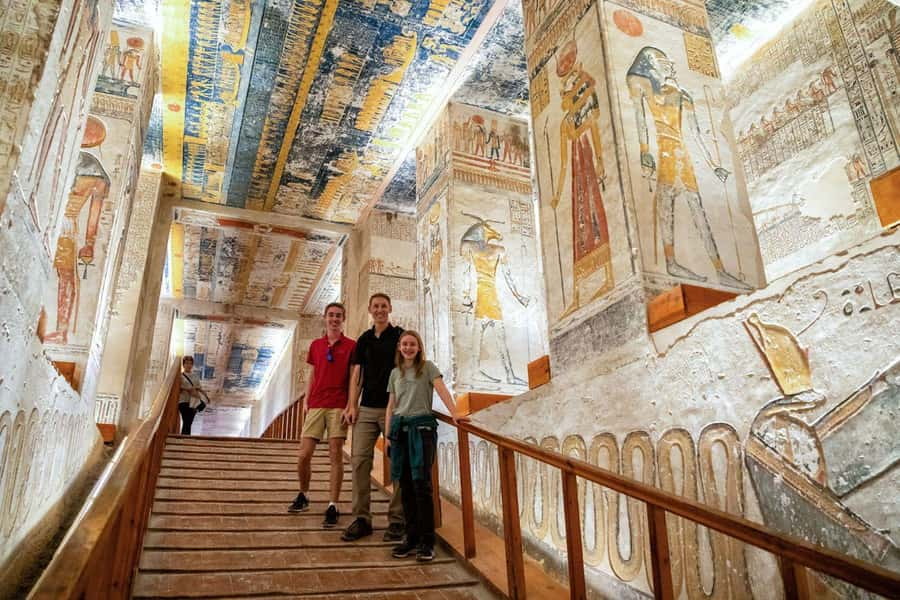
After the balloon experience, you visit the Valley of the Kings. Pharaohs of the New Kingdom carved tombs into the hills here to hide royal burials and their treasures. The valley is not about grand exterior buildings. Its importance lies underground, in painted corridors and burial chambers built for the afterlife.
Your ticket arrangements and the number of tombs open can affect exactly what you see, so listen carefully to your guide. The heat, uneven ground, and early start can also make this visit tiring. Still, the Valley of the Kings is one of the essential Luxor stops.
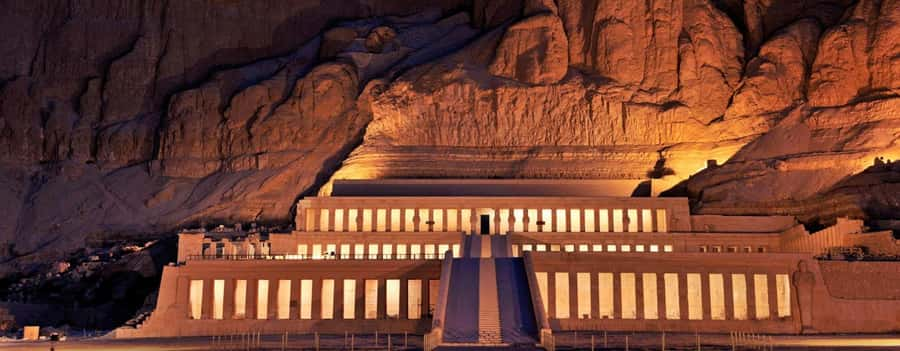
The Mortuary Temple of Hatshepsut comes next at Deir el-Bahari. Its broad terraces rise against the cliffs, creating one of the most striking settings in Luxor. Your guide can explain Hatshepsut’s unusual path to power and her relationship with her nephew, who later succeeded her.
A photo stop at the Colossi of Memnon ends the west-bank visits. These enormous seated statues once guarded a much larger temple complex. You do not spend long here, but the scale makes it a useful quick stop.
Lunch at a local restaurant is optional. If you are already tired, you may prefer to keep the meal simple and save your energy for Karnak.
Karnak Temple is the final major visit. It grew over roughly 2,000 years and covers about 63 acres, so it is not a quick monument. The hypostyle hall, with its forest of giant columns, is the visual centerpiece. Obelisks, courtyards, gateways, and carved walls show how successive rulers added to the complex.
This final afternoon is demanding, especially after the balloon and west-bank sites. It is also a fitting finish. Philae, Kom Ombo, Edfu, Luxor, and Karnak each show a different side of ancient Egypt, while the Nile links them into one long story.
Guides, group size, and the human side of the trip
The guide can shape this experience more than the ship. Mohamed Gobran is the name most strongly praised for clear English, strong organization, warmth, and a good sense of humor. He has also been credited with helping a large group become friendly and cooperative during four packed days.
Mahmoud has also been praised for being approachable and well informed. Most of the feedback about the guiding is very positive, but there has been one organizational problem: some departures used three different guides, and one guide arrived an hour late for a short tour.
The Abu Simbel outing is shared with a small group. The wider cruise group can be much larger, with one account describing about 40 people. That size can make headcounts and transfers slower, but it can also give the trip a social feel.
Communication with the tour operator is the weaker point. Flight details have arrived less than 24 hours before departure for some bookings, creating avoidable stress. If your schedule is tight, confirm the flight information directly as soon as possible. Some people may prefer to arrange their own Cairo flights, though the package includes them.
Cabin comfort, meals, and extra costs
The cruise is described as simple rather than lavish, but clean and comfortable. Cabins have Nile views, and the ship is reported to sail smoothly. The crew receives strong praise for friendly service and attentive work.
Breakfast, lunch, and dinner are included for the three cruise nights. The buffet offers a good range of food and has generally satisfied people on board. Drinks are extra, and even water is not included, so the advertised full-board plan does not mean every meal expense disappears.
Tips are not included. A practical figure used during the trip was $15 per person for the cruise crew. Entrance tickets are also extra, with a reported total of about $105 per person for the main sights. Add those costs to the headline price when comparing this program with other Nile cruises.
Who should book this Nile cruise?
I would choose this trip if you want to see the main Aswan and Luxor monuments in four days and prefer having transport, guides, lodging, and meals arranged together. It is especially useful if you are short on time in Egypt and want Abu Simbel without building a separate trip around it.
I would not choose it for a slow holiday. The itinerary includes repeated early starts, long sightseeing days, and limited free time. You need to be comfortable walking through major temple sites, riding in vehicles at dawn, and accepting that river timing can change the order of visits.
The best approach is to treat the ship as a comfortable moving base, not a resort. You will have time to rest on deck, but the main purpose is seeing the monuments.
Should you book it?
At $1,100 per person, this is a good-value package if you use the included flights and visit every major stop. Abu Simbel, the balloon flight, three cruise nights, Luxor’s west bank, Karnak, Philae, Kom Ombo, and Edfu would be costly and time-consuming to arrange separately.
Book it if maximum sightseeing and strong guiding matter more to you than sleep and free time. Before paying, ask for the flight schedule, confirm what entrance fees are expected, and set aside money for drinks and tips. If Mohamed Gobran is assigned to your group, you can expect the kind of guide who adds real value to a tightly packed route.
FAQ
How long is the Nile cruise?
The experience lasts four days and includes three nights on board a five-star Nile cruise.
Which route does the cruise follow?
The cruise sails from Aswan to Luxor, with visits to Kom Ombo and Edfu along the way.
Are flights from Cairo included?
Yes. The package includes domestic flights from Cairo to Aswan and from Luxor back to Cairo.
Is Abu Simbel included?
Yes. You travel to Abu Simbel around 4:30 am in a shared small group with an English-speaking guide.
Is the hot-air balloon ride included?
Yes. The package includes a 30 to 45 minute hot-air balloon flight over Luxor. Strong wind can lead to cancellation, with a refund provided in the reported case.
Are meals included on the cruise?
Breakfast, lunch, and dinner are included for the three cruise nights. Drinks, including water, are not included.
Are entrance fees and tips included?
No. Entrance fees and tipping are extra. One trip used figures of about $105 per person for entrance fees and $15 per person for cruise crew tips.
Just added in the Nile Valley
- Egypt 8 Days Cairo,Nile cruise,Luxor,Aswan from Cairo airport★ 5.0 · 79 reviews
- Private Tour: 7 Nights Pyramids & Nile Cruise +Flights from Cairo★ 4.5 · 157 reviews
- 8 Day Cairo Pyramids and Nile cruise and Alexandria All inclusive Private Tour★ 5.0 · 23 reviews
- 7 Days Egypt Tour Package to Cairo and Nile Cruise★ 5.0 · 62 reviews
- 6-Day Egypt Package, Nile Cruise from Aswan to Luxor by Flights★ 5.0 · 18 reviews
- Private 6-Days Egypt Tour Package with Nile Cruise by Flights★ 4.0 · 59 reviews
- Egypt in 9 Days from Saturday to Sunday including tours and Dahabeya Nile trip.★ 5.0 · 21 reviews
- From Cairo 4-Day Nile Cruise to Aswan by Flights& Hot Air Balloon★ 4.5 · 44 reviews
Nile Cruises, compared.
4-Days Nile Cruise From Aswan To Luxor including Abu Simbel and Hot Air Balloon
Read our review →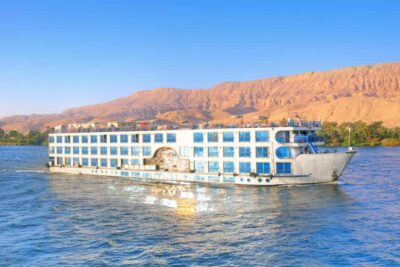
4-Day Nile Cruise from Aswan to Luxor with Guide
Read our review →Browse the lists this tour appears in