
Reviewed · NILE CRUISES
Dahabiya Nile Cruise: Aswan to Luxor – 4 Days/3 Nights
The best part of this four-day dahabiya cruise is the pace. You move along the Nile on a small boat, stop at major temples, and still have time for quiet islands, village scenery, birds, sunsets, and meals on deck. It connects Aswan and Luxor without turning every day into a long bus ride.
I especially like the visits to Gebel el-Silsila and El Kab, sites often left out of shorter Nile programs. I also like that the price includes three nights, all listed entrance fees, meals, transfers, and a private guide. The main consideration is comfort: a small dahabiya feels personal and peaceful, but the boat, cabin layout, and sailing arrangements may differ from one departure to another.
Key points before you book
- Philae starts the journey: Visit the island temple of Isis before boarding in Aswan.
- Quiet Nile travel: Small boats can reach peaceful mooring spots and pass close to riverbanks.
- Unusual archaeological stops: Gebel el-Silsila and El Kab add sites beyond the standard cruise route.
- Major Luxor sights included: See three Valley of the Kings tombs, Hatshepsut’s Temple, the Colossi of Memnon, and Karnak.
- Private group format: Only your own party takes part, with an Egyptologist guide and vehicle transfers.
- Full-board pricing: The $1,123 per-person cost includes three nights, nine meals, transport, guides, and admissions.
Why a dahabiya changes the Nile experience
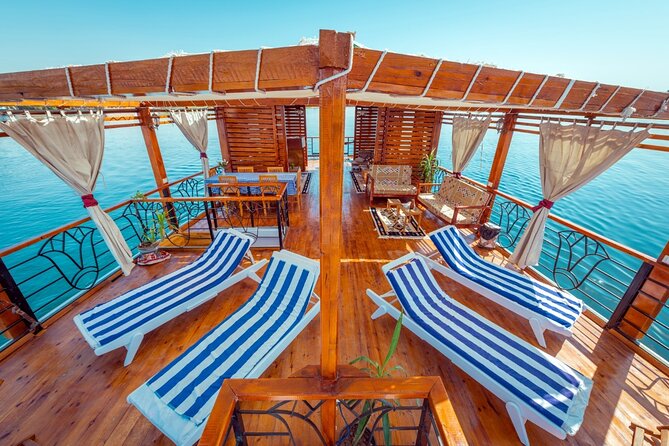
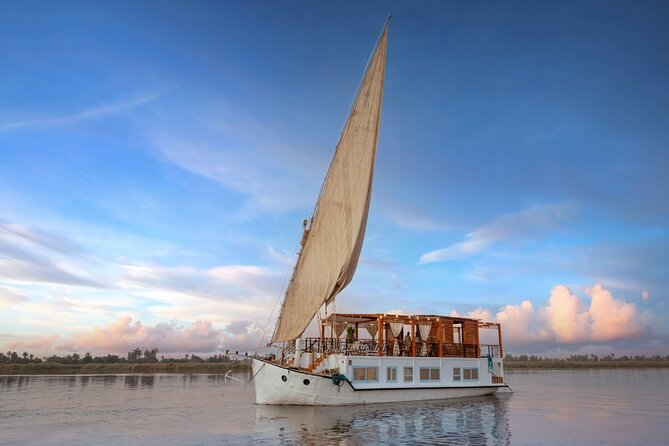
A dahabiya is a small Nile sailing boat with a slower, more intimate feel than the large passenger ships that run between Aswan and Luxor. You spend much of the day close to the water, watching palms, fields, villages, birds, and fishermen pass at an easy pace.
That quiet is the real luxury here. One account describes watching birds from the boat as it moved silently near the bank or around an island. Another notes that a small towing boat may sometimes pull the dahabiya instead of wind power. That can be less romantic if you expect constant sailing, but it also keeps the cabins quiet and allows the boat to maintain its route.
The exact boat matters. The experience has been provided on dahabiyas described as cozy, polished, well maintained, and recently remodeled, but boat names and cabin arrangements can vary. Ask for the exact vessel, room photos, and cabin details before paying. This is especially important because one unhappy booking involved a last-minute change of boat and accommodation.
The format is private, so your party travels with its own guide and crew rather than joining a large public group. Small parties can make the temple visits easier to pace, although the social feel depends on the number of people in your booking.
A few more days out in the Nile Valley to weigh up
- 4-Day 3-Night Nile Cruise from Aswan to Luxor&Abu Simbel+Balloon
★ 5.0 · 2,023 reviews - 4-Day 3-Night Nile Cruise from Aswan to Luxor including Abu Simbel, Air Balloon
★ 4.5 · 612 reviews - From Aswan: 4-Day Nile Cruise from Aswan to Luxor with Guide
★ 4.1 · 593 reviews
Day 1: Philae, island life, and Kom Ombo
Your Aswan pickup can be arranged from the airport, railway station, or hotel. You first visit Philae Temple with an Egyptologist guide, then board the dahabiya for the river portion of the trip.
Philae is dedicated to Isis, one of ancient Egypt’s most important goddesses. The temple sits on an island, giving the first visit a strong sense of place. It is not simply another monument beside a road. Water, stone, and the surrounding hills frame the site, and the boat ride helps you understand why the temple feels separate from ordinary Aswan.
After lunch on board, the boat continues toward Kom Ombo. The itinerary also includes a walk on a small Nile island, where you can see a quieter side of river life and stretch your legs away from the formal ruins.
Kom Ombo is one of Egypt’s most memorable temple settings. It sits on a bend in the river, with open views around the sanctuary. The temple is unusual because it serves two gods: Sobek, the crocodile god, and Horus the Elder. Its double design reflects that shared dedication.
Your guide can help you read the reliefs and understand the temple’s practical and religious roles. The crocodile connection is especially useful here, since sacred crocodiles once lived in the area. The visit lasts about two hours, then you return to the boat and continue toward Gebel el-Silsila.
This first day packs in a lot. If you arrive in Aswan after a flight or train journey, the morning may feel busy. The reward is that you begin with one of the region’s finest island temples rather than spending the first day only on the boat.
Day 2: Gebel el-Silsila and the great temple at Edfu

Day two begins with breakfast and, if conditions are clear, a sunrise from the sundeck. This is one of the strongest reasons to choose a dahabiya. You are not confined to a coach, and the river itself becomes part of the morning.
The first major sight is Gebel el-Silsila. The boat passes the sandstone quarries and rock-cut chapels connected with Horemheb, Seti I, Ramses II, and Merenptah. The itinerary describes viewing these from the dahabiya, so you should not assume a full shore visit or long archaeological walk here.
Gebel el-Silsila matters because the sandstone used in many Egyptian monuments was quarried in this area. Seeing the cliffs from the water gives useful context for the temples you visit later. It also breaks up the usual sequence of famous monuments with a more rugged, working side of ancient Egypt.
The boat then continues to Edfu. On arrival, your guide accompanies you to the Temple of Horus, widely regarded as one of Egypt’s best-preserved cult temples. It was built for the falcon-headed Horus, and its reliefs tell the story of Horus avenging his father Osiris by defeating Seth.
Edfu is a good place to have a guide. The massive walls, pylons, halls, and carved scenes can blur together without explanation. With a clear introduction, you can see how the temple functioned and why its survival is so valuable.
After Edfu, the dahabiya moors at Besaw Island for the night. This is the kind of stop that sets the trip apart from a large ship schedule. You are not only ticking off monuments. You are spending the night in a quieter stretch of the river.
Day 3: El Kab and a slower afternoon on the river
After breakfast, you sail toward El Kab, the ancient town of Nekheb. The site includes temple remains and tombs cut into the cliffs, giving you another view of Egyptian civilization beyond the best-known royal monuments.
El Kab is particularly useful for visitors who want more than the headline sites. The remains are not presented as one enormous temple complex. Instead, the stop asks you to look at an older settlement, religious remains, and cliff tombs as parts of a wider Nile community.
The visit lasts about two hours, followed by a return to the boat and sailing toward Esna. Compared with day one and day four, this is a lighter archaeological day. That is a good thing. You have time to sit on deck, watch the river, and let the trip breathe.
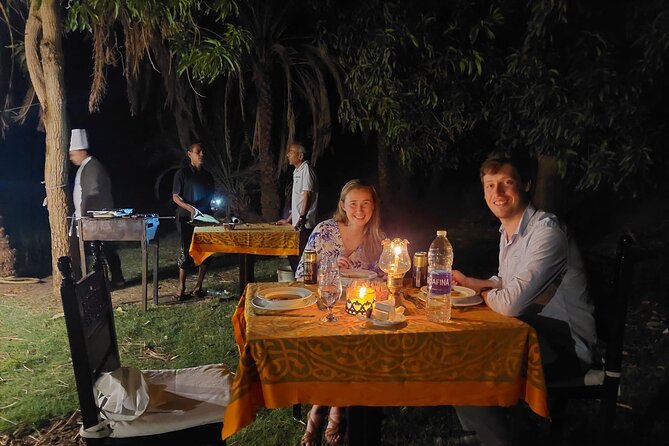
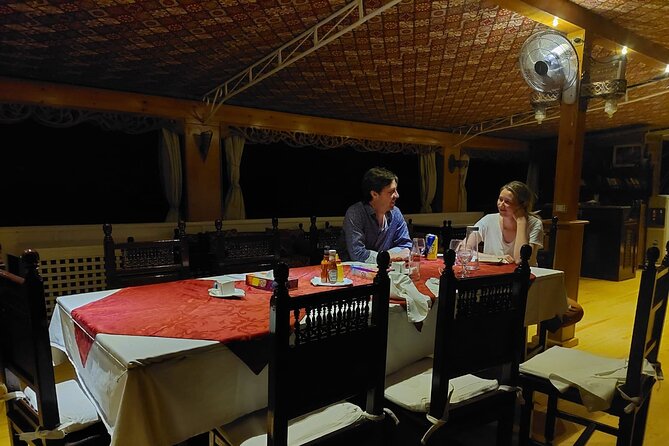
The boat’s crew handles the meals, tea, coffee, and natural water included in the package. Food is described as traditional and very well prepared, with special diets possible when arranged with the chef. One account specifically describes vegan meals being handled successfully. Still, tell the operator about dietary needs before departure rather than waiting until you board.
Some dahabiyas offer wine or beer for purchase, but drinks beyond the listed tea, coffee, and water are not included in the stated price. Personal expenses are also extra.
More Nile cruises to weigh up:
- 4-Days Nile Cruise From Aswan To Luxor including Abu Simbel and Hot Air Balloon
★ 5.0 · 3,142 reviews - 4-Days Nile Cruise From Aswan To Luxor including Abu Simbel and Hot Air Balloon
★ 4.5 · 509 reviews - 4-Day 3-Night Nile Cruise from Aswan to Luxor – Private Tour
★ 5.0 · 369 reviews - 4 Days Nile Cruise from Aswan to Luxor including Abu Simbel and Hot Air Balloon
★ 4.5 · 356 reviews
Day 4: Luxor’s west bank, then Karnak
After breakfast, you check out and meet your guide for the Luxor visits. A modern air-conditioned vehicle takes you around the west bank, then you continue to Karnak before your final transfer in Luxor.
The Valley of the Kings is the morning’s major stop. You visit three royal tombs, excluding the tomb of Tutankhamun. That is worth knowing in advance. If Tutankhamun is a priority, the itinerary does not include it, and any additional arrangements should be confirmed separately.
The valley itself is visually stark, with tomb entrances cut into dry hills. Inside, the painted walls and ceilings explain why the site remains one of Egypt’s essential visits. The heat, stairs, and uneven surfaces can make the tomb circuit tiring, so pace yourself and follow your guide’s advice about which tombs are open.
Next comes the Temple of Hatshepsut at Deir el-Bahari. Its broad terraces rise against the cliffs, creating one of Luxor’s most striking settings. Hatshepsut ruled for about two decades during the Eighteenth Dynasty and is the best-known woman to rule Egypt as pharaoh. Her temple gives you a chance to consider royal power, trade, and the way later rulers treated her memory.
The Colossi of Memnon are a quick stop, about thirty minutes. These two huge statues once guarded the entrance to Amenhotep III’s funerary temple. They are damaged and faceless, but their scale is still impressive. Archaeological work continues behind them, so your guide can point out how the site is being understood and rebuilt over time.
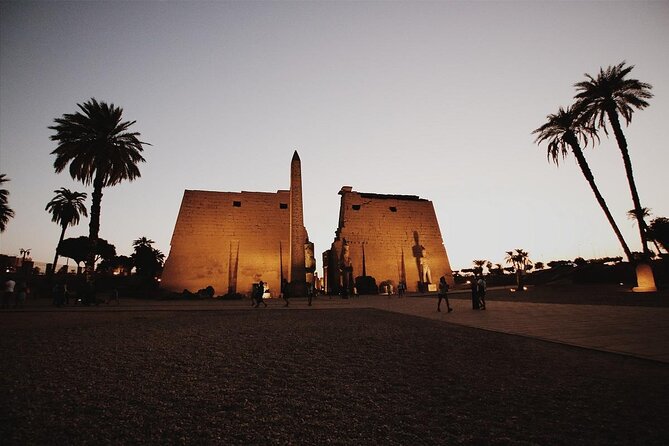
Karnak closes the sightseeing portion of the cruise. The complex covers more than two square kilometers and contains pylons, sanctuaries, obelisks, columns, and the great Temple of Amun. It was expanded over roughly 1,500 years, which explains why it feels less like one building and more like an entire sacred district.
Allow yourself time to look upward in the columned halls. Karnak can feel overwhelming if you rush from one feature to the next. Your guide’s job is most useful here, helping you separate the major religious spaces from the many layers of royal construction.
After Karnak, you are transferred to your chosen drop-off point in Luxor, such as a hotel, station, or airport. The supplied meeting information also refers to Luxor Corniche, so confirm the exact final location if your onward plans are tight.
What the $1,123 price really covers
At $1,123 per person, this is not the cheapest way to move between Aswan and Luxor. It can be good value if you use the included services: three nights aboard the dahabiya, full board, all listed entrance fees, a private Egyptologist guide, air-conditioned ground transport, Aswan pickup, the Esna to Luxor transfer, and final drop-off.
The price also removes several small expenses that can add up on a Nile trip. You are not separately paying for each temple ticket, a day vehicle, or meals during the cruise. Group discounts are offered, which may improve the price for a larger private party.
The value depends heavily on the boat you receive. Confirm whether the quoted cabin is standard or a suite, whether the vessel shown in photographs is the vessel assigned, and how many cabins and passengers are expected. The small-boat experience is the reason to pay more than a basic transport arrangement, so the vessel deserves as much attention as the sightseeing.
Tipping and personal expenses are excluded. Carry some Egyptian currency for the crew and guide, but the amount is not specified in the tour details, so ask the operator for current guidance.
Who will enjoy this Nile cruise most
I would choose this trip if you want major Egyptian monuments without spending every night on a large ship. It suits couples, families, and small private groups that value quiet mooring spots, flexible attention from a guide, and time on the water.
It is also a good fit if you have already seen the standard Aswan and Luxor highlights and want lesser-visited stops such as El Kab and Gebel el-Silsila. Birdwatchers and photographers may appreciate the slow movement near islands and riverbanks.
You should think twice if you want resort-style facilities, a fixed luxury standard, or a packed program of evening entertainment. Dahabiyas are about atmosphere, scenery, food, and personal service. Cabin sizes, onboard amenities, and the amount of true wind sailing can vary.
The tour is listed as suitable for most people, but several archaeological sites involve walking, heat, stairs, and uneven ground. Anyone with mobility or health concerns should ask the provider for more detail before booking.
Should you book this Aswan to Luxor dahabiya?
Book it if you want the Nile to be more than a corridor between temples. The strongest parts are the small-boat setting, peaceful island stops, full-board service, and the mix of famous sights with El Kab and Gebel el-Silsila.
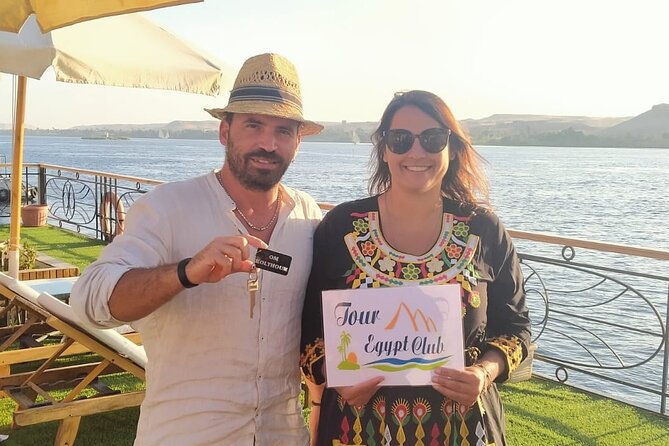
Before paying, request the exact dahabiya name, cabin photographs, room size, passenger capacity, and confirmation of the guide and route. Guides named in past arrangements include Salem, Aref, Ahmed, Mohamed, and Iman, but your assigned guide is not guaranteed in advance. If the boat and cabin details are clear, the $1,123 price can make sense for a private, well-organized Nile journey. If those details remain vague, choose carefully.
FAQ
How long is the dahabiya cruise?
The experience lasts approximately four days and three nights, beginning in Aswan and ending in Luxor.
Where does the cruise begin?
Pickup begins in Aswan, with collection available from an airport, railway station, or hotel.
Where does the cruise end?
The final transfer is in Luxor. Drop-off can be arranged at a hotel, station, airport, or another chosen location in Luxor.
Is this a private tour?
Yes. Only your own group takes part in the private tour or activity.
What meals are included?
Three breakfasts, three lunches, and three dinners are included. The cruise is described as full board.
Are entrance fees included?
Yes. Entrance fees for the listed sites are included, including Philae, Kom Ombo, Edfu, El Kab, the Valley of the Kings, Hatshepsut’s Temple, the Colossi of Memnon, and Karnak.
Is an Egyptologist guide included?
Yes. A professional Egyptologist guide accompanies the sightseeing visits.
Is Tutankhamun’s tomb included?
No. The Valley of the Kings visit includes three tombs, excluding the tomb of King Tutankhamun.
Can you cancel for a full refund?
You can receive a full refund if you cancel at least six full days before the experience start time. Cancellations two to six full days before departure receive a 50 percent refund, while cancellations less than two full days before departure are not refunded.
Just added in the Nile Valley
- Egypt 8 Days Cairo,Nile cruise,Luxor,Aswan from Cairo airport★ 5.0 · 79 reviews
- Private Tour: 7 Nights Pyramids & Nile Cruise +Flights from Cairo★ 4.5 · 157 reviews
- 8 Day Cairo Pyramids and Nile cruise and Alexandria All inclusive Private Tour★ 5.0 · 23 reviews
- 7 Days Egypt Tour Package to Cairo and Nile Cruise★ 5.0 · 62 reviews
- 6-Day Egypt Package, Nile Cruise from Aswan to Luxor by Flights★ 5.0 · 18 reviews
- Private 6-Days Egypt Tour Package with Nile Cruise by Flights★ 4.0 · 59 reviews
- Egypt in 9 Days from Saturday to Sunday including tours and Dahabeya Nile trip.★ 5.0 · 21 reviews
- From Cairo 4-Day Nile Cruise to Aswan by Flights& Hot Air Balloon★ 4.5 · 44 reviews
Nile Cruises, compared.
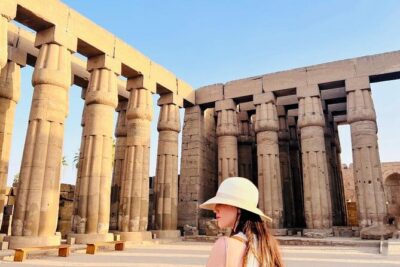
4-Days Nile Cruise From Aswan To Luxor including Abu Simbel and Hot Air Balloon
Read our review →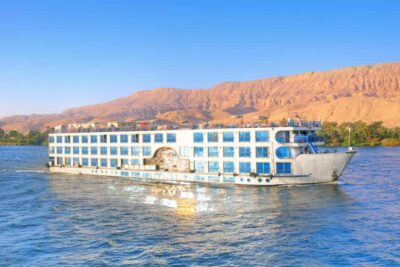
4-Day Nile Cruise from Aswan to Luxor with Guide
Read our review →Browse the lists this tour appears in