
Reviewed · CRUISES & BOAT TOURS
Cruise on Nile River between Aswan and Luxor
The great appeal here is simple: the Nile becomes your moving base. Instead of packing and unpacking between Aswan, Edfu, Luxor, and the temples in between, you sleep aboard ship and let the ancient sites come to you. The four-day route packs a lot into a short stretch, from Philae’s island setting to the colossal temples of Luxor.
I like the full-board format, which covers three nights, breakfast, lunch, dinner, snacks, and drinks such as tea and coffee. I also like the mix of famous monuments and river time, including a felucca ride around Aswan’s islands and a carriage ride through Edfu. The main caution is to confirm the precise cruise ship and cabin arrangement in writing, since the advertised 5-star standard and specific ship names may not always match what is supplied.
Key points at a glance
- Aswan to Luxor in four days: The route covers the Nile’s main archaeological stops without requiring separate hotel moves or long road transfers between every site.
- Philae on Isis Island: You begin with one of Egypt’s most atmospheric temple visits, paired with the High Dam and old Aswan Dam.
- Kom Ombo and Edfu: Two very different temples add variety, with Kom Ombo dedicated to Sobek and Horus and Edfu dedicated to the falcon-headed Horus.
- West Bank of Luxor: The itinerary includes the Valley of the Kings, Hatshepsut’s temple, and the Colossi of Memnon.
- Full-board cruise package: Three nights, meals, transfers, entry fees, guide service, and bottled water are included.
- Ship confirmation matters: Ask for the exact vessel, cabin category, and any possible upgrade charge before you pay.
What the four-day Nile route really delivers
At $569 per person, this is not simply a boat ride. You are paying for three nights aboard a Nile cruise, guided sightseeing, admission fees, transport in an air-conditioned vehicle, airport or hotel transfers, and full board.
That makes the price reasonably strong if you want a packaged Egypt itinerary. Buying each transfer, temple visit, meal, and hotel night separately would take more planning, and the cruise removes much of the daily guesswork. Still, value depends heavily on the ship you receive. A 5-star label can cover a range of Nile cruise standards, so the exact boat matters more here than it would on a simple day tour.
The schedule is active. You will visit several major sites in four days, often around the ship’s sailing times. This is a good choice if you want a concentrated first look at Upper Egypt. It is less suitable if you prefer long, unhurried visits or plenty of free time in each city.
The package is described as a private tour and activity for your group, with private vehicle transfers and a licensed Egyptologist guide. The cruise itself may operate on a shared ship, so ask how private the sightseeing arrangements are and whether other passengers join the excursions.
A few more days out in Luxor to weigh up
- Hurghada: Luxor Valley of the Kings & Tutankhamun Tomb Trip
★ 4.7 · 13,208 reviews - Luxor Day Trip from Hurghada Small Group & Tutankhamun Tomb
★ 4.8 · 5,366 reviews - Hot Air Balloon Ride in Luxor Egypt with Transfers Included
★ 5.0 · 4,319 reviews
Day 1: Philae, the dams, and an Aswan felucca
The program begins in Aswan, with pickup at the airport or your accommodation. The listed start time is 6:00 a.m., so you should be ready for an early morning. From there, you meet the Egyptologist guide and begin with Aswan’s key sights.
Philae Temple is the day’s highlight. Dedicated mainly to Isis, the temple complex sits on an island and is reached as part of the Aswan sightseeing program. Its setting on the Nile gives the visit a different feeling from the vast temple fields near Luxor. Water, stone, and open sky frame the monuments, and the island location helps explain why the site feels separate from modern Aswan.
The tour also includes the High Dam, the old Aswan Dam, and views toward Lake Nasser. These stops add modern context to the ancient temples. The dams changed the flow of the Nile and helped protect Egypt from seasonal flooding, but they also led to the relocation of monuments such as Philae. You do not need to be an engineering enthusiast to find this part useful, since it explains why the temple is where it is today.
Lunch is served aboard the ship after boarding. The cruise then offers a felucca ride around Aswan’s islands and the botanical garden, with a chance to visit a Nubian village. This is one of the nicest changes of pace in the program. After a morning of stone temples and dams, you get low, open views of the river from a traditional sailing boat.
The Nubian village visit is listed as a chance rather than a guaranteed full visit, so ask your guide what the stop includes. The afternoon may also depend on the ship’s boarding schedule and river conditions. Dinner, entertainment, and your first night aboard follow.
Day 2: Kom Ombo, Edfu, and the Esna lock
On the second morning, the ship sails toward Kom Ombo. This is one of the most enjoyable parts of the route because the river itself fills the gaps between the temples. You can have breakfast aboard, watch the Nile valley pass by, and reach the next archaeological stop without another long drive.
Kom Ombo is unusual because its temple is dedicated to two gods: Sobek, the crocodile god, and Haroeris, a form of Horus. The paired design gives the complex a distinctive layout, with some areas serving one deity and other areas serving the other. Your guide is especially useful here, since the site can otherwise look like a collection of damaged columns and walls rather than a place with a clear religious plan.
After lunch aboard ship, you continue to Edfu. The listed transport is a horse carriage through the local city, followed by a visit to the Temple of Edfu. The carriage is practical as well as atmospheric, since the temple is not directly beside the cruise dock.
Edfu is dedicated to Horus, shown as a falcon-headed god. The temple is among the best-preserved major temples on this route, which makes its carved walls and large entrance especially rewarding. Compared with the more weathered ruins elsewhere, Edfu gives you a stronger sense of how a complete temple complex was organized.
The carriage ride may be memorable, but it can also feel less comfortable than the private vehicle used for transfers. If you have mobility concerns, ask in advance how the carriage section is handled. The tour data says most people can participate, but it does not give detailed accessibility information.
Later, the cruise continues toward the Esna lock. Passing through the lock is described as a special part of the journey, and it is one of those practical river moments that breaks up the monument schedule. You see the ship being raised or lowered as it continues toward Luxor. Dinner, onboard entertainment, and another night on the ship follow.
Day 3: The Valley of the Kings and Hatshepsut
By the third morning, the ship is in Luxor. The day focuses on Luxor’s West Bank, where the desert edge holds some of ancient Egypt’s most important royal sites.
The Valley of the Kings includes entry to three royal tombs. The specific tombs are not named, and access can change according to site rules and preservation needs. The basic ticket does not automatically mean entry to every special tomb, so ask your guide which three are included and whether any extra ticket is needed for famous tombs with separate admission.
Inside the tombs, you should expect narrow passages, painted walls, and an enclosed setting. The visit is more about the surviving decoration and the idea of royal burial than about grand exterior architecture. Some people find the heat and uneven ground tiring, particularly after several sites in one morning. Bring water and take the pace steadily.
Next comes the funerary temple of Queen Hatshepsut at Deir el-Bahari. Its broad terraces are cut into the cliffs, giving it a markedly different appearance from the Valley of the Kings. Hatshepsut’s position as one of ancient Egypt’s most important female rulers adds meaning to the visit, and the temple gives your guide plenty to explain about royal image-making and power.
The stop at the Colossi of Memnon is shorter, but it is worth having the context. These giant seated statues once guarded the entrance to a much larger temple complex. Today, they are an easy roadside stop and a useful reminder that Luxor’s ancient city was far larger than the remains you can see in one morning.
Lunch is back aboard the cruise. The afternoon includes free time in Luxor for the city and souq. This is a useful opening in a busy schedule, especially if you want to browse rather than move from one formal site to the next. The itinerary does not specify a guided market visit, so you should confirm where the free time begins and ends.
Dinner and the final night aboard follow. Since disembarkation is the next morning, keep your luggage arrangements clear with the ship staff and guide.
More boat trips in Luxor:
- Hurghada: 2-Day Luxor Tour with Hotel, Balloon, & Boat Ride
★ 4.5 · 1,113 reviews - From Aswan: 3-Day Cruise to Luxor with Hot Air Balloon
★ 4.3 · 598 reviews - Amazing Sunset sailing by Felucca in Luxor -2 Hours (Private)
★ 5.0 · 255 reviews - Luxor: Valley of the Kings and Hatshepsut Temple w/Nile Boat
★ 5.0 · 230 reviews
Day 4: Karnak and the end of the cruise
After breakfast, you leave the ship and complete the Luxor sightseeing program. The eastern side of Luxor includes the Karnak temple complex, with attention to the Temple of Ramses III and Hatshepsut’s obelisks.
Karnak is not a single building. It is a huge religious complex built and expanded over many generations. Give yourself time to look beyond the most famous columns. The scale is the main point: courtyards, pylons, statues, and obelisks show how major the temple center once was.
The itinerary also describes Luxor Temple in the overall cruise highlights, although the day-by-day schedule specifically names Karnak and the eastern bank visits. Because of that difference, confirm before booking that Luxor Temple is included in your actual sequence. The operator notes that the order of sightseeing may change because of circumstances beyond its control, while all mentioned sights are intended to be covered.
At the appropriate time, a private transfer takes you to Luxor airport or your accommodation in Luxor. This final transfer is valuable if you are flying home or continuing your Egypt trip without arranging a separate car.
The guide, transport, and daily pace
A licensed Egyptologist guide is included, with English, French, Spanish, and German available. The guide is not just a narrator. At sites such as Kom Ombo and Karnak, a clear explanation helps you understand what you are seeing instead of reducing each stop to a quick photo opportunity.
Transport between ports and sightseeing areas uses a modern, air-conditioned vehicle with a qualified driver. Bottled water is supplied during the day trips, and the package includes assistance from the tour company’s staff during the stay.
The itinerary leaves little room for spontaneous changes. You will follow the ship’s sailing schedule, port access, meal times, and temple opening arrangements. I would choose this format for convenience, especially if you are visiting Egypt for the first time. If you want to linger for hours at one site, schedule photography sessions, or make many changes, a custom private itinerary would give you more control.
Food, drinks, and what you still pay for
Breakfast, lunch, and dinner are included for the three nights. Snacks, bottled water, coffee, and tea are also listed. That means you do not need to budget for ordinary meals during the cruise, though the details of menus and dining times are not provided.
Drinks beyond the included items are extra, as are personal expenses and optional tours. Gratuities are not included. Set aside money for tips for the guide, driver, ship staff, and other service workers as appropriate, since gratuities are a normal part of touring in Egypt.
The package also includes taxes and service charges. That reduces the chance of small mandatory fees appearing at the end, but it does not remove the need to ask about drinks, special tomb tickets, or optional excursions.
The ship question you should settle before booking
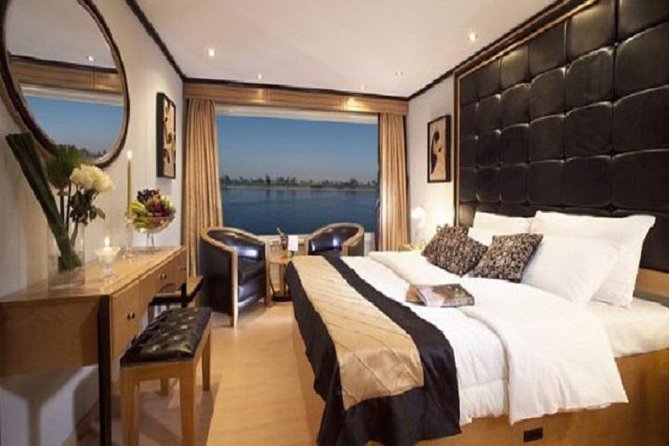
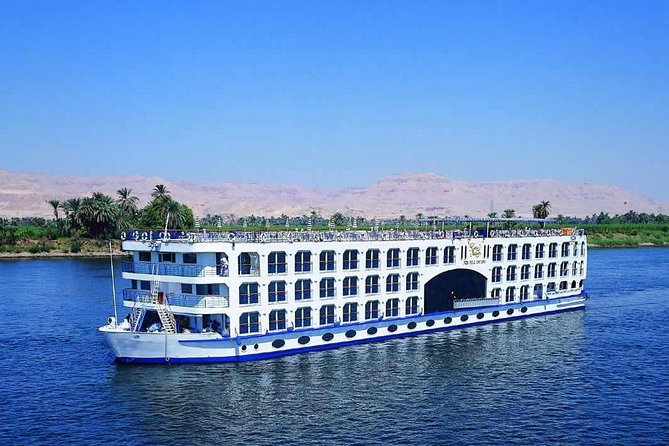
The most important practical step is to request the exact ship name and cabin details in writing. The experience is sold as a 5-star deluxe Nile cruise, and named vessels such as Radamis II, Semiramis II, or Princess Sara may be discussed during the booking process. A prior booking dispute involved expectations about the named vessel and a proposed paid upgrade, so do not rely on a general star rating alone.
Ask these questions before finalizing:
- What is the exact ship name?
- Is the listed price for the stated cabin category?
- Is any upgrade charge optional or required?
- Are three full nights guaranteed if sailing times change?
- Is Luxor Temple included in the final sightseeing sequence?
- Which three Valley of the Kings tombs are covered?
The operator allows free cancellation up to 24 hours before the local start time. Changes or cancellations inside that period are not accepted, and the experience requires a minimum number of participants. Those rules are fairly flexible, but they do not replace the value of confirming the ship and itinerary early.
Who should book this Nile cruise?
I would recommend it to a first-time Egypt visitor who wants the main Aswan to Luxor sights in one organized package. It suits you if you value included meals, guided visits, private transfers, and the ease of sleeping in one place while the ship moves along the Nile.
It is also a good fit for people who want a blend of famous temples and river scenery. Philae, Kom Ombo, Edfu, the Valley of the Kings, Hatshepsut, and Karnak give you a strong introduction to Upper Egypt, while the felucca ride and Esna lock add variety.
I would hesitate if you need a guaranteed particular ship, want a slow schedule, or dislike uncertainty about the final sequence of visits. At $569, the package can be good value, but only if the cruise vessel and cabin meet your expectations. The strongest booking decision is not based on the price alone. It is based on getting the exact ship, inclusions, and sightseeing order confirmed.
Should you book it?
Book this cruise if convenience is your priority and you want a well-filled four-day route between Aswan and Luxor. The combination of full board, airport and port transfers, entry fees, an Egyptologist guide, and private road transport removes a great deal of planning.
Before paying, confirm the vessel, cabin category, Valley of the Kings access, and whether Luxor Temple is included. If those details are clear and the ship matches the promised standard, this is a practical way to see the Nile’s major sights without building the trip piece by piece.
FAQ
How long is the Nile cruise from Aswan to Luxor?
The experience lasts approximately four days and includes three nights aboard the cruise ship.
Where does the cruise begin?
It begins in Aswan, in Egypt’s Nile River Valley. Pickup is available from Aswan airport or your accommodation in Aswan.
What time does the experience start?
The listed start time is 6:00 a.m. local time.
Which temples are included?
The program includes Philae, Kom Ombo, Edfu, Karnak, and the Luxor sightseeing area. It also includes the Valley of the Kings, Hatshepsut’s funerary temple, and the Colossi of Memnon.
Is Luxor Temple included?
Luxor Temple is named among the cruise highlights, but the detailed day-by-day schedule specifically lists Karnak for the East Bank. Confirm the final sightseeing sequence before booking.
Are meals included?
Yes. Breakfast, lunch, and dinner are included for the three-night cruise, along with snacks, bottled water, coffee, and tea.
Is a guide included?
Yes. A licensed Egyptologist guide is included. English, French, Spanish, and German language options are available.
Are airport and hotel transfers included?
Yes. The package includes pickup in Aswan and a private transfer from the cruise to Luxor airport or your accommodation in Luxor.
Are gratuities included?
No. Gratuities are not included in the price.
Can I cancel for a full refund?
Yes, if you cancel at least 24 hours before the experience start time. Cancellations or changes made less than 24 hours before the start are not accepted for a refund.
Just added in Luxor
- Private Trip To Luxor from Cairo by Plane★ 5.0 · 22 reviews
- Luxor Private Day Trip from Cairo by Plane★ 4.5 · 69 reviews
- Private Day Tour To Luxor from Cairo by Plane,Tours,Sailing Felucca,Camel&Lunch★ 5.0 · 45 reviews
- Private Day Tour To Luxor from Cairo by Plane★ 4.5 · 41 reviews
- Package 8 Days 7 Nights To Jewels of Egypt, Luxor & Aswan Tour★ 5.0 · 29 reviews
- Package Cairo & Alexandra & Luxor & Aswan★ 5.0 · 39 reviews
- Overnight Luxor Tours by train from Cairo with Hot Air Balloon and much more★ 5.0 · 29 reviews
- Private Luxor Day tour from Cairo by Flight★ 5.0 · 25 reviews
Cruises & Boat Tours, compared.


Royal Seascope Submarine Cruise with Snorkel Stop
Read our review →
3 Islands, Dolphins & Snorkel Yacht Trip w/ Lunch
Read our review →
4-Days Nile Cruise From Aswan To Luxor including Abu Simbel and Hot Air Balloon
Read our review →
Dinner Cruise on the Nile River with Entertainment
Read our review →
Nile Sunset Dinner Cruise, Show & Optional Transfer
Read our review →
Hula Hula Cruise with Lunch, Massage, & Snorkeling
Read our review →
White Island and Ras Mohamed Cruise Adventure
Read our review →Browse the lists this tour appears in