
Reviewed · ABU SIMBEL TOURS
Aswan, Nubian village & Abu Simbel & Luxor in 03 Days overland
Abu Simbel is the headline here: two enormous temples, a pre-dawn departure, and a story about moving ancient buildings piece by piece to save them from Lake Nasser. I like that this private tour also includes Philae Temple by motorboat and a real visit to a Nubian village, not just a string of royal monuments.
I also like the freedom built into the plan. You choose your own hotel, receive a first-class train ticket from Aswan to Luxor, and travel by private air-conditioned vehicle in each location. Guides such as Khaled have earned strong praise for clear English, safety, patience, and Egyptological insight.
The trade-off is pace. Abu Simbel means a pickup around 4:00 to 4:15 a.m., and Day 3 packs five major Luxor stops into one long sightseeing day. Entrance fees, meals, drinks, and lodging are not included, so the $300 price is a starting point rather than your final cost.
Key points before you book
- Abu Simbel requires an early start: You join the escorted convoy from Aswan at about 5:00 a.m. and spend roughly six hours on the road.
- Philae is reached by boat: The temple sits on an island created after the High Dam changed the Nile’s water level.
- The Nubian village adds local culture: You can enter Nubian homes, meet a family with translation help, see crocodiles, and browse handicrafts and herbs.
- The private format gives you room to adjust: Your group travels alone, with free time at several ancient sites.
- The train connection is useful: A first-class ticket from Aswan to Luxor is included, while your accommodation remains your responsibility.
- Khaled is a strong guide choice: Several comments single him out for his English, historical explanations, photography help, and calm handling of the trip.
What this three-day Aswan to Luxor trip really offers

This is not a fully packaged resort-style holiday. It is a private sightseeing framework that connects the major sights of southern Egypt while leaving your hotel and some daily spending to you.
That distinction matters. You get a driver, an air-conditioned vehicle, a qualified Egyptologist guide, parking, fuel, taxes, and the train from Aswan to Luxor. You do not get entrance tickets, meals, drinks, or accommodation. If you already know where you want to sleep, this arrangement can be good value. If you want one fixed price with no decisions left, expect extra planning.
The private setup is the main advantage. Your group is not tied to strangers, and the day can feel less hurried at certain stops. The guide can explain a temple, let you wander, and then regroup with you. That freedom was especially useful to people who wanted to avoid the usual crowd pressure.
The company has received a 4.9 rating from 16 reviews, with 100 percent recommending it. Praise centers on organization, personal care, safe driving, and guides such as Khaled. One important caution appears in the feedback: one person found that a guide at Abu Simbel did not seem to be present. I would confirm in advance exactly who will guide you at the temples that day.
More Abu Simbel Tours in Luxor
- Luxor: Abu Simbel Temple Private Guided Day Trip with Lunch
★ 4.6 · 546 reviews - Our Exceptional 5 days Cairo, Luxor and Abu Simbel Tour Package
★ 5.0 · 212 reviews - From Cairo: 2-Day Abu Simbel & Luxor Tour
★ 3.9 · 136 reviews
Day 1: Philae Temple and the Nile by motorboat
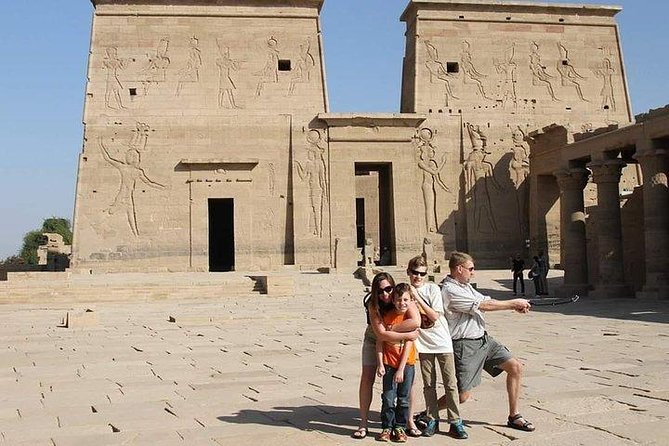
Philae is an excellent first stop because getting there is part of the experience. After the vehicle transfer, you take a short motorboat ride to the island. The temple was moved about 500 meters from its original location when the High Dam caused the water around the old site to rise.
That rescue effort gives the visit two layers. You are seeing a Ptolemaic-era temple dedicated mainly to Isis, but you are also seeing a modern engineering project that saved it from submersion. The island setting makes the approach especially attractive, with open Nile views and the temple framed by water.
Your guide leads a walking tour through the sanctuaries and shrines connected with Isis and Osiris. The explanation helps you understand why the carvings matter instead of leaving you to see only columns and stone walls. After the guided portion, you have free time to look around at your own speed.
The listed visit lasts about two hours. Admission is not included, and the boat ride is part of the practical arrangement, so bring cash or another accepted payment method for costs that are not covered by the tour price. The exact fee is not provided here.
The High Dam and Lake Nasser
The High Dam is a short but useful counterpoint to the ancient sites. Built from 1960 to 1970, it changed farming, electricity production, and the Nile itself. From the dam, you look toward Lake Nasser, described here as the second-largest artificial lake in the world.
You also cross the Friendship emblem, a monument associated with the dam. This stop can feel less visually dramatic than Philae, but it explains why Philae had to be moved and why Abu Simbel was saved in the same broad effort.
Allow about an hour. The admission fee is separate. I would treat this as a context stop rather than the main event, but that context improves the rest of your Aswan sightseeing.
A closer look at Nubian life
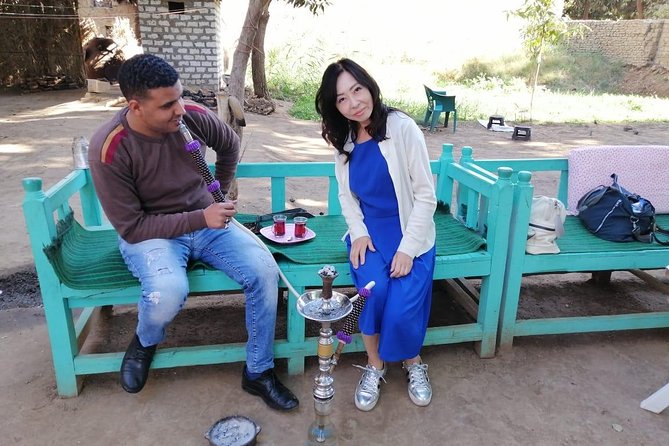
The Nubian village is the most personal part of Day 1. You reach it by boat, passing Nile islands on the way. The trip is not simply transport. It gives you a quieter view of the river and a break from the stone monuments.
The village is known for brightly painted houses and a simple, welcoming setting. You may enter Nubian homes, take photos with crocodiles, and browse Nubian crafts, herbs, and souvenirs. One especially useful detail is the possibility of translation help during a conversation with a Nubian family. That can turn a quick photo stop into a more meaningful exchange.
Keep your expectations sensible. This is a village visit arranged for tourism, and shopping is part of the experience. You should ask before taking close-up portraits and buy only what interests you. The visit lasts about two hours, and admission is separate.
I like this stop because it gives the itinerary a human scale. Philae and the dams tell large stories about rulers, water, and engineering. The Nubian village lets you connect with a living community shaped by the Nile and the changes brought by Lake Nasser.
A completely different sort of day in Luxor:
- Hurghada: Luxor Valley of the Kings & Tutankhamun Tomb Trip
★ 4.7 · 13,208 reviews - Luxor Day Trip from Hurghada Small Group & Tutankhamun Tomb
★ 4.8 · 5,366 reviews - Hot Air Balloon Ride in Luxor Egypt with Transfers Included
★ 5.0 · 4,319 reviews - Small group Hurghada to Luxor, Valley of the Kings by Van
★ 4.5 · 2,470 reviews
Day 2: The long road to Abu Simbel
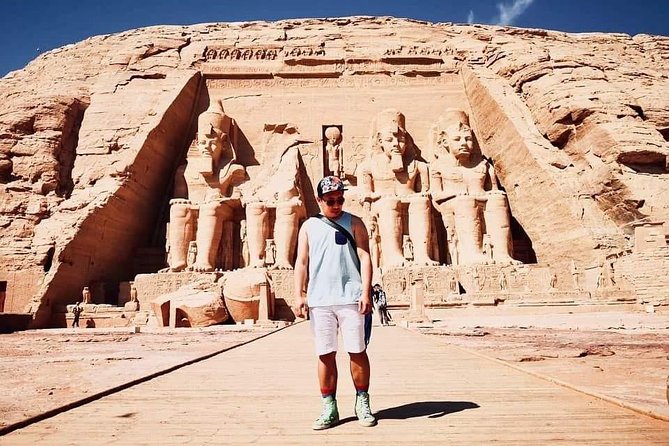
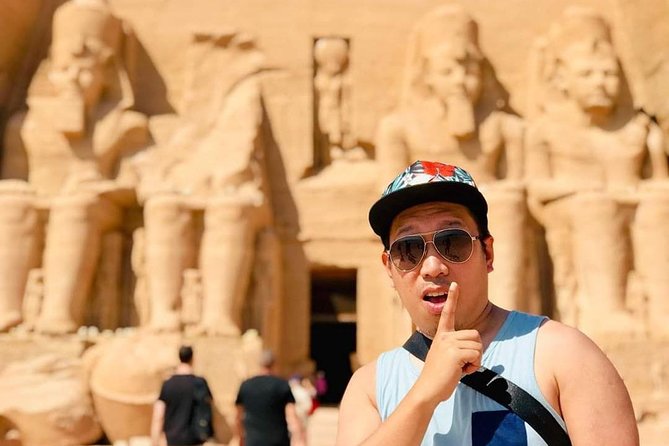
Abu Simbel is the most demanding day and probably the most memorable. Pickup is scheduled around 4:00 to 4:15 a.m., with the convoy leaving Aswan at about 5:00. The drive takes roughly three hours each way, leaving about two hours at the temple complex.
That schedule is not gentle. You will spend much of the day in the vehicle, and the early start is fixed by the convoy arrangement. Still, the payoff is substantial. You arrive with the temples in the light of the rising sun, then tour the site with an Egyptologist and have some free time before returning.
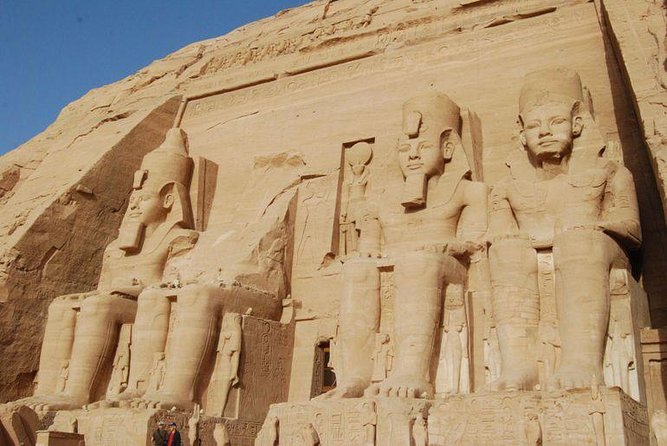
The complex was built by Ramses II. Its huge seated figures are instantly recognizable, but the scale is only part of the story. The temples were dismantled and reassembled when the rising waters of Lake Nasser threatened to cover them. That engineering rescue links Abu Simbel directly with the High Dam and Philae.
The larger temple honors Ramses II, while the smaller temple is connected with Queen Nefertari. Inside, your guide can help you read the carved scenes, royal images, and religious symbolism. The experience is better with explanation because the grand facade is easy to appreciate, while the political and religious messages take more work.
Admission is not included. The listed stop lasts about 11 hours, including the road journey. Take water, a light breakfast if you can manage one so early, sun protection, and comfortable shoes. Those are practical suggestions based on the length and timing of the day, not extra services supplied by the company.
One point deserves attention before booking. Most of the praise for the guides is strong, especially for Khaled, but one person specifically felt that the Abu Simbel guide was absent. Ask the operator if your Aswan guide will accompany you inside, or if a local Egyptologist will meet you there.
The first-class train from Aswan to Luxor
The included first-class train ticket is a useful bridge between the two regions. It saves you from arranging that connection alone and fits the tour’s semi-independent design.
The exact train departure and arrival time is not stated, so confirm those details before finalizing your hotel plans. Since accommodation is not included, you need to know where you are sleeping in Luxor and how the pickup will work around the train.
This is one reason the tour suits people who like structure without a fully locked package. The company handles the transport link, while you retain control over lodging and personal plans.
Day 3: The Valley of the Kings
Day 3 moves to Luxor’s West Bank and begins at the Valley of the Kings. This was the burial ground for the kings of ancient Thebes, and the tombs are the real attraction, not the surrounding desert view.
You receive an introduction at the visitor center, then enter the tombs on your own because guides are not permitted inside. Your guide can explain what to notice in the decorated rooms before you go in. That arrangement is worth knowing ahead of time: the guide provides the context outside, but you will not have a running explanation beside the wall paintings.
The tomb of King Tutankhamun costs extra if you choose to enter it. The regular admission fee is also separate from the tour. Allow about 90 minutes, though your exact time inside will depend on which tombs are open and which tickets you buy.
Bring patience and comfortable footwear. The day involves walking, steps, heat, and uneven surfaces, which explains the requirement for a moderate fitness level.
Hatshepsut and the Colossi of Memnon

The Temple of Hatshepsut is a striking change from the underground tombs. Its broad terraces and courtyards are built into the cliffs, and the guide explains how Hatshepsut presented herself as a male ruler to secure the throne.
You have about an hour to listen, walk through the courtyards, and study the hieroglyphic decoration. This is a good place to ask questions about royal power and how ancient Egyptian rulers shaped their public image.
The Colossi of Memnon is a short 15-minute stop. Two enormous seated statues are all that remain of Amenhotep III’s funerary temple. The visit is brief, but the scale of the figures makes it a sensible photo pause between the larger West Bank sites. Admission is included for this stop, unlike most of the other monuments.
Karnak, the great East Bank complex
Karnak deserves time and a good guide. You enter along the Avenue of Sphinxes, then move through a complex expanded by many pharaohs over more than 3,000 years.
The Great Court leads to the Great Hypostyle Hall, where 134 columns rise above you in dense rows. It is easy to rush through, but I would slow down here and let the guide point out how the complex grew over time. The deeper you go, the older the surviving sections become.
The sacred lake is another useful detail. It helped priests and temple rituals, and it gives you a quieter place to understand the complex as a functioning religious center rather than a collection of isolated ruins.
The visit lasts about 90 minutes, followed by free time. Admission is separate. Since Karnak is large, you will appreciate having a guide who can set priorities. Khaled is repeatedly praised for explaining Egyptian history in clear English and for being patient, so requesting him may be worth asking about, though the information does not guarantee his availability.
Luxor Temple at the end of the day
Luxor Temple is the final major stop and a fitting finish. It was once connected to Karnak by a two-kilometer Avenue of Sphinxes, part of which marks the entrance today.
Ramses II dominates the approach, while the inner walls and columns carry layers of Egyptian and later history. Your guide can explain how Alexander the Great added his own connection to the temple and point out the obelisk whose partner now stands in Paris at Place de la Concorde.
The visit lasts about an hour. Admission is separate, and the tour ends with a return to your East Bank hotel. That final transfer is convenient, but you need to arrange and pay for the hotel yourself.
What $300 includes, and what it does not
At $300 per person, the tour offers good value if you are visiting Aswan and Luxor for the first time and want the major transport pieces handled privately. The price includes the first-class train ticket, private air-conditioned vehicles, hotel pickup and drop-off, an Egyptologist, parking, fuel, taxes, and service charges.
The exclusions are significant:
- Entrance fees to the sites
- Accommodation
- Meals and drinks
- Laundry and personal spending
- Gratuities
You should budget beyond the advertised price. The exact entrance costs are not supplied, and the extra amount will depend on the sites you enter, including any additional ticket for Tutankhamun’s tomb.
The value improves for a small private group because the price is per person but the service is private. You also avoid arranging the convoy, drivers, boats, and train connection separately. If you are a solo visitor on a tight budget, a shared option might cost less, but it would not provide the same privacy or flexibility.
Who should choose this itinerary?
I would recommend it to someone with limited time who wants the essential southern Egypt route: Aswan, Nubian culture, Abu Simbel, and Luxor. It suits people who value a private vehicle and a guide but do not need the operator to choose their hotel.
It is also a good match for independent-minded visitors who want help with logistics while keeping some freedom. The feedback about avoiding crowds and adjusting the program points to a useful strength of the private format.
I would hesitate to recommend it to anyone who dislikes very early starts, long road journeys, or tightly packed sightseeing days. Abu Simbel is an 11-hour commitment, and Luxor covers five stops in one day. You should also be comfortable paying entrance fees separately and making your own accommodation arrangements.
The tour requires moderate physical fitness. The combination of walking, temple courtyards, tomb access, heat, and long transfers can be tiring, even with an air-conditioned vehicle.
Booking advice and final verdict
Ask three questions before paying: Which hotel pickup times apply to your booking, who guides you inside Abu Simbel, and what train schedule will carry you from Aswan to Luxor? Also confirm the entrance fees you should prepare and request Khaled if guide availability allows.
The cancellation policy is generous if your plans change early. You can receive a full refund by canceling at least 24 hours before the start time, while changes or cancellations inside that window are not accepted. Poor weather can lead to a new date or a full refund.
Book this tour if you want the big southern Egypt sights in a compact private plan, and you are willing to handle the extra costs and early mornings. Skip it if you want a slow Nile holiday, included hotels and meals, or plenty of time at each monument. For the right kind of visitor, the combination of Philae’s island setting, Nubian life, Abu Simbel’s rescue story, and Luxor’s royal monuments makes these three days an efficient and rewarding route.
FAQ
How long is the tour?
The experience lasts approximately three days. Day 1 covers Aswan, Day 2 is the Abu Simbel excursion, and Day 3 covers Luxor’s West and East Banks.
Is the tour private?
Yes. Only your group participates in the private tour or activity.
Is accommodation included?
No. Accommodation is available by request but is not included in the stated price. You arrange and pay for your own hotel.
Are entrance fees included?
No. Entrance fees to the sites are separate. The Colossi of Memnon admission is listed as included, while the other stated site admissions are not.
What time does the Abu Simbel day begin?
Pickup is scheduled around 4:00 to 4:15 a.m. The escorted convoy leaves Aswan at about 5:00 a.m.
Is the train from Aswan to Luxor included?
Yes. A first-class seating train ticket from Aswan to Luxor is included.
More 3-Day Experiences in Luxor
- From Aswan: 3-Day Cruise to Luxor with Hot Air Balloon
★ 4.3 · 598 reviews - 3 Days 2 Nights Travel package to Aswan & Luxor from Cairo by flights
★ 4.5 · 29 reviews - 3-Day 2-Night Tour to Aswan, Abusimbel & Luxor
★ 5.0 · 24 reviews - 3-Day Aswan , Nubian Village ,Abu Simbel , Luxor & Train ticket
★ 4.5 · 17 reviews
Just added in Luxor
- Private Trip To Luxor from Cairo by Plane★ 5.0 · 22 reviews
- Luxor Private Day Trip from Cairo by Plane★ 4.5 · 69 reviews
- Private Day Tour To Luxor from Cairo by Plane,Tours,Sailing Felucca,Camel&Lunch★ 5.0 · 45 reviews
- Private Day Tour To Luxor from Cairo by Plane★ 4.5 · 41 reviews
- Package 8 Days 7 Nights To Jewels of Egypt, Luxor & Aswan Tour★ 5.0 · 29 reviews
- Package Cairo & Alexandra & Luxor & Aswan★ 5.0 · 39 reviews
- Overnight Luxor Tours by train from Cairo with Hot Air Balloon and much more★ 5.0 · 29 reviews
- Private Luxor Day tour from Cairo by Flight★ 5.0 · 25 reviews
Abu Simbel Tours, compared.
4-Days Nile Cruise From Aswan To Luxor including Abu Simbel and Hot Air Balloon
Read our review →
Private Day Tour to Abu Simbel Temples from Aswan
Read our review →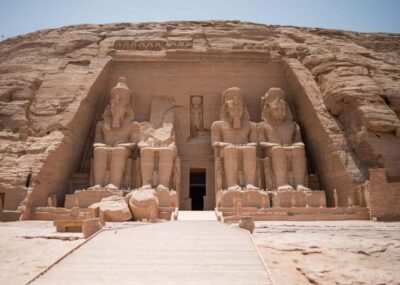
Abu Simbel Group Tour with Guide and Entrance Fees
Read our review →Browse the lists this tour appears in