
Reviewed · HOT AIR BALLOON RIDES
Luxor: Hot Air Balloon & Private tour to West bank and Lunch
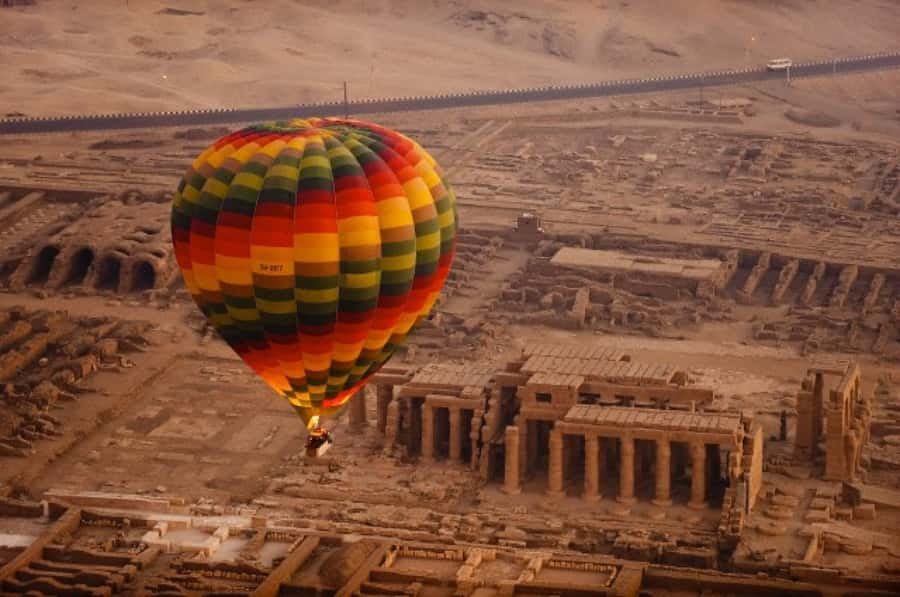
The best part of this six-hour Luxor outing comes before breakfast: a 45-minute hot-air-balloon flight over the Nile Valley, fields, and ancient West Bank sites. Then your private Egyptologist guide takes you to Medinet Habu, the Valley of the Nobles, and Deir el-Medina, three places that show more than royal tombs alone.
I like the private format, since guides such as Hamdy, Yasser, Abanob, Ahmed Bahaa, and Manal can adjust their explanations to your questions. I also like the mix of a grand temple, painted private tombs, and the village where royal craftsmen lived. The main drawback is timing: a crowded balloon operation may send you up in a later flight, so the sunrise can be partly over by the time you lift off.
Key points at a glance
- A 45-minute balloon flight begins the day: Expect an early pickup, with the exact time set by your hotel’s distance from the launch area.
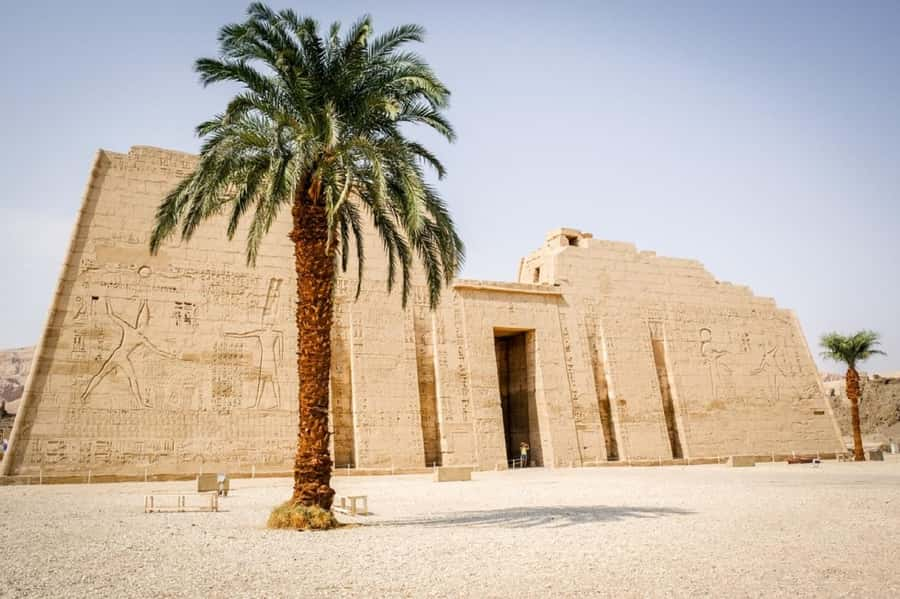
- Medinet Habu gives you scale and drama: The entrance is 63 meters wide and 22 meters tall, with Ramses III shown on the facade.
- The Valley of the Nobles offers a different view of Egypt: More than 500 tombs belonged to officials and aristocratic families, not pharaohs.
- Deir el-Medina tells the workers’ story: This ancient village housed the artisans who made tombs in the Valley of the Kings.
- The private guide is a major part of the value: English is included, while French, German, and Spanish options cost extra.
- Lunch and private transport simplify a long morning: East Bank pickup and drop-off are included, while West Bank hotel service costs an extra $5 per person.
A sunrise flight over Luxor’s West Bank
This tour starts early, and that is not a minor detail. Your pickup time depends on where your hotel sits and how far it is from the ballooning area, so confirm the time with the local agent before bed. You will be heading out before the West Bank sites open into their usual daytime rhythm.
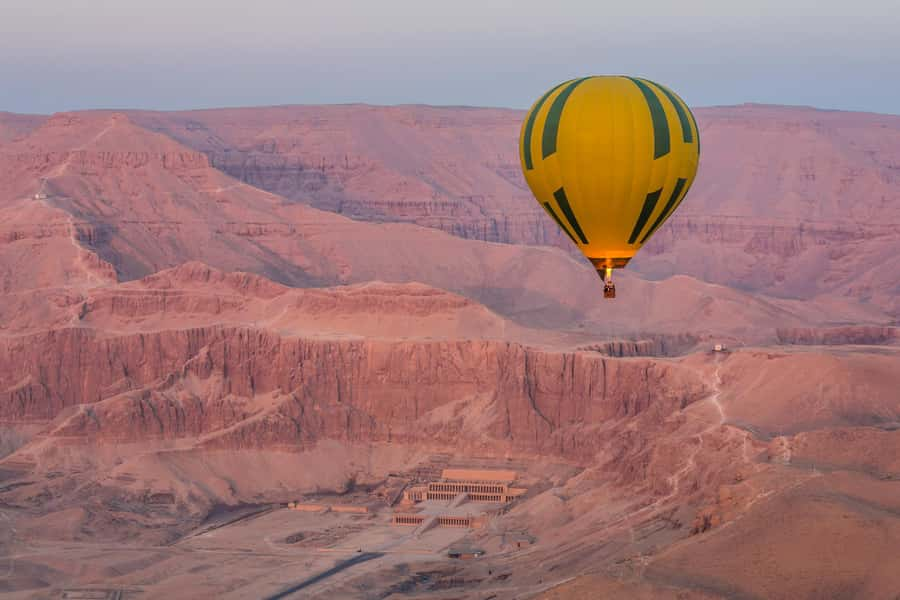
The balloon ride lasts about 45 minutes. From above, you can see Luxor’s fields, settlements, and ancient monuments in one broad view. It is a useful introduction to the geography of the area: the Nile separates the East Bank, where ancient temples and much of modern Luxor are found, from the West Bank, the traditional zone of tombs and mortuary temples.
The flight is advertised as a sunrise experience, but you should keep your expectations flexible. One French visitor found that the number of balloon passengers required a first wave and a second wave, which meant the sunrise was no longer perfectly timed for everyone. The flight itself was still enjoyable, but this is the clearest practical warning attached to the experience.
That issue is not necessarily controlled by your guide. It comes from the balloon operation and the number of flights being organized that morning. If the sunrise matters most to you, ask about the likely launch sequence before booking. If the view and the novelty of flying over Luxor matter more, the timing problem is easier to accept.
After landing, you meet your guide and continue by private, air-conditioned vehicle. Mineral water or a soft drink is included, which is welcome after the early start.
More Hot Air Balloon Rides in Luxor
- Hot Air Balloon Ride in Luxor Egypt with Transfers Included
★ 5.0 · 4,319 reviews - Luxor: Hot Air Balloon Ride over Luxor Relics
★ 4.8 · 1,681 reviews - Hurghada: 2-Day Luxor Tour with Hotel, Balloon, & Boat Ride
★ 4.5 · 1,113 reviews
Medinet Habu and the huge entrance to Ramses III’s temple
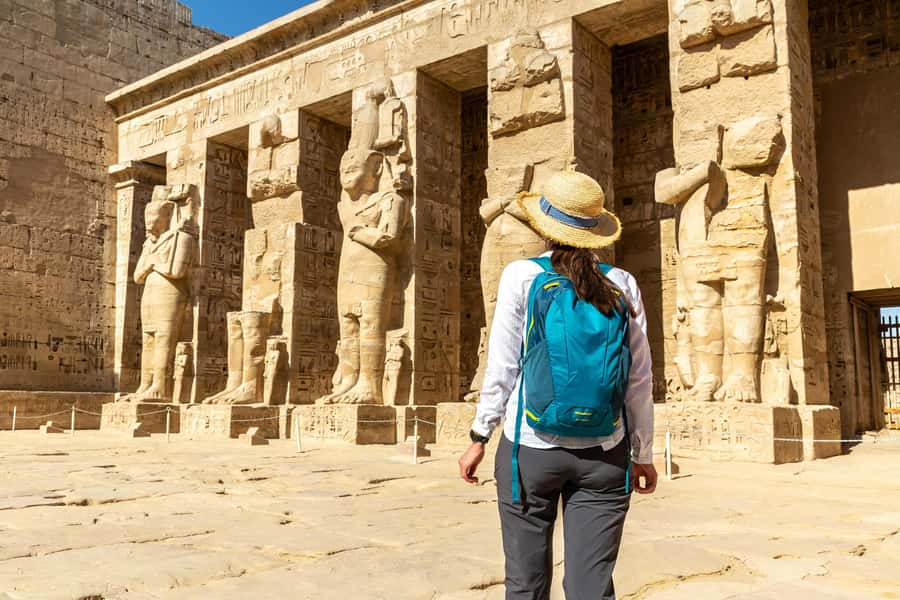
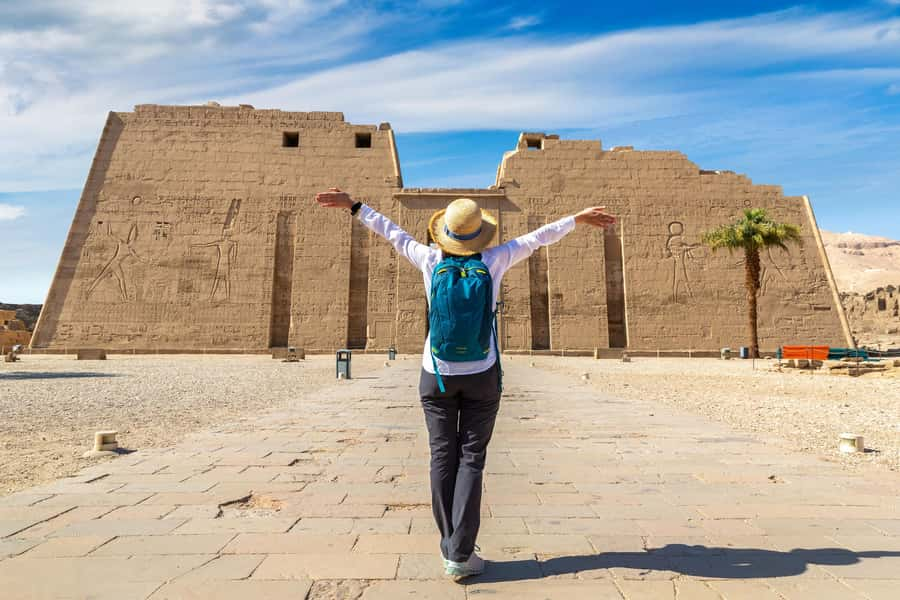
Medinet Habu is the first main stop on the West Bank route. Its formal name is the mortuary temple of Ramses III, and its entrance immediately explains why this site remains one of Luxor’s important religious monuments.
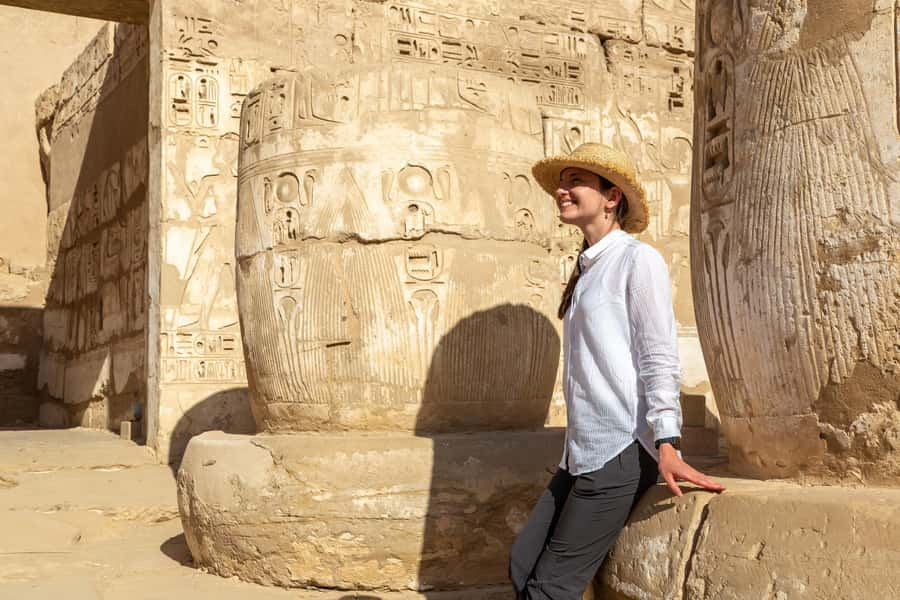
The gateway is about 63 meters wide and 22 meters high. That is not a detail you simply read and forget. It gives you a sense of how ancient rulers used architecture to control your first impression. The facade includes a representation of the pharaoh, and your guide can connect the structure to the religious role of a mortuary temple.
I like beginning the land tour here because the site has a strong sense of scale. After seeing Luxor from a balloon, you get to walk up close to stone walls and monumental carvings. The contrast works well: first a wide view of the Nile Valley, then a close look at the symbols and figures built to preserve a ruler’s memory.
A private guide makes a real difference at Medinet Habu. Without explanation, temple walls can become a long sequence of figures and inscriptions. Guides including Hamdy and Manal have been praised for clear, detailed explanations, while Hamdy is especially good for visitors who enjoy questions, humor, and small historical connections.
You are not just looking at a pretty ruin here. You are seeing a building made for ritual and royal remembrance. Ask your guide which parts of the temple served religious purposes and which images related to the king’s authority. The private setting gives you more room to stop and ask instead of following a fixed group schedule.
The Valley of the Nobles and Egypt beyond the pharaohs
Next comes the Valley of the Nobles, often called the Tombs of the Nobles. More than 500 tombs belong to members of Egypt’s aristocracy and official class. This changes the focus from royal power to the people who held important positions in ancient society.
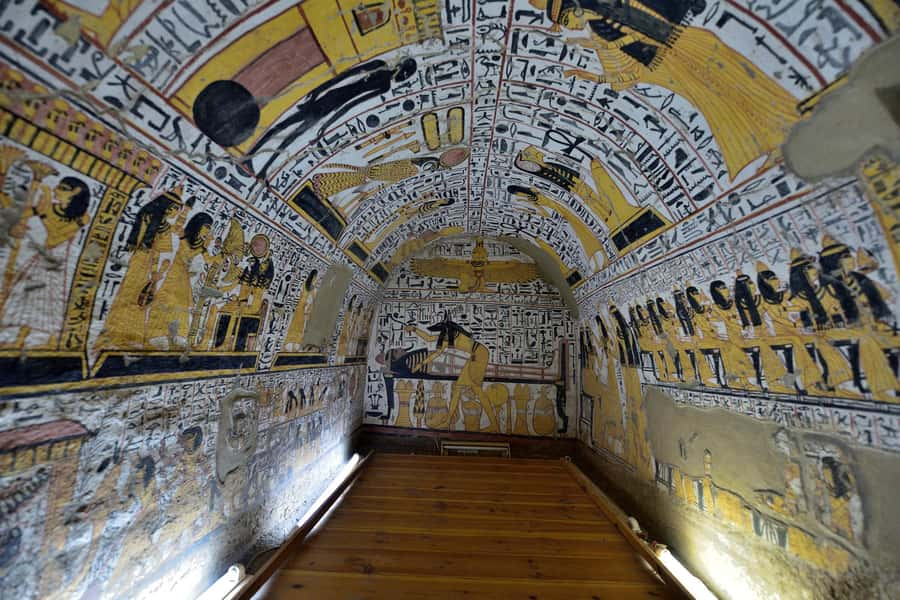
The tombs were not all built for pharaohs, and that is exactly why this stop adds something useful to the day. Their decoration can show work, family life, religious scenes, and the duties of the person buried there. You get a more personal look at the society that supported the royal court.
The tombs are also valued for their preservation. The explanation given for this is practical: they were less attractive to grave robbers than royal burial places, so some of their painted decoration survived in better condition. Inside, you can see the decorated walls at close range, although the particular tombs open on the day can vary.
This is a place where patience helps. The rooms are not grand halls like the entrance at Medinet Habu. They are enclosed burial chambers, and the appeal lies in the painted details. Let your guide point out what the scenes reveal about the tomb owner, rather than rushing from one entrance to the next.
Ahmed Bahaa, who has guided this route in French, was praised for making the visit interactive and adjusting the plan after an itinerary mix-up. That is worth keeping in mind if you need a French guide. English is included in the standard price, while French, German, and Spanish require the appropriate paid option.
Deir el-Medina, the village behind the royal tombs
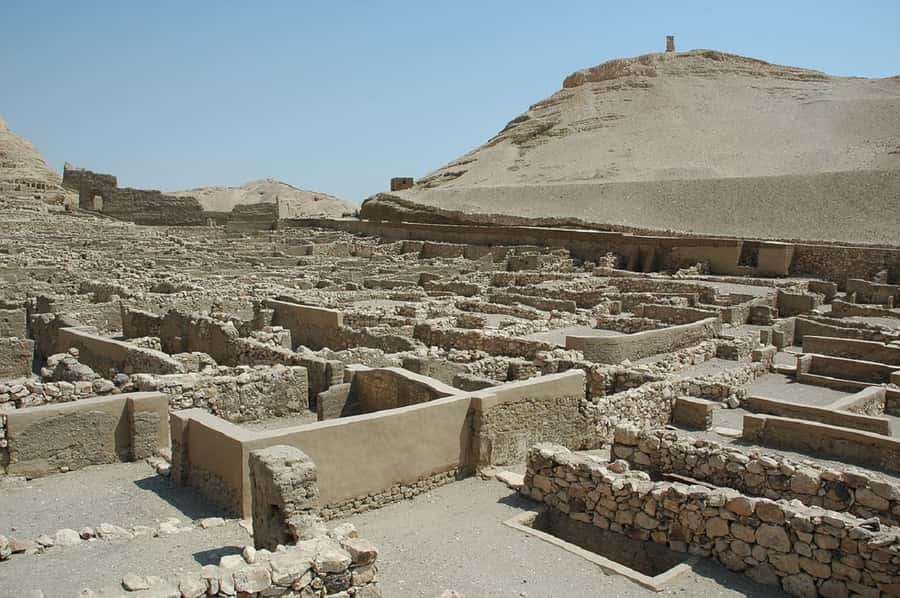
The final archaeological stop is Deir el-Medina, an ancient village for the artisans who worked on tombs in the Valley of the Kings. This is one of the most useful additions to the itinerary because it introduces the people who made the royal burial places possible.
You can think of the day as moving through three layers of ancient Egypt. Medinet Habu shows royal religion and public power. The Valley of the Nobles shows officials and aristocratic families. Deir el-Medina brings you to the skilled workers who planned, carved, and decorated tombs.
That progression gives the tour more balance than a route made only of famous royal monuments. You see how power was presented, how elite families were remembered, and how specialist workers lived and worked.
Your guide is particularly helpful here because a village can look less immediately dramatic than a huge temple gate. Ask about the connection between the residents and the nearby royal tombs. A good explanation turns the site from a set of remains into part of the larger system that created Luxor’s famous burial places.
The stops also vary in tone. Medinet Habu is imposing, the Nobles’ tombs are intimate, and Deir el-Medina is more focused on daily work and community. I like that change of pace, especially after the early balloon flight.
A completely different sort of day in Luxor:
- Hurghada: Luxor Valley of the Kings & Tutankhamun Tomb Trip
★ 4.7 · 13,208 reviews - Luxor Day Trip from Hurghada Small Group & Tutankhamun Tomb
★ 4.8 · 5,366 reviews - Small group Hurghada to Luxor, Valley of the Kings by Van
★ 4.5 · 2,470 reviews - Luxor: Shared Full-Day Tour to Luxor West and East Banks
★ 4.5 · 1,812 reviews
Lunch and the value of a private vehicle
Lunch follows the sightseeing, at a local restaurant. One particularly praised meal was at Casablanca restaurant, described as the best food of one visitor’s Egypt trip. The exact restaurant arrangement may depend on the operating plan, but lunch is included in the tour price.
A meal at this point matters because the day begins so early. You are not left to arrange food between remote West Bank sites, and the private vehicle takes you onward after the final visit. Hotel drop-off or return to a selected location comes at the end.
The $150 per-person price is not simply paying for three entry tickets. It covers the balloon flight, entrance fees, a private air-conditioned vehicle, an English-speaking professional guide, lunch, bottled water or a soft drink, taxes, and handling fees. For two people or a small private party, that package can be good value because transport and guiding are bundled together.
The price is less attractive if you mainly want the balloon ride and do not care about the West Bank sites. It is also worth checking the hotel pickup detail closely. East Bank hotel pickup and drop-off are included. If you stay on the West Bank, the listed extra charge is $5 per person.
The private format is the strongest reason to choose this package over a basic shared outing. You can ask for more detail at the sites that interest you and move on when your attention fades. It also avoids the uncertainty of finding separate transport after a very early balloon landing.
Guides who shape the experience
The guide is not an accessory here. Three archaeological sites follow one another quickly, and their value depends on understanding what you are seeing.
Several guides are associated with this route. Hamdy is described as precise, enthusiastic, and humorous in English. Yasser is noted for being flexible and explaining the story of each stop clearly. Abanob brings a playful approach, including questions along the way, while Ahmed Bahaa has led French-language tours. Manal is also praised for detailed explanations.
You should not assume you will receive a particular guide unless the operator confirms it. Still, these examples show the type of service the tour is designed to provide: a live guide who can explain, answer questions, and keep the morning moving.
Language choice affects the price. English is included, while Spanish, German, and French guides require an additional cost. Arabic is also listed among the available languages. If you want the tour in a language other than English, choose that option during booking rather than treating it as an informal request on the morning.
Timing, comfort, and small practical matters
Six hours is a compact schedule for a balloon flight, three West Bank sites, lunch, and hotel transport. You get a lot into one morning and early afternoon, but you should not expect a slow, open-ended archaeological visit.
The early start is the biggest physical demand. Bring cash, as requested in the tour information, and wear practical clothing for moving between the vehicle, temple grounds, and tomb entrances. Mineral water or a soft drink is supplied, but the balloon portion and site visits still make an early breakfast plan useful.
The experience includes skip-the-ticket-line access, entrance fees, and private transfers. Those details save time, though they do not remove the need to follow the balloon company’s operating schedule. The sunrise issue is the one timing point I would discuss before booking.
Free cancellation is available up to 24 hours before the activity, and you can reserve now and pay later. Those terms help if your Luxor schedule is still changing, but the more important decision is whether you want a tightly packed morning or a slower day at fewer sites.
Who should book this Luxor combination?
I would choose this tour if you want the thrill of a balloon flight but also want your morning to have real historical substance. It suits first-time visitors who want several major West Bank stops without arranging transport, tickets, lunch, and a guide separately.
It is also a good fit if you like asking questions. The private format gives you more control than a large group, and guides such as Hamdy, Yasser, Abanob, Ahmed Bahaa, and Manal bring different styles to the same route.
Families and small groups may appreciate the private vehicle and straightforward hotel return. People with a strict sunrise goal should be more cautious, since balloon capacity can create first-wave and second-wave departures. If you need a West Bank hotel pickup, add the $5 per-person charge to your calculation.
Should you book it?
Book this experience if you want one efficient Luxor morning that combines an aerial view with three very different archaeological sites. The strongest value comes from the package: balloon flight, private guide, transport, tickets, lunch, and drinks are all handled for $150 per person.
Think twice if you dislike early starts, want a guaranteed sunrise flight, or prefer spending a full day at one or two monuments. For most visitors with limited time, though, the route makes sense. You see royal power at Medinet Habu, private lives in the Nobles’ tombs, and the working community of Deir el-Medina, then finish with lunch and a hotel drop-off.
FAQ
How long does the tour last?
The activity lasts six hours, including the hot-air-balloon flight, West Bank sightseeing, lunch, and transport.
How long is the hot-air-balloon flight?
The balloon flight lasts around 45 minutes.
What sites are included on the West Bank tour?
The tour visits Medinet Habu, the Valley of the Nobles, and Deir el-Medina.
Is hotel pickup included?
Pickup and drop-off are included for hotels on Luxor’s East Bank. West Bank hotel pickup and drop-off are available for an additional $5 per person.
Is lunch included?
Yes. Lunch at a local restaurant is included in the tour price.
What language is the standard guide?
A professional English-speaking guide is included. Arabic, French, German, and Spanish are also listed, with an additional cost for French, German, or Spanish guide options.
What does the $150 price include?
The price includes the balloon flight, entrance fees, private West Bank tour, lunch, private air-conditioned transfers, an English guide, mineral water or a soft drink, handling fees, and taxes.
Can I cancel the tour?
You can cancel up to 24 hours in advance for a full refund. Reserve-now, pay-later booking is also available.
Just added in Luxor
- Private Trip To Luxor from Cairo by Plane★ 5.0 · 22 reviews
- Luxor Private Day Trip from Cairo by Plane★ 4.5 · 69 reviews
- Private Day Tour To Luxor from Cairo by Plane,Tours,Sailing Felucca,Camel&Lunch★ 5.0 · 45 reviews
- Private Day Tour To Luxor from Cairo by Plane★ 4.5 · 41 reviews
- Package 8 Days 7 Nights To Jewels of Egypt, Luxor & Aswan Tour★ 5.0 · 29 reviews
- Package Cairo & Alexandra & Luxor & Aswan★ 5.0 · 39 reviews
- Overnight Luxor Tours by train from Cairo with Hot Air Balloon and much more★ 5.0 · 29 reviews
- Private Luxor Day tour from Cairo by Flight★ 5.0 · 25 reviews
Hot Air Balloon Rides, compared.

Hot Air Balloon Ride in Luxor Egypt with Transfers Included
Read our review →
4-Days Nile Cruise From Aswan To Luxor including Abu Simbel and Hot Air Balloon
Read our review →
2-Day Luxor Tour with Hotel, Balloon, & Boat Ride
Read our review →
Sunrise Hot Air Balloon Over the Historical sites in Luxor
Read our review →
Sunrise Ballooning Luxor with Transfers Included
Read our review →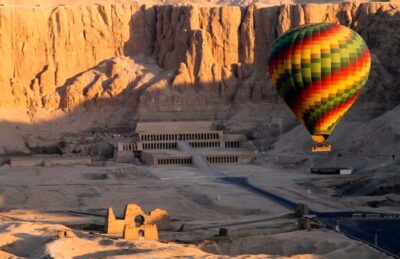
Hot Air Balloon Ride with Full-Day Sights Tour
Read our review →Browse the lists this tour appears in