
Reviewed · VALLEY OF THE KINGS TOURS
Luxor Day Tour: Valley of Kings & Queens & Hatchepsut Temples
Luxor’s West Bank packs an astonishing amount of ancient Egypt into one day. This private tour takes you from royal tombs in the Valley of the Kings to the colorful burial chambers of the Valley of the Queens, with Hatshepsut’s great temple and Medinet Habu filling out the story.
I like the private format, which lets you ask questions, adjust the pace, and travel in an air-conditioned vehicle rather than joining a large bus. I also like the broad route: many day trips stop at the kings and Hatshepsut, while this one adds Deir el-Medina, Medinet Habu, the Valley of the Queens, and the Tombs of the Nobles.
The main caution is that some guides have reportedly added perfume or alabaster stops and pressed for purchases or tips. Set a clear boundary before you leave, and confirm that the day will focus on the advertised sites.
Key points to know before booking
- Seven major West Bank sights: The route covers royal tombs, temples, a workmen’s village, colossal statues, and noble tombs.
- Private attention: Only your group participates, so you can ask questions and request a slower pace.
- About eight hours: This is a full day with plenty of walking and little room for dawdling.
- Strong guide potential: Guides named Abdo, Roshdy, Mohsen, Mohamed Awad, and others have been praised for clear English, history explanations, and friendly service.
- Lunch is not included: You will need to pay for your meal, and tips are also separate.
- Watch for unwanted shopping stops: Alabaster and perfume visits have been a problem for some customers, so be direct if you are not interested.
Why this West Bank tour covers so much
The West Bank is not one single monument. It is a spread of valleys, temples, villages, and tomb fields across the desert side of the Nile. Seeing it properly means moving between several sites, and doing that by private vehicle saves time and energy.
This tour is priced at $89.24 per person. For a private day with hotel or Nile cruise pickup, an air-conditioned vehicle, a licensed Egyptologist guide, water, and admission to the listed sites, that is a fair package price. It is not an all-inclusive day, though. Lunch, tips, airport pickup, and optional visits cost extra.
The advertised schedule totals about eight hours, with roughly seven hours of sightseeing before transport and lunch are counted. That tells you something important: the day is full. You will see a lot, but this is not the right choice if you want to sit quietly in one tomb for half an hour or explore each temple at a leisurely pace.
The tour is private, not shared. That gives you a better chance to ask about the details that interest you, such as burial customs, wall paintings, royal succession, or the daily lives of the craftsmen who decorated the tombs.
More Temple Tours in Luxor
- Luxor: Valley of the Kings and Hatshepsut Temple Day Tour
★ 4.4 · 1,404 reviews - Hurghada: Luxor Tour with Valley of Kings, Karnak & Tut Tomb
★ 4.6 · 1,082 reviews - Luxor: Valley of Kings, Hatchepsut Temple ,Karnak & Luxor-DayTour
★ 5.0 · 735 reviews
Valley of the Kings: tombs beneath the Theban hills
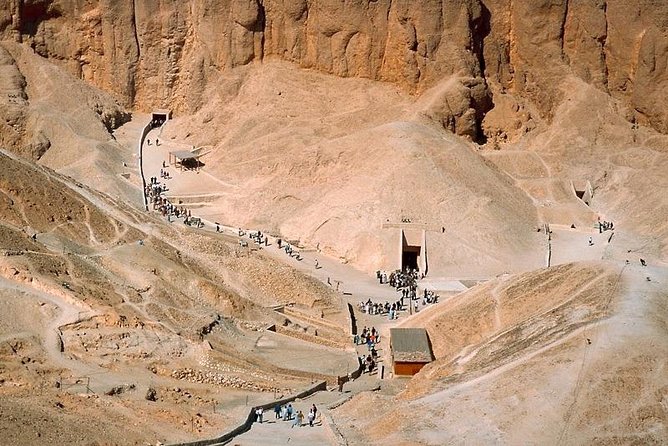
The day begins at the Valley of the Kings, usually the emotional high point for first-time visitors to Luxor. More than 60 tombs were cut into the valley, though only a selection is open at any given time and the standard admission does not necessarily cover every special tomb.
The royal burial chambers were decorated with scenes from Egyptian religious belief, including texts intended to guide the dead through the afterlife. Your guide can help you read the scenes as more than attractive wall art. The painted figures, symbols, and processions reflect ideas about judgment, protection, rebirth, and the journey after death.
Tutankhamun is the valley’s biggest name, but his tomb is not automatically part of every basic ticket arrangement. One customer specifically paid extra for Tutankhamun and the tombs of Ramses V and VI, and felt the added cost was worthwhile. If those chambers matter to you, ask before entering which tombs are included and what supplement applies.
Expect heat, uneven ground, and walking between the visitor center, tomb entrances, and the valley floor. Good shoes are important. One family traveling with a 68-year-old parent found the day rewarding but stressed that there was considerable walking, so plan your pace honestly.
A strong guide makes a major difference here. Abdo, Abdo Esmael, Mohsen, Roshdy, and Mohamed Awad were praised for explaining small details and answering many questions. Mohamed Awad, in particular, was credited with pointing out features in the hieroglyphics that would be easy to miss without help.
Hatshepsut Temple and the story of a powerful queen
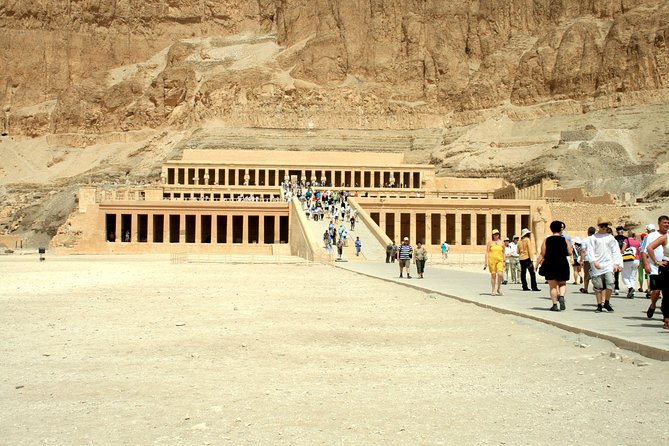
The Temple of Hatshepsut at Deir el-Bahari takes about an hour and offers a sharp change from the hidden tombs. Its broad terraces rise against the cliffs, creating one of the West Bank’s most recognizable views.
Hatshepsut ruled as king, not merely as queen consort, and presented herself through royal imagery. Her name is often translated as Foremost of Noble Ladies. The tour description also connects her reign with early trading routes, giving your guide a useful opening to explain her political power and international ambitions.
This is a sun-exposed stop, so bring water, a hat, and clothing suitable for strong heat. The tour provides a bottle of water, and several guides and drivers have also been praised for keeping extra refreshments available in the vehicle.
The temple is impressive in scale, but it is also a place where a guide’s timing matters. You want enough time to understand the terraces, reliefs, and setting without spending so long here that the later tombs become rushed.
Colossi of Memnon: a quick stop with a big visual payoff
The Colossi of Memnon take about 20 minutes. These twin statues were made from blocks of quartzite sandstone and once guarded the entrance to a much larger temple complex.
This is a short photo stop rather than a full archaeological visit. The statues are easy to appreciate quickly, especially when you stand near their enormous feet and look up at the surviving figures.
Do not expect the same depth of exploration as at the Valley of the Kings or Medinet Habu. The value here is visual scale and historical context. Your guide can explain what the statues represented and how they fit into the ceremonial architecture of the West Bank.
More Valley of the Kings tours in Luxor:
- Hurghada: Luxor Valley of the Kings & Tutankhamun Tomb Trip
★ 4.7 · 13,208 reviews - Luxor Day Trip from Hurghada Small Group & Tutankhamun Tomb
★ 4.8 · 5,366 reviews - Small group Hurghada to Luxor, Valley of the Kings by Van
★ 4.5 · 2,470 reviews - Hurghada: Small-Group Luxor Highlights & Tut Tomb Day Tour
★ 4.6 · 928 reviews
Medinet Habu: one of the day’s strongest temples
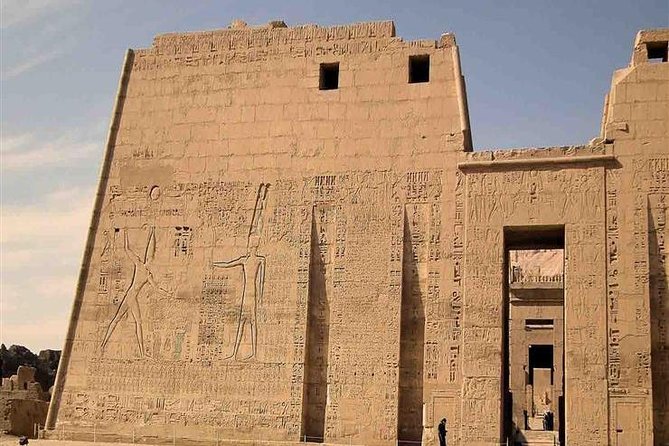
After lunch, the route continues to Medinet Habu, the mortuary temple of Ramses III. The temple was built to honor the king after his death, following his own orders.
This is one of the places where the tour’s broad itinerary pays off. The Valley of the Kings shows royal burial chambers below ground, while Medinet Habu gives you a large temple setting with monumental walls and reliefs. Together, the two sites help you understand how Egyptian rulers were remembered in both tomb and temple.
The listed visit lasts about an hour. That is enough for a guided overview, though you may want longer if you enjoy inscriptions and carved battle scenes. Ask your guide to point out the parts that reveal how Ramses III wanted his reign presented.
Lunch is not included. The guide may offer restaurant choices, but clarify the price before ordering. One positive account described a flexible stop at a local restaurant near the Colossi of Memnon, while other accounts raised concerns about unclear meal charges. The safest habit is simple: ask for the menu and total cost before you sit down.
Deir el-Medina, the village behind the royal tombs
Deir el-Medina is one of the most interesting stops for anyone who wants more than kings and monuments. This was the village of the artists, craftsmen, and workers who built and decorated the royal tombs.
The site brings the ancient building project down to human scale. Instead of focusing only on pharaohs, you learn about the people whose skills made the tomb paintings possible. Their work required specialized knowledge, from cutting and plastering surfaces to placing religious scenes and inscriptions.
The visit is scheduled for about an hour. That is a useful amount of time because the remains can feel less immediately grand than a giant temple. Your guide’s explanation helps you see why this settlement matters.
I would pay close attention here if you want a fuller picture of ancient Egyptian society. The royal tombs show the final product. Deir el-Medina helps explain the community that produced it.
Valley of the Queens and Nefertari’s famous tomb
The Valley of the Queens shifts the focus from kings to royal women and other members of the royal household. The most famous tomb connected with the valley is that of Queen Nefertari.
The basic admission to the Valley of the Queens is included, but special tombs can have separate rules or charges. Ask specifically about Nefertari’s tomb before the visit if seeing it is a priority. The supplied information confirms the valley is included, but it does not promise entry to every individual tomb.
The route allows about an hour here. The colorful wall decoration is a major draw, but the number of open chambers can change. Your guide should explain what is available on the day and help you make the best use of the time.
This stop is particularly useful after the Valley of the Kings because you can compare the treatment of royal burials across the two valleys. It also gives the day a better gender balance, rather than treating Egypt’s queens as an afterthought.
Tombs of the Nobles: a fitting final chapter
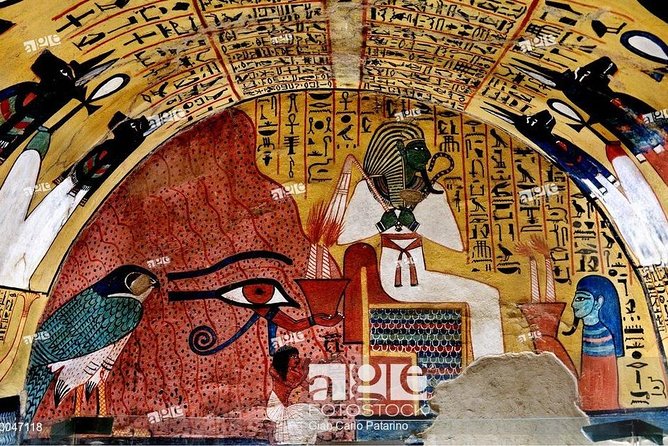
The final addition is the Tombs of the Nobles, a large group said to contain more than 400 tombs. These belong to officials and other members of the elite, not pharaohs.
Their decoration can offer a different view of Egyptian life. Royal tombs often center on divine protection and the king’s journey through the afterlife. Noble tombs may show work, agriculture, food preparation, family life, and social duties alongside religious scenes.
The tour description places this visit at the end of the day, after the Valley of the Queens. Because the itinerary is already busy, confirm with your guide that the Tombs of the Nobles are included in your final route and ask how much time is available.
This is a valuable stop for an important reason: it broadens the story. You leave with more than a parade of famous rulers. You also see how officials wanted their own lives and responsibilities remembered.
Guides, drivers, and the private-tour difference
The strongest part of this experience can be the person assigned to you. Abdo and Abdo Esmael were praised for friendly explanations, fluent English, patience with questions, and even taking photographs. Roshdy received similar praise for clear communication and a relaxed approach. Mohamed Awad was singled out for strong historical explanations and careful attention to hieroglyphic details.
Drivers also received positive comments for punctual pickups, safe driving, and keeping the vehicle cool between stops. One vehicle was described as new, air-conditioned, and equipped with a USB charging port. These details matter in Luxor, where a comfortable transfer between sites gives you a needed break from the sun.
Still, a private tour depends heavily on the individual guide. A few accounts describe poor English, constant phone use, incorrect charges for optional tombs, and aggressive efforts to sell alabaster or perfume. One extremely serious account described unwanted physical contact and intimidation. That conduct is unacceptable.
At pickup, confirm the guide’s name, the exact sites, and the day’s order. Say clearly that you do not want shopping stops. If anyone asks for extra money, ask what it covers and request an official ticket or receipt where appropriate. Keep the operator’s contact details accessible, and if you feel unsafe, end the tour in a busy public place.
These precautions do not cancel out the many strong accounts, but they are sensible for any private excursion in a place where sales commissions can affect the day.
Walking, heat, lunch, and useful planning
Wear sturdy shoes. You will walk through valleys, temple grounds, and tomb approaches, and the route includes several separate sites rather than one compact complex.
Start as early as possible if you can arrange it. The published duration is about eight hours, and the heat can build even in winter. An early start also gives you a better chance of seeing the major sites before the hottest part of the afternoon.
Bring sunscreen, a hat, and extra water beyond the bottle supplied. Keep some cash for lunch, optional tombs, and tips. Airport pickup is available for an additional $10, while hotel and Nile cruise pickup and return are included.
The tour is marked suitable for most participants, but it is not a low-walking outing. If you have limited mobility, ask the operator what can be adjusted before booking. The private format may allow some flexibility, but the supplied details do not promise a specific accessibility arrangement.
Free cancellation is available if you cancel at least 24 hours before the local start time. Changes or cancellations inside that window are not accepted for a refund.
Who should book this Luxor day tour?
I would choose this tour if you have one full day for Luxor’s West Bank and want the major royal sites plus less obvious places such as Deir el-Medina and the Tombs of the Nobles. It suits couples, families, and small groups who value a private guide and direct hotel transport.
It is also a good match for history-focused visitors who want explanations rather than a driver who simply drops them at the gates. The best guide reports describe lively teaching, clear English, careful timing, and genuine patience with questions.
I would think twice if you dislike a packed schedule, want guaranteed entry to special tombs, or prefer to explore independently. I would also avoid booking unless you are prepared to state your shopping preferences firmly and confirm all optional costs in advance.
Should you book it?
At $89.24 per person, the combination of private transport, an Egyptologist guide, listed admission fees, water, and a full West Bank route offers good value. The 4.9 rating from 1,496 ratings and 98 percent recommendation figure show that the experience is usually well received.
The key word is usually. The sightseeing plan is excellent, but the guide assignment can shape the entire day. Confirm the itinerary, reject unwanted shopping stops, clarify special tomb fees and lunch prices, and keep your expectations realistic about walking and heat.
Book it if you want a broad, efficient introduction to Luxor’s West Bank with private attention. Choose another arrangement if personal safety concerns, independent pacing, or guaranteed control over every stop matter more than convenience.
FAQ
How long does the Luxor West Bank tour last?
The tour lasts approximately eight hours, including visits to the listed West Bank sites and transportation from and back to your Luxor hotel or Nile cruise.
Is hotel pickup included?
Yes. Pickup and return from a starting point in Luxor are included. Airport pickup costs an additional $10.
Is this a private tour?
Yes. Only your group participates in the activity.
Which sites are included?
The route includes the Valley of the Kings, Hatshepsut Temple, Colossi of Memnon, Medinet Habu, Deir el-Medina, the Valley of the Queens, and the Tombs of the Nobles.
Are admission fees included?
Admission to the Valley of the Kings, Hatshepsut Temple, Medinet Habu, Deir el-Medina, and the Valley of the Queens is included. Optional tours and special tomb charges may cost extra.
Is lunch included?
No. Lunch is not included in the tour price.
Is a guide provided?
Yes. The tour includes a qualified and fully licensed Egyptologist guide.
What should I bring?
Wear comfortable shoes and prepare for considerable walking. It is also sensible to bring sun protection and extra water. A bottle of water is provided during the trip.
Can I cancel for a full refund?
Yes, if you cancel at least 24 hours before the experience’s local start time. Cancellations or changes made less than 24 hours before the start are not accepted for a refund.
Just added in Luxor
- Private Trip To Luxor from Cairo by Plane★ 5.0 · 22 reviews
- Luxor Private Day Trip from Cairo by Plane★ 4.5 · 69 reviews
- Private Day Tour To Luxor from Cairo by Plane,Tours,Sailing Felucca,Camel&Lunch★ 5.0 · 45 reviews
- Private Day Tour To Luxor from Cairo by Plane★ 4.5 · 41 reviews
- Package 8 Days 7 Nights To Jewels of Egypt, Luxor & Aswan Tour★ 5.0 · 29 reviews
- Package Cairo & Alexandra & Luxor & Aswan★ 5.0 · 39 reviews
- Overnight Luxor Tours by train from Cairo with Hot Air Balloon and much more★ 5.0 · 29 reviews
- Private Luxor Day tour from Cairo by Flight★ 5.0 · 25 reviews
Valley of the Kings Tours, compared.

Luxor Valley of the Kings & Tutankhamun Tomb Trip
Read our review →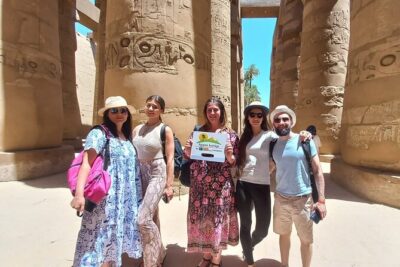
Small group Hurghada to Luxor, Valley of the Kings by Van
Read our review →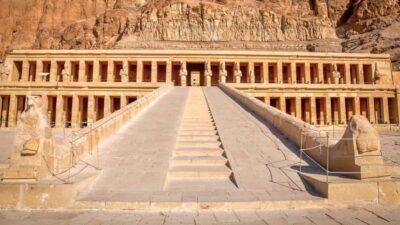
Valley of the Kings and Hatshepsut Temple Day Tour
Read our review →
Small-Group Luxor Highlights & Tut Tomb Day Tour
Read our review →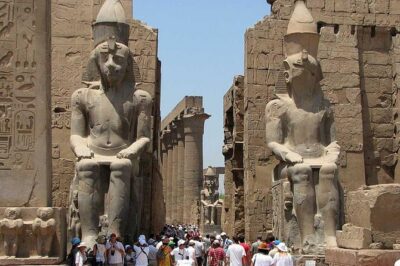
Valley of Kings, Hatchepsut Temple ,Karnak & Luxor-DayTour
Read our review →
Valley of the Kings and Queens Guided Tour with Lunch
Read our review →Browse the lists this tour appears in