
Reviewed · TEMPLE TOURS
Aswan: Edfu and Kom Ombo Day Tour with Luxor Transfer
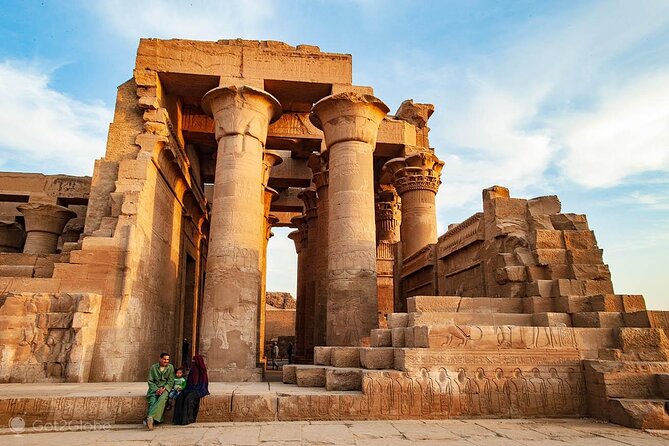
The smartest feature here is the route itself: you get from Aswan to Luxor while visiting two of Upper Egypt’s finest temples along the way. Edfu gives you a huge, remarkably complete Ptolemaic temple, while Kom Ombo offers an unusual double sanctuary beside the Nile.
I like the private car, which lets you leave from your Aswan hotel and finish at your Luxor hotel without arranging a second transfer. I also like the guides assigned at the temples. Names such as Aladin, Thabet, Walid, Hafiz, and Mohamed Aty appear often in guest feedback, with praise for clear explanations and time to take photos.
The catch is the road. The advertised duration is six to seven hours, but traffic, city delays, stops, and rough sections can make the day longer. This is a practical transfer with sightseeing, not a quick shuttle.
Key points to know before booking
- Edfu is the grand finale of Ptolemaic temple building: Its massive entrance and well-preserved reliefs make it the stronger of the two stops for many people.
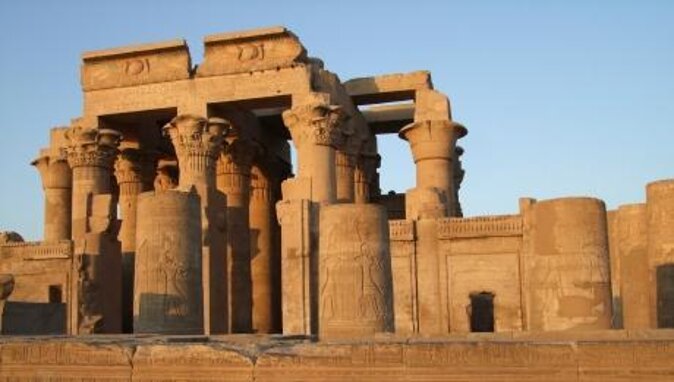
- Kom Ombo has a rare double plan: Courts, halls, sanctuaries, and rooms were arranged for two sets of gods.
- Your ride ends in Luxor: Hotel pickup in Aswan and drop-off in Luxor are included, but there is no return transfer to Aswan.
- The car is private and air-conditioned: That matters on a long road journey through Upper Egypt, especially in warmer months.
- Guides meet you at the temples: English guiding is included, while Spanish, German, and French guiding costs extra.
- Allow more than the advertised time: The route can take nine hours or more when traffic and road conditions slow things down.
A useful way to move between Aswan and Luxor
Many people travel between Aswan and Luxor by Nile cruise, train, or flight. This trip offers a different trade-off. You lose the slow rhythm of a river journey, but you gain a private road transfer with stops at Edfu and Kom Ombo.
That makes it especially useful if your schedule does not fit a cruise departure. You can see two important temples and arrive at your next hotel in Luxor on the same day. The transfer is also more personal than a large coach, with only your private group in the car.
The route passes through farming areas, villages, market towns, railway lines, and stretches of Nile Valley life that you would not see from a plane. You might find the scenery more interesting than expected, particularly if you enjoy watching ordinary daily life rather than only visiting monuments.
Still, this is a long sitting day. The road between stops can be bumpy and dusty, and Egyptian city traffic can be disorderly. The air-conditioning helps, and several drivers have been praised for smooth, careful driving, but you should not book this expecting a polished European motorway transfer.
More Temple Tours in Aswan
- From Aswan: Abu Simbel Temple Day Trip with Hotel Pickup
★ 4.4 · 2,807 reviews - Private Day Tour to Abu Simbel Temples from Aswan
★ 4.5 · 507 reviews - Aswan: High Dam, Unfinished Obelisk, & Philae Private Tour
★ 4.5 · 375 reviews
Leaving Aswan in a private, air-conditioned car
Pickup is arranged from your hotel in Aswan. The standard service includes hotel pickup, a private car, entrance fees, the guide service, taxes, and drop-off at your Luxor hotel.
An early start is useful. One common pickup time is around 6 a.m., which can help you reach the temples before the busiest periods. Exact departure times depend on availability, so check the time offered for your date before you commit.
The car is one of the strongest practical features. Several people found the vehicles clean and comfortable, with effective air-conditioning. Bottled water and small snacks have sometimes been offered, but these should be treated as a pleasant extra rather than a guaranteed part of the package.
Pickup is not automatically covered everywhere in the Aswan area. Hotels in Gharb Soheil, the island, Nagaa al-Mahatta, and New Aswan carry an extra charge of $10 per person. Pickup or drop-off on Luxor’s West Bank costs an extra $5 per person. Check your exact hotel location carefully, since the standard price may not cover these zones.
Edfu Temple and the power of scale
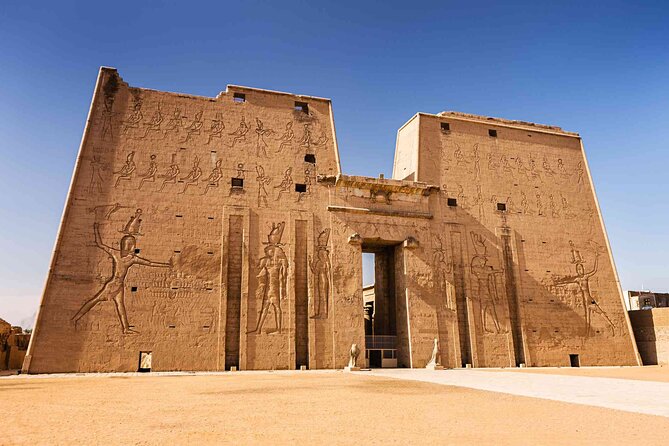
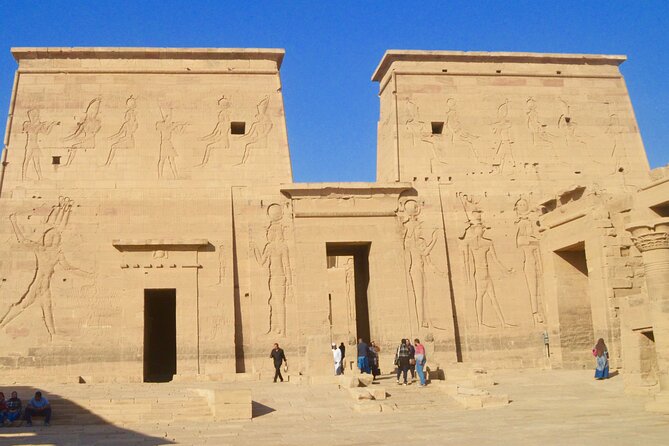
Edfu is usually the emotional high point of the day. Dedicated to Horus, the falcon-headed god, it was built during the Ptolemaic period and is one of Egypt’s best-preserved large temples.
The first sight is the enormous entrance pylon. Its reliefs show a Ptolemaic ruler presenting offerings and defeating enemies before the gods. The scale gives you a clear sense of how ambitious temple builders were. This is not a small shrine with a few surviving walls. It is a powerful ceremonial complex with broad courts, towering gateways, columns, sanctuaries, and carved surfaces.
Inside, look closely at the reliefs rather than simply walking from one room to the next. The temple walls preserve scenes of ritual, royal authority, and religious stories. A good guide can help you read the repeated symbols and explain why Horus mattered to the temple.
Guides such as Hafiz, Ahmed Zanan, and Walid have been singled out for strong explanations at Edfu. A capable Egyptologist makes a real difference here because the monument can feel overwhelming at first. You need someone to point out which figures are Horus, where the ritual scenes fit into the temple plan, and how the spaces changed from public areas to more restricted rooms.
You should also have time to explore on your own and take photographs. The best experience is not a rushed march behind the guide. Listen first, then spend a few minutes looking again at the details that caught your eye.
Edfu is not beside the main road in the same easy way as Kom Ombo, so the visit is part of the reason this private transfer is useful. You do not need to arrange a separate taxi or work out how to reach the entrance.
Kom Ombo and its unusual twin design
Kom Ombo has a different feel. It sits beside the Nile, and its setting gives the stop an open, scenic quality after the enclosed spaces of Edfu.
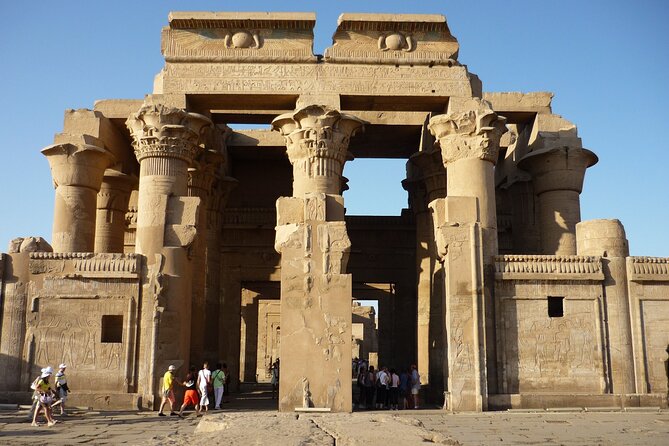
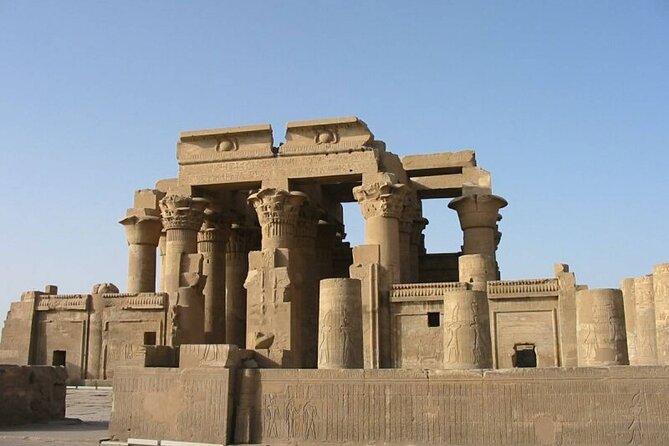
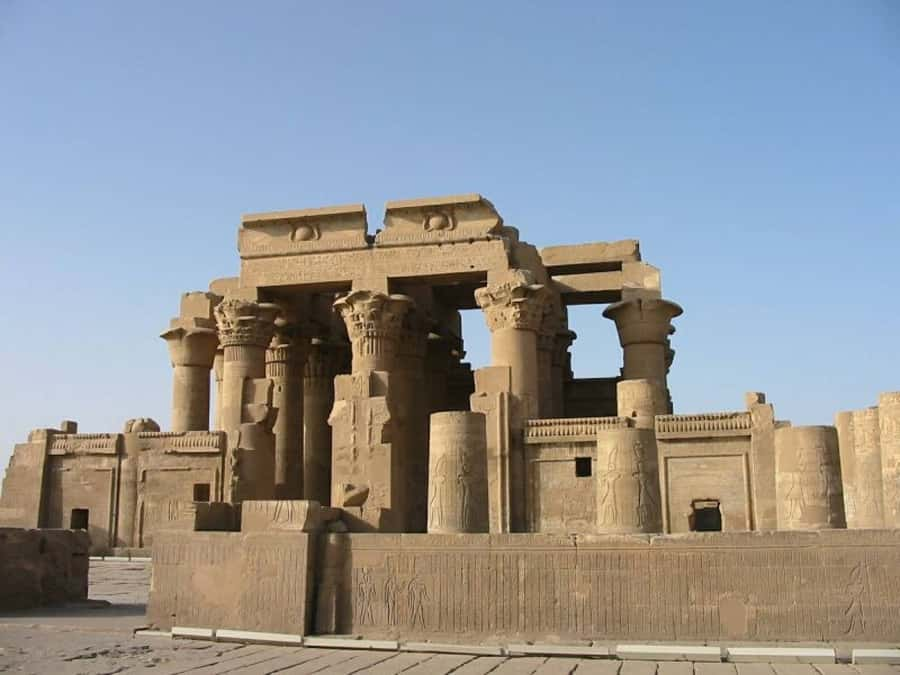
The temple is unusual because it was planned for two divine groupings. Its courts, halls, sanctuaries, and rooms were duplicated, creating a paired layout rather than a single straight religious route. One side was linked with Sobek, the crocodile god, while the other was associated with Horus the Elder.
This double design is the detail you should focus on during the visit. At first glance, the site can look smaller and less imposing than Edfu. Its importance becomes clearer when you understand that you are looking at two parallel religious systems sharing one temple complex.
The surviving carvings also connect the temple with medicine, ritual, calendars, and royal worship. Your guide can show you the reliefs that are easy to miss if you walk through quickly. Haly, Mohamed Aty, and other guides have been praised for explaining the carvings and temple plan in clear English.
Kom Ombo is often a good place to pause and take in the Nile-side setting. The monument is compact enough for a focused visit, but it can still feel hot and exposed. Carry water, use sun protection, and keep your camera ready for the river views.
The order of the stops can vary. The standard experience is built around Edfu and Kom Ombo, with guides meeting you at the temple sites. Ask the local contact which stop comes first on your date, especially if you care about arriving early.
A completely different sort of day in Aswan:
- From Aswan: Abu Simbel Day Tour with Private Guide and Car
★ 4.3 · 342 reviews - Aswan: Abu Simbel Group Tour with Guide and Entrance Fees
★ 4.3 · 337 reviews - Full Day tour to Abu simbel temples from aswan
★ 4.5 · 309 reviews - From Aswan: Private Guided Tour of Philae Temple with Entry
★ 4.6 · 239 reviews
Why the guides matter so much
The temples are worth seeing without a guide, but the guide is what turns carved walls into a readable story. The included guide is described as a professional English-speaking Egyptologist, and the service is private rather than a shared group tour.
The guide names connected with particularly strong experiences include Aladin, Thabet, Walid, Mohamed Aty, Hafiz, Asmaa, and Mohamed Zanan. Assignments are not guaranteed, so you should not book on the assumption that one specific person will lead your visit. Still, these examples show the range of help you can expect: explanations of mythology, readings of hieroglyphs, historical context, photography help, and time to look around independently.
Thabet, for example, has been praised for reading hieroglyphs aloud and connecting the inscriptions to mythology. Aladin has been noted for adding geographical and historical information during the drive. Walid has been appreciated for speaking clear English and allowing time for photographs.
That personal attention is easier to provide in a private group. You can ask questions without worrying about holding up a busload of people. You can also tell the guide if you prefer more explanation, less explanation, or a few quiet minutes to explore alone.
Guides in Spanish, German, or French are available for an added cost. Arabic and several other languages are listed as available, but confirm the language arrangement before booking if English is not suitable for you.
The road to Luxor is part of the experience
After Kom Ombo, you return to the car for the onward trip to Luxor. The Nile, railway, cultivated fields, and villages often run close to the route. You may see farmers, roadside businesses, market activity, and small towns that rarely appear in a standard sightseeing program.
This is one of the more genuine parts of the day. You are not just moving between monuments. You are seeing the populated Nile Valley as it is lived in now, with homes, fields, shops, and traffic passing outside the window.
But keep your expectations realistic. The road has potholes, speed bumps, dusty stretches, and busy city sections. One account of the journey reached more than nine hours, despite the advertised six to seven hours. The final approach to Luxor may feel easier once the road improves, but delays are possible.
Your driver matters here. Drivers named Salah, Mostafa, Islam, Rami, Aamir, Dany, and Mohamed have received praise for safe driving, courtesy, and practical help. Some drivers have stopped for food or ice cream, offered water, or helped passengers feel comfortable during the long ride.
Driver assignments vary, and the driver may speak limited English. One person found that gestures and a translation app were useful. The temple guides provide the historical explanations, so the driver’s main job is safe, dependable transport rather than commentary.
How the $115 price works out
At $115 per person, this is not simply a taxi ride. The cost includes a private car, hotel pickup, Luxor drop-off, entrance fees, taxes, and professional guiding at two major temples.
That bundle can be good value if you already need to travel from Aswan to Luxor. You are combining transport and sightseeing instead of paying for a separate transfer and separate temple visits. The private format also saves you from finding local transport at Edfu and Kom Ombo.
The value is weaker if you only want a cheap point-to-point ride. A train or other basic transport may cost less, but it will not give you the same direct access to both temples or the same door-to-door arrangement. You are paying for time saved, planning reduced, and a more controlled travel day.
Remember the possible add-ons. Some Aswan pickup areas cost $10 per person, and Luxor West Bank service costs $5 per person. Non-English guides also cost extra. Tips are not listed as included, so carry small cash if you want to thank the guides or driver.
Free cancellation is available up to 24 hours before departure, and you can reserve now and pay later. Those terms give you some flexibility, but you should still check the final booking conditions and pickup details for your date.
Who will appreciate this day most
I would choose this trip if you want to visit Luxor after Aswan and do not want a Nile cruise. It suits people with limited time, couples or families who prefer a private car, and anyone who wants guides at both temples.
It is also a good match if you care about seeing rural Egypt between the main sights. The road journey is long, but it gives you a view of the Nile Valley that a flight cannot provide.
Families may appreciate the private setting because you can manage breaks and questions more easily than on a shared coach. The air-conditioned car is helpful, though children and anyone who dislikes long drives should understand that this is still a full road day.
I would think twice if you dislike bumpy roads, need a precise arrival time, or want a leisurely cruise experience. The trip is efficient, but it is not slow travel. The road can take longer than planned, and traffic near towns can change the schedule.
Should you book the Aswan to Luxor temple transfer?
Book it if you want the most useful combination of transport and archaeology between Aswan and Luxor. Edfu is a major payoff, Kom Ombo adds a rare architectural plan, and the private car removes much of the hassle of arranging the route yourself.
Choose an early pickup when possible, confirm your hotel’s pickup zone, and allow extra time beyond the stated six to seven hours. If you can accept a long and sometimes rough drive, this is one of the better ways to turn a necessary transfer into a worthwhile sightseeing day.
Skip it if your priority is the cheapest transport or a relaxed river journey. For everyone else, especially those avoiding a cruise, the $115 price is reasonable for the private car, included entrances, guides, and direct hotel-to-hotel service.
FAQ
How long does the Aswan to Luxor tour take?
The stated duration is six to seven hours, but the drive can take longer. Traffic, city congestion, road conditions, and stops have resulted in journeys of nine hours or more.
Does the tour return to Aswan?
No. The experience transfers you from Aswan to Luxor. A return transfer to Aswan is not included.
Are entrance fees to Edfu and Kom Ombo included?
Yes. Entrance fees for both temples are included in the stated price.
Is the car private and air-conditioned?
Yes. The transfer uses a private, air-conditioned car for your group.
Is a guide included?
Yes. A professional English-speaking guide is included for the temple visits. Spanish, German, and French-speaking guides are available for an additional cost.
Is hotel pickup available everywhere in Aswan and Luxor?
Standard pickup and drop-off are included, but Gharb Soheil, the island, Nagaa al-Mahatta, and New Aswan cost an extra $10 per person. Luxor West Bank pickup or drop-off costs an extra $5 per person.
Just added in Aswan
- 5 Days Cairo, Aswan, and Abu Simbel Tour★ 5.0 · 21 reviews
- 10 Day Egypt Wonders of the Pharaohs Cairo & Alexandria & The Nile & Abu Simbel★ 5.0 · 15 reviews
- Private Tour in Aswan : Felucca and Nubian village★ 5.0 · 29 reviews
- Philae Temple and Aswan High-Dam Half-day tour★ 5.0 · 49 reviews
- Nubian Village by Motorboat In Aswan★ 5.0 · 97 reviews
- Day Tour to Abu Simbel from Aswan by Bus★ 4.5 · 25 reviews
- Abu Simbel Private Full-Day Tour from Aswan★ 5.0 · 114 reviews
- Aswan Philae Temple, Obelisk, and High Dam Private Tour★ 4.5 · 17 reviews
Temple Tours, compared.

Luxor Day Tour: Valley of Kings & Queens & Hatchepsut Temples
Read our review →
Luxor Tour with Valley of Kings, Karnak & Tut Tomb
Read our review →
Full Day Tour of Luxor West Bank Temples and Tombs (Private)
Read our review →
Private Day Tour to Abu Simbel Temples from Aswan
Read our review →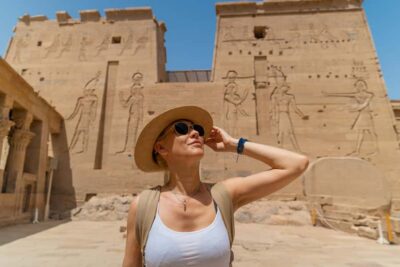
High Dam, Unfinished Obelisk, & Philae Private Tour
Read our review →Browse the lists this tour appears in