
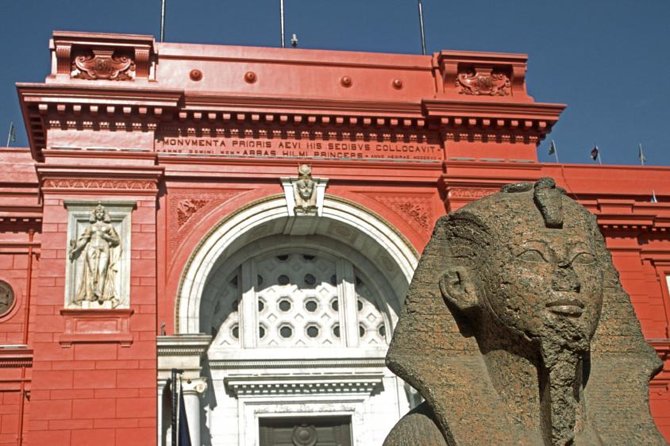
Reviewed · EGYPTIAN MUSEUM TOURS
Private Tour: Egyptian Museum
Tutankhamun’s solid-gold death mask is the headline act, but the real reward here is seeing how much more the Egyptian Museum holds. A private Egyptologist can lead you through royal coffins, mummies, jewelry, household objects, and Roman-era pieces without leaving you to make sense of thousands of displays on your own.
I like the private format, since you can ask to spend more time on Tutankhamun, mummies, or a period that interests you. I also like the hotel pickup and air-conditioned minivan, a practical help in Cairo traffic. The main caution is timing: although the experience lasts about three hours, the museum portion may be only two hours, and some guides have completed it in about 90 minutes.
Key points to know before booking
- Tutankhamun’s treasures are the main event: See the famous gold mask, coffins, chariot, and other funerary objects.
- A private Egyptologist guides your route: Guides such as Fouad, Mohammed, Tariq, Ahmed, Amged, and Kaled have been praised for clear explanations and personal attention.
- The collection is enormous: More than 165,000 objects range from prehistoric Egypt through the Roman period.
- The Royal Mummies Room costs extra: You can add this climate-controlled exhibit to see rulers such as Ramses II.
- The schedule needs watching: The advertised tour is about three hours, but the museum visit is listed at two hours and can feel rushed.
- Pickup and drop-off are included: Transfers use a private air-conditioned minivan, with extra charges for some outlying Cairo areas.
Why a private guide helps inside the Egyptian Museum
The Egyptian Museum is not a tidy, one-story introduction to ancient Egypt. It is a huge collection of objects from thousands of years, and the displays can feel crowded with information. Small signs do not always explain an object fully, and you may not be able to read them easily when other people are gathered around a case.
That is where this tour earns its keep. Your guide introduces the museum’s main themes and points out objects that are easy to miss. You can ask why a coffin was shaped a certain way, how royal burial customs changed, or what an everyday object tells you about life beyond the pharaohs.
You are not joining a large group, so the guide can adjust the pace. Tell the guide at the start if you care most about Tutankhamun, royal mummies, jewelry, tomb furnishings, or Roman material. The tour is designed to be tailored, though the amount of time available still limits how much you can see.
The strongest guide reports name people including Fouad, Mohammed, Tariq, Ahmed, Amged, and Kaled. Fouad is especially praised for making a vast, disorganized collection easier to understand without overwhelming you. Amged and driver Naser also received special praise for planning a careful, accessible visit for a person using a wheelchair.
Guide quality matters more here than on a simple walk through a compact monument. The museum gives you a great deal to look at, but the guide supplies the order and context. Still, do not assume every guide will use the full available time. At the start, politely confirm how long you will spend inside and say clearly that you want free time to look around afterward.
More Egyptian Museum Tours in Cairo
- Cairo: Egyptian Museum, Citadel, and Old Cairo Guided Tour
★ 4.7 · 853 reviews - Cairo: Egyptian Museum of Antiquities online QR Ticket
★ 4.5 · 558 reviews - Museum of Egyptian Civilization, Citadel & Old Cairo Tour
★ 4.7 · 530 reviews
Hotel pickup and the Cairo ride to Tahrir Square
The tour begins at about 9:00 a.m. with pickup from your hotel. You travel to the museum in a private, air-conditioned minivan, then return to your hotel after the visit.
This arrangement is useful in Cairo, where traffic can turn a short route into a slow one. One delayed start was blamed on traffic, and that is a realistic part of the day rather than a flaw in the museum itself. The drive gives your Egyptologist time to explain what you are about to see and lets you discuss priorities before entering.
The standard price is listed at $99.18 per person. For a private tour, that can be fair value if you are traveling as a small group and want door-to-door transport plus a specialist guide. The value is less clear if you mainly want a quick look at the mask and plan to leave after an hour.
Extra transfer charges apply for pickup from the 6th of October, North Coast Capital, and Settlement areas. Each listed supplement is 1,000 Egyptian pounds round-trip per car. Non-English guides also carry a 1,000 Egyptian pound supplement, so check the language and pickup area before you pay.
Tutankhamun’s gold mask and the royal treasures
The museum’s most famous rooms hold objects from the tomb of Tutankhamun, the young pharaoh whose burial treasures became symbols of ancient Egypt. Your guide should take you to the solid-gold death mask, the gilded coffins, the chariot, and other funerary pieces.
The mask is a moment that needs no sales pitch. Its scale, detail, and polished gold make it instantly recognizable, but a guide can explain how it functioned within the burial tradition and how the surrounding objects fit together.
The coffins are worth more than a quick glance. Their decoration, materials, and nested arrangement show the care given to a royal burial. The chariot shifts the story from death to kingship, warfare, ceremony, and the image Tutankhamun’s court wanted to preserve.
The room can sometimes be surprisingly quiet, which gives you a better chance to look closely. Still, do not build your whole day around seeing every Tutankhamun object in detail. Time is tight, and the guide will need to balance the famous pieces with other parts of the museum.
Beyond Tutankhamun, from royal mummies to daily life
The museum’s strength is not only its spectacular gold. It also shows the ordinary objects that make ancient Egypt feel like a lived society rather than a parade of rulers.
You may see jewelry, furnishings, tomb goods, tools, and other household items. These pieces help you picture how people prepared for death, displayed status, and organized daily life. Ask your guide to include some ordinary objects, since they are easy to skip when the grand royal pieces draw everyone’s attention.
The collection spans prehistoric Egypt through the Roman era. That long time range can be hard to follow without a clear route. A private guide can show you how beliefs, art, burial customs, and political power changed over time, rather than presenting each case as an isolated object.
Roman-era funerary paintings add another layer. They remind you that Egypt continued to change after the pharaohs and that later rulers and communities adapted older traditions. If you have already visited pyramids or temples, the museum gives you the smaller objects that those monumental sites cannot show.
A completely different sort of day in Cairo:
- Hurghada: Full-Day Trip to Cairo by Plane
★ 4.5 · 2,415 reviews - Cairo: Dinner Cruise on the Nile River with Entertainment
★ 4.2 · 2,190 reviews - Cairo: Nile Sunset Dinner Cruise, Show & Optional Transfer
★ 4.1 · 2,184 reviews - Cairo Airport Private Arrival/Departure Transfer to any address/hotel in Cairo
★ 5.0 · 1,509 reviews
The Royal Mummies Room, an important paid extra
The Royal Mummies Room is optional and costs extra. It is climate-controlled and contains the preserved remains of major Egyptian rulers, including Ramses II.
For many people, this is the most powerful part of the museum. Seeing the actual remains of a ruler connected with major building projects gives a direct, physical link to the names you encounter at temples and monuments.
The extra admission is worth considering if royal burials and ancient preservation are high on your list. If you prefer art, jewelry, and architecture, you may decide to stay with the main collection instead. Ask your guide about the current arrangement and cost before entering, since it is not included in the base tour price.
Do not expect the Royal Mummies Room to replace the rest of the museum. It is one focused exhibit, while the main collection gives you a broader picture of Egyptian life and belief.
Two hours inside can be enough, but only with a plan
The itinerary lists about two hours for the museum stop, while the full experience lasts roughly three hours including transport and the introduction. Some people have covered the museum in about half a day, but others have spent only 90 minutes inside because the guide moved quickly.
That difference is important. Two hours can work well for a highlights tour, especially if the guide has a sensible route and you know what matters to you. It is not enough to inspect 165,000 objects, read every label, and return to favorite rooms at leisure.
The best approach is to set expectations before the tour begins:
- Ask for the Tutankhamun collection early.
- Request the Royal Mummies Room if you want it.
- Tell the guide which periods or objects interest you.
- Keep a little free time for your own looking.
- Confirm when the museum portion ends.
The private format gives you a better chance of shaping the visit, but it does not create extra hours. If you want a slow museum day, this three-hour option may feel short. If you want an organized first visit before exploring Cairo on your own, it makes more sense.
What happens after the museum
After the guide introduces the main highlights, you receive time to explore further on your own. This is one of the most useful parts of the arrangement, since you can return to the mask, spend longer with a favorite coffin, or look through rooms the guide only briefly covered.
The tour may also offer a visit to a Papyrus Institute after the museum. There you can learn about papyrus as an ancient writing material and art form, then buy painted papyrus scenes at your own expense.
Treat this stop as optional in spirit, even if it is offered as part of the route. If you still have museum areas you want to see, say so. The museum is the reason to book this experience, and your remaining time may be better spent there.
Lunch is included only if you select the option that includes it. The basic tour information does not make lunch part of every booking, so check the option carefully rather than assuming it is covered.
Comfort, accessibility, and practical limits
Most people can participate, and the museum is near public transportation, though this tour relies on private vehicle transfers. Pickup and drop-off remove some of the day’s hassle, particularly if you are unfamiliar with Cairo.
The experience is private, meaning only your group participates. That makes it easier to ask questions, adjust the pace, and request help. One particularly strong account describes a wheelchair user whose route was planned carefully and made accessible, but you should still discuss your specific needs with the provider before booking.
The included guide language is English. A supplement applies to other guide languages. The driver and guide are separate roles, and positive experiences have specifically credited both guide and driver when the service worked well.
Tipping is not listed as included. One person felt that an expected tip reduced an otherwise good experience, so bring this cost into your planning and ask about local tipping expectations at the start if you want clarity.
Is $99.18 good value?
The price makes the most sense for two or more people who value a private guide and hotel transport. You are paying not only for entry and a museum visit, but also for an Egyptologist who can filter the collection, answer questions, and help you avoid wandering without a plan.
For a solo visitor, the per-person price is harder to judge. You still receive private attention, but a self-guided visit costs less if you are comfortable finding the main rooms yourself. The museum’s crowded displays and limited signs make the guide more useful, but the short schedule limits the amount of interpretation you receive.
I would call it good value when your priorities are convenience, context, and a focused first visit. I would be more cautious if you want a long, unhurried museum session or expect every major room to be covered. The Royal Mummies Room, lunch option, language supplements, outlying-area transfers, and tips can also raise the final cost.
Who should book this Egyptian Museum tour?
This tour suits you if you are visiting Cairo for the first time, want a private introduction, or prefer to have the museum’s complicated collection put in order. It is also a good fit if you want hotel pickup and a guide who can shift attention toward your interests.
Families and small groups may find the private setup especially practical. You can ask questions without holding up strangers, and the guide can adjust explanations for different ages and interests.
You should think twice if you are a serious museum reader who wants hours for every gallery. The 90-minute accounts show the risk clearly: the advertised duration does not guarantee a slow visit inside. Agree on the museum time before you begin, and protect your free time.
The overall rating is 4.3 from 74 reviews, with the strongest praise directed at clear, engaging guides and reliable pickup. The weakest experiences involve guides rushing through the museum or ending the visit early. That makes guide assignment and early communication the two biggest variables.
Should you book it?
Book this private Egyptian Museum tour if you want Tutankhamun, the royal collections, and a clear introduction without wrestling with the museum alone. The guide is the main reason to choose it, and names such as Fouad, Mohammed, Tariq, Ahmed, and Amged have been associated with especially strong visits.
Before you go, request the full museum time, ask about the Royal Mummies Room, and confirm any pickup or language supplement. If the guide gives you a thoughtful route and leaves time to look around, $99.18 can be a sensible price for a private Cairo experience. If you want to study the collection at length, book a longer museum visit instead.
FAQ
How long does the private Egyptian Museum tour last?
The experience lasts approximately three hours, including hotel pickup, transport, the museum visit, and the return transfer. The museum stop is listed at about two hours.
What time does the tour start?
The stated start time is 9:00 a.m.
Is hotel pickup included?
Yes. Pickup and drop-off are included by private, air-conditioned minivan, though extra transfer charges apply to the 6th of October, North Coast Capital, and Settlement areas.
Is the Royal Mummies Room included?
No. The Royal Mummies Room requires an additional cost. It contains the mummies of Egyptian rulers including Ramses II.
Is lunch included?
Lunch is included only when you select the option that includes it.
What language is included in the price?
English-language Egyptologist guiding is included. A 1,000 Egyptian pound supplement applies to other guide languages.
Can only my group join the tour?
Yes. This is a private activity, so only your group participates.
More Museums in Cairo
- Cairo Luxury Tours to Egyptian Museum,Coptic Cairo & Bazaar
★ 4.5 · 130 reviews - Egyptian Museum, Citadel and Old Cairo Tour
★ 5.0 · 118 reviews - VIP Private tour Egyptian museum hanging church Islamic mosque
★ 5.0 · 113 reviews - Private Day Tour in Egyptian Museum, Citadel and Coptic Cairo
★ 5.0 · 99 reviews
Just added in Cairo
- Private Dinner Cruise with Belly Dancing★ 5.0 · 48 reviews
- Fayoum 4×4 Safari Adventure, Sandboarding, Lunch, Felucca★ 5.0 · 71 reviews
- Private Half Day Tour to Islamic Cairo★ 5.0 · 19 reviews
- Private day trip to Cairo from Hurghada★ 5.0 · 139 reviews
- Private day tour visiting Coptic, Islamic Cairo, khan Elkhalili★ 5.0 · 39 reviews
- Private VAN Airport Transfer: Cairo Airport Transfer to anywhere in Cairo★ 4.5 · 49 reviews
- Private pickup & Transfer from & to cairo Airport★ 5.0 · 19 reviews
- Private Transfer – Cairo Airport Arrivals Hall to Hotel★ 5.0 · 147 reviews
Egyptian Museum Tours, compared.

Tour to Giza Pyramids and The Egyptian Museum
Read our review →
Cairo Pyramids, Sphinx & Egyptian Museum Day Trip
Read our review →
Egyptian Museum, Citadel, and Old Cairo Guided Tour
Read our review →
Egyptian Museum of Antiquities online QR Ticket
Read our review →Browse the lists this tour appears in