
Reviewed · MEMPHIS & SAQQARA TOURS
Private Guided Day Tour of Giza and Saqqara with Egyptian Lunch and Camel Ride
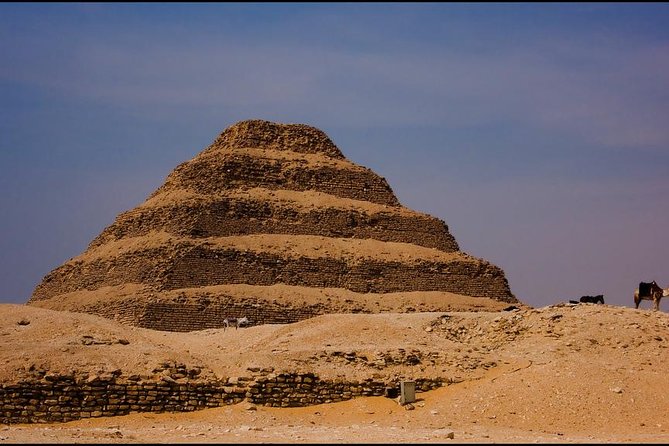
The first pyramid was not at Giza. It was Saqqara’s Step Pyramid of Djoser, an early stone experiment that changed Egyptian building forever. This private day tour links that quieter burial ground with the famous pyramids of Giza, so you see how royal tombs developed rather than simply ticking off the Great Pyramid.
I like the private door-to-door transport, especially in Cairo, where getting across town can take patience. I also like the mix of major sights and smaller details: ancient pyramid texts, painted tomb scenes, a local lunch, and a 30-minute camel ride with the pyramids behind you.
The main thing to consider is the long day and the uneven guide experience. Guides such as Sayed Mohamed, Gamal, Amani, Kamal, and Ahme have been praised for clear explanations, patience, photography, and language skills, but one disappointing account describes a guide who stayed in the vehicle and offered little on-site commentary. Confirm your guide’s approach at the start.
Key points at a glance
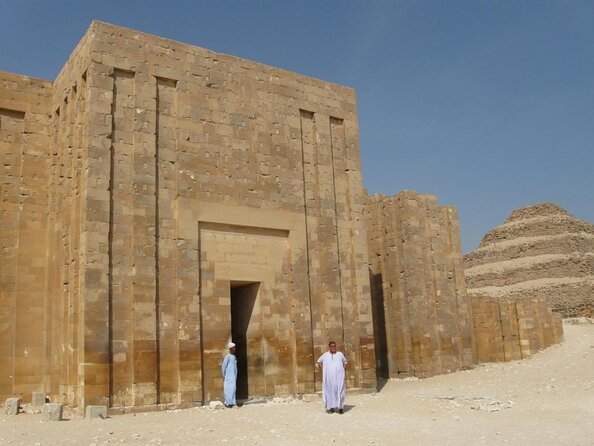
- Saqqara gives the day its historical shape: See Djoser’s Step Pyramid, enter Teti’s pyramid, and view Kagemni’s tomb scenes.
- Giza includes the essential royal trio: Visit the pyramids of Cheops, Chephren, and Mycerinus, then stop at the Great Sphinx.
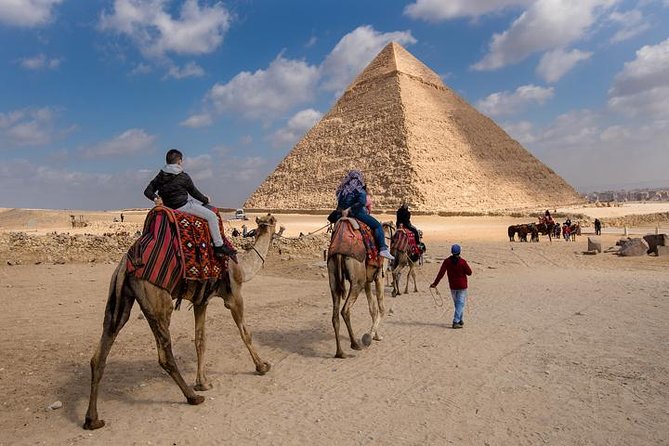
- The camel ride lasts 30 minutes: You ride around the Giza pyramids with the Great Pyramid in view.
- Lunch is Egyptian and filling: Koshary is included, with foul and falafel also described as possible meal choices.
- The tour is private: Your group has its own guide and air-conditioned van, with hotel pickup and drop-off.
- The price is unusually low for a full private day: At $45 per person, included entrance fees, lunch, transport, water, and the camel ride make the value strong.
Why pairing Saqqara with Giza makes sense
Many Cairo day tours rush straight to Giza. That gives you the postcard view, but it skips the story of how pyramid building began. Saqqara supplies that missing first chapter.
The Step Pyramid of King Djoser dates to about 2700 B.C. Its stacked design is very different from the smooth-sided pyramids at Giza. You can look at it as a record of experimentation, when royal builders were moving from earlier burial forms toward the great stone pyramid tradition.
Giza then shows the mature version of that idea. You visit the Great Pyramid of Cheops, also called Khufu, followed by the pyramids of Chephren and Mycerinus. Seeing all three together helps you understand that Giza is not one monument but a royal complex built across generations.
I value this order of ideas more than another hour spent posing beside a pyramid. Still, the supplied schedule presents the day in two slightly different ways. One description places Saqqara before lunch and Giza afterward, while the detailed stop order begins at Giza at 8:00 a.m. Ask your guide to confirm the running order on the morning of the tour.
More Camel Rides in Giza
- Cairo: Pyramids & Great Sphinx Private Tour with Camel Ride
★ 4.9 · 6,335 reviews - Top Rated Giza Pyramids,Sphinx,Camel ride,lunch & inside pyramids
★ 5.0 · 1,004 reviews - Giza pyramids, Sphinx, ATV bike, Lunch,Camel ride, Dinner cruise& shopping tour
★ 5.0 · 798 reviews
Starting at Giza with the three pyramids
The stated start time is 8:00 a.m., with pickup from your hotel in a private, air-conditioned van. You are not being added to a large coach group, and the vehicle includes Wi-Fi. That matters in Cairo, where private transport lets you move at your own pace instead of waiting for a full bus.
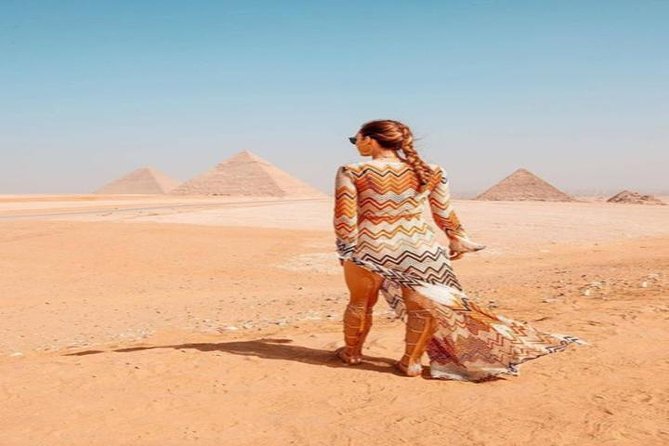
At the Giza Plateau, the focus is the three main pyramids. Cheops is the largest and most famous. Chephren is often recognizable by the remaining cap of smoother stone near its top, while Mycerinus is smaller and gives the group a useful sense of scale.
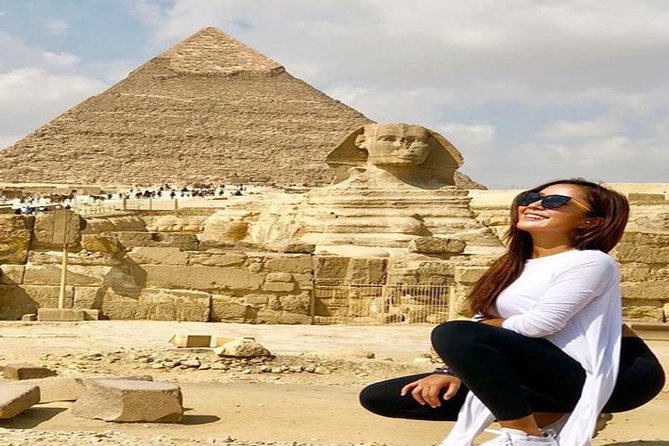
The tour includes a stop at a panorama where all three pyramids can be seen together. This is the place for broad photographs, and the guide can help with pictures. Several guides connected with this experience have been praised for taking strong photos, with Sayed Mohamed singled out for patience and calm, and other guides described as helping create memorable shots.
The included entrance fees are important here. Pyramid areas can involve several separate charges, and a low headline price can become less appealing when tickets are added one by one. In this case, the tour price states that entrance fees are included, though the information does not promise entry into every interior space at Giza.
Some people will want to enter the Great Pyramid. One account describes going inside it, along with two other tombs, but interior access can depend on the ticket arrangement and the day’s plan. Ask before leaving the hotel if entering a particular pyramid is essential to you.
A 30-minute camel ride beside the pyramids
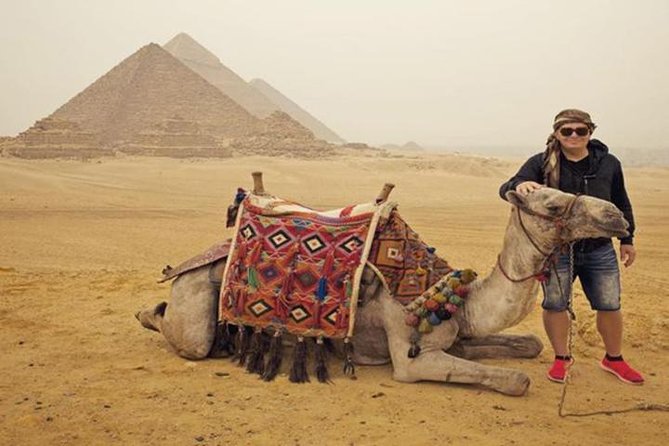
The camel ride takes about 30 minutes around the Giza pyramids. This is not a long desert expedition. Think of it as a short, memorable circuit that gives you a different viewpoint and the familiar pyramid backdrop.
The best part is the visual contrast: you are on a traditional desert animal, with the stone monuments behind you and open sand around the plateau. It is a classic Egyptian scene, but the short duration keeps it from taking over the day.
You should also keep your expectations sensible. A camel ride can be bumpy, and the experience is more about the setting and photographs than speed or distance. One account described the ride as short, which matches the stated 30-minute duration. If you want an extended ride through the desert, this is not that product.
Wear practical clothing and shoes. The stated dress code is smart casual, but the useful version of that advice is simple: choose clothes that protect you from sun and dust while still being comfortable when climbing into and out of a vehicle, tomb, or camel saddle.
The Great Sphinx and its temple
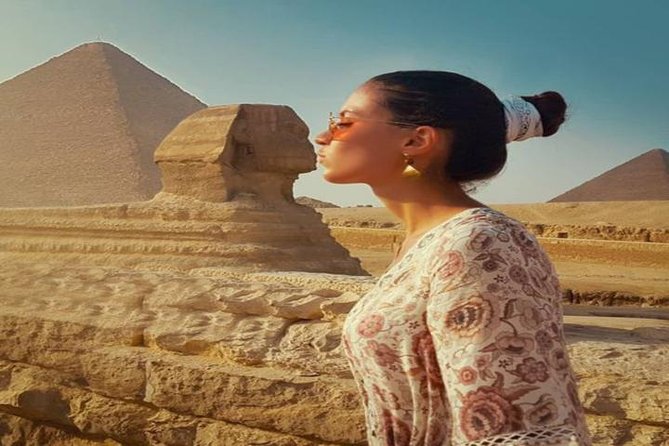
The Great Sphinx receives its own one-hour stop. This is more than a quick roadside photograph. The visit includes the Sphinx and the large temple associated with the Giza complex.
The statue’s familiar human head and lion body make it one of Egypt’s most recognizable sights, but scale is what makes the in-person visit worthwhile. From the viewing area, you can study the relationship between the Sphinx, the temple, and the nearby pyramids.
Your guide should explain what you are seeing here rather than simply point out the statue. This is where the guide’s quality matters most. The strongest guides named in connection with the tour, including Gamal, Sayed Mohamed, and Amani, are described as offering history along with help taking photos. One account gives a sharp warning in the other direction: the guide stayed in the vehicle and told the group to ask questions later. I would make sure your guide walks with you at the Sphinx and explains the temple on site.
More Memphis and Saqqara tours in Giza:
- VIP All inclusive Best of the best Giza Pyramids,Sakkara,Memphis
★ 5.0 · 3,164 reviews - From Cairo: Pyramids of Giza, Sphinx, Saqqara & Memphis Tour
★ 4.7 · 3,110 reviews - Cairo: Pyramids, Sakkara & Memphis Tour with Lunch
★ 4.6 · 2,493 reviews - Private Day Tour Giza Pyramids, Sphinx, Memphis, and Saqqara
★ 4.5 · 904 reviews
Saqqara and the Step Pyramid of Djoser
Saqqara is the part of the day I would most look forward to. Giza is the essential headline, but Saqqara gives you more room to think about ancient Egyptian burial customs and royal power.
The Step Pyramid of Djoser is described as Egypt’s first and oldest stone building, dating to about 2700 B.C. Its layered form looks less polished than the smooth pyramids at Giza, and that is precisely its value. You can see an important stage in the development of pyramid design rather than only the finished idea.
The tour also takes you into the pyramid of Teti, dating to about 2200 B.C. Interior spaces can feel very different from the huge exterior monuments. You may find yourself looking less at size and more at the carved religious pyramid texts inside.
The tomb of the high priest Kagemni adds another useful change of focus. Its wall scenes show daily life, giving you details beyond kings and burial chambers. The images can help connect the enormous royal monuments with work, food, animals, and ordinary activity in ancient Egypt.
Saqqara is also the place where a good Egyptologist can turn scattered stones into a clear story. Ask about the change from the Step Pyramid to the smooth-sided pyramids, the purpose of the texts, and how a private tomb such as Kagemni’s differs from a royal pyramid complex.
One practical point: Saqqara makes the day feel full. The stated stop is three hours, and that includes the pyramid and tomb visits as well as lunch. If you prefer a slow, museum-like pace, you may need to choose which details matter most.
Egyptian lunch: koshary, foul, or falafel
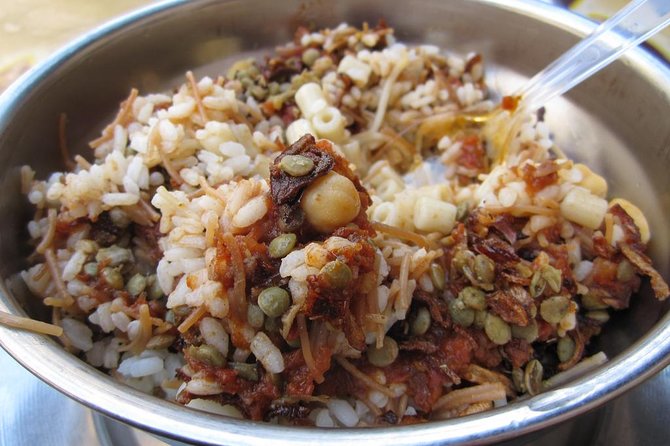
Lunch is included, with koshary identified as the local meal provided. Koshary combines rice, macaroni, black lentils, tomato sauce, fried onions, and chickpeas. It is hearty, inexpensive Egyptian comfort food, and a sensible midday meal after a morning among the monuments.
The food description also lists foul, warm fava beans seasoned with garlic, onion, and cumin, and falafel made from ground fava beans, served in pita with salads, pickles, and hot sauce. It is not entirely clear whether these are alternatives available on the day or examples of typical Egyptian food, so ask your guide what will be served.
One small but useful detail from the day’s practical notes is the need to consider toilet access at the lunch stop. Do not assume every stop has convenient facilities. Ask before leaving Saqqara or when you arrive for lunch, especially if you are touring with children.
What the private format changes
The private setup is the strongest practical feature. Only your group participates, so you can ask questions without competing with a crowd and adjust the pace within the day’s fixed structure.
You also receive hotel pickup and drop-off in Cairo, bottled water, and a private air-conditioned van. That saves you from arranging separate rides between Giza and Saqqara, two major archaeological areas that are not best handled by casual taxi hopping.
The private format does not guarantee a perfect guide. It makes the guide more important. A strong Egyptologist can explain why Djoser’s pyramid matters, point out the purpose of the Giza temples, help with photographs, and answer questions as you go. A passive guide can leave you with a series of impressive views but little understanding.
If you are assigned Sayed Mohamed, Gamal, Amani, Kamal, or Ahme, the information available about this experience gives you useful expectations to discuss. Sayed Mohamed is described as calm, patient, highly trained in ancient Egyptian history, and good with photographs. Gamal is described as offering detailed explanations and selecting a worthwhile crafts shop rather than a poor tourist stop. Ahme is noted for speaking good Spanish, while Kamal is described as speaking very good English. These names may not be guaranteed for your departure, so confirm who will guide you.
Is $45 good value?
At $45 per person, this is strong value if the promised inclusions are delivered. You receive private transport, a personal Egyptologist, entrance fees, lunch, bottled water, and a 30-minute camel ride. Paying separately for transport and a guide could quickly cost more, particularly for a small group.
The value improves if you want the full Giza and Saqqara combination in one day. A basic Giza visit alone can feel incomplete, while Saqqara adds the early pyramid story and the tomb interiors.
The low price also means I would read the inclusions carefully. The information confirms entry fees generally, but it does not specify every optional interior ticket at Giza. It also does not guarantee a particular guide, lunch venue, or the exact sequence of Giza and Saqqara. Ask those questions before the vehicle leaves.
Group discounts are available, and the activity is booked about five days ahead on average. Confirmation is received at booking, and cancellation is free if you cancel at least 24 hours before the local start time. Within 24 hours, the amount paid is not refunded.
Who should book this day?
This suits you if you want the major Cairo pyramid sights without arranging several separate transfers. It is especially useful for a first visit, a family group, or friends who want control over the pace and plenty of help with photographs.
History-minded visitors will get the most from Saqqara, Teti’s pyramid, Kagemni’s tomb, and the pyramid texts. The camel ride adds a classic experience without requiring a separate desert excursion.
You may want a different plan if you dislike long sightseeing days, want extended time inside the Great Pyramid, or prefer a slow specialist visit to one archaeological site. You should also be direct about guide expectations if detailed commentary is important to you.
Should you book it?
I would book this tour if you want Giza and Saqqara in one efficient private day and care about having transport, entry fees, lunch, and the camel ride bundled into a low price. Saqqara gives the experience real depth, while Giza and the Sphinx deliver the famous sights.
Before confirming, ask who your Egyptologist will be, whether the day starts at Giza or Saqqara, and which pyramid interiors are included. If the answer is clear and your group values flexibility, this is a practical Cairo choice with excellent potential. Just remember that the quality of the day depends heavily on the guide who steps out of the van with you.
FAQ
How long does the tour last?
The tour lasts approximately eight hours.
What time does the tour start?
The detailed schedule gives an 8:00 a.m. hotel pickup. Confirm the exact pickup time when booking.
Is hotel pickup included?
Yes. Hotel pickup and drop-off are included, and the activity ends back at the meeting point.
Is this a private tour?
Yes. Only your group participates, with a private guide and private air-conditioned van.
What sites are visited?
The day includes the Giza pyramids, the Great Sphinx, and Saqqara, including the Step Pyramid of Djoser, Teti’s pyramid, and Kagemni’s tomb.
Is the camel ride included?
Yes. A 30-minute camel ride around the Giza pyramids is included.
Is lunch included?
Yes. Egyptian lunch is included, with koshary specified. Foul and falafel are also described as possible traditional meal choices.
Are entrance fees included?
Yes. Entrance fees are included in the tour price, though the available information does not specify every optional interior ticket at Giza.
Is bottled water provided?
Yes. Bottled water is included.
Can children join the tour?
Yes. Children can participate, but they must be accompanied by an adult.
Just added in Giza
- Private Tour: Discover Giza Pyramids, Sphinx & Egyptian Museum★ 5.0 · 83 reviews
- Private pyramids tour to Giza pyramids Sphinx Dahshur Sakkara & Memphis★ 5.0 · 37 reviews
- GEM Grand Egyptian Museum Private Tour from Cairo Giza hotels★ 5.0 · 23 reviews
- Vip Tour Giza pyramids, sphinx with Camel Ride and Vip lunch★ 5.0 · 37 reviews
- Giza Pyramids,Sphinx,Camel Ride,ATV Bike,Shopping,Dinner cruiseII★ 5.0 · 27 reviews
- 8-Hours Private Guided Tour in Giza , Egyptian Museum & Market with Lunch★ 5.0 · 21 reviews
- Pyramids of Giza and National Museum Private Day Tour★ 5.0 · 21 reviews
- Private tour Giza Pyramids ,sphinx & camel ride all included★ 5.0 · 36 reviews
Memphis & Saqqara Tours, compared.
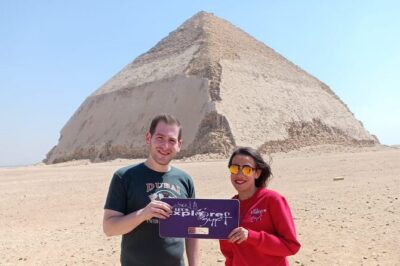
VIP All inclusive Best of the best Giza Pyramids,Sakkara,Memphis
Read our review →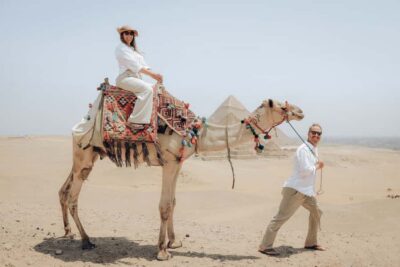
Pyramids of Giza, Sphinx, Saqqara & Memphis Tour
Read our review →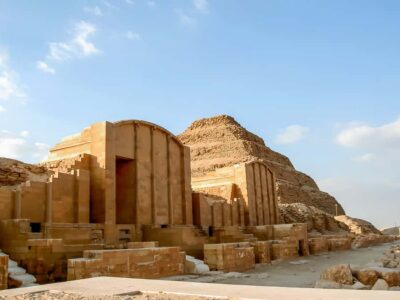

Sakkara, Memphis & Dahshur (Pyramid & Felucca Options)
Read our review →
All-inclusive Private Trip Giza Pyramids Sphinx Saqqara, Dahshur
Read our review →
8 hours Cairo day Tour to Giza Pyramids, Memphis City, Sakkara and Dahshur
Read our review →Browse the lists this tour appears in