
Reviewed · MEMPHIS & SAQQARA TOURS
Private full day tour to Giza Pyramids, Sphinx, Sakkara and Dahshour with guided
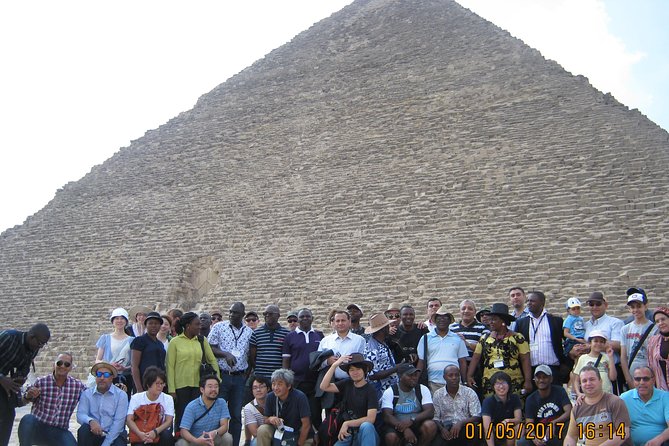
The best thing about this private Cairo tour is its sweep: in one long day, you move from the famous pyramids of Giza to the quieter ancient sites at Saqqara and Dahshour. You see not just the finished monuments, but the stages of experimentation that led Egyptian builders toward the Great Pyramid.
I like the private vehicle and guide, since the sites are spread out and Cairo traffic can make self-driving a poor use of your day. I also like the chance to ask questions at your own pace, especially with guides such as Nasser and Bassam, who are noted for patient explanations and practical help. The main drawback is the packed schedule, with roughly eight to nine hours in the heat and several entrance fees paid separately.
Key things to know before booking
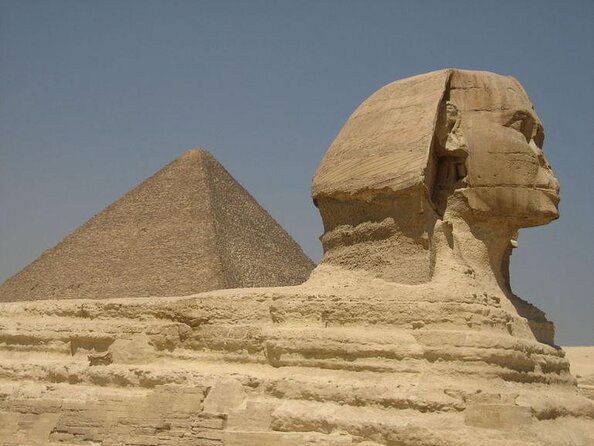
- Three major archaeological areas in one day: Giza, Saqqara, and Dahshour give you a broad view of pyramid building.
- Private touring: Only your group takes part, with a guide and an air-conditioned vehicle.
- Strong guide feedback: Nasser is often praised for patience, clear English, history explanations, and help with photos and site navigation.
- Entrance fees are generally extra: The tour price covers transport and guiding, but you should budget separately for site tickets and any interior access.
- A full day in the sun: Comfortable shoes, light clothing, and a hat are practical necessities.
- Flexible cancellation: You can cancel for a full refund up to 24 hours before the start time.
Why this pyramid route works so well
Many Cairo excursions stop at Giza and call it a day. This one gives you a more useful story. Giza shows the height of royal pyramid building, Saqqara shows an early step in the design process, and Dahshour reveals how Egyptian builders tested angles and construction methods.
That order also helps you make sense of what you are seeing. At Giza, the pyramids can feel almost too familiar from photographs. After seeing Saqqara and Dahshour, you understand that these monuments were not created in one sudden burst of genius. They developed through trial, change, and careful engineering over centuries.
The private format matters here. You can spend more time at the Great Pyramid if that is your priority, ask your guide to explain burial customs again, or move on when the heat becomes tiring. A shared group tour can offer a lower price, but it rarely gives you the same control.
At $55 per person, the value is strong if the advertised inclusions match your booking confirmation. You receive hotel pickup and return, a private vehicle, an Egyptology guide, bottled water, soft drinks, fuel, and parking. Entrance fees are not included, and the tour information is not fully consistent about lunch: the overview says lunch is covered, while the included-services list does not clearly include it. I would confirm both lunch and the exact ticket arrangements before paying.
More Memphis and Saqqara tours in Giza:
- VIP All inclusive Best of the best Giza Pyramids,Sakkara,Memphis
★ 5.0 · 3,164 reviews - From Cairo: Pyramids of Giza, Sphinx, Saqqara & Memphis Tour
★ 4.7 · 3,110 reviews - Cairo: Pyramids, Sakkara & Memphis Tour with Lunch
★ 4.6 · 2,493 reviews
Giza begins with the pyramids and Sphinx
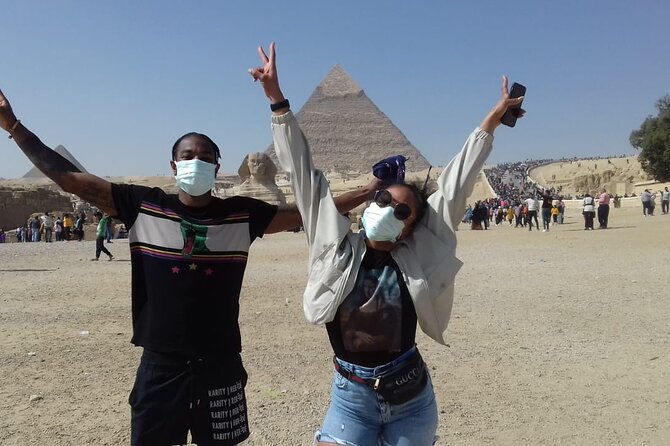
You spend about two and a half hours around the Giza complex, with time for the Great Pyramid of Khufu, the Pyramid of Khafre, the Pyramid of Menkaure, the Valley Temple, and the Sphinx. The main pyramid area admission is described as included in one part of the tour details, but the individual stops also say entrance tickets are not included. Treat this as something to verify in writing.
The three pyramids were royal tombs built during Egypt’s Fourth Dynasty. Khufu’s Great Pyramid is the oldest and largest of the group, and the only surviving monument of the ancient Seven Wonders. Khafre’s pyramid is slightly smaller, though its higher bedrock setting and remaining casing stones can make it appear taller. Menkaure is the smallest of the three.
Your guide should help you read the site instead of simply pointing at large stone triangles. The placement of the pyramids, the original smooth outer casing, and the relationship between the burial complex and the Nile all add meaning. Ask about how workers moved stone, how royal burial areas were organized, and what is known versus assumed about the construction process.
The Sphinx is the emotional high point for many people. With a lion’s body and the head of King Khafre, it served as a guardian figure near the funerary complex. You also visit the Valley Temple, associated with the preparation and mummification of Khafre’s body.
Give yourself time for photographs, but do not let the camera take over. The Sphinx area can feel crowded, and a private guide can help you find a better angle and keep the visit moving. Nasser is specifically praised for taking photos, helping with site navigation, and being patient when groups wanted extra picture stops.
Khafre’s Pyramid and the question of going inside
The itinerary allows about an hour at Khafre’s Pyramid. From outside, this is one of the most rewarding places to hear the guide compare the three Giza monuments. The pyramid was built for Khafre, who ruled during the Fourth Dynasty, around 2558 to 2532 BC.
The interior is not automatically part of the base experience. Entrance fees are extra, and the tour information does not promise entry into every pyramid. If you want to go inside one, ask exactly which ticket is required and how much it costs on your date.
Interior access can be physically demanding. The Great Pyramid’s passages are narrow and low, and the route includes a descending passage beneath the original entrance. You should not book interior entry simply because it is famous. If you dislike confined spaces or have mobility concerns, the exterior explanation may be the better choice.
Khufu’s Great Pyramid deserves your full attention
The Great Pyramid receives about an hour in the schedule. That is enough for a focused visit, but it is not a leisurely archaeological study. You will likely spend part of the time walking between viewpoints, listening to the guide, and taking photographs.
Khufu’s monument was built as a royal tomb and originally had a smooth limestone exterior. The original entrance sits on the northern face, about 17 meters above ground. Inside, the passage system includes a descending corridor that eventually reaches the bedrock beneath the pyramid.
Those details help explain why an hour can pass quickly. The pyramid is not just a huge pile of blocks. It is a carefully planned structure with internal spaces, corridors, and a larger funerary complex around it. A good Egyptologist guide can connect those features to the religious beliefs and royal power of the period.
The tradeoff is time. Giza is the most famous stop, but it is only one part of the day. If your main goal is to spend hours at the plateau or enter more than one pyramid, this route may feel rushed. If you want to see several major sites with one private guide, the broad coverage is its main strength.
A few more days out in Giza to weigh up
- From Hurghada: Cairo and Giza Highlights Full-Day Tour
★ 4.5 · 6,014 reviews - From Sharm El-Sheikh: Cairo’s Pyramids: Full-Day By Flight
★ 4.7 · 720 reviews - Private Full-Day Tour to Giza Pyramids,Sphinx,Memphis, and Saqqara
★ 5.0 · 626 reviews - Cairo By Big Bus full day From Hurghada (Pyramids-sphinx-Egyptian Museum-Lunch)
★ 4.5 · 494 reviews
Saqqara shows how the pyramid form developed
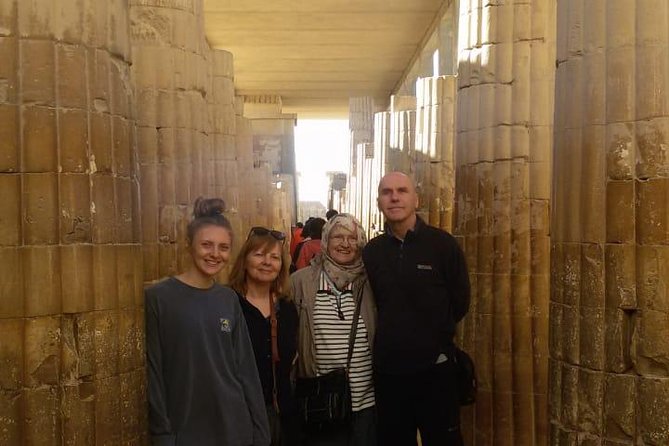
After Giza, the tour continues to Saqqara, about 27 kilometers southwest of Cairo. The schedule gives this area about two hours, though the listed stop times suggest roughly an hour at the pyramid and additional short visits nearby.
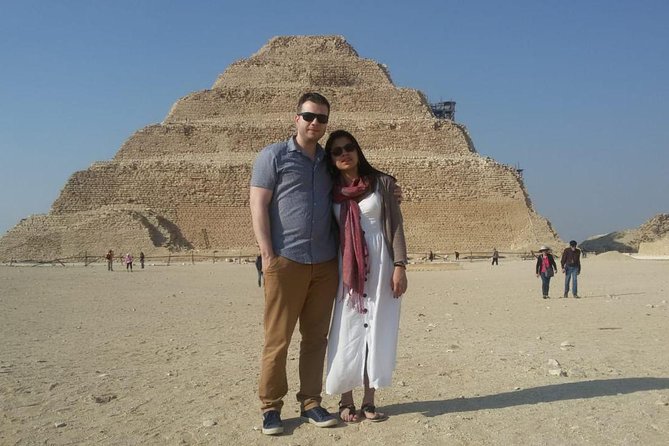
Saqqara is valuable because it makes the development of Egyptian pyramid design easier to understand. The Step Pyramid of Djoser began as a mastaba, a rectangular tomb with sloping sides, and was expanded into a six-tier stone structure. Built in the 27th century BC during the Third Dynasty, it is considered Egypt’s earliest colossal stone building.
The Step Pyramid does not have the smooth, finished appearance of Giza. That is precisely why it matters. You can see an earlier answer to the problem of creating a monumental royal tomb, before later builders refined the pyramid into the familiar form.
Expect walking over an archaeological site rather than a single compact viewpoint. Wear sturdy shoes, carry water, and keep your hat handy. The supplied vehicle includes bottled water and soft drinks, which is useful during a long day, but you should still plan for sun exposure.
The Step Pyramid of Djoser puts Giza in context
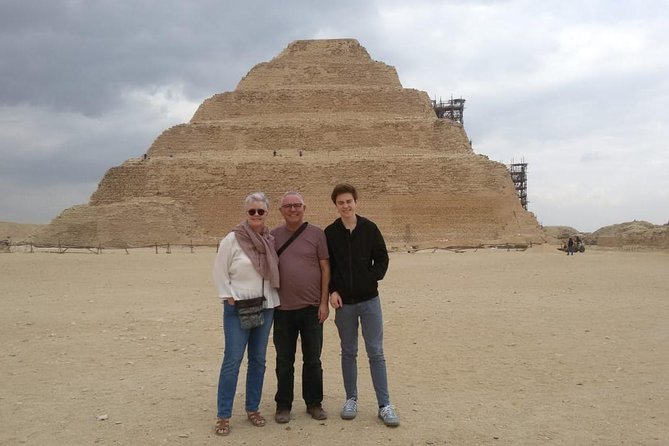
The Djoser stop lasts about 30 minutes in the listed schedule. That may sound brief, but a guide can make the time count by explaining the structure’s six levels, four-sided design, and place in Egyptian building history.
I would pay attention to the change in scale and finish between Djoser and the later pyramids. Saqqara lets you see the pyramid as an evolving idea, not a fixed shape that appeared fully formed. This is one reason the site is worth adding to a Giza visit.
The short time allocation is also a warning. If you want a slow look at every part of the Saqqara complex, you may need to ask about the schedule before departure. The route includes several sites in one day, so the guide must balance detail with onward travel.
Mereruka’s tomb adds everyday detail
The Mastaba of Mereruka receives about 15 minutes. That is a small part of the day, but it adds something the royal pyramids cannot provide.
Mereruka was vizier to King Teti, the first pharaoh of Egypt’s Sixth Dynasty. His mastaba is described as the largest and most elaborate non-royal tomb at Saqqara, with 33 rooms or chambers.
A royal pyramid shows state power. A decorated official’s tomb can offer a more personal window into status, work, family, ritual, and daily life. Your guide can explain why a senior official received such a large burial complex and how mastabas differed from pyramids.
Fifteen minutes will not allow a slow examination of every chamber. Still, this stop breaks up the pyramid-heavy rhythm and gives you a different type of ancient Egyptian monument.
Dahshour reveals the builders’ experiments
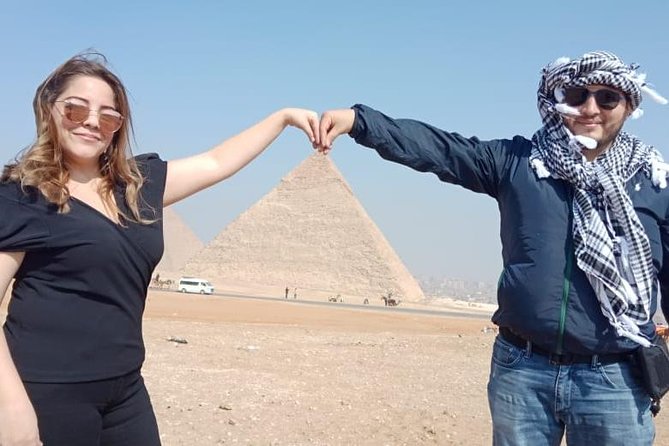
Dahshour is the final major archaeological area and receives about an hour. It is an important finish because it shows the engineering problems that came before the smooth-sided pyramids of Giza.
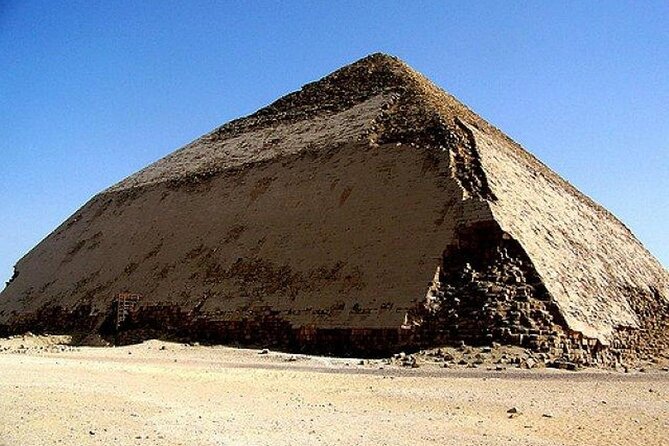
The pyramids here record a learning process. Egyptian builders tested how steep a pyramid could be, how the outer shape should be formed, and how to move from stepped or sharply angled designs toward smooth sides. The experience gained at Dahshour helped prepare the way for the Great Pyramid.
This is often a calmer stop than Giza, though the provided information does not promise crowd levels on your particular day. The main benefit is visual and historical comparison. After seeing the finished pyramids, you can look back at earlier designs and understand that the monuments were part of a long sequence of technical experiments.
Dahshour also makes the tour feel less like a checklist of famous attractions. You are not only visiting the monument everyone recognizes. You are seeing the stages that explain how it became possible.
The guide and driver shape the day
A private guide is useful in Cairo not just for facts, but for movement. The sites are spread out, traffic can be difficult, and the timing requires someone to keep an eye on the clock without turning the day into a race.
Nasser receives the strongest repeated praise in the supplied feedback. He is described as patient, friendly, clear in English, and willing to explain the same point more than once. He is also noted for taking photos, helping with directions inside the sites, and including children in the conversation.
Bassam is another named guide associated with a warm, professional approach. Other departures may use guides such as Hassan or Aslaam, and the experience is described as multilingual. You should not assume a particular guide unless the company confirms one before departure.
The driver matters just as much. Several comments praise drivers for handling Cairo traffic and helping groups feel safe. The private, air-conditioned vehicle gives you a place to rest between sites, which becomes increasingly valuable by the afternoon.
Families can also find this format practical. The vehicle has been described as spacious enough for bags and a stroller, and guides have accommodated families with very young babies. That does not remove the heat, stairs, or walking, but it gives you more flexibility than a large group excursion.
Lunch, tickets, and practical costs
The headline price is $55 per person, which is attractive for a full private day with a vehicle, guide, hotel transport, fuel, and parking. It becomes particularly good value for a small group, since the same vehicle and guide are serving only your party.
You should budget for entrance fees. The tour details say gratuities are not included, and the individual attractions are marked as requiring separate admission. One example gives an additional payment of 360 Egyptian pounds for entry into the Great Pyramid, but prices can change, so confirm current costs before departure.
Lunch needs the same check. The tour overview says lunch is included, while the formal inclusion list names water and soft drinks but does not list lunch. Do not assume a meal is covered until the operator confirms it.
Bring:
- Comfortable walking shoes
- A hat and sun protection
- Light, comfortable clothing
- Money or a card for admission fees and gratuities
- A face mask if required by the operator
- Water, even though bottled water is supplied
The tour information says the vehicle is sterilized periodically, hand sanitizer is available, and guides and drivers wear masks. It also asks customers to wear masks and recommends using credit cards instead of cash. These measures may change, but they are part of the stated operating conditions.
Confirmation is provided at booking. Children must be accompanied by an adult, and most people can participate. The tour also operates near public transportation, though hotel pickup and drop-off are provided free.
Who should book this private Cairo tour?
I would choose this tour if you want to see the major pyramid sites in one day and prefer a private guide to a large coach group. It suits first-time Cairo visitors, ancient Egypt enthusiasts, families who need some flexibility, and anyone who would rather not arrange transport between Giza, Saqqara, and Dahshour.
It is less suitable if you want a slow, museum-style day. The route covers a lot of ground, and the combined walking, sun, traffic, and ticket decisions can feel tiring. You should also clarify lunch, admission fees, and the possibility of entering the pyramids before you go.
Free cancellation is available up to 24 hours before the start time for a full refund. Changes or cancellations made within 24 hours are not accepted for a refund.
Should you book it?
Book this tour if your priority is maximum archaeological coverage with private transport. Giza gives you the icons, Saqqara explains the first major stone pyramid, and Dahshour shows the experiments that led to the classic pyramid form.
The strongest reason to book is the guide support, especially if Nasser is available. The main reason to pause is the packed schedule and the unclear treatment of lunch and entrance tickets. Confirm those points, bring proper sun protection, and accept that this is a long sightseeing day rather than a relaxed outing. For $55 per person, it offers a useful introduction to the pyramid fields and good value for a private Cairo excursion.
FAQ
How long does the tour last?
The tour lasts approximately 8 to 9 hours.
Is hotel pickup included?
Yes. Private pickup and drop-off at your hotel are provided free of charge.
Is this a private tour?
Yes. Only your group participates in the activity.
Which sites are included?
The route includes the Giza Pyramids, the Great Sphinx, the Valley Temple, Saqqara, the Step Pyramid of Djoser, the Mastaba of Mereruka, and the pyramids of Dahshour.
Are entrance fees included?
The tour information is inconsistent on this point. It states that admission to the pyramid area is included in one section, but also says entrance fees are not included and marks individual stops as requiring admission. Confirm the exact ticket coverage before booking.
Is lunch included?
The overview mentions lunch, but the detailed inclusions list does not clearly include it. Confirm this with Egypt Direct Tours before the tour begins.
Can I cancel for a full refund?
Yes. You can cancel at least 24 hours before the local start time for a full refund. Cancellations or changes made less than 24 hours before the start are not accepted for a refund.
Just added in Giza
- Private Tour: Discover Giza Pyramids, Sphinx & Egyptian Museum★ 5.0 · 83 reviews
- Private pyramids tour to Giza pyramids Sphinx Dahshur Sakkara & Memphis★ 5.0 · 37 reviews
- Vip Tour Giza pyramids, sphinx with Camel Ride and Vip lunch★ 5.0 · 37 reviews
- GEM Grand Egyptian Museum Private Tour from Cairo Giza hotels★ 5.0 · 23 reviews
- Giza Pyramids,Sphinx,Camel Ride,ATV Bike,Shopping,Dinner cruiseII★ 5.0 · 27 reviews
- 8-Hours Private Guided Tour in Giza , Egyptian Museum & Market with Lunch★ 5.0 · 21 reviews
- Pyramids of Giza and National Museum Private Day Tour★ 5.0 · 21 reviews
- Private tour Giza Pyramids ,sphinx & camel ride all included★ 5.0 · 36 reviews
Memphis & Saqqara Tours, compared.
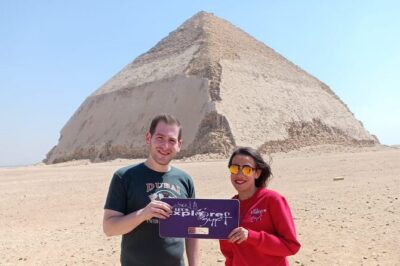
VIP All inclusive Best of the best Giza Pyramids,Sakkara,Memphis
Read our review →
Pyramids of Giza, Sphinx, Saqqara & Memphis Tour
Read our review →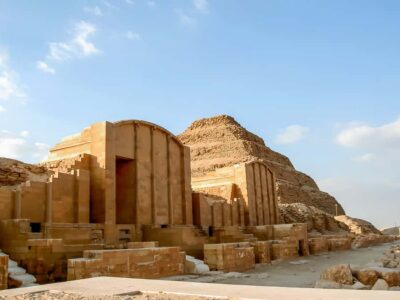

Sakkara, Memphis & Dahshur (Pyramid & Felucca Options)
Read our review →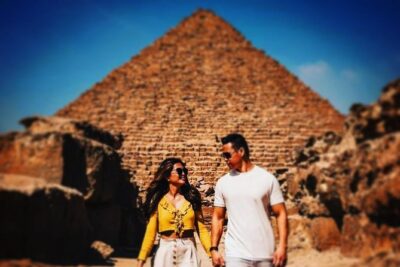
All-inclusive Private Trip Giza Pyramids Sphinx Saqqara, Dahshur
Read our review →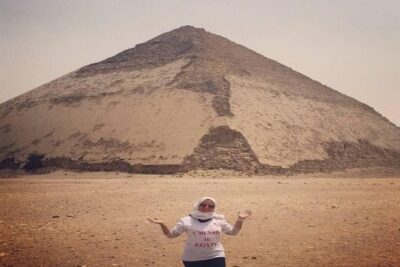
8 hours Cairo day Tour to Giza Pyramids, Memphis City, Sakkara and Dahshur
Read our review →Browse the lists this tour appears in