
Reviewed · MEMPHIS & SAQQARA TOURS
Full-Day Tour to Giza Pyramids, Memphis, and Sakkara
The best thing about this Cairo day trip is its sweep: in one day, you move from the famous Giza pyramids to the older Step Pyramid at Saqqara and the former capital at Memphis. That gives you a useful picture of how Egyptian pyramid building developed, rather than leaving you with only the postcard view.
I like the private format and the included air-conditioned car, lunch, bottled water, and hotel pickup. A good guide, such as Ehab, Mohamed, Marwa, Rawan, or Tonsi, can adjust the pace and explain what you are seeing. The main drawback is time: ten listed stops, possible shopping visits, and Cairo traffic can make the day feel brisk.
Key points to know before booking
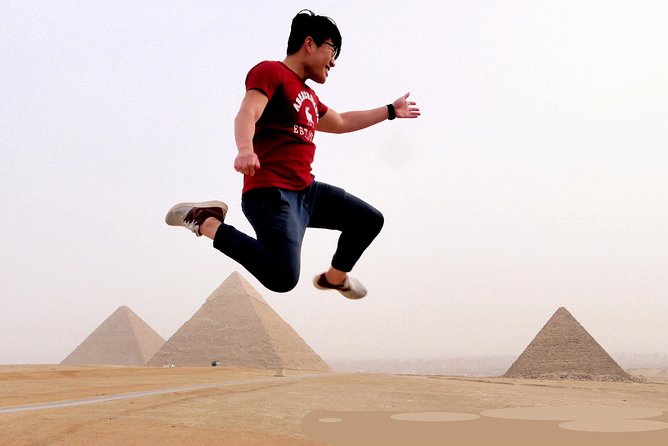
- Three major archaeological areas in one day: Giza, Saqqara, and Memphis cover more ground than a standard pyramid visit.
- Private guide and vehicle: Your group travels alone, so you can ask questions, change the pace, or request extra help with mobility.
- The Step Pyramid adds vital context: Saqqara shows the early stages of pyramid design before the smooth-sided monuments at Giza.
- Pyramid interiors cost extra: Basic admission does not necessarily include entering the pyramids, and tight, hot passages can be hard for some people.
- Shopping stops may appear: Perfume, papyrus, cotton, carpet, and souvenir visits are part of some versions of the day, so state clearly if you want to skip them.
- A strong value at $45: For a private eight-hour outing with transport, guide, lunch, and entry fees, the price is attractive, provided you confirm what admission level is covered.
Why this route gives you more than a pyramid photo
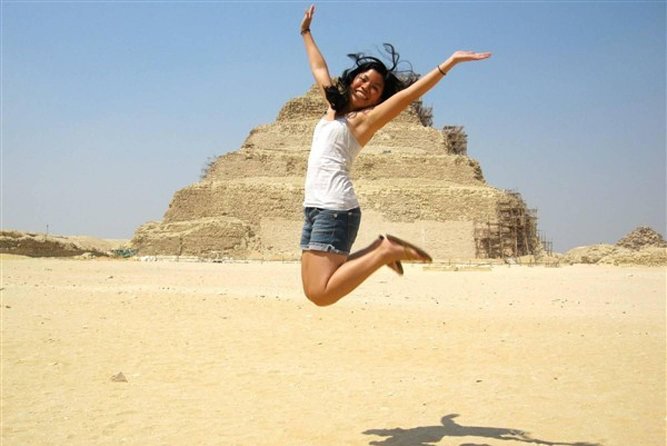
Giza is the headline act, but Saqqara is where the story becomes clearer. The Step Pyramid of Djoser, also spelled Zoser in some descriptions, marks a major change from the low mastaba tomb to the stacked pyramid form. It is older than the Giza pyramids and helps you see that the famous monuments were part of a long process, not a sudden stroke of genius.
Memphis adds another layer. This ancient capital dates to about 3100 BC and once served as a major center of Egyptian power. Today, much of the city is gone, but the colossal statue of Ramses II and the alabaster sphinx give you a sense of its former importance.
At $45 per person, the tour offers good value for anyone with only one free day in Cairo. You are paying for a private vehicle, guide, pickup, lunch, water, and a full route through several sites. The catch is that the basic ticket may not cover every extra area, especially the interiors of the pyramids. Ask exactly what your chosen option includes before you set out.
More Memphis and Saqqara tours in Giza:
- VIP All inclusive Best of the best Giza Pyramids,Sakkara,Memphis
★ 5.0 · 3,164 reviews - From Cairo: Pyramids of Giza, Sphinx, Saqqara & Memphis Tour
★ 4.7 · 3,110 reviews - Cairo: Pyramids, Sakkara & Memphis Tour with Lunch
★ 4.6 · 2,493 reviews
Giza Plateau: the essential first look
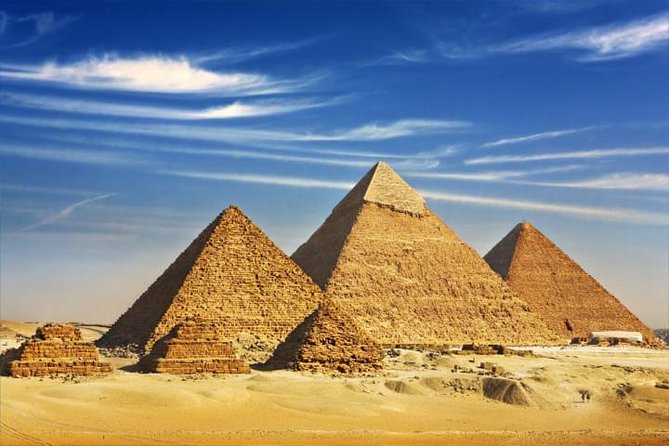
The Giza portion is planned for roughly three hours, giving you time to see the three main pyramids, the Valley Temple, and the Sphinx. You will view the Great Pyramid of Khufu, also called Cheops, the Pyramid of Khafre, also called Chephren, and the smaller Pyramid of Menkaure.
The first useful fact to keep in mind is that the three pyramids are not simply different sizes of the same monument. Each had its own valley temple, causeway, mortuary temple, and burial complex. A private Egyptologist can explain how those parts worked together, which makes the bare stones easier to read.
Khufu’s pyramid is the largest and most famous. Its valley temple lies beneath the modern village of Nazlet el-Samman and has not been fully excavated. That means the visible pyramid is only part of the original complex. You may spend about 30 minutes on this section, so use your guide’s time well and ask about the building methods, the original outer casing, and the role of the surrounding temples.
Khafre’s pyramid often looks taller than Khufu’s because it sits on higher ground and retains some of its smooth casing near the top. Its complex once included a valley temple, Sphinx temple, causeway, mortuary temple, and pyramid. Several statues of Khafre were found in the valley temple, including discoveries made by Auguste Mariette in the nineteenth century.
Menkaure’s pyramid is smaller, but its complex is not minor. It included the same basic collection of temples and a causeway, and excavations found statues connected with the king. The scheduled visit is short, around 30 minutes, so expect an overview rather than a slow archaeological study.
The Sphinx and Valley Temple
The Great Sphinx is usually the emotional high point of the Giza visit. Its lion body and human head are carved from the bedrock, and it is generally linked to the reign of Khafre. The scale is difficult to grasp in photographs, especially when you see the Sphinx beside the temple complex.
The nearby Valley Temple is important because it was used in the preparation and mummification of the dead king. It is also one of the best places to connect the Sphinx with the wider funerary complex. Your guide can point out the relationship between the temple, the causeway, and Khafre’s pyramid.
Allow time for the practical side of Giza. Vendors, camel and horse operators, and people offering photographs can approach you around the monuments. One of the better uses of a private guide is help with these encounters. Still, your guide cannot make every approach disappear, so agree on a firm answer before you arrive.
The advertised stop at the Great Pyramid complex does not automatically mean you can enter Khufu’s pyramid. Interior access is an optional extra, and the ticket wording can vary with the tour option. If you choose to go inside, expect inclined passages, low ceilings, tight corridors, heat, and little ventilation. It is not suitable for anyone uncomfortable with cramped spaces or difficult climbing.
Memphis: a short visit with a large story
Memphis is scheduled for about an hour, usually combined with the wider Saqqara section. The ancient capital was founded around 3100 BC, making it one of the oldest major urban centers in Egyptian history.
The most memorable object here is the enormous fallen statue of Ramses II. Seeing the statue lying indoors lets you study details that would be hard to notice if it were upright and viewed from a distance. The alabaster sphinx is another key piece, with a different material and shape from the better-known Sphinx at Giza.
Memphis is not a vast preserved city. You are mainly visiting a compact archaeological display, so do not expect streets of standing buildings. Its value comes from what it represents: administration, kingship, religion, and the long life of Egypt’s old capital. A guide’s explanation matters here because the site itself can seem modest after the scale of Giza.
A few more days out in Giza to weigh up
- From Hurghada: Cairo and Giza Highlights Full-Day Tour
★ 4.5 · 6,014 reviews - From Sharm El-Sheikh: Cairo’s Pyramids: Full-Day By Flight
★ 4.7 · 720 reviews - Private Full-Day Tour to Giza Pyramids,Sphinx,Memphis, and Saqqara
★ 5.0 · 626 reviews - Cairo By Big Bus full day From Hurghada (Pyramids-sphinx-Egyptian Museum-Lunch)
★ 4.5 · 494 reviews
Saqqara and the Step Pyramid
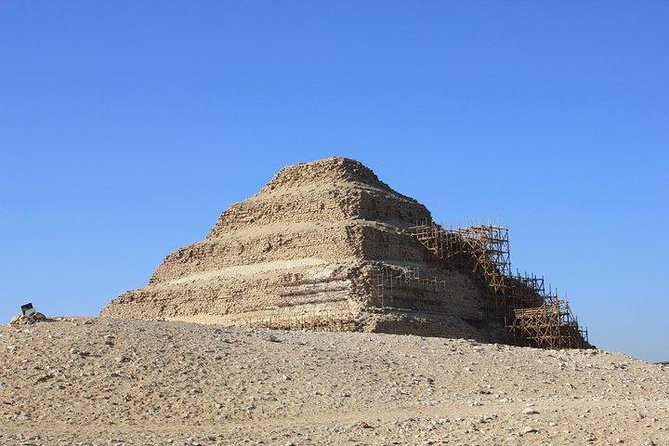
Saqqara lies about 27 kilometers southwest of Cairo and receives around an hour in the listed schedule, though the full group of Saqqara stops takes longer. The Step Pyramid of Djoser is the centerpiece.
The pyramid’s six rising levels show an early stage in the development of monumental stone architecture. Before this form, royal tombs were generally mastabas, rectangular structures with flat roofs. Saqqara lets you see the transition toward the smooth-sided pyramids that later appeared at Giza.
This is the part of the day where I would ask the most questions. You can ask your guide to explain why the pyramid was built in stages, how the surrounding complex served the king’s afterlife, and how the site differs from Giza. The setting also tends to feel less dominated by the single giant monument, which can make the archaeology easier to follow.
The schedule also includes the Pyramid of Unas. From the outside, it is the smallest Old Kingdom pyramid on this route, but its interior importance is far greater than its size suggests. Its underground chambers contain Pyramid Texts, spells carved into the walls to help the king in the afterlife. These inscriptions began a long tradition that later led to other funerary texts, including the Coffin Texts and the material associated with the Book of the Dead.
Teti’s pyramid and the Mastaba of Ti
The Pyramid of Teti receives about 15 minutes in the planned schedule. Teti was the first king of Egypt’s Sixth Dynasty, and his pyramid is another chance to see the difference between the remains above ground and the surviving underground chambers and corridors.
Do not expect a long visit here. The short stop works best if your guide gives you a clear explanation before you enter or move on. If you prefer detailed exploration over collecting several sites in a day, this is one place where the itinerary may feel too tight.
The Mastaba of Ti is a particularly useful stop because its walls show scenes from daily life. The tomb contains two serdabs, sealed spaces associated with statues of the deceased, and was discovered by Auguste Mariette. The reliefs can show farming, food preparation, craft work, and other ordinary activities that royal monuments often leave out.
That everyday detail gives Saqqara a human scale. You are not only looking at tombs for kings. You are also seeing how ancient Egyptians pictured work, food, status, and service in the world beyond death.
Lunch, transport, and the private format
Lunch is described as koshari at a local restaurant. Koshari is a filling Egyptian dish built around ingredients such as rice, pasta, lentils, chickpeas, tomato sauce, and fried onions. Bottled water and snacks are also included, which matters on a hot day when you are moving between open-air monuments.
Pickup and drop-off are included, and transport is by air-conditioned vehicle. That is more than a small comfort in Cairo. The distances between Giza, Memphis, and Saqqara, plus traffic and dust, can make an unconditioned vehicle exhausting.
The private setup is one of the strongest reasons to choose this outing instead of a cheaper shared bus. You can ask for more explanation at Saqqara, spend less time at a shop, pause for photographs, or request help if someone in your group has mobility concerns. Guides such as Tonsi and Mohamed have been praised for adapting to mobility needs and young children, but the exact guide is assigned rather than guaranteed.
The day begins at 8:00 am and lasts about eight hours. That sounds generous until you add travel between sites, the three Giza pyramids, the Sphinx, Memphis, several Saqqara monuments, lunch, and possible commercial stops. Some guides begin at Memphis or Saqqara and finish at Giza, which can create a more logical historical sequence. Others start at Giza, as the published route suggests. Ask at the start what order you will follow.
The shopping stops and how to handle them
The supplied details mention 20-minute stops at Paradise Perfumes and Flower Cotton, Key of Life Papyrus, and a handmade carpet school. There may also be government-associated souvenir shops. These visits are presented as places to learn about oils, cotton, papyrus, and rug-making, but they are also commercial stops.
Some people enjoy seeing local crafts and buying a souvenir. Others would rather spend those 20-minute periods at the monuments. Both are reasonable choices, but you should say so plainly before the car leaves. Several poor experiences came from unwanted pressure to buy products or pay tips to people offering photographs and other services.
A simple line works: you want the archaeological sites and will skip shopping unless you ask for it. If you do visit a shop, compare prices, bargain carefully, and do not feel obliged to purchase anything. A guide can help, but you remain responsible for your own spending.
Guide quality makes or breaks the day
This tour’s strongest praise is aimed at the guides who explain clearly, manage the pace, and protect the group from confusion around the monuments. Ehab, Osama, Marwa, Rawan, Tonsi, Mohamed, Samir, and others have been singled out for warmth, useful explanations, patience, humor, photography help, and care with families or older people.
The experience can vary, though. One poor account described basic explanations and a communication gap, while other complaints focused on guides changing the plan or pushing commercial stops. That is a real consideration with a private operator using different guides.
At pickup, confirm four points:
- Which sites you will visit and in what order
- Whether you want shopping stops
- What is included in your entrance ticket
- Which optional activities, such as pyramid entry or camel rides, cost extra
Clear agreement at the beginning prevents most trouble later. You should also keep small tips separate from shopping money. Tipping is not included, and the amount is your choice.
Who should book this $45 day trip?
I would choose this tour if you have one full day for ancient Cairo and want to cover the major sites without arranging several taxis. It suits first-time visitors, families, and small groups that value a private car and the ability to adjust the pace.
It is also a smart choice if you want historical connections rather than only photographs. Giza gives you the famous monuments, Saqqara explains the development of the pyramid, and Memphis adds the story of the old capital.
I would hesitate if you want long, quiet visits at each site or dislike commercial stops. The schedule is ambitious, and the 15- to 30-minute visits can feel too short for serious archaeology. In that case, a private guide with a shorter list of sites may suit you better.
Should you book it?
Book it if the combination of Giza, Saqqara, and Memphis matters more to you than a slow pace. At $45, the private transport, guide, lunch, water, hotel pickup, and basic admissions make it a strong deal.
Before paying, confirm the exact ticket option and tell the operator that you do not want forced shopping. If you do that, request a guide who can explain the sites well and adapt to your group. The route can be an excellent introduction to Cairo’s ancient monuments, but its success depends heavily on guide quality and how firmly you manage the extras.
FAQ
How long does the tour last?
The tour lasts approximately eight hours.
What time does the tour start?
The stated start time is 8:00 am.
Is hotel pickup included?
Yes. Hotel pickup and drop-off are included.
Is the tour private?
Yes. Only your group participates in the private tour or activity.
What sites are included?
The route includes the Giza Plateau, the pyramids of Khufu, Khafre, and Menkaure, the Great Sphinx, the Valley Temple, Memphis, the Step Pyramid of Djoser at Saqqara, the Pyramid of Unas, the Pyramid of Teti, and the Mastaba of Ti.
Is lunch included?
Yes. Lunch at a local restaurant is included, with koshari listed as the meal.
Are drinks provided?
Yes. Bottled water is included, and complimentary snacks are also provided.
Can I enter the pyramids?
Entering the pyramids is listed as an optional activity and is not included in the basic tour. Additional admission fees may apply.
Are shopping stops part of the tour?
The additional details mention 20-minute stops at perfume and cotton, papyrus, and handmade carpet locations, as well as government souvenir shops. You should confirm which stops apply to your option and tell your guide if you want to skip them.
What is included in the $45 price?
The listed inclusions are entrance fees, hotel pickup and drop-off, a private tour, a tour guide, lunch, and bottled water. Extra pyramid access and other optional tours are not included, and tipping is separate.
Can I cancel the booking?
You can cancel up to 24 hours before the experience starts for a full refund. Cancellations or changes made less than 24 hours before the start time are not accepted for a refund.
Just added in Giza
- Private Tour: Discover Giza Pyramids, Sphinx & Egyptian Museum★ 5.0 · 83 reviews
- Private pyramids tour to Giza pyramids Sphinx Dahshur Sakkara & Memphis★ 5.0 · 37 reviews
- GEM Grand Egyptian Museum Private Tour from Cairo Giza hotels★ 5.0 · 23 reviews
- Vip Tour Giza pyramids, sphinx with Camel Ride and Vip lunch★ 5.0 · 37 reviews
- Giza Pyramids,Sphinx,Camel Ride,ATV Bike,Shopping,Dinner cruiseII★ 5.0 · 27 reviews
- 8-Hours Private Guided Tour in Giza , Egyptian Museum & Market with Lunch★ 5.0 · 21 reviews
- Pyramids of Giza and National Museum Private Day Tour★ 5.0 · 21 reviews
- Private tour Giza Pyramids ,sphinx & camel ride all included★ 5.0 · 36 reviews
Memphis & Saqqara Tours, compared.
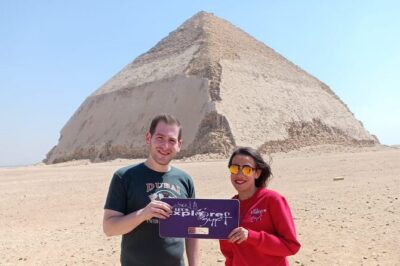
VIP All inclusive Best of the best Giza Pyramids,Sakkara,Memphis
Read our review →
Pyramids of Giza, Sphinx, Saqqara & Memphis Tour
Read our review →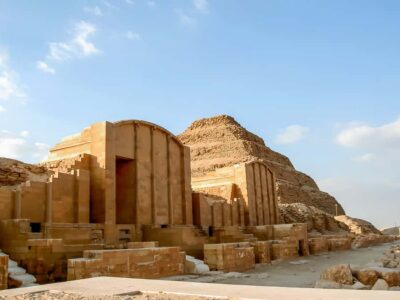

Sakkara, Memphis & Dahshur (Pyramid & Felucca Options)
Read our review →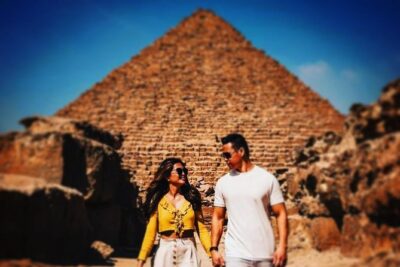
All-inclusive Private Trip Giza Pyramids Sphinx Saqqara, Dahshur
Read our review →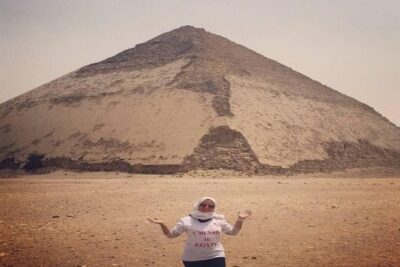
8 hours Cairo day Tour to Giza Pyramids, Memphis City, Sakkara and Dahshur
Read our review →Browse the lists this tour appears in