
Reviewed · ABU SIMBEL TOURS
Egypt 9 Days- Cairo Pyramids and Nile Cruise from Luxor to Aswan and Abu Simbel
Egypt’s greatest sights arrive in a remarkably compact package here. You’ll see the Giza Pyramids, Saqqara, and the Egyptian Museum, then follow the Nile south by cruise to Luxor, Aswan, and Abu Simbel. I like the four nights aboard a luxury cruise and the fact that entry fees, many meals, hotels, and transfers are already covered.
I also like the reliable structure: airport pickup, port transfers, guided sightseeing, and a small maximum group of 15. Guides including Mahmoud, Remon, and Mustafa have been praised for going beyond the basic script. The tradeoff is simple: nine days move fast, with long sightseeing days and little room for wandering on your own.
Key points to know before booking
- The route covers Egypt’s main ancient sights: Giza, Saqqara, Memphis, Luxor, Edfu, Kom Ombo, Aswan, and Abu Simbel.
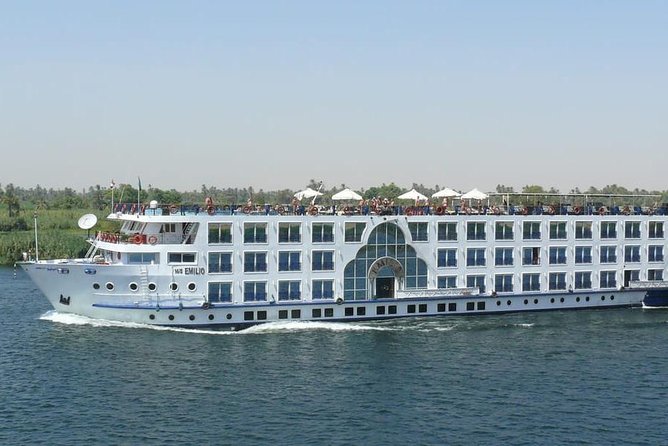
- Four nights are spent on a luxury Nile cruise, with full board during the cruise portion.
- Cairo receives four hotel nights, based on bed and breakfast.
- Airport, hotel, and port transfers are arranged, which matters in a country where changing cities can take time and patience.
- The group is capped at 15 people, a useful middle ground between a private trip and a large coach tour.
- Tips for guides and drivers are extra, so budget for them separately.
Why this nine-day Egypt route works
Egypt can be tiring to plan. Cairo, Luxor, Aswan, and Abu Simbel are spread across a long stretch of the country, and each area has its own transfers, admission fees, and timing concerns.
This itinerary takes care of that framework. You begin and end in Cairo, spend four nights in hotels, and use a four-night Nile cruise as the backbone of the southern portion. That gives you a steady base while the temples come to you along the river.
The price is $2,895 per person. That is not a budget trip, but the value depends on what you would otherwise arrange separately. Four nights in five-star hotels, four nights on a luxury cruise, an Egyptologist guide, site entry, airport transfers, port transfers, eight breakfasts, six lunches, and four dinners are included.
You should still allow money for guide and driver tips, personal drinks, souvenirs, and any costs not listed among the inclusions. The package is best for someone who wants a planned, high-comfort introduction rather than a trip built from low-cost hotels and independent trains.
More Abu Simbel tours in the Nile Valley:
- 4-Days Nile Cruise From Aswan To Luxor including Abu Simbel and Hot Air Balloon
★ 5.0 · 3,142 reviews - 4-Day 3-Night Nile Cruise from Aswan to Luxor&Abu Simbel+Balloon
★ 5.0 · 2,023 reviews - 4-Day 3-Night Nile Cruise from Aswan to Luxor including Abu Simbel, Air Balloon
★ 4.5 · 612 reviews
Day 1: A soft landing in Cairo
Your arrival day is deliberately simple. Assistance meets you at the airport, helps with arrival formalities, and transfers you to your Cairo hotel.
That matters after a long flight. You are not left to figure out the first taxi, hotel address, or local arrangements on your own. There is no major sightseeing scheduled, so use this night to rest and prepare for an early start.
The tour lists four Cairo hotel nights on a bed-and-breakfast basis. The exact hotel is not named in the supplied details, but the category is five-star.
Day 2: Giza, Saqqara, and the first capital
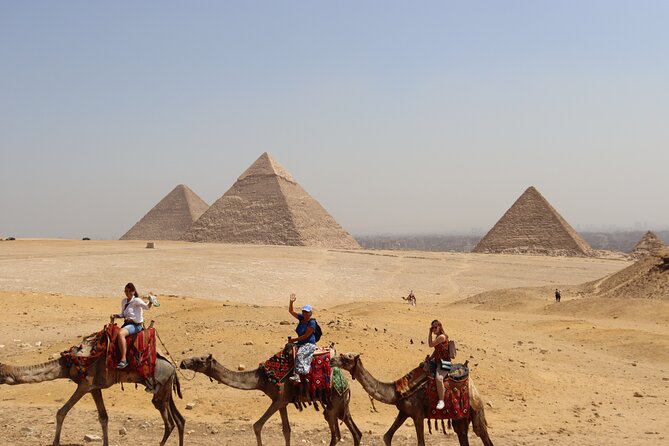
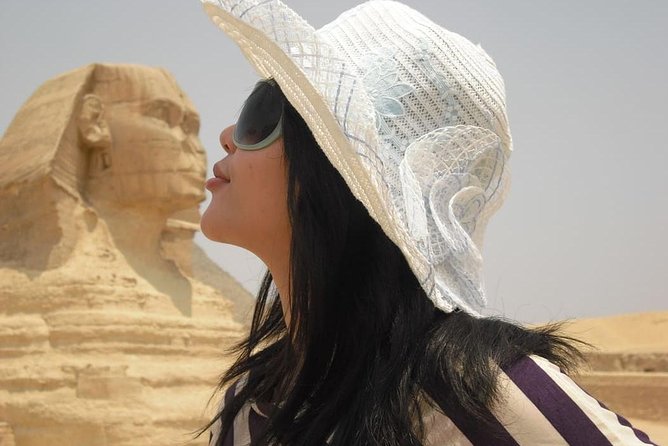
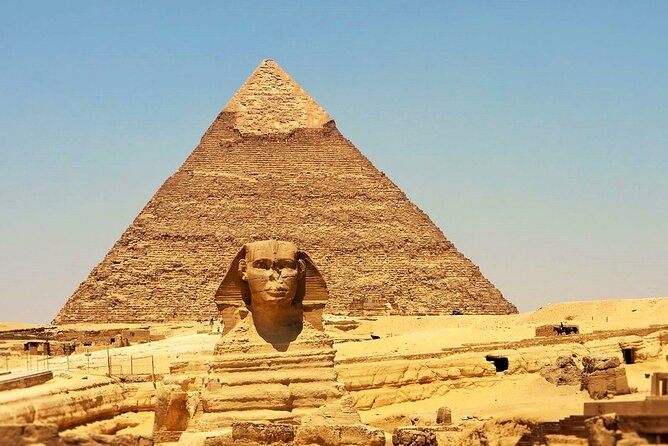
The day begins at the Giza Plateau, where the Great Pyramid, the other two major pyramids, and the Sphinx provide Egypt’s famous opening scene.
The Great Pyramid was built during the Old Kingdom, beginning around 2590 BC according to the tour information. You’ll have time to see the pyramid complex and enter the Queen’s Pyramid. Keep your expectations practical: entering an ancient pyramid is more about the confined passage and sense of age than about decorated chambers. The exterior view is the main event.
The Sphinx deserves more than a quick photograph. Its human head and lion body express royal power, and its location near the pyramids helps you understand how the monuments were arranged. Your guide can add the names, dates, and stories that are difficult to grasp from the stones alone.
From Giza, the route continues to Saqqara. The Step Pyramid of Djoser is the key sight here, and it marks an important change in Egyptian building. It was created for the Third Dynasty ruler Djoser and is often described as Egypt’s earliest major stone structure.
Saqqara is valuable because it shows an earlier stage of pyramid design. The six levels developed from the older mastaba tomb form, giving you a clear sense of how royal burial architecture changed over time. The visit lasts about three hours, so you can give the site more attention than a quick photo stop.
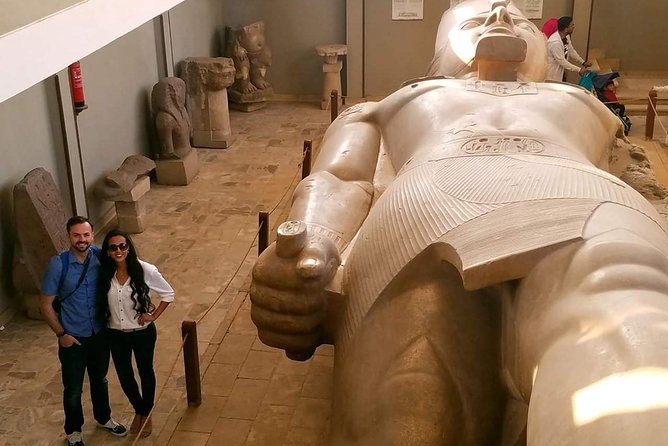
The final stop is Mit Rahina Museum, located near the ruins of Memphis. Memphis was the first capital of ancient Egypt and once served as a major center in Lower Egypt. The museum visit adds context to the city that otherwise survives mainly through scattered remains.
This is a full day with three substantial stops. You’ll see a great deal, but do not expect a leisurely afternoon. Comfortable shoes, water, and a hat will make a real difference.
Day 3: Ancient objects, Cairo’s market, and Coptic history
Day three shifts from open-air monuments to Cairo’s museums and historic neighborhoods.
At the Museum of Egyptian Antiquities, you’ll see a large collection of ancient objects. The museum holds about 120,000 items, with only part of the collection displayed at any one time. Three hours gives your guide enough time to focus on important pieces rather than sending you through every room without context.
This is where an Egyptologist guide can make the biggest difference. A good guide helps connect statues, burial objects, writing, and royal imagery instead of treating the museum as a warehouse of old objects. Guides such as Mahmoud, Remon, and Mustafa are among the names associated with the company’s service, though your assigned guide may differ.
Next comes Khan Al-Khalili, Cairo’s historic souk. Allow one hour here. You can browse small shops, look at traditional goods, and experience one of the city’s oldest commercial quarters. It is also the place to keep your attention on prices and purchases. If you want something, ask the price clearly and decide calmly.
The final stop is Coptic Cairo, where the route includes historic Christian sites connected with Old Cairo. The area includes the Babylon Fortress, the Coptic Museum, the Hanging Church, and the Greek Church of St. George.
Coptic Cairo gives the itinerary a useful change of focus. Egypt is not only pharaohs and temples. This district reflects the country’s Christian past and includes places connected by tradition with the Holy Family’s visit to Egypt. The visit lasts about an hour, so you will receive an introduction rather than a full study of every church.
More multi-day Egypt packages:
- 6 Days Hypnotic Cairo & Nile Cruise Tour Package
★ 5.0 · 248 reviews - 8-Day Private Tour Cairo, Aswan, Luxor and Nile Cruise Including Air Fare
★ 5.0 · 142 reviews - Egypt on Budget – 8 Days ( Cairo , Aswan , Nile Cruise – Luxor ) Sleeper Train
★ 4.5 · 121 reviews - Egypt Tour Package to Cairo and Nile Cruise
★ 5.0 · 98 reviews
Day 4: Karnak and Luxor Temple
The tour now shifts south to Luxor. The supplied schedule does not specify how the Cairo to Luxor transfer is made, so confirm the transport details before booking. Once in Luxor, sightseeing begins at Karnak Temple.
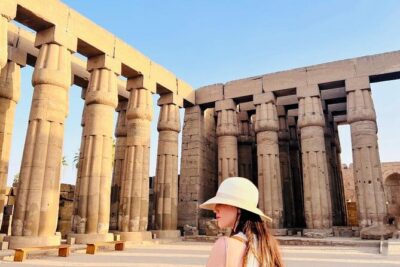
Karnak is enormous, and three hours is a sensible amount of time. The complex grew over many centuries and was dedicated mainly to Amun. You’ll walk among huge columns, courtyards, statues, and carved surfaces that show how successive rulers added to the site.
Karnak rewards patient looking. Ask your guide to point out changes in style, royal names, and temple functions. Without that explanation, the scale can overwhelm you.
Luxor Temple follows with about two hours on the east bank of the Nile. Built around 1400 BCE, it was known in ancient Egyptian as the southern sanctuary. Its placement within modern Luxor makes the visit feel different from the more isolated desert sites.
The two temples work well together. Karnak shows a vast religious complex built over time, while Luxor Temple gives you a more focused site in the middle of a living city. It is another long sightseeing day, but the schedule allows enough time to appreciate both.
Day 5: Tombs and royal memorials on Luxor’s west bank
The west bank begins with the Valley of the Kings. This dry valley contains royal tombs in two main areas, the East Valley and West Valley. You’ll have about three hours, giving you time to visit the tombs included under current site rules.
The Valley of the Kings is not a place to judge by the outside. The real interest is underground, in the corridors, painted walls, burial scenes, and careful planning inside the cliffs. Tomb access can vary, so ask your guide which entrances are included and whether any additional tickets are needed.
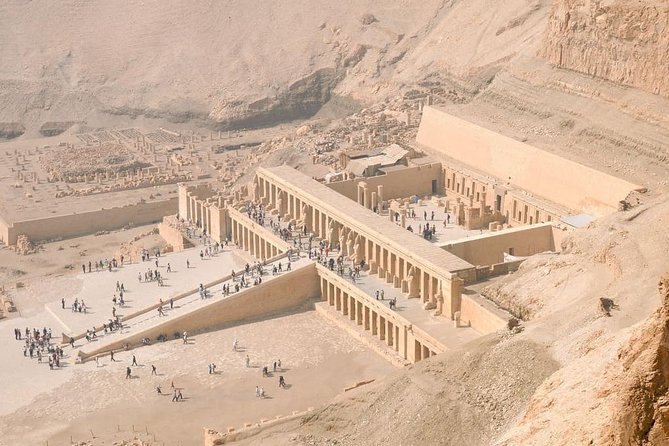
The Temple of Hatshepsut at Deir el-Bahari follows. Its terraces sit beneath the cliffs, creating one of Luxor’s most striking settings. The temple was built for Hatshepsut, an Eighteenth Dynasty pharaoh, and its broad design differs sharply from the enclosed spaces at Karnak.
The final stop is the Colossi of Memnon, two large statues of Amenhotep III. The stop lasts about 40 minutes and has no admission charge. It is brief, but it provides a useful photo stop and a reminder of the huge scale of royal monuments.
The west bank includes open sun, uneven ground, and substantial walking. You will appreciate an early start and sturdy shoes. The day is historically rich without being padded with minor stops.
Day 6: Edfu and Kom Ombo by Nile cruise
The cruise becomes the main way you move through Upper Egypt. At Edfu, you’ll visit the Temple of Horus, one of the best-preserved temples in Egypt. It dates from the Ptolemaic period and gives you a clear look at later Egyptian temple design.
Three hours at Edfu is generous. The temple’s preserved reliefs and large halls are easier to appreciate with a guide who explains the gods, rituals, and inscriptions. This is one of the places where the cruise format works especially well: you visit the site, return to the ship, and continue along the Nile instead of changing hotels.
Kom Ombo is unusual because it is a double temple. One side was dedicated to Sobek, the crocodile god, while the other honored Horus the Elder. The temple dates from the Ptolemaic dynasty, from 180 to 47 BC.
The visit lasts about two hours. Look for the way the building is divided into paired spaces. Kom Ombo is not as vast as Karnak, but its two-part plan gives the visit a distinctive focus.
The four cruise nights are based on full board. That makes budgeting easier and reduces the daily search for meals. It also means you should not expect every meal to be an independent dining experience. The value is convenience and continuity.
Day 7: Abu Simbel and Philae at Aswan
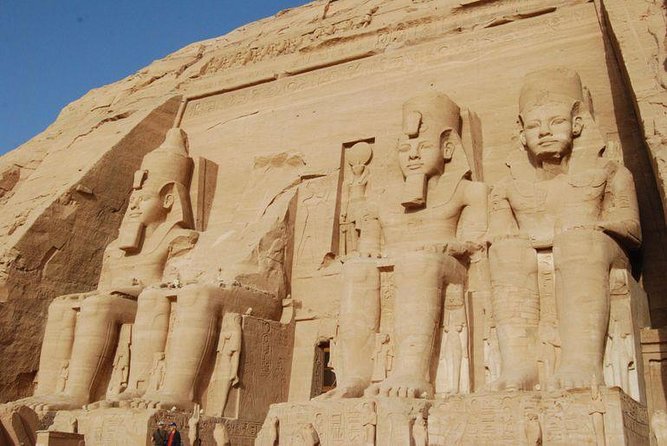
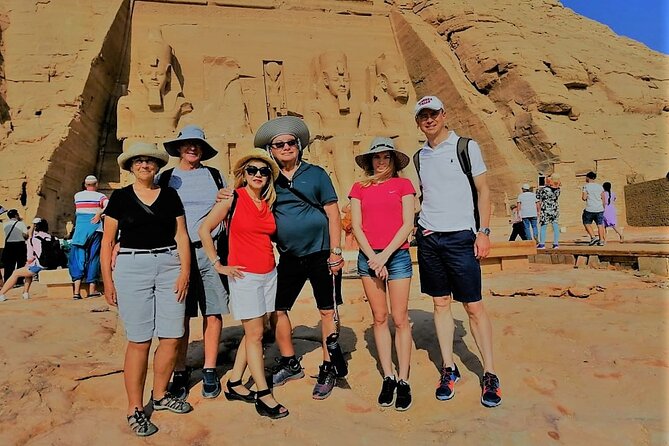
Abu Simbel is the southern highlight, and the five-hour visit gives you time to see both massive rock temples. They are located near the village of Abu Simbel, about 230 kilometers southwest of Aswan, beside Lake Nasser and close to the Sudan border.
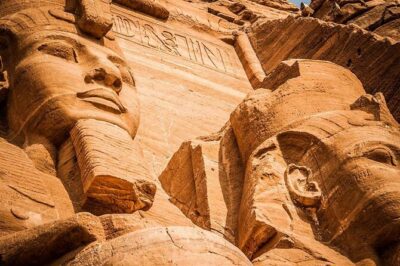
The scale of the temples is the first thing you notice. Their facades are built into the rock, and the interiors carry royal and religious scenes. The journey is a major part of the day, so this is not a quick add-on. It is worth confirming the exact departure time and transport plan because Abu Simbel requires a long run from Aswan.
Later, the itinerary includes Philae Temple for about two hours. Philae was originally located near the First Cataract of the Nile and was later associated with the reservoir created by the Aswan Low Dam. The temple complex is dedicated to the goddess Isis and offers a quieter contrast to Abu Simbel’s enormous facades.
The pairing gives you two very different experiences in one day: Abu Simbel for monumental scale, Philae for a temple setting shaped by the Nile and modern water projects.
Day 8: Return to Cairo
After breakfast on the cruise, you check out and fly back to Cairo. On arrival, a transfer takes you to your Cairo hotel for time to relax.
This is not presented as a major sightseeing day, and that is sensible. After several temple-heavy days, a lighter evening helps. It also gives you some protection against the strain of moving between cities.
The tour includes eight breakfasts overall. Since the final Cairo night is based on bed and breakfast, your dinner on this evening is not listed as included.
Day 9: Airport transfer and departure
The final day is a transfer to Cairo International Airport. The service is scheduled around your departure, with airport transfer available around the clock.
This is a useful end to a tightly planned trip. You do not need to arrange a last-minute taxi, though you should confirm the pickup time with the local team after your return to Cairo.
Guides, group size, and the practical side
A qualified Egyptologist guide is included, and that is one of the strongest reasons to consider this package. Ancient Egyptian sites can blur together when you visit several in a row. Good explanations help you notice the differences between Old Kingdom pyramids, New Kingdom temples, and Ptolemaic buildings.
The maximum group size is 15. That is small enough for questions and easier movement than a large coach group, while still keeping the price below a fully private tour.
Airport, hotel, and port pickup and drop-off are included. Dependable transfers matter here because the itinerary has several handoffs: Cairo arrival, the move to Luxor, cruise boarding, Aswan sightseeing, the return flight, and final airport departure.
Most people can take part, and children must be accompanied by an adult. The tour begins at 8:00 am for scheduled activities, though Abu Simbel may require a particularly early departure. Confirm the daily pickup times with the operator.
Tips for guides and drivers are not included. Set aside a separate amount for these services. You can cancel for a full refund up to six full days before the start time. Cancellations two to six full days before departure receive a 50 percent refund, while cancellations less than two full days before departure are not refunded.
Who should book this Egypt tour?
I would choose this tour if you want Egypt’s major sights in one organized trip and prefer comfort over independent problem-solving. It suits first-time visitors who want Cairo, the classic Luxor temples, a Nile cruise, Aswan, and Abu Simbel without arranging each transfer separately.
It is less suitable if you want long afternoons in one neighborhood, flexible start times, or several free days. The route is packed, and you will spend many hours walking, riding, touring, and changing locations.
At $2,895, the package earns its price through the hotels, cruise, guides, entry fees, meals, and transport coordination. If you would otherwise book five-star accommodation and a luxury cruise, the inclusions make the cost easier to justify. If you are a confident independent planner and happy with simpler lodging, you may prefer to build a less expensive trip.
FAQ
How long is the Egypt tour?
The tour lasts approximately nine days, beginning with arrival and airport transfer in Cairo and ending with departure from Cairo International Airport.
Which major sights are included?
The route includes the Giza Pyramids and Sphinx, Saqqara, Memphis, the Egyptian Museum, Khan Al-Khalili, Coptic Cairo, Karnak Temple, Luxor Temple, the Valley of the Kings, Hatshepsut’s Temple, the Colossi of Memnon, Edfu, Kom Ombo, Abu Simbel, and Philae Temple.
How many nights are spent in Cairo hotels?
You receive four nights at five-star hotels in Cairo, based on bed and breakfast.
How many nights are spent on the Nile cruise?
The tour includes four nights on a luxury Nile cruise, based on full board.
Are meals included?
Eight breakfasts, six lunches, and four dinners are included. Meals not listed in the inclusions are not covered.
Are entrance fees included?
Entry fees for all mentioned sites are included in the tour price.
Is transportation between the major stops arranged?
Hotel, port, and airport pickup and drop-off are included. The itinerary also includes a flight back to Cairo from the cruise area on day eight.
Are guide and driver tips included?
No. Tipping for guides and drivers is not included, so plan for those costs separately.
What is the maximum group size?
The activity has a maximum of 15 participants.
Can children join the tour?
Yes. Children must be accompanied by an adult, and most people can participate.
What is the cancellation policy?
You can receive a full refund if you cancel at least six full days before the start time. A cancellation two to six full days before the start time receives a 50 percent refund. Cancellations less than two full days before departure are not refunded.
Just added in the Nile Valley
- Egypt 8 Days Cairo,Nile cruise,Luxor,Aswan from Cairo airport★ 5.0 · 79 reviews
- Private Tour: 7 Nights Pyramids & Nile Cruise +Flights from Cairo★ 4.5 · 157 reviews
- 8 Day Cairo Pyramids and Nile cruise and Alexandria All inclusive Private Tour★ 5.0 · 23 reviews
- 7 Days Egypt Tour Package to Cairo and Nile Cruise★ 5.0 · 62 reviews
- Private 6-Days Egypt Tour Package with Nile Cruise by Flights★ 4.0 · 59 reviews
- 6-Day Egypt Package, Nile Cruise from Aswan to Luxor by Flights★ 5.0 · 18 reviews
- Egypt in 9 Days from Saturday to Sunday including tours and Dahabeya Nile trip.★ 5.0 · 21 reviews
- From Cairo 4-Day Nile Cruise to Aswan by Flights& Hot Air Balloon★ 4.5 · 44 reviews
Abu Simbel Tours, compared.
4-Days Nile Cruise From Aswan To Luxor including Abu Simbel and Hot Air Balloon
Read our review →
Private Day Tour to Abu Simbel Temples from Aswan
Read our review →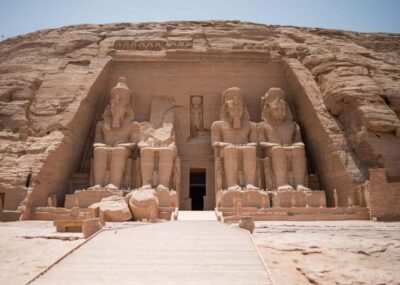
Abu Simbel Group Tour with Guide and Entrance Fees
Read our review →Browse the lists this tour appears in