
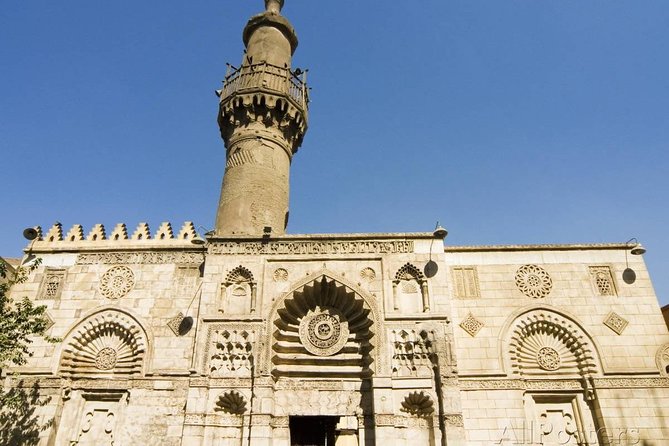
Reviewed · COPTIC & ISLAMIC CAIRO TOURS
Cairo private guided tours visit Islamic and Coptic Cairo
Cairo’s oldest religious quarters are packed into one remarkable day: Coptic churches built around the remains of Roman Babylon, a synagogue linked by local tradition to baby Moses, grand Mamluk mosques, and Saladin’s Citadel above the city. I like the private car and hotel pickup, which spare you from Cairo’s traffic and make a long sightseeing day easier. I also like the chance to shape the route and ask questions at your own pace.
The main caution is that the advertised price and inclusions need checking. The tour is shown at $8 per person, yet entry fees, lunch, and even the guide appear as optional in one section, while other details describe a guide, lunch, and admissions as included. Confirm the exact package before paying.
Key points at a glance
- Coptic Cairo in one concentrated visit: See the Hanging Church, Ben Ezra Synagogue, and Abu Serga Church around Old Cairo’s Roman fortress area.
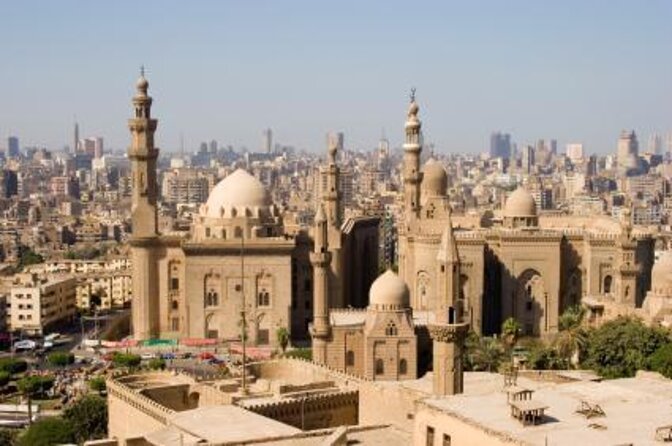
- Two of Cairo’s finest Islamic monuments: Sultan Hassan and Al-Rifa’i face one another near the Citadel and make a powerful architectural pair.
- A private vehicle matters: Hotel pickup, an air-conditioned car, and a careful driver help you cope with Cairo’s crowded roads.
- Guide quality shapes the day: Michael, Mira, Joseph, Yasmine, Zainab, and others are praised for warmth and clear explanations, but communication skills can vary.
- Khan Al-Khalili is worth protecting: Make sure the market remains in your schedule, since one account describes pressure to cut this stop short.
- Plan for religious-site etiquette: Mosques require shoes off, and some sites may ask women to cover more fully.
Why this Cairo tour works
Cairo is not a city I would tackle casually in one day. Its major religious sites are spread across several districts, and the traffic can turn a short drive into a slow crawl. This private tour gives you a driver, an air-conditioned vehicle, and a guide who can connect the sites instead of leaving you to piece them together alone.
The theme is especially strong. You move from Egypt’s Coptic Christian community to its Jewish heritage and then into the great Islamic monuments of medieval and modern Cairo. That makes the day more than a parade of buildings. You see how several faiths shaped one city.
The tour is listed at about six hours, although the scheduled stops add up to much more time before driving and lunch. The actual day may run longer depending on traffic, time inside each building, and the package you select. I would treat six hours as an approximate minimum rather than a strict finish time.
The private format is useful for families, couples, and solo visitors who want direct help. You do not have to wait for a large group, and you can ask to linger at a church icon, shorten a stop, or spend more time at the market. The advertised average booking lead time is 24 days, so reserving ahead is sensible if your Cairo dates are fixed.
More Coptic & Islamic Cairo Tours in Cairo
- Cairo: Egyptian Museum, Citadel, and Old Cairo Guided Tour
★ 4.7 · 853 reviews - Cairo Citadel, Old Cairo and Khan El Khalili: Private Tour
★ 4.6 · 741 reviews - Old Cairo: Full-Day Islamic and Coptic Cairo Tour with Lunch
★ 4.6 · 688 reviews
Coptic Cairo and the story of Babylon
The morning begins with hotel pickup, listed for 8:00 a.m. The first area is Coptic Cairo, often called Old Cairo, where churches sit among the remains of Babylon Fortress and streets that feel far removed from modern Cairo’s broad avenues.
The tour presents this district in connection with the Holy Family’s time in Egypt. That religious tradition is central to the experience, but the value is also architectural. The churches are compact, layered, and full of details that are easy to miss without someone pointing them out.
The first Coptic stop is allotted about 30 minutes. That is enough for an introduction, but not a leisurely study of every chapel and icon. If you have a particular interest in Christian art or early Egyptian Christianity, ask your guide to focus the visit rather than trying to absorb every detail at once.
The Hanging Church and its unusual entrance
The Hanging Church gets its name from its position above a gatehouse of the old Roman fortress. Its nave was built over a passage, giving the church its suspended appearance. The modern ground level has risen considerably since Roman times, so the original setting is not as visually dramatic as it once was, but the approach still gives the building a distinctive character.
You reach the church by climbing 29 steps. Earlier visitors called it the Staircase Church, a practical nickname that helps you understand the visit before you arrive. The nineteenth-century facade has twin bell towers, while the inner areas include older portions and a small courtyard with biblical artwork.
The stop is scheduled for 30 minutes and includes admission according to the itinerary, though the general booking details say entry fees can depend on the option chosen. That inconsistency is worth clarifying. Modest clothing is a wise choice for all religious sites, and you should expect a quieter, more respectful pace than at an ordinary museum.
Ben Ezra Synagogue and the Cairo Geniza
Ben Ezra Synagogue adds an important Jewish chapter to the morning. Local tradition connects the site with the place where baby Moses was found. The building is also linked to the Cairo Geniza, a storeroom where a large collection of Hebrew, Aramaic, and Judeo-Arabic manuscripts was discovered in the nineteenth century.
Most of those manuscripts are now held in academic libraries, with the largest share at Cambridge University Library. That fact gives the stop unusual reach: you are looking at a place in Cairo that helped preserve documents about Jewish religious and daily life across many centuries.
The visit is again planned for 30 minutes. The synagogue may be more about context than a long interior tour, so listen closely to the explanation. This is one of the places where a good guide makes a real difference. Ask how the building fits into Old Cairo’s Christian and Muslim surroundings, rather than treating it as an isolated stop.
More Coptic and Islamic Cairo tours in Cairo:
- Old Cairo Guided Walk Tour: History, Culture & Street Bites
★ 4.6 · 633 reviews - Cairo: Local Markets & Khan el Khalili Private Shopping Tour
★ 4.6 · 614 reviews - Museum of Egyptian Civilization, Citadel & Old Cairo Tour
★ 4.7 · 530 reviews - 4-hours private Tour Islamic Mosque,Coptic Cairo &Khan el-Khalili
★ 5.0 · 489 reviews
Abu Serga and St. Barbara
The Church of St. Sergius and Bacchus, commonly called Abu Serga, is another 30-minute visit. It is associated with the Holy Family tradition and is one of the most important Coptic sites in Old Cairo.
Inside, you can expect ancient religious elements, icons, carved details, and a sense of continued worship rather than a staged archaeological display. St. Barbara is included in the description of this portion of the visit, adding another church to the cluster.
The attraction here is scale. These churches are not vast monuments. Their appeal comes from age, devotion, and the way they fit into a living neighborhood. I would not rush this section. The Coptic stops can blur together if you only take photographs, so give your guide room to explain the differences between the buildings.
Sultan Hassan and Al-Rifa’i, Cairo’s grand pair

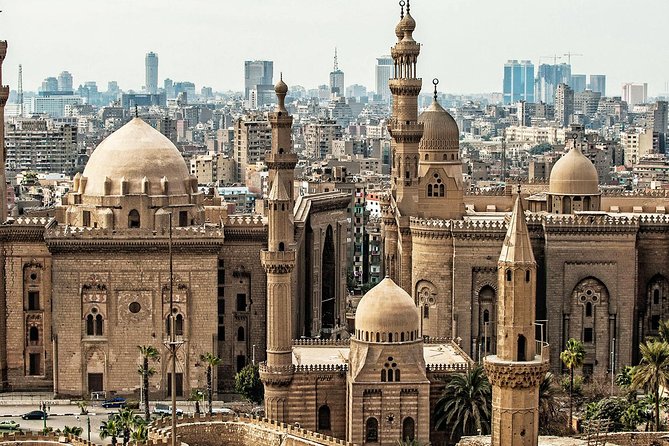
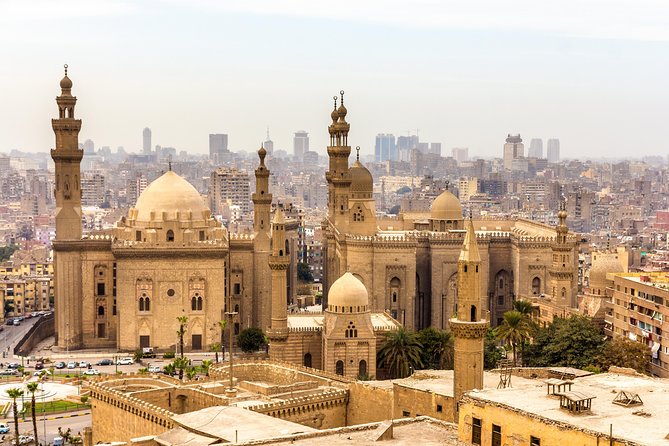
The tour then shifts to Islamic Cairo and the area near the Citadel. Al-Rifa’i Mosque and the Mosque-Madrassa of Sultan Hassan sit opposite one another, creating one of Cairo’s most striking architectural views.
Sultan Hassan was built between 1356 and 1363 during the Bahri Mamluk period. Its huge scale and carefully planned parts make it one of the city’s essential monuments. The building served as both mosque and madrassa, or religious school, and its size reflects the power of the ruler who commissioned it.
Al-Rifa’i Mosque is a later building, connected with the Muhammad Ali royal family and often called the Royal Mosque. It was designed beside Sultan Hassan partly to associate nineteenth-century rulers with the glory of earlier Islamic Cairo. The two buildings are not from the same period, and that contrast is part of the lesson.
The itinerary allows one hour at each mosque. That is generous compared with the shorter Coptic stops, but the exact pace will depend on your guide and access conditions. Women may be asked to cover more fully at some mosques, and shoes must be removed. Wear socks if you prefer not to walk barefoot.
One caution concerns the handling of donations and clothing at religious sites. Most of the day appears to be smooth and well organized, but one account describes aggressive requests for tips and pressure around shoe storage at Amr Ibn Al-As Mosque later in the route. Keep small bills handy, ask your guide what is required, and do not confuse a demand with a formal entrance charge.
Saladin’s Citadel and the city below
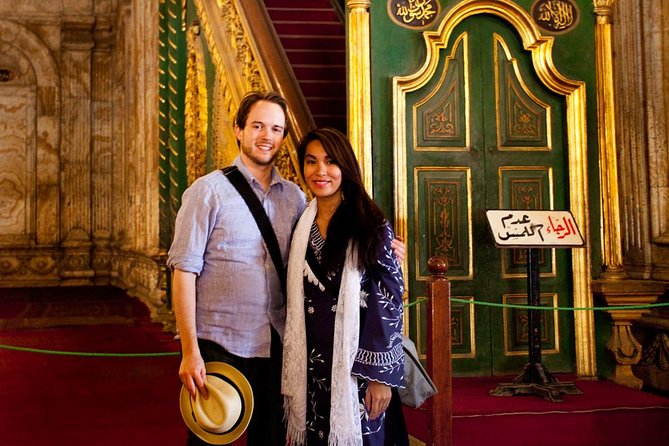
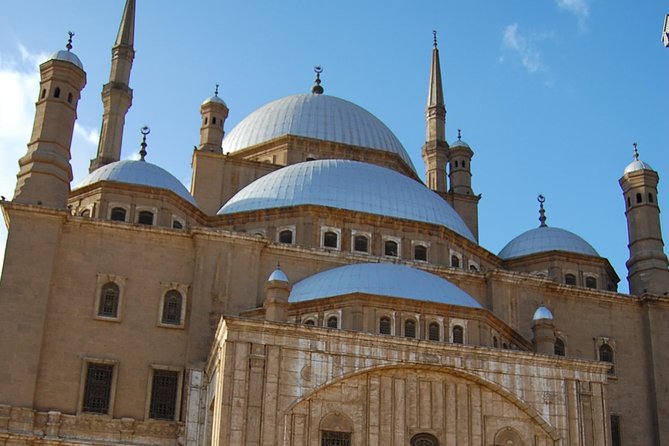
Cairo’s Citadel occupies a high point on the Mokattam hills and controlled the city for roughly seven centuries. Saladin began the medieval fortification, and later rulers expanded it. From the walls and open areas, you get a broad view across Cairo and a useful sense of why this position mattered.
The stop is listed at 30 minutes, though the Citadel contains enough mosques and museums to fill much longer. The main focus here is the Alabaster Mosque, whose domes and minarets are among Cairo’s best-known silhouettes.
Do not expect a full museum visit in half an hour. Think of the Citadel as a lookout, a major historic complex, and a chance to see the Alabaster Mosque. If the view is clear, take a moment before heading inside. After the dense church streets, the open height gives the day a welcome change of pace.
Amr Ibn Al-As and the beginning of Islamic Cairo
The route continues to the Amr Ibn Al-As Mosque in the Fustat area. It was founded in 642 AD by Amr Ibn Al-As, the Muslim leader associated with the founding of Islamic Cairo.
The site is important for its early place in the city’s Islamic story, but the current building may not deliver the same visual impact as Sultan Hassan or Al-Rifa’i. One account describes the interior as modern and plain, with an uncomfortable process involving shoe storage, full coverings for some women, and forceful tip requests.
That does not make the stop worthless. It does mean you should ask your guide what you will actually see and how much time it deserves. If your main goal is medieval architecture, you may prefer more time at the older monuments. If you care about the origins of Islamic Cairo, the historical setting still gives the visit purpose.
Khan Al-Khalili and the final shopping streets
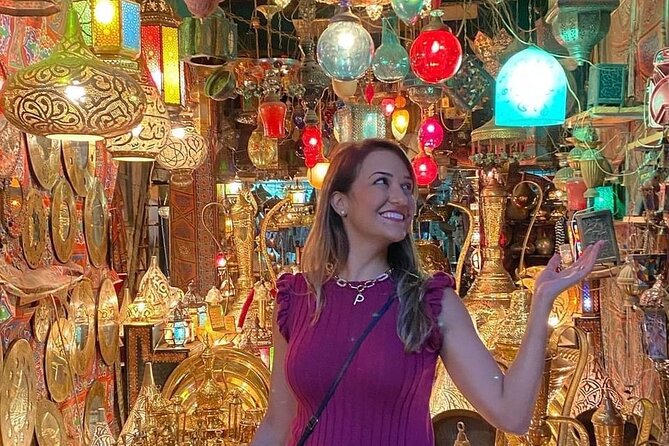
Khan Al-Khalili is the natural finish. The market’s narrow lanes offer metalwork, souvenirs, fabrics, spices, and other goods, though the exact selection and atmosphere can vary. This is the point where you can switch from formal monuments to ordinary street life and shopping.
The scheduled visit is only 30 minutes. That is enough to walk through a small part of the market, but not enough for relaxed browsing, bargaining, and a coffee break. If the market matters to you, say so at the start of the day and confirm that it will not be dropped if the schedule runs late.
Be ready to bargain politely and compare prices. A guide can help you find the route and explain what you are seeing, but you should make your own buying decisions. One account describes a guide pressing to leave and appearing to side with vendors, so keep control of your shopping time and budget.
Drivers, guides, and the human side of the tour
The strongest part of this experience appears to be the team. Several named guides receive special praise for patience, humor, and clear explanations. Michael is singled out for making Christian and Muslim history accessible. Mira is described as enthusiastic and well read, while Joseph, Yasmine, Zainab, Hola, Ruwana, and Sameer are also associated with friendly, informative days.
The driver matters just as much. Cairo traffic is demanding, and several accounts specifically praise careful driving, punctual pickup, clean cars, and safe movement through crowded streets. Esam, Sayed, and Mohammed Bin Shama are among the drivers mentioned positively.
Still, guide quality is not guaranteed to be identical from one booking to the next. One account describes repeated explanations and limited English conversation, while another describes pressure to tip. If you need a guide who can discuss theology, architecture, and history in depth, state that preference when booking and ask which guide is assigned.
The private format gives you a useful safeguard. If you are tired, the guide can adjust the pace. If an explanation is unclear, you can ask again without holding up a coach group.
Price, lunch, and what is really included
At a listed price of $8 per person, this looks like exceptional value for a private vehicle, hotel pickup, driver, guide, and several major sites. That price is also low enough to require careful checking.
The information gives conflicting details. One section lists transfers in a private air-conditioned vehicle and bottled water as included. Another highlights free admissions, lunch, snacks, hotel pickup, and a qualified Egyptologist. Yet the exclusions say entry fees, lunch, and the guide may be optional.
Do not assume the cheapest displayed price covers everything. Ask these questions before booking:
- Is the Egyptologist included, or is the vehicle only?
- Which entrance tickets are covered?
- Is lunch included, and where is it served?
- Are snacks and bottled water included?
- Is the itinerary six hours or longer?
- Can Khan Al-Khalili be guaranteed?
Some accounts describe a tasty traditional lunch, including koshari, but the formal details label lunch optional. Treat lunch as an add-on unless your confirmation clearly says otherwise.
Free cancellation is available up to 24 hours before the start time. Changes or cancellations inside that window are not accepted for a refund.
Who should book this experience
I would choose this tour if you have one full day in Cairo and want the religious quarters explained in a logical order. It suits first-time visitors, families, solo visitors who want extra support, and anyone uneasy about Cairo’s traffic or finding small historic sites alone.
It is also a good match for people who value context more than a slow museum visit. You will see many sites, but the day is busy. The short stops at the Coptic churches and Khan Al-Khalili may feel rushed if you want detailed photography or long periods of quiet.
I would hesitate if your main interest is shopping, if you dislike religious-site dress rules, or if you want a fixed package with no uncertainty over admissions and lunch. In that case, get the inclusions in writing or choose a simpler private driver arrangement.
Should you book the Coptic and Islamic Cairo tour?
Yes, if you confirm the price and inclusions first. The route covers an unusually broad slice of Cairo: Coptic churches, a historic synagogue, Mamluk mosques, the Citadel, an early Islamic mosque, and Khan Al-Khalili. The private car and hotel pickup add real value in a city where traffic and distances can wear you down.
Ask for an experienced English-speaking guide, protect your market time, and keep expectations realistic at Amr Ibn Al-As Mosque. If you receive a strong guide such as Michael, Mira, Joseph, or Yasmine, the day can turn a crowded list of monuments into a clear story about Cairo’s many faiths.
FAQ
How long does the tour last?
The experience is advertised as approximately six hours, but the listed stops and driving time may make the day longer. Confirm the expected finish time when booking.
Is hotel pickup included?
Hotel pickup and drop-off are advertised, with an 8:00 a.m. pickup listed in the itinerary. Confirm the pickup area when you receive your booking confirmation.
Is this a private tour?
Yes. Only your group participates, and transportation is provided in a private air-conditioned vehicle.
Is a guide included in the price?
The information is inconsistent. The tour is described as led by a qualified Egyptologist, but another section lists the guide as optional. Confirm this before booking.
Are entrance fees included?
Some itinerary entries show admission included, while the general details say entrance fees depend on the option selected. Ask for a complete list of included tickets.
Is lunch included?
Lunch is described as included in the highlights, but the exclusions list lunch at a local restaurant as optional. Confirm whether lunch is part of your chosen package.
What is the cancellation policy?
You can cancel up to 24 hours before the local start time for a full refund. Cancellations or changes made less than 24 hours before the start time are not accepted for a refund.
Just added in Cairo
- Private Dinner Cruise with Belly Dancing★ 5.0 · 48 reviews
- Fayoum 4×4 Safari Adventure, Sandboarding, Lunch, Felucca★ 5.0 · 71 reviews
- Private Half Day Tour to Islamic Cairo★ 5.0 · 19 reviews
- Private day tour visiting Coptic, Islamic Cairo, khan Elkhalili★ 5.0 · 39 reviews
- Private day trip to Cairo from Hurghada★ 5.0 · 139 reviews
- Private VAN Airport Transfer: Cairo Airport Transfer to anywhere in Cairo★ 4.5 · 49 reviews
- Private pickup & Transfer from & to cairo Airport★ 5.0 · 19 reviews
- Private Transfer – Cairo Airport Arrivals Hall to Hotel★ 5.0 · 147 reviews
Coptic & Islamic Cairo Tours, compared.

Egyptian Museum, Citadel, and Old Cairo Guided Tour
Read our review →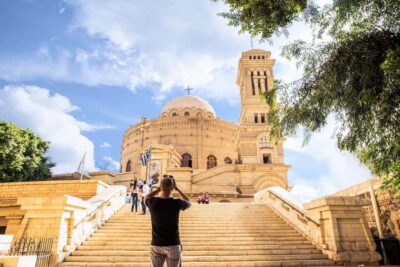
Old Cairo: Full-Day Islamic and Coptic Cairo Tour with Lunch
Read our review →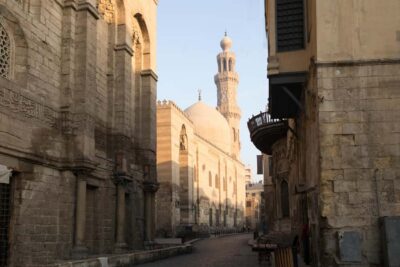
Old Cairo Guided Walk Tour: History, Culture & Street Bites
Read our review →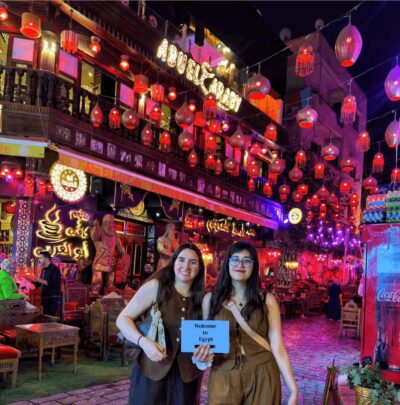
Local Markets & Khan el Khalili Private Shopping Tour
Read our review →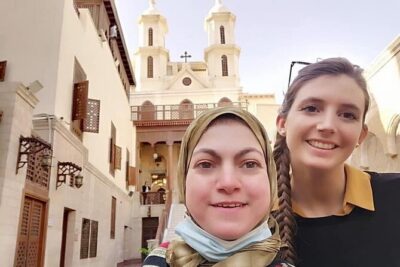
4-hours private Tour Islamic Mosque,Coptic Cairo &Khan el-Khalili
Read our review →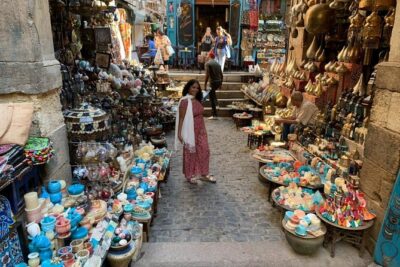
Cairo VIP Guided Tour to Khan El-Khalili Market with Lunch
Read our review →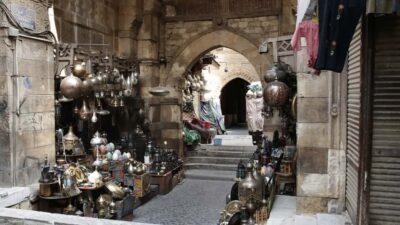
Old Cairo and Khan El Khalili Bazaar: Private Half-Day Tour
Read our review →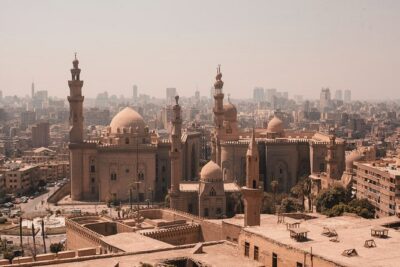
Cairo Private Day Tours: Discover Islamic and Coptic Cairo
Read our review →Browse the lists this tour appears in