
Reviewed · VALLEY OF THE KINGS TOURS
Luxor East and West Bank: Valley of the kings, Habu Temple,Karnak&Luxor Temples
Luxor packs an astonishing amount of ancient Egypt into one long day. This private tour crosses both sides of the Nile, taking you from royal tombs and desert temples to the great sanctuaries of Karnak and Luxor. The most memorable stop is likely the Valley of the Kings, where your ticket allows you to enter selected tombs beneath the Theban hills.
I like the private vehicle and guide, since you can move at your own pace and ask questions without a large group slowing you down. I also like the mix of famous sights and less-discussed places, especially Medinet Habu, the powerful temple of Ramses III. The main drawback is simple: eight hours is a lot of sightseeing, and admission fees are not included in the $85 price.
Key points at a glance
- Six major ancient sites in one day: You visit the Valley of the Kings, Hatshepsut’s temple, the Colossi of Memnon, Karnak, Luxor Temple, and Medinet Habu.
- Private transport: Your group travels in a private air-conditioned vehicle, with pickup and return to your hotel or Nile cruise.
- Strong guide focus: Laila is frequently praised for clear English, patience, organization, and help with photography. Mohamed Noor is also specifically praised for his explanations.
- A full eight-hour schedule: The planned visits add up to about eight hours, so bring water, a snack, and comfortable shoes.
- Entrance fees are extra: The tour price covers transport, the guide, and one bottle of water, but not site tickets or tips.
- Flexible cancellation: Cancel at least 24 hours before the start for a full refund. Poor weather may lead to a new date or full refund.
Why this Luxor day works so well
Luxor is divided by the Nile into two very different sightseeing zones. The East Bank holds the great religious centers of Karnak and Luxor Temple. The West Bank is the land of tombs, funeral temples, and the ancient Theban Necropolis.
Covering both banks independently can involve arranging transport, judging distances, and deciding how long to spend at each site. This tour takes care of the driving in a private, air-conditioned vehicle. That matters in Luxor, where heat can make even a short transfer feel tiring.
The day begins at 7:00 a.m. and includes stops with an estimated total of about eight hours. You will not be wandering through the sites alone. An English-speaking Egyptologist guide accompanies you, explaining the meaning behind the carvings, rulers, gods, and burial customs.
The private format is the strongest practical feature. You can ask for more explanation at a favorite temple, move on when your energy drops, or pause for photographs without coordinating with a busload of people. The tour is still busy, but it feels more manageable than trying to arrange all six places yourself.
More Temple Tours in Luxor
- Luxor Day Tour: Valley of Kings & Queens & Hatchepsut Temples
★ 5.0 · 1,496 reviews - Luxor: Valley of the Kings and Hatshepsut Temple Day Tour
★ 4.4 · 1,404 reviews - Hurghada: Luxor Tour with Valley of Kings, Karnak & Tut Tomb
★ 4.6 · 1,082 reviews
The Valley of the Kings and its royal tombs
The Valley of the Kings occupies a desert wadi on Luxor’s West Bank, within the wider Theban Necropolis. Ancient Egyptian rulers chose this area for royal burials, and the valley contains two main sections, the East Valley and the West Valley.
You have about two hours here, the longest single visit of the day. That is appropriate. The site is not one monument but a collection of tomb entrances cut into the hills, with decorated corridors leading underground.
Your admission ticket is not included, and the exact tombs available can depend on the ticket type and current site arrangements. The supplied experience specifically refers to visits to the tombs of Ramses III, Ramses IV, and Ramses IX, but you should confirm the current ticket details before setting out.
Inside, look for painted scenes, hieroglyphs, and carefully planned passageways. The tombs are more intimate than the huge temples later in the day. You are seeing a private religious world built for the afterlife, not a public monument meant to impress crowds from a distance.
The biggest challenge is the heat. Much of the approach is exposed, and you may walk over uneven ground. Wear shoes with a firm sole, carry sun protection, and save some energy for the later temples.
A guide adds real value here. Tomb decoration can look like a wall of symbols if nobody explains the scenes. Laila is repeatedly praised for giving clear background while allowing time for photographs. One useful detail from the tour’s feedback is that she stayed with a family member who needed to rest while another person continued to the tombs. That kind of flexibility can matter when a group has mixed mobility or stamina.
Hatshepsut’s temple at Deir el-Bahari
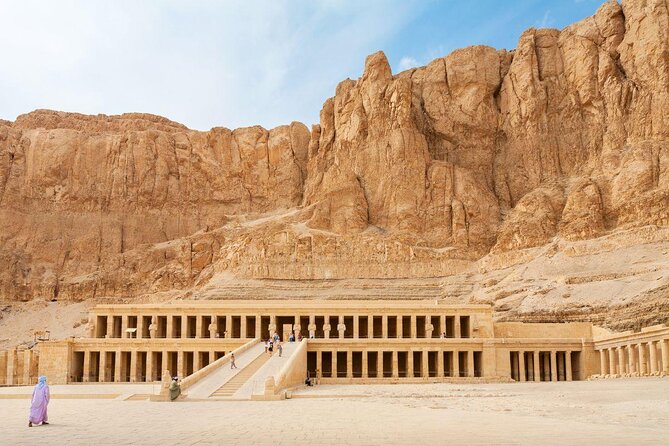
From the Valley of the Kings, the tour continues to the Temple of Hatshepsut at Deir el-Bahari. The visit is planned for about 90 minutes, with entrance fees extra.
Hatshepsut was one of Egypt’s most important female rulers and the fifth king of the Eighteenth Dynasty. Her reign was a major period in Egypt’s ancient story, and her temple presents a different kind of royal monument from the tombs nearby.
The temple is arranged in broad levels against the cliffs. Its terraces, ramps, columns, and reliefs create a strong visual contrast with the narrow tomb passages. A guide can help you understand both the building and the unusual political story of Hatshepsut’s rule.
I would give this stop enough time for the main terraces, views, and carved scenes, but I would not expect the same leisurely pace you might have on a stand-alone West Bank tour. With six major sites on the schedule, the guide needs to keep the day moving.
Admission is not included, so add this cost to your planning. The tour price is best understood as payment for private transport and guiding rather than an all-inclusive ticket.
The Colossi of Memnon: a short but useful stop
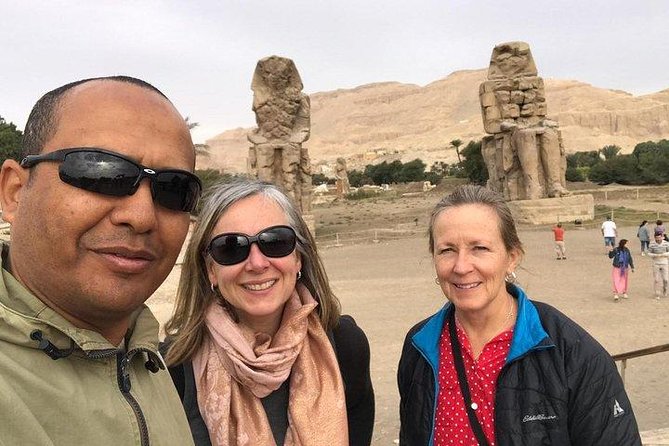
The Colossi of Memnon are two huge seated statues of Amenhotep III, built around 1350 BC. They are the surviving figures from a much larger funerary temple on the West Bank.
This stop lasts about 30 minutes and admission is free. That makes it a welcome pause between longer paid sites.
The statues face toward the Nile and represent Amenhotep III seated with his hands resting on his knees. Smaller figures appear beside the legs. Their scale is the main attraction, but the missing temple also gives the stop an important lesson: ancient sites often survive as fragments rather than complete buildings.
Thirty minutes is enough to see the statues, hear their story, and take photographs. You should not expect a full museum-style visit here. Think of it as a brief, worthwhile roadside stop that breaks up the West Bank route.
More Valley of the Kings tours in Luxor:
- Hurghada: Luxor Valley of the Kings & Tutankhamun Tomb Trip
★ 4.7 · 13,208 reviews - Luxor Day Trip from Hurghada Small Group & Tutankhamun Tomb
★ 4.8 · 5,366 reviews - Small group Hurghada to Luxor, Valley of the Kings by Van
★ 4.5 · 2,470 reviews - Hurghada: Small-Group Luxor Highlights & Tut Tomb Day Tour
★ 4.6 · 928 reviews
Karnak Temple and its massive scale
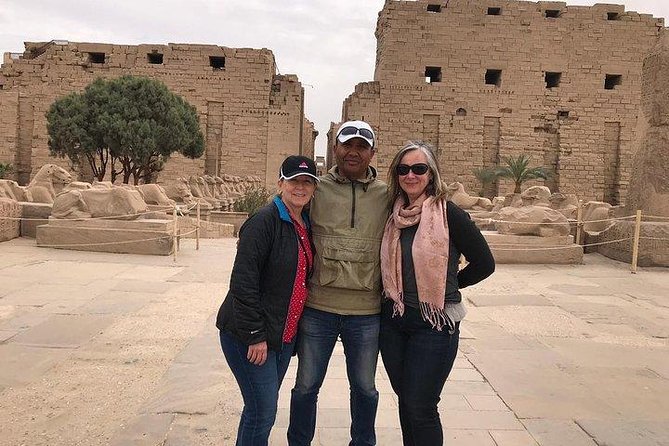
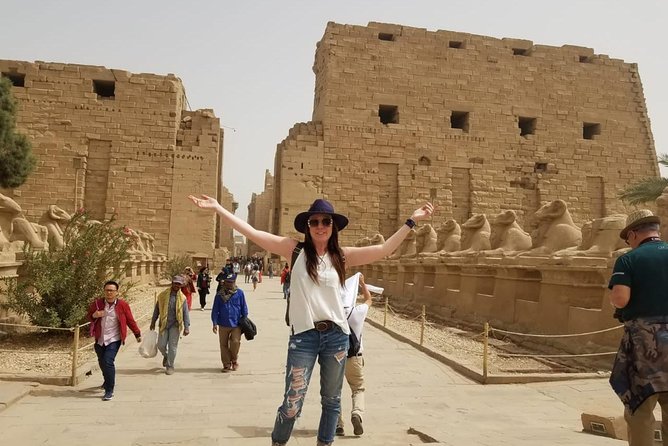
Karnak receives about two hours, and this is one of the places where a private guide makes a major difference. The Karnak complex grew over many centuries, from the Middle Kingdom through the Roman period. It includes temples linked with Amun, Mut, and Khonsu, the Theban triad.
Most people use Karnak to mean the great temple area devoted to Amun, or Amun-Ra. In practice, you are entering a large collection of courts, columns, gateways, and sacred spaces rather than a single compact building.
The scale can be hard to grasp at first. Columns rise around you, courtyards open and close, and successive rulers added their own work to the complex. A guide helps you read the site in sections instead of treating it as one enormous wall of stone.
Two hours is a useful amount of time, though it will not cover every corner. Focus on the major processional route, the columned areas, gateways, and the details your guide considers most important. Wear a hat or other sun protection. There is plenty of open space, and the Egyptian sun is not gentle.
Karnak is also where the day may begin to feel long. You will already have visited three West Bank sites before arriving here. I would use the transfer time to drink water and eat a snack rather than trying to save every bit of energy for the monuments.
Luxor Temple as the evening highlight
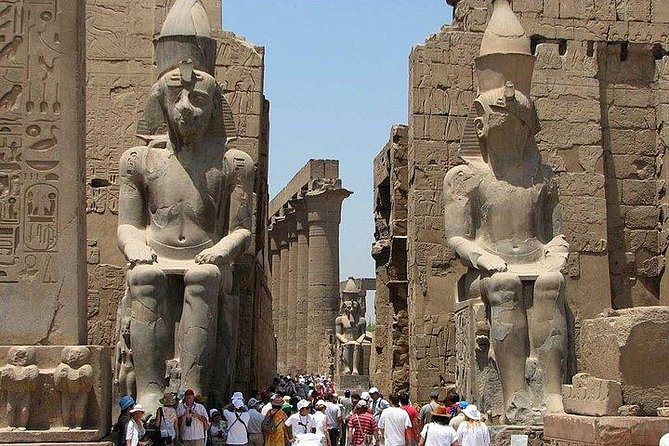
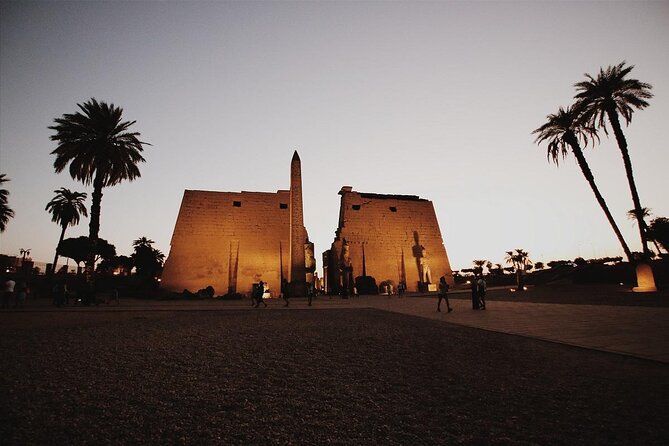
Luxor Temple is planned for about 90 minutes. It sits on the East Bank in modern Luxor and was founded around 1400 BC. Much of the complex took shape under Amenhotep III and Ramses II, with later rulers adding their own work.
The temple was linked with the Theban triad of Amun, Mut, and Khonsu. Its courtyards, columns, obelisks, and monumental entrances show how Egyptian rulers used architecture to connect themselves with the gods and with earlier kings.
This is a fitting final major monument because it feels different from Karnak. Karnak is sprawling and layered. Luxor Temple is more contained, so you can take in its main spaces during a 90-minute visit without feeling quite as lost in the site.
Your guide can point out the work associated with Amenhotep III, Ramses II, and Thutmose III. Since many rulers contributed to the temple, the explanation helps you separate the different periods instead of seeing only one long sequence of columns.
Entrance fees are extra here as well. If you enjoy taking photographs, this stop offers plenty of striking angles, but the schedule remains fixed. Ask your guide early in the visit how much free time you will have for pictures.
Medinet Habu and the story of Ramses III
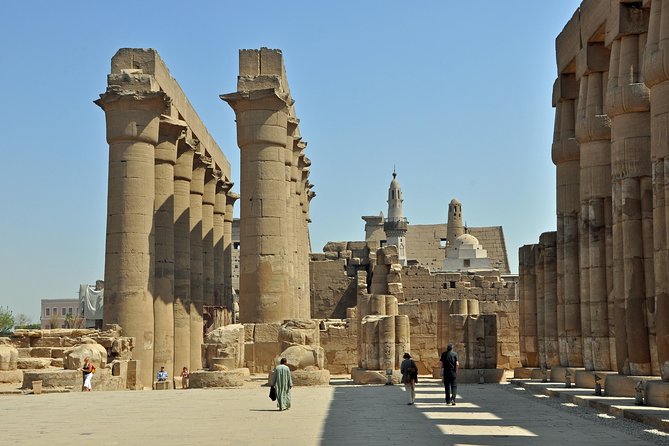
Medinet Habu, also called the Temple of Ramses III, is on the southern end of the Theban Necropolis. The visit lasts about 90 minutes, with the entrance ticket not included.
This temple is one of the best-preserved in Egypt. Its massive mud-brick enclosure wall may have been fortified, giving the complex a more defensive appearance than many other temples in Luxor.
The site is especially useful for understanding Ramses III and the later New Kingdom. The tour also connects Medinet Habu with the first recorded labor strike in history, when workers protested against their king. That detail brings ancient Egypt down from the level of kings and gods to the practical concerns of ordinary workers.
Medinet Habu is sometimes left out of a first visit because Karnak, Luxor Temple, and the Valley of the Kings are better known. Including it makes this route more complete. You get another major temple, but also a site with unusually well-preserved architecture and a story that is easy to remember.
By this point, you may be tired. That is the tradeoff. The temple deserves attention, but the full route asks you to remain alert through the final stop. If you care more about depth than quantity, tell your guide which sites matter most to you at the start.
What the $85 price really covers
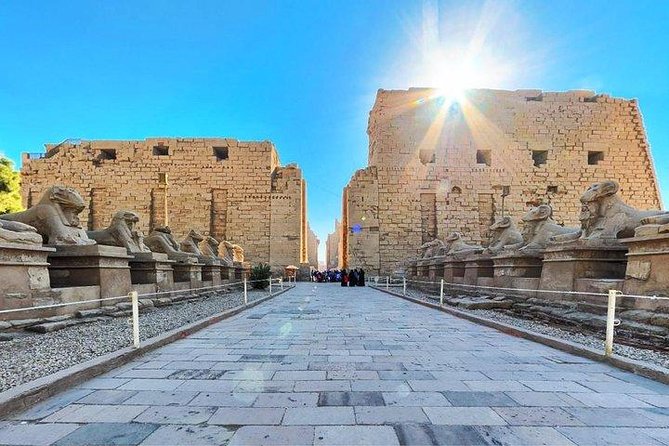
At $85 per person, the tour offers a private air-conditioned vehicle, hotel or Nile cruise pickup and return, an English-speaking Egyptologist guide, and one bottle of water. Group discounts are offered, and the activity uses a mobile ticket.
The important catch is that entrance fees are not included. You also pay for tipping and anything not specifically listed. Because of that, the final cost will be higher than $85, particularly if you are traveling with several people and paying separate entrance fees.
Still, the price can be reasonable if you value private transport and a guide across both sides of Luxor. Hiring separate taxis, planning the route, and finding explanations at each site may not save much money, and it will require more effort.
The value is strongest for first-time visitors with only one day in Luxor. You see the major names without spending time arranging transfers. It is less compelling for someone who already knows the temples well or wants long, unhurried visits at two or three sites.
Guides, pacing, and the human side of the day
The guide is central to this experience. Laila receives particularly strong praise for her English, patience, archaeological knowledge, organization, photography help, and ability to adjust the pace. Mohamed Noor is also singled out for leading a well-received East and West Bank day.
You cannot assume a specific guide unless the company confirms one. If Laila is important to your booking, request her by name before the tour. The guide assigned to you will shape how much you learn and how smoothly the day runs.
The private format also helps with different energy levels. One person can rest while another continues through a tomb or temple, as long as the timing remains workable. That is useful for families and mixed-age groups.
A small but practical warning: bring a snack. One person specifically found the day long and advised doing so. The tour includes one bottle of water, but that may not be enough for eight hours in the Egyptian heat.
The route is described as suitable for most people, but the supplied details do not promise full accessibility. Expect walking around large archaeological sites, exposed sun, and uneven surfaces. Ask the provider about your specific needs before booking.
Booking, cancellation, and who should choose it
Pickup is offered from your hotel or Nile cruise, with return to the same general accommodation point in Luxor. The meeting time is 7:00 a.m. Confirmation is received at booking, and the activity is private, so only your group participates.
Free cancellation is available up to 24 hours before the start time for a full refund. Changes or cancellations inside that 24-hour window are not refunded. The tour also depends on good weather. If poor weather causes cancellation, you are offered another date or a full refund.
I would choose this tour if you have one full day, want the main sights on both banks, and prefer having an English-speaking guide handle the transport and explanations. It is especially suitable for families, first-time visitors, and small groups that want some control over the pace.
I would think twice if you dislike early starts, long sightseeing days, or extra ticket costs. A shorter West Bank tour plus a separate East Bank visit would offer more breathing room, but it would not give you the same broad coverage in one day.
Should you book this Luxor tour?
Book it if your priority is seeing a great deal of Luxor without managing the logistics yourself. The combination of private transport, a guide, and six major sites gives you a strong first look at both banks.
Before paying, ask for the current entrance-fee total and confirm the guide, pickup point, and vehicle arrangements. Request Laila if she is available, bring a snack and sun protection, and accept that this is a brisk sightseeing day rather than a slow archaeological study.
For $85 per person before admissions and tips, it is a useful value for a private full-day route. The best part is not simply the number of temples. It is having someone explain why royal tombs, working people, gods, and kings all belong to the same extraordinary story.
FAQ
What is included in the Luxor tour?
The tour includes transfers in a private air-conditioned vehicle, pickup and return from your hotel or Nile cruise, one bottle of water, and a qualified English-speaking Egyptologist guide.
Are entrance fees included?
No. Entrance fees for the Valley of the Kings, Hatshepsut’s temple, Karnak, Luxor Temple, and Medinet Habu are not included.
What time does the tour start?
The stated start time is 7:00 a.m.
How long does the experience last?
The tour lasts approximately eight hours, followed by transfer back to your hotel in Luxor.
Is this a private tour?
Yes. Only your group participates in the activity.
Can I request Laila or Mohamed Noor as my guide?
The information identifies Laila and Mohamed Noor as guides associated with the experience, but it does not guarantee a specific guide. You should request your preferred guide before booking and wait for confirmation.
What is the cancellation policy?
You receive a full refund if you cancel at least 24 hours before the experience starts. Cancellations or changes made less than 24 hours before the start are not refunded. If poor weather causes cancellation, you are offered another date or a full refund.
Just added in Luxor
- Private Trip To Luxor from Cairo by Plane★ 5.0 · 22 reviews
- Luxor Private Day Trip from Cairo by Plane★ 4.5 · 69 reviews
- Private Day Tour To Luxor from Cairo by Plane,Tours,Sailing Felucca,Camel&Lunch★ 5.0 · 45 reviews
- Private Day Tour To Luxor from Cairo by Plane★ 4.5 · 41 reviews
- Package 8 Days 7 Nights To Jewels of Egypt, Luxor & Aswan Tour★ 5.0 · 29 reviews
- Package Cairo & Alexandra & Luxor & Aswan★ 5.0 · 39 reviews
- Overnight Luxor Tours by train from Cairo with Hot Air Balloon and much more★ 5.0 · 29 reviews
- Private Luxor Day tour from Cairo by Flight★ 5.0 · 25 reviews
Valley of the Kings Tours, compared.

Luxor Valley of the Kings & Tutankhamun Tomb Trip
Read our review →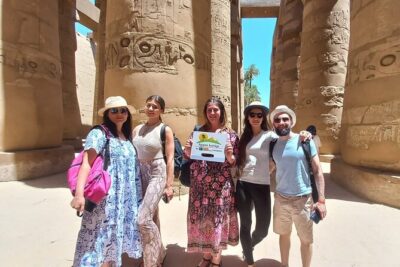
Small group Hurghada to Luxor, Valley of the Kings by Van
Read our review →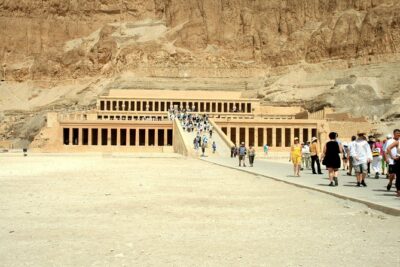
Luxor Day Tour: Valley of Kings & Queens & Hatchepsut Temples
Read our review →
Small-Group Luxor Highlights & Tut Tomb Day Tour
Read our review →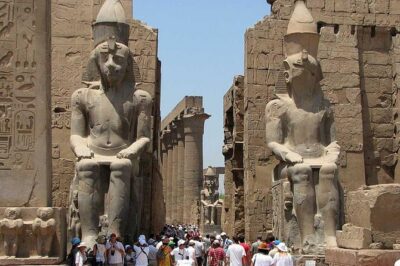
Valley of Kings, Hatchepsut Temple ,Karnak & Luxor-DayTour
Read our review →Browse the lists this tour appears in