
Reviewed · 2-DAY EXPERIENCES
2 Days In Giza And Cairo. (Including lunch)
The best thing about this tour is its two-day pace. Instead of squeezing Giza, the old capitals, the museum, and Islamic Cairo into one exhausting outing, you get a full day for the pyramids and nearby sites, followed by a separate day in central Cairo. I especially like the private vehicle and hotel pickup, plus the chance to see less-visited pyramids at Saqqara and Dahshur.
I also like that the price includes all listed admission tickets and two lunches, which makes planning simple. Guides named Hala, Mohammed, and Muhammad have received warm praise for their history knowledge, patience, and help with practical matters. The main caution is the packed schedule. One experience was described as rushed, so ask your guide at the start how much time you will have for photos, quiet exploration, and explanations.
Key points to know before booking
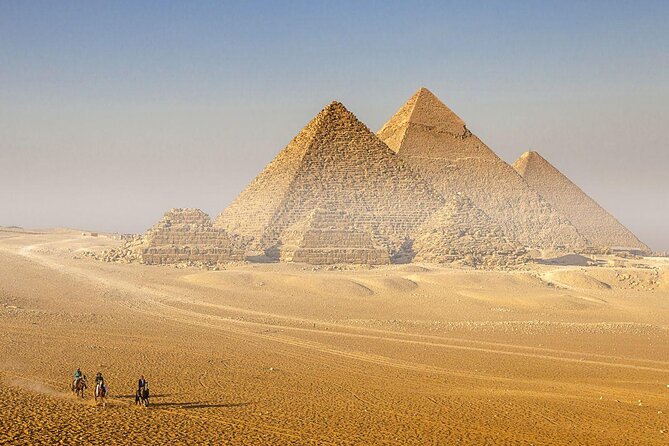
- Giza gets a full three hours: You see the three major pyramids, panoramic viewpoints, the Valley Temple, and the Great Sphinx.
- Saqqara and Dahshur add real depth: The Step Pyramid, Bent Pyramid, and Red Pyramid show how Egyptian pyramid design changed.
- The private format helps with Cairo traffic: Your group travels by air-conditioned vehicle and returns to your hotel each day.
- Day two shifts from pharaohs to Cairo: The Egyptian Museum, Citadel, Alabaster Mosque, and Khan Al-Khalili provide a strong contrast.
- Lunch is included twice: Personal expenses and tipping are not included.
- This is a full sightseeing program: It suits curious first-time visitors more than anyone seeking a slow, unstructured holiday.
Why two days makes Cairo easier to handle
Cairo and Giza are close on a map, but the sights are spread across a huge urban area. Traffic can be slow, and each major site needs time if you want more than a quick photograph.
This tour divides the experience sensibly. Day one focuses on the pyramid fields west and south of Cairo. Day two stays mainly in Cairo, moving from the Egyptian Museum to the Citadel and then the market quarter. That division gives you a better chance to remember what you saw instead of mixing every dynasty and monument together.
The private setup matters here. You are not tied to a large group’s walking speed or repeated hotel stops. The guide can explain a monument, allow time for pictures, and then move on. That said, a private tour is not automatically a leisurely one. The listed stops fill both days, so tell your guide if you prefer fewer sites with longer visits.
Pickup begins at about 8:00 am from your Cairo hotel. The air-conditioned vehicle is a practical comfort, especially after time outside at Giza and Dahshur. Drop-off is included at the end of each day.
A few more days out in Giza to weigh up
- 2 days cairo and giza attractions plus Gem, private tour
★ 5.0 · 231 reviews - All Inclusive 2-Day Private Tour to All Pyramids and Cairo and 2 evenings
★ 5.0 · 187 reviews - Cairo: 2-Day Pyramid, Museum, Bazaar Private Tour
★ 4.6 · 74 reviews
Day one begins with the Great Pyramids of Giza
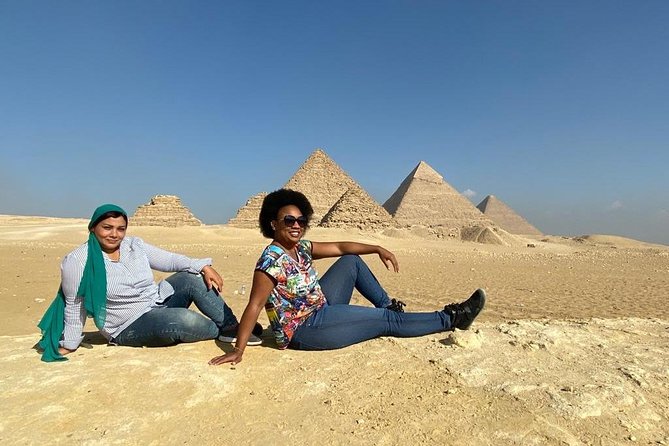
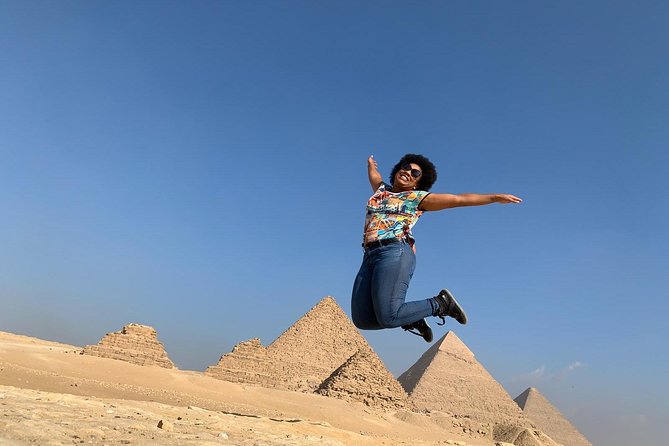
The Giza Plateau is the obvious headline, and the tour gives it about three hours. You see the Pyramid of Cheops, also called Khufu, along with the pyramids of Chephren and Mycerinus. These are the only surviving landmarks from the ancient Seven Wonders.
The visit also includes tombs connected with high officials and royal relatives. That detail helps you see Giza as more than three giant stone monuments. It was a working funerary complex with spaces for ritual, burial, administration, and remembrance.
Make good use of the panoramic area. It is the place for broad photographs of the pyramids, with the three structures arranged across the desert. You then continue to the Valley Temple and the Great Sphinx. The Sphinx is especially useful for understanding how Egyptian rulers linked their human identity with divine and animal power.
A private guide can add welcome context here because the site itself does not explain every detail in one clear sequence. Guides such as Mohammed and Hala have been singled out for making the visit easy to follow and enjoyable. Guide assignments can vary, so you should not book on the assumption that a particular person will lead your tour.
The main drawback is heat and exposure. The schedule includes outdoor walking and open viewpoints, followed by more sites later in the day. Wear practical shoes, carry water, and keep your camera ready without letting photography take over the visit.
Saqqara shows how pyramids developed
After Giza, you travel to Saqqara, where the Step Pyramid of King Djoser forms the center of the visit. Built during the Third Dynasty, it is described as the world’s oldest major stone structure. Its layered shape looks very different from the smooth-sided pyramids at Giza, and that contrast is the point.
Saqqara was built as a funerary complex, not simply as one isolated pyramid. The site also includes the pyramid of King Teti, founder of the Sixth Dynasty, along with mastabas belonging to officials. These tombs give you a look at how royal and elite burials were arranged around the main monument.
The two-hour stop should give your guide time to explain Imhotep’s role as architect and the early use of limestone in the complex. If you want detailed information about construction methods, ask for it directly. The same applies if you want more time at the mastabas rather than a fast walk past them.
Saqqara is one of the strongest reasons to choose this two-day plan. Many short Cairo programs stop at Giza and never reach this earlier stage of pyramid building. You see an important change in design, and the site feels different from the more famous plateau.
Memphis and lunch break up the first day
Memphis was founded by King Menes and served as Egypt’s capital during the Old Kingdom. The visit centers on the large statue of Ramses II and the alabaster sphinx. It is a shorter stop than Giza or Saqqara, but it connects the monuments to the political center that once directed the country.
The itinerary places lunch after Memphis. Two lunches are included across the tour, and the supplied information describes them as being at a nice restaurant. The exact restaurant and menu are not specified, so you should treat lunch as a useful included break rather than a reason to expect a particular style of meal.
Lunch also gives you a chance to reset before the final pyramid stop. This matters because day one is long and includes several outdoor locations. Personal expenses are separate, and tipping is not included.
A completely different sort of day in Giza:
- Cairo: Pyramids & Great Sphinx Private Tour with Camel Ride
★ 4.9 · 6,335 reviews - Tour to Giza Pyramids and The Egyptian Museum
★ 5.0 · 6,016 reviews - From Hurghada: Cairo and Giza Highlights Full-Day Tour
★ 4.5 · 6,014 reviews - VIP All inclusive Best of the best Giza Pyramids,Sakkara,Memphis
★ 5.0 · 3,164 reviews
Dahshur brings the pyramid story to a close
Dahshur gives you two more major monuments: the Bent Pyramid and the Red Pyramid. Both were built for King Snefru, father of Khufu and founder of the Fourth Dynasty.
The Bent Pyramid is valuable because it shows a change in building plans. Its lower section has a steep angle that shifts partway up, giving the monument its name. It is commonly described as an unsuccessful attempt to create a true pyramid, but it is better understood as evidence of builders working out a new form.
The Red Pyramid offers another stage in that process. Seeing both at Dahshur, after Giza and Saqqara, turns the day into a clear lesson in design development. You are not just collecting famous names. You are following how royal tombs changed over time.
The stop is scheduled for about two hours, then your guide returns you to your hotel. If you are already tired by late afternoon, ask how much walking remains. The tour is private, so communication can help you avoid a rushed finish.
Day two opens at the Egyptian Museum
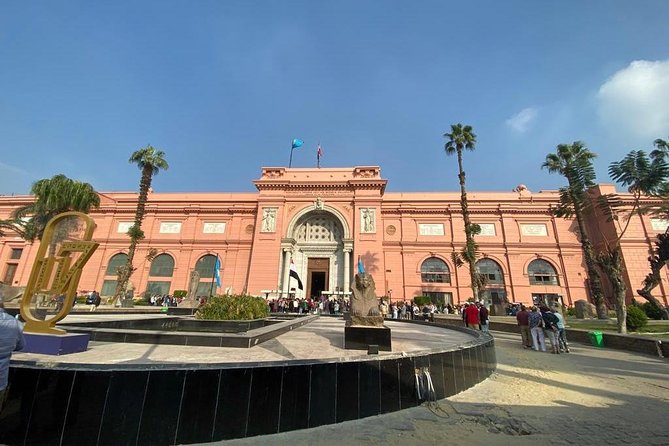
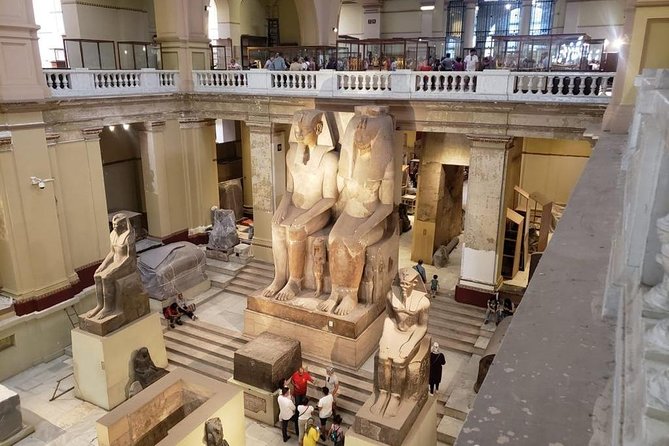
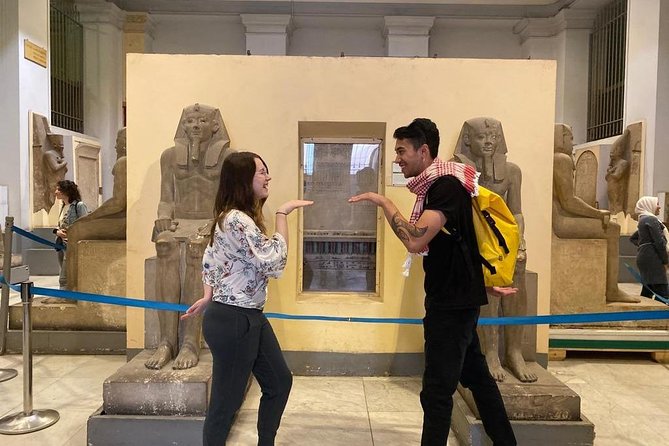
Day two starts with about three hours at the Egyptian Museum of Antiquities. The main draw is the collection of King Tutankhamun, including the famous golden mask. You also see objects connected with Yuya and Thuya, described here as Tutankhamun’s great-grandparents.
Three hours is useful for a museum of this size, but it is not enough to study every room closely. I would ask your guide to identify the pieces that matter most, then keep a little time to look at objects that catch your eye. A guide can also help place the collections in chronological order, which is useful when several thousand years of material are in front of you.
The museum is a strong match for people who want context after seeing the monuments. On day one, you see tombs and pyramids in their original setting. Here, you see objects made for royal life, burial, and religious practice.
Some experiences connected the museum with mummies and the Citadel in a particularly smooth day, while another account found the whole program too fast. That difference is a useful warning. At the museum, tell your guide whether you want a focused highlights tour or more independent time.
The Citadel and Alabaster Mosque change the mood
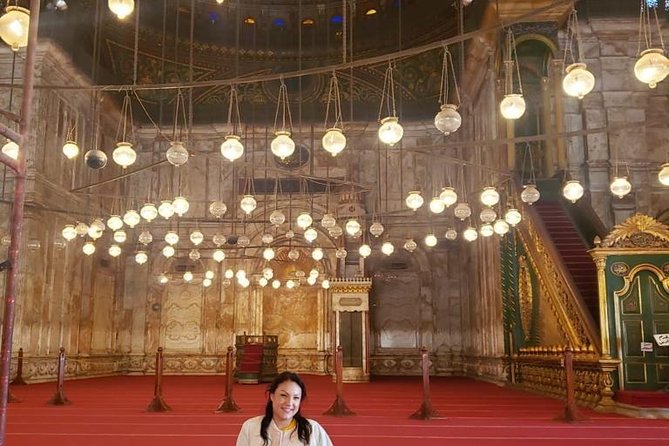
The Citadel of Salah El-Din dates to 1182. It shifts the story from ancient Egypt to medieval Cairo and later Ottoman influence. From the fortified complex, you visit the Alabaster Mosque of Muhammad Ali, built in 1848.
The mosque was designed in Ottoman style by the Turkish architect Youssef Bushnok. Its design reflected Muhammad Ali’s wish to match the power and visual language of the Ottoman ruler. That political purpose makes the building more interesting than a simple stop for architecture.
Allow about two hours for the Citadel and mosque. Your guide can explain the layout, the role of the fortress, and the mosque’s Ottoman features. Dress respectfully for the mosque and be ready for footwear rules or other site instructions, though the supplied tour details do not specify the exact requirements.
This is one of the tour’s most useful contrasts. Giza can feel vast and monumental. The Citadel is more about power, faith, and Cairo’s later rulers. A guide who can explain both pharaonic and Islamic sites adds real value here. Several named guides, including Hala and Muhammad, have been praised for covering different periods clearly.
Lunch follows the Citadel visit. Since it is included, you do not need to stop and negotiate a meal during the middle of the day. Still, ask what is included if you have dietary needs, since no menu or special meal policy is provided.
Khan Al-Khalili adds everyday Cairo
The final scheduled stop is Khan Al-Khalili, an open market associated with the Mamluk Sultan Barqouq in the fourteenth century. It is part of Islamic Cairo and is described as the oldest and biggest market in the Middle East.
The market gives the itinerary a needed change of pace. You move from formal monuments and museum displays into a network of shops and public streets. This is where you can look for souvenirs, watch daily commerce, and get a feel for Cairo beyond its monumental sights.
Shopping requires judgment. One guide was praised for helping with purchases at good prices, but personal expenses are not covered, and the tour price does not include anything you buy. If you are not shopping, you can still use the stop for photographs and atmosphere.
Two hours is enough to see the market without making the final day drag. The guide can help you get oriented, but you should make clear how much time you want for browsing. The visit ends with a transfer back to your hotel.
What the $300 price buys you
At $300 per person, the value depends on your group size and what you would otherwise arrange yourself. This is a private two-day experience, with hotel pickup and drop-off, an air-conditioned vehicle, a guide, admission to all listed sites, and two lunches.
You are paying for coordination as much as transportation. Giza, Saqqara, Memphis, and Dahshur would take careful planning without a private driver. Day two adds museum timing, the Citadel, and Khan Al-Khalili. The price also removes the need to buy each admission ticket separately.
The value is strongest for first-time visitors, families, and small groups that want a clear route through Cairo’s major sights. Group discounts are offered, which may improve the per-person cost for larger bookings. If you are traveling alone, the price is harder to compare with a self-guided visit, but the private transport and guide support may still justify it.
Tipping and personal expenses are extra. Free cancellation is available up to 24 hours before the start time. Cancellations within 24 hours are not refunded, and poor weather may lead to a new date or a full refund.
Who should book this two-day Cairo tour?
I would choose this tour if you want the major sites explained in a logical order and prefer not to manage Cairo transport yourself. It is also a good fit if you want both famous stops, such as Giza and Tutankhamun’s mask, and less familiar pyramid sites at Saqqara and Dahshur.
Families may appreciate the private vehicle and hotel service. Couples and small groups can ask for a slower museum visit or more time at a particular monument. The tour is also useful for visitors who want one guide to connect ancient, medieval, and Islamic Cairo.
I would hesitate if you dislike early starts, long sightseeing days, or fixed routes. The schedule is full, and one account specifically found the pace too fast. I would also avoid booking it if you want substantial free time for shopping or independent wandering.
Should you book it?
Book this experience if you want a strong first look at Cairo and Giza without the stress of arranging several distant archaeological sites yourself. The combination of Giza, Saqqara, Memphis, and Dahshur is particularly good, while the second day gives you the museum, Citadel, mosque, and market.
Before departure, ask your guide to agree on pacing. Decide which sites deserve extra time, especially the Egyptian Museum and Giza. With that small conversation, this private two-day plan can give you a much clearer and more comfortable introduction to Egypt than trying to force the same sights into one day.
FAQ
How long is the tour?
The experience lasts two days, with each day described as an approximate full-day private tour.
What time does the tour start?
The listed start time is 8:00 am.
Is hotel pickup included?
Yes. Pickup and drop-off from any hotel in Cairo are included.
Is the tour private?
Yes. Only your group participates in the activity.
Are admission tickets included?
Yes. Admission to all mentioned sites is included.
Are meals included?
Yes. Two lunches are included, one during each tour day.
Is tipping included?
No. Tipping and personal expenses are not included.
Just added in Giza
- Private Tour: Pyramids of Giza Memphis Saqqara with Lunch★ 5.0 · 85 reviews
- Private Pyramids, Saqqara and Memphis full day tour★ 5.0 · 15 reviews
- Pyramids, Sphinx, Memphis and Saqqara Full Day Private Tour★ 5.0 · 21 reviews
- Pyramids of Egypt full day tour: Great Pyramids of Giza, Saqqara & Memphis★ 5.0 · 36 reviews
- Private Tour to Great Pyramids of Giza and Sphinx★ 5.0 · 15 reviews
- Giza Pyramids & sphinx ,Saqqara(step pyramids,Dahshour (red and bent pyramids)★ 5.0 · 28 reviews
- Pyramids, Sphinx, Egyptian Museum And khan El Khalili Day Tour★ 5.0 · 25 reviews
- Full Day Guided tour to the Pyramids, Sphinx, Meidum And Dahshur★ 5.0 · 30 reviews
2-Day Experiences, compared.
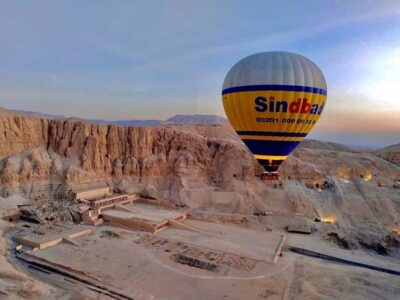
2-Day Luxor Tour with Hotel, Balloon, & Boat Ride
Read our review →
White & Black Desert tour 2 Days 1 night camping from Cairo.
Read our review →
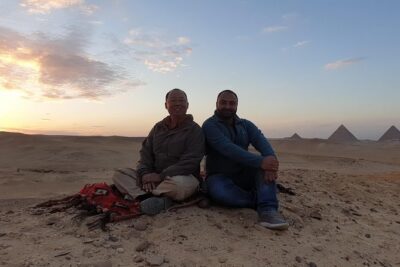
2 days cairo and giza attractions plus Gem, private tour
Read our review →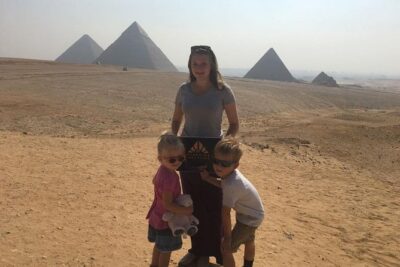
All Inclusive 2-Day Private Tour to All Pyramids and Cairo and 2 evenings
Read our review →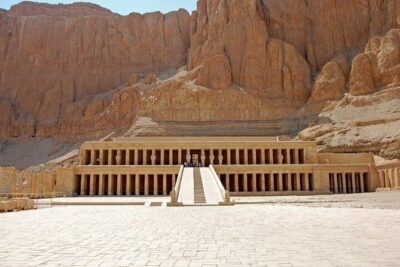
2-Day Top Attractions and Adventures Package in Luxor with Accommodation
Read our review →
Browse the lists this tour appears in