
Reviewed · ABU SIMBEL TOURS
10 Day Egypt Wonders of the Pharaohs Cairo & Alexandria & The Nile & Abu Simbel
Egypt’s greatest hits arrive one after another on this 10-day Pharaohs tour: the Pyramids of Giza, the temples of Luxor, the tombs in the Valley of the Kings, and Abu Simbel. The clever part is the four-night Nile cruise, which links several major sights without making you pack and unpack every day.
I like the mix of famous monuments and less obvious stops, especially Saqqara, Philae, and Alexandria. I also like that airport transfers, domestic flights, guides, hotels, meals, and cruise arrangements are bundled together. The drawback is pace: you cover a lot of ground, and Abu Simbel requires a long seven-hour sightseeing day.
The strongest praise for this company centers on smooth organization, friendly airport help, and guides such as Hannah, Remon, Mustafa, and Mo Salah. Before booking, confirm the Cairo hotel nights, since the information lists both four and five nights.
Key points at a glance
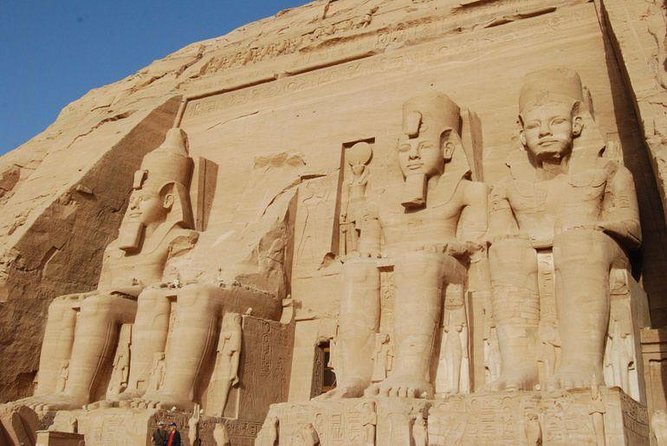
- A full sweep of ancient Egypt: Giza, Saqqara, Memphis, Luxor, Kom Ombo, Edfu, Aswan, Philae, and Abu Simbel all fit into one trip.
- Four nights on the Nile: The cruise includes full board and a traditional Galabeya party, giving you a slower rhythm between temple visits.
- A maximum group size of two: This is a major advantage if you want private attention rather than a large coach tour.
- Abu Simbel is included: You avoid having to arrange this distant and important site on your own.
- Alexandria adds a different side of Egypt: Roman ruins, catacombs, the Qaitbay Citadel, and the Bibliotheca Alexandrina round out the ancient Egyptian focus.
- Most major logistics are handled: Hotels, domestic flights, transfers, meals, tickets, and guides are included, while guide and driver tips are extra.
What the $2,850 price really covers
At $2,850 per person, this is not a bargain-basement Egypt trip, but it includes a great deal. The package covers five-star Cairo accommodation, four nights on a luxury Nile cruise, domestic flights between Cairo, Luxor, Aswan, and Cairo, airport transfers, guided sightseeing, breakfast for nine days, seven lunches, and four dinners.
That matters in Egypt. The distances are large, airport transfers can feel confusing, and several historic sites are easier with an Egyptologist guide beside you. Having one company coordinate the moving parts can save you from arranging separate cars, flights, river transport, and entrance tickets.
The main price question is what the five-star hotels and cruise are like in practice. The information promises four nights at a five-star Cairo hotel in one place and five nights in another, so I would ask for the exact hotel name and the number of included nights before paying. This is a small wording issue, but it affects both value and planning.
Guide and driver tips are not included. Set aside cash for those costs, and ask the company for its current tipping guidance before departure. The package also does not list international airfare, so you will need to arrange that separately.
More Abu Simbel Tours in Aswan
- From Aswan: Abu Simbel Temple Day Trip with Hotel Pickup
★ 4.4 · 2,807 reviews - Private Day Tour to Abu Simbel Temples from Aswan
★ 4.5 · 507 reviews - From Aswan: Abu Simbel Day Tour with Private Guide and Car
★ 4.3 · 342 reviews
Cairo begins with Giza, Saqqara, and Memphis
Your first day is simple: airport pickup and transfer to the hotel. That is useful after a long international flight, particularly when you are arriving in a city as large and busy as Cairo.
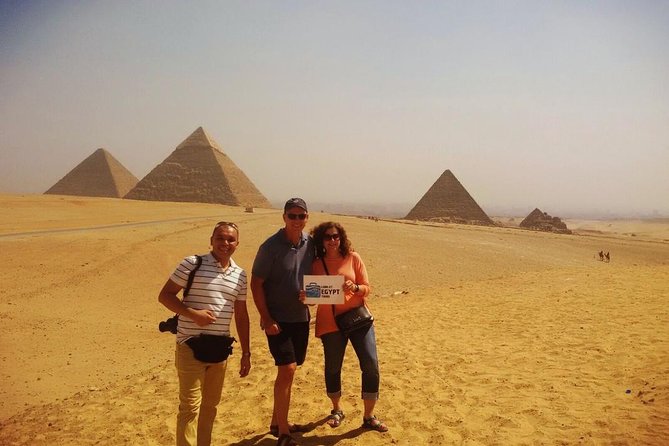
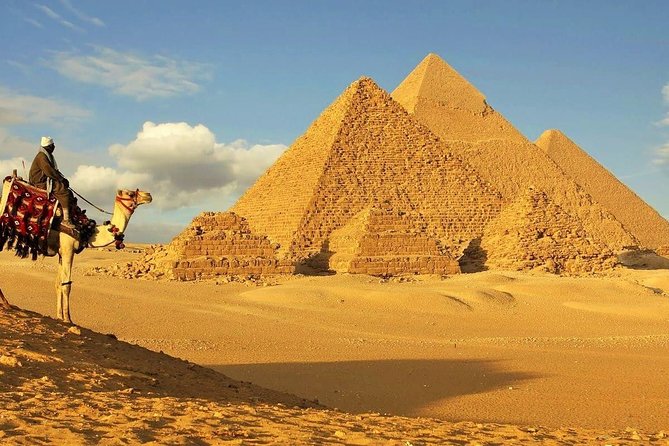
Day two begins with the Pyramids of Giza and the Great Sphinx. You have about three hours here, which gives you time to see the main pyramid area, hear the basic story of the royal tombs, and take the classic photographs. The Pyramids of Giza are the only surviving wonder of the ancient Seven Wonders, and the scale is hard to grasp until you are standing near the stone blocks.
The Sphinx adds a different mood. It is not simply a photo stop, but a massive guardian figure carved from the bedrock, with the pyramids behind it. Your guide can help connect the monuments to the rulers and building projects that shaped the Giza plateau.
Next comes Saqqara, where the Step Pyramid of Djoser is the main attraction. It predates the smooth-sided pyramids at Giza and shows an important stage in the development of monumental stone construction. I like this stop because it gives you a clearer sense that Egyptian architecture did not appear fully formed at Giza.
Memphis follows for about an hour. The site is tied to the ancient capital and includes the huge fallen statue of Ramses II and an alabaster sphinx associated with Hatshepsut. This day covers a lot, so comfortable shoes and water matter. The combined visit lasts roughly seven hours, and the heat can make the final stop feel longer than it looks on paper.
Cairo’s museum, citadel, and Khan el-Khalili
Day three turns from royal tombs to Cairo’s museums and Islamic-era monuments. The Museum of Egyptian Antiquities gets about three hours, enough for a broad introduction to ancient Egyptian objects and royal treasures. The collection is large, with only part of its holdings displayed, so a guide is useful for choosing what deserves your attention.
The tour specifically highlights the treasures of Tutankhamun. If you like ancient art, this is one of the day’s best chances to see burial objects and learn how they fit into the wider story of pharaonic Egypt. Three hours can pass quickly, so do not expect to study every gallery.
Khan el-Khalili comes next for about an hour. This is Cairo’s historic souk district, where you can browse souvenirs, spices, jewelry, and small crafts. I would treat it as a short introduction rather than a relaxed shopping afternoon. Keep track of your belongings, compare prices, and enjoy the atmosphere without feeling pressured to buy.
The final stop is the Citadel of Saladin and the Mosque of Muhammad Ali. Two hours gives you time to see the mosque’s Ottoman design and take in broad views across Cairo. The Citadel also helps explain Egypt’s medieval political story, since it served as a seat of government for centuries.
The company’s strongest practical strength appears here and throughout the trip: guides and drivers handle the complicated movement between sites. Guides named in the feedback include Hannah, Mustafa, Mo Salah, and others, though your assigned guide can differ.
Luxor’s east bank: Karnak and Luxor Temple
A domestic flight takes you from Cairo toward the Nile portion of the trip. The first Luxor visits are Luxor Temple and Karnak Temple, both on the river’s east bank.
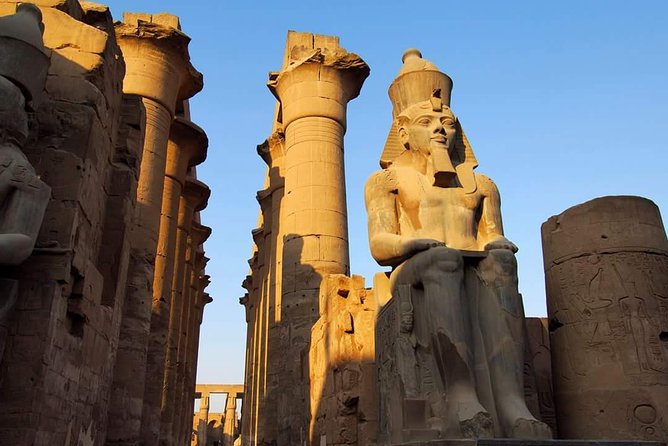
Luxor Temple receives about an hour. It was built around 1400 BCE and was known in ancient Egyptian terms as the southern sanctuary. Its location in modern Luxor makes it easy to connect the ancient city with the present-day city around it.
Karnak gets two hours, which is more appropriate for a sprawling temple complex. The site developed over a long period and was devoted mainly to Amun. Columns, courts, gateways, and carved surfaces make it one of the most impressive places on the route, but it can also feel overwhelming without a guide to explain how the sections fit together.
This is where the cruise becomes a practical choice. Instead of moving to a new hotel after every Luxor visit, you return to the ship and continue south. The cruise lasts four nights and includes full board, so much of the day-to-day planning is already done.
A completely different sort of day in Aswan:
- Aswan: High Dam, Unfinished Obelisk, & Philae Private Tour
★ 4.5 · 375 reviews - Aswan: Edfu and Kom Ombo Day Tour with Luxor Transfer
★ 4.1 · 341 reviews - Aswan: Abu Simbel Group Tour with Guide and Entrance Fees
★ 4.3 · 337 reviews - Full Day tour to Abu simbel temples from aswan
★ 4.5 · 309 reviews
The Valley of the Kings and Hatshepsut
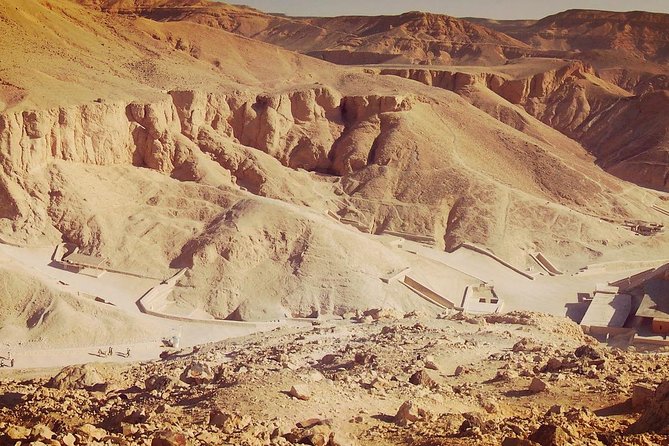
The west bank of Luxor brings the tour’s most famous collection of royal tombs. The Valley of the Kings served as the burial ground for many New Kingdom pharaohs, including Tutankhamun and Ramses IV.
A standard ticket allows entry to three of the 63 tombs, with Tutankhamun’s tomb excluded from that allowance. If you want to enter Tutankhamun’s tomb, ask about the additional ticket and current access rules. The published schedule allows about three hours here, which is enough for a strong introduction but not every tomb.
The interior spaces can be narrow, hot, and crowded. Flash photography is damaging to the paintings, and access rules can change. I would focus on the painted walls rather than trying to record every room on a phone.
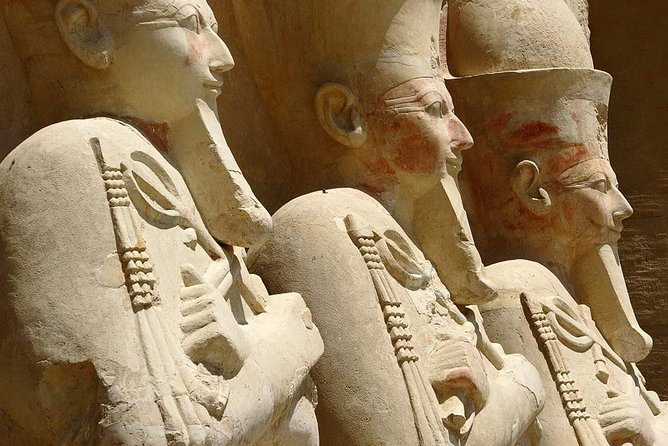
The Temple of Hatshepsut follows with about an hour. Built as a funerary temple for Egypt’s female ruler, it has broad terraces cut into the cliffs. Hatshepsut presented herself as a male king, and her later political story adds a human edge to the stonework.
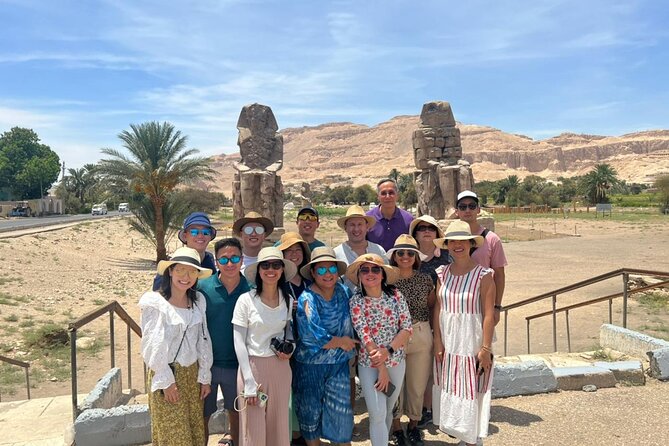
The Colossi of Memnon are a short additional stop. These two huge statues of Amenhotep III have faced the Theban plain for thousands of years. They do not require a long visit, but they give you a quick sense of the scale of royal building projects.
Cruising south through Kom Ombo and Edfu
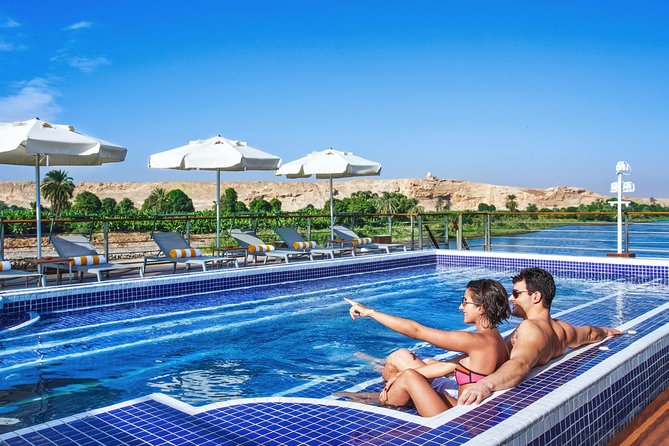
The next stage is one of the most rewarding parts of the trip because the Nile cruise provides a pause between major monuments. You still have scheduled sightseeing, but the river gives you time to watch the changing banks from the ship.
Kom Ombo is unusual because it is a double temple. One side honors Sobek, the crocodile god, while the other is linked with Haroeris, a form of Horus. The Ptolemaic-era complex receives about two hours, giving you time to study the unusual layout and carvings.
Edfu Temple, dedicated to Horus, gets about three hours. It is one of Egypt’s best-preserved ancient temples, with its roof still intact. That feature makes the interior feel enclosed and atmospheric, and the carved walls are easier to understand because so much of the structure remains.
The cruise also includes a Galabeya party. You can dress in traditional clothing and join the evening entertainment on board. It is a light, social break from tombs and temple lectures, and it gives the cruise some character beyond being a floating hotel.
Aswan, Abu Simbel, and Philae
Abu Simbel is the longest day of the tour, with about seven hours scheduled for the temple complex. The site lies about 230 kilometers southwest of Aswan near Egypt’s border with Sudan, so the long transfer is unavoidable.
The two rock-cut temples are dedicated to Ramses II and Queen Nefertari. Their enormous seated figures and carved interiors make the long journey worthwhile for many people, but you should know what you are signing up for. This is not a quick morning outing. Bring water, sun protection, and something to occupy you during the road time.
Philae offers a gentler contrast. You cross the Nile by motorboat to reach Agilika Island, where the temples dedicated to Isis were rebuilt after the Aswan High Dam threatened the original site. The complex includes layers from the pharaonic, Greek, Roman, and Byzantine periods.
The boat crossing and island setting make Philae feel different from the landlocked temples. The visit lasts about two hours, and admission is listed as included. Boat arrangements are part of the site visit, so you do not need to arrange this separately.
Alexandria adds Greek and Roman Egypt
After the cruise, you fly back to Cairo and have time to rest at the hotel. The following day is a long Alexandria outing, about nine hours in total.
Pompey’s Pillar comes first. It was built in honor of Emperor Diocletian and once belonged to the Serapeum, a major ancient complex. The surviving column gives you a glimpse of Alexandria’s later Greek and Roman identity, which feels quite different from the pharaoh-focused sites farther south.
The Catacombs are another highlight. This underground Roman cemetery has three levels cut into the rock. The spaces may feel tight, so consider that if you dislike enclosed areas.
Lunch at a local restaurant is included, followed by the Qaitbay Citadel. The fortress was built on the site associated with Alexandria’s ancient lighthouse, one of the most famous lost structures of the ancient world. The final stop is the Bibliotheca Alexandrina, a modern library and cultural center that links the city’s old intellectual reputation with its present-day identity.
Because you return to Cairo after this full-day trip, Alexandria is best for someone who wants to see the city without changing hotels. The tradeoff is a long road day, not a relaxed coastal stay.
Guides, group size, and the practical rhythm
The stated maximum group size is two. That is unusually intimate for a package covering so many sites, and it should allow you to ask questions, move at a reasonable pace, and get help with airport procedures.
Specific names associated with the company include Hannah in Cairo, Remon on the Nile, Mustafa, Mo Salah, and Walid. The exact guide team depends on your departure, but the company’s strongest praised qualities are prompt communication, airport assistance, strong site explanations, and the ability to adjust plans when needed.
Most activity days begin at 8:00 a.m. Expect early starts, long drives, and substantial time on your feet. The package says most people can participate, but the heat, uneven surfaces, temple steps, narrow tombs, and long Abu Simbel day deserve honest consideration.
The final day includes airport transfer according to your flight details. Cancellation terms allow a full refund when you cancel at least six full days before the start time, with reduced refunds inside that window.
Who should book this Egypt tour?
I would choose this tour if you want the major sights covered without having to coordinate hotels, flights, guides, and river transport yourself. It suits a first Egypt visit, couples or pairs who value a small group, and anyone who wants both Cairo and the Nile in one trip.
I would hesitate if you prefer slow mornings, independent wandering, or several free days in each city. Alexandria is a long day, Abu Simbel is a long day, and Cairo’s sightseeing schedule is full.
For most people, the strongest value comes from the combination of Abu Simbel, a full-board Nile cruise, and private-scale guiding. Confirm the Cairo hotel-night count, ask about your exact hotels and cruise ship, and budget separately for tips. If those details suit you, this is a well-packed way to see Egypt’s major ancient sites in ten days.
FAQ
How long is the Egypt Pharaohs tour?
The tour lasts approximately 10 days, from airport pickup and hotel transfer on day one to airport transfer for departure on day ten.
What is included in the price?
The package includes Cairo hotel accommodation, four nights on a luxury Nile cruise, domestic flights, an Egyptologist guide, activities, private round-trip transfers, seven lunches, four dinners, and nine breakfasts.
Are international flights included?
No. The provided inclusions cover domestic flights between Cairo, Luxor, Aswan, and Cairo. International airfare is not listed.
Is the Nile cruise full board?
Yes. The four-night luxury Nile cruise includes full-board service.
Is Abu Simbel included?
Yes. Abu Simbel Temple Complex is scheduled on day seven, with about seven hours allocated to the visit.
How large is the group?
The activity has a stated maximum of two travelers.
Are guide and driver tips included?
No. Tipping for the guide and drivers is not included in the tour price.
Just added in Aswan
- 5 Days Cairo, Aswan, and Abu Simbel Tour★ 5.0 · 21 reviews
- Private Tour in Aswan : Felucca and Nubian village★ 5.0 · 29 reviews
- Philae Temple and Aswan High-Dam Half-day tour★ 5.0 · 49 reviews
- Nubian Village by Motorboat In Aswan★ 5.0 · 97 reviews
- Day Tour to Abu Simbel from Aswan by Bus★ 4.5 · 25 reviews
- Abu Simbel Private Full-Day Tour from Aswan★ 5.0 · 114 reviews
- Aswan Philae Temple, Obelisk, and High Dam Private Tour★ 4.5 · 17 reviews
- Shared Day Trip to Abu Simbel from Aswan★ 5.0 · 17 reviews
Abu Simbel Tours, compared.
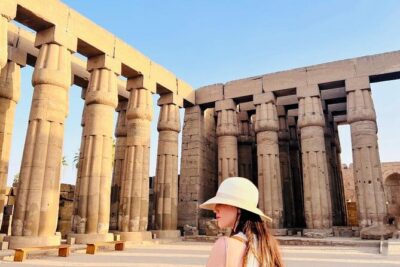
4-Days Nile Cruise From Aswan To Luxor including Abu Simbel and Hot Air Balloon
Read our review →
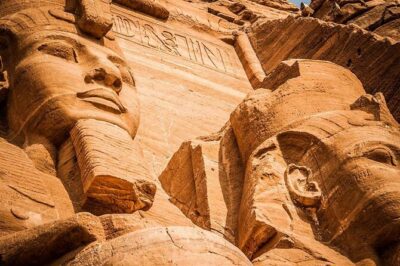
Private Day Tour to Abu Simbel Temples from Aswan
Read our review →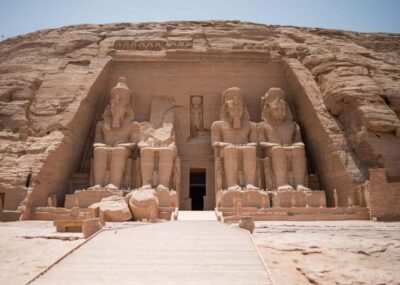
Abu Simbel Group Tour with Guide and Entrance Fees
Read our review →Browse the lists this tour appears in