
Reviewed · ABU SIMBEL TOURS
3-Nights Cruise From Aswan To Luxor, Hot Air Balloon,Abu Simbel
The big draw here is simple: you get Upper Egypt’s major sights in one four-day trip, moving by Nile rather than by road whenever possible. I like the smart route from Aswan to Luxor, which joins the grand temples with the quieter rhythm of a cruise, and I like that Abu Simbel and the hot-air balloon are built into the same package.
The trade-off is a tight schedule. Abu Simbel takes about seven hours, the balloon starts around 4:30 am, and the final Luxor sightseeing day runs until roughly 4 or 5 pm. The ship may also be an older vessel rather than a polished luxury hotel, and entrance fees are not included in the $349 price.
Key points at a glance
- Abu Simbel from Aswan: Allow about seven hours for the long outing to Ramses II’s monumental temples.
- A three-night Nile cruise: The cruise covers transport, a cabin, and three breakfasts, lunches, and dinners.
- A 4:30 am balloon flight: You see Luxor from above, weather permitting, with a cellphone allowed but not a camera in the basket.
- An Egyptology guide: Guided visits give context to Philae, Kom Ombo, Edfu, the Valley of the Kings, and Karnak.
- Entrance fees are extra: Budget separately for most archaeological sites, with cash needed for the Philae motorboat and High Dam.
- A small-group format: The activity is described as private for your group, with a maximum of 15 people.
What $349 buys on the Aswan to Luxor route
At $349 per person, this is a strong value if you want the main sights arranged for you. The price covers three nights aboard the cruise, your cabin, meals from lunch on the first day through breakfast on the last, hotel or port transfers, an air-conditioned vehicle, a horse-and-carriage ride, an Egyptology guide, and the balloon flight.
The price does not cover entrance fees. That matters in Egypt, where a full sightseeing program can add a noticeable amount to the final bill. You also need cash for the motorboat to Philae and the High Dam, while the other entrance charges must be paid by card according to the provided instructions.
I would compare the total cost, not just the headline fare. Add site tickets, tips, drinks, and any optional spending on board before deciding. Even with those extras, the package can make sense because it combines a cruise, private transfers, a long Abu Simbel outing, and a balloon flight, all of which would take more planning separately.
The cruise itself is described as a five-star ship, but the condition can vary by assigned vessel. One recent account praised the helpful staff and good food on an older ship, while other feedback raised concerns about poor coordination and confusion over guides. That makes confirmation of the boat name, guide language, and daily meeting arrangements especially important before departure.
More Abu Simbel tours in the Nile Valley:
- 4-Days Nile Cruise From Aswan To Luxor including Abu Simbel and Hot Air Balloon
★ 5.0 · 3,142 reviews - 4-Day 3-Night Nile Cruise from Aswan to Luxor&Abu Simbel+Balloon
★ 5.0 · 2,023 reviews - 4-Day 3-Night Nile Cruise from Aswan to Luxor including Abu Simbel, Air Balloon
★ 4.5 · 612 reviews
Day one: Philae by motorboat and the High Dam
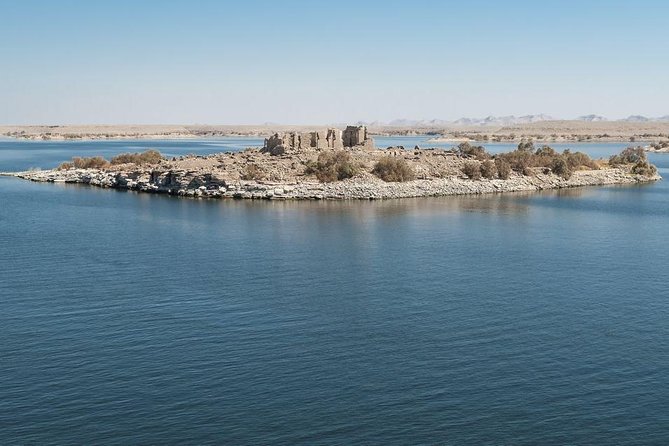
Your Aswan arrival begins with a pickup and a transfer toward the Nile. The first major stop is Philae Temple, reached by motorboat. That approach is part of the appeal. The temple sits on an island, so the short boat ride gives the visit a clear sense of arrival rather than dropping you beside a road.
Philae is associated with Isis and is one of Aswan’s most atmospheric ancient sites. You will see carved gateways, columns, and courtyards arranged around the temple complex. The water setting also helps explain the huge engineering effort needed to protect and relocate important monuments after the building of the High Dam.
The motorboat is not included in the admission price and must be paid in cash. Keep small bills handy, and confirm the exact amount with your guide before setting off. The tour allows about six hours for the first day’s sightseeing, including Philae and the High Dam, so the pace should feel active rather than leisurely.
Next comes the Aswan High Dam, built during Gamal Abdel Nasser’s presidency with Soviet assistance. The dam controls the Nile’s floodwaters and generates electricity, but its construction also changed the river and forced the relocation of monuments and communities. Your stop is about an hour and a half, giving you time to understand the engineering scale and the modern politics tied to the project.
If you arrive very early, the sightseeing may begin before your cabin is ready. Cruise check-in is at noon, so do not expect immediate access to the room if your transport reaches Aswan in the morning. At night, you can visit Aswan’s local market, then return to the ship for your first night on board.
Day two: the long road to Abu Simbel
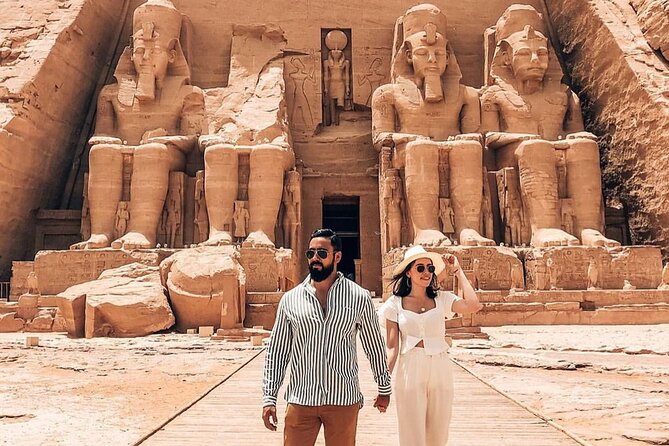
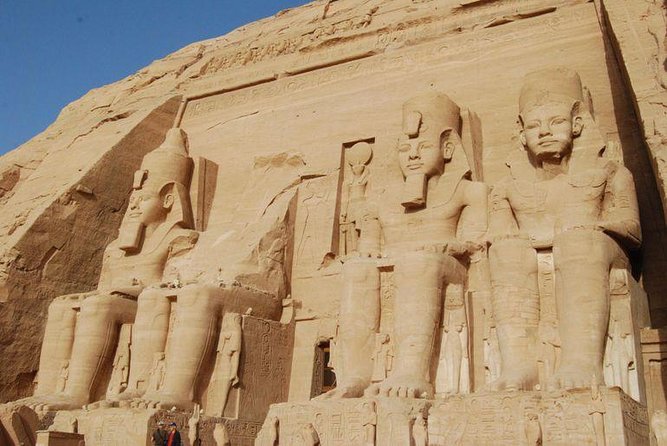
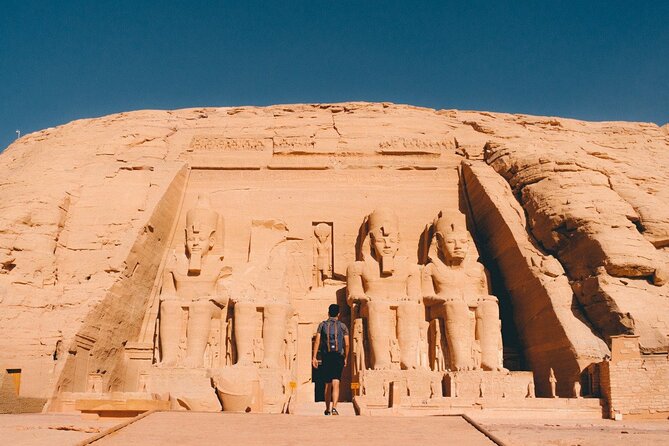
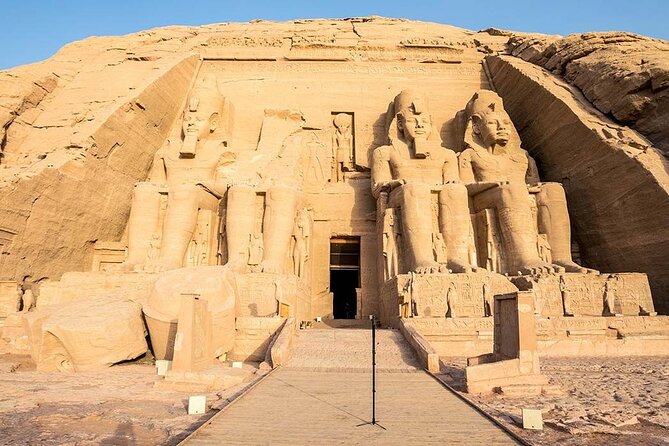
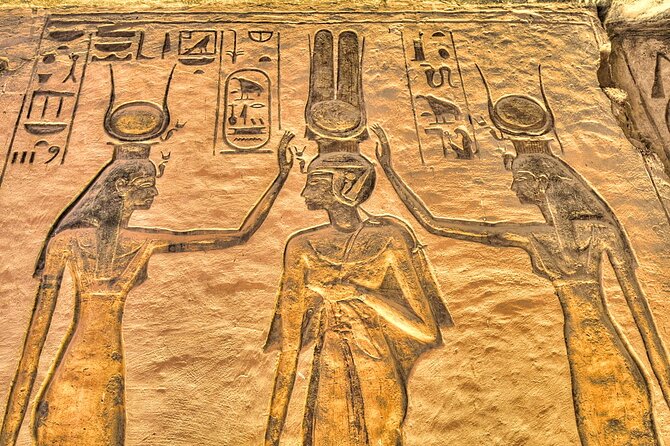
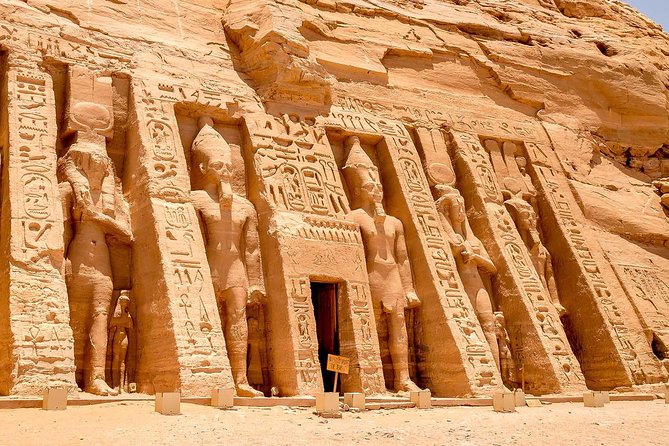
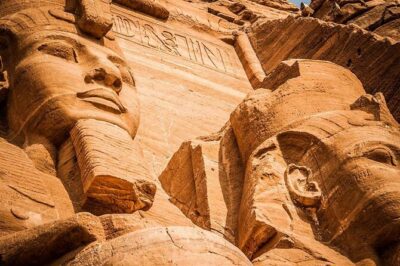
Abu Simbel is the day’s headline, and it deserves the attention. The two temples were cut into the rock during the reign of Ramses II in the 13th century BC. The larger temple has four huge seated figures at its entrance, while the smaller temple is linked to Queen Nefertari and the goddess Hathor.
The drive from Aswan makes this a demanding excursion. The scheduled visit lasts about seven hours, and the temples are roughly 366 kilometers south of Aswan. You will spend much of the day in transport, so bring water, snacks, sun protection, and something to read for the road.
The reward is one of Egypt’s most unforgettable monuments. The scale of the entrance statues is hard to grasp in photographs, and the inner halls carry scenes of Ramses II, deities, and military victories. Your guide can help explain the temple’s original political purpose, which was to project royal power toward Nubia and Egypt’s southern border.
One practical point needs attention before you go: clarify whether your guide will accompany the Abu Simbel visit and in which language. A serious coordination problem has occurred for at least one booking, with confusion about guide coverage at the temples. Do not leave this detail vague.
The day may also feel rushed if the driving schedule slips. Ask how much time you will have inside each temple and where the group will meet before returning. Weather-related cancellation is covered by a refund of $25 per adult, or $12.50 per child, according to the stated terms.
After Abu Simbel, the cruise program includes Kom Ombo. This temple is unusual because it serves two gods in a divided layout: the crocodile god Sobek and the falcon-headed Horus. You can see paired entrances, halls, and sanctuaries arranged side by side, rather than one central religious axis.
Kom Ombo was begun under Ptolemy VI and decorated further during the Roman period. Its reliefs include medical instruments and other carved details that reward a careful look. The scheduled stop is about two hours, often in the cooler part of the day or evening, depending on the ship’s movement.
This is one place where coordination matters. The route includes a guide-led visit, but a missed meeting can mean missing the site altogether. Confirm the time and meeting point on board, and do not assume that a general announcement will reach you.
Day three: Edfu and the changing Nile view
The third day starts early, around 5:00 am, for the Temple of Horus at Edfu. This is another demanding wake-up, but Edfu is one of the best-preserved ancient Egyptian temples and deserves a place on the route.
The temple was dedicated to Horus, the falcon god, and was built during the Ptolemaic period. Its massive entrance pylon, long processional court, columns, and carved walls remain unusually complete. The reliefs show religious ceremonies and the struggle between Horus and Seth, giving your guide plenty to explain.
A horse-and-carriage ride is included for this part of the program. That can be a practical way to reach the temple, although you should confirm the exact arrangement and any local expectations before setting off. The visit lasts about two hours, so you will need to stay with the schedule.
Edfu is also a good reminder that the cruise is not just a hotel that happens to float. The ship gives you moving views of the Nile between stops, while the daily excursions pull you into temples, towns, and ancient river settlements. The quieter hours on deck can balance the early alarms and long touring days.
Meals are served buffet-style, with breakfast, lunch, and dinner included during the cruise. Food quality can vary by ship, but one account specifically praised the variety and taste of the buffet and the helpful staff. If you have dietary needs, raise them before boarding because the provided information does not promise special menus.
More hot air balloon rides in the Nile Valley:
- 4-Days Nile Cruise From Aswan To Luxor including Abu Simbel and Hot Air Balloon
★ 4.5 · 509 reviews - 4 Days Nile Cruise from Aswan to Luxor including Abu Simbel and Hot Air Balloon
★ 4.5 · 356 reviews - 4-Day 3-Night Nile Cruise from Aswan to Luxor With Balloon and Abu Simbel
★ 5.0 · 327 reviews - 4-Days Nile Cruise Aswan&Luxor,Hot Air Balloon&Abu Simbel.Hot deal
★ 5.0 · 322 reviews
Day four: a sunrise balloon over Luxor
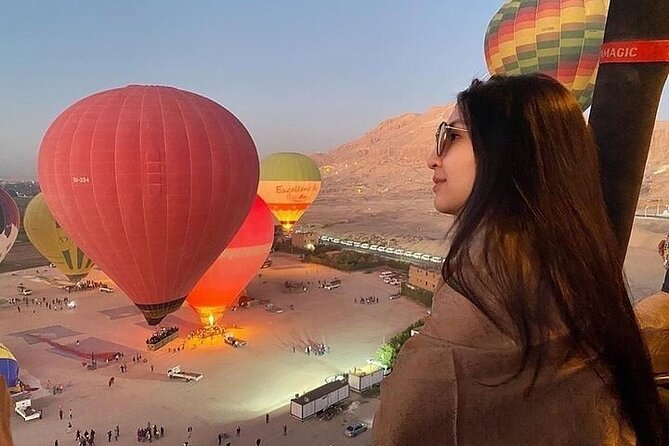
The hot-air balloon flight is the most unusual part of the package. Pickup is around 4:30 am, before sunrise, and the flight lasts about an hour. You will need to accept a very early start after several full days of temples and road travel.
The balloon takes you over Luxor’s west bank, where the Valley of the Kings, Deir el-Bahari, agricultural fields, and the Nile form a broad view below. The light changes quickly at sunrise, so the flight offers a different way to understand how the ancient monuments relate to the river.
You may use a cellphone during the flight, but a camera is not allowed in the basket. Children under six cannot join the balloon trip. Weather controls the launch, and if the flight is canceled because of poor conditions, the stated refund is $25 per adult or $12.50 per child.
After landing, the program turns to Luxor’s west bank. The Valley of the Kings served as a royal burial ground for roughly 500 years, from the 16th to the 11th centuries BC. You will visit the eastern valley, where most of the royal tombs are located, with about two hours scheduled for the stop.
The admission arrangement deserves care here. Site entry is not included in the package, and particular tombs may require separate tickets or supplements. Ask your guide which tombs are included in your ticket and which ones cost extra before entering the valley.
Hatshepsut, Memnon, and Luxor’s two great temple zones
Deir el-Bahari is home to the Temple of Hatshepsut, an 18th Dynasty monument built into the cliffs on Luxor’s west bank. Its three broad terraces and long ramps give it a different shape from the more enclosed temples elsewhere in Egypt.
Hatshepsut ruled as pharaoh and presented herself in royal form in the temple’s statues and reliefs. Your guide can explain the unusual political story behind the monument and the later damage to some images. The scheduled visit lasts about 90 minutes, enough for the main terraces without allowing for a slow, private exploration.
The Colossi of Memnon are a short stop, about 30 minutes. These two 19-meter statues are all that remain of a much larger temple built for Amenhotep III. Their damaged condition is part of the lesson: the western bank once held huge funerary compounds, many of which did not survive as complete buildings.
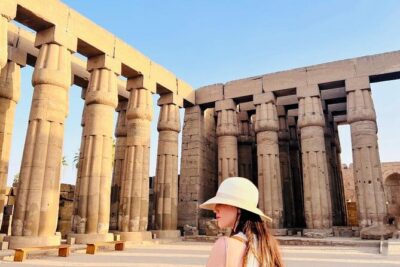
Karnak is the largest major temple visit on the final day, with about 90 minutes scheduled. The complex grew over centuries, beginning in the Middle Kingdom and continuing into the Roman period. Its huge columns, processional spaces, obelisks, and sacred precincts can feel overwhelming without a guide to organize the story.
The guide is most useful here. Karnak is not one simple building. It is a collection of temples linked to the Theban religious system, especially Amun, Mut, and Khonsu. You will get more from the visit if you listen for how different rulers added their own courts, pylons, columns, and inscriptions.
Luxor Temple follows, with about 45 minutes planned. Built mainly during the 18th and 19th Dynasties, it was linked to Karnak by an avenue of sphinxes and dedicated to the Theban triad. Ramses II added a pylon, courtyard, and obelisks, while Amenhotep III shaped much of the earlier complex.
The short time here is a limitation. Luxor Temple is especially rewarding after dark, but this itinerary does not promise an evening visit. If you have an extra night in the city, consider returning independently, if your schedule and ticket arrangements allow.
The cruise rhythm, rooms, and group size
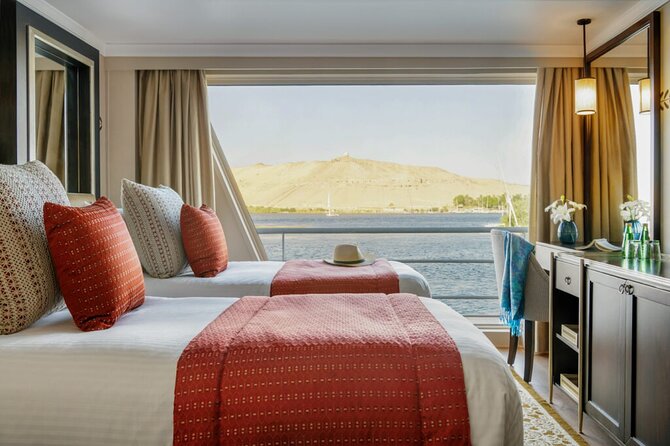
The ship provides a cabin with standard facilities, three nights on board, and all six main meals during the cruise portion. You can book a single room by paying for one person, while three people can share a triple room. Families can place up to two children aged 5 to 11 in a room with their parents, with a child accompanied by one adult treated as an adult for pricing.
The activity is described as private for your group, with a maximum of 15 people. That is small enough for easier movement than a large coach group, though the actual size of your party depends on the booking. Other languages can be arranged for an additional charge.
Transfers are included from hotels or ports, and the final drop-off can be at a Luxor East Bank hotel or train station. The tour ends around 4 or 5 pm, so plan an evening departure rather than a tightly timed afternoon connection.
The overall pace favors coverage over free time. You will see the major monuments, but you will not have long unscheduled periods in Aswan or Luxor. I would add extra nights if you want to explore markets, return to Luxor Temple, or spend more time at the west bank sites.
Who should book this Nile cruise?
I would choose this tour if you want Egypt’s classic Upper Egypt route handled in one booking. It suits you if you value transfers, meals, a guide, and a clear sightseeing plan more than a slow, independent trip.
It is also a good fit for first-time visitors who do not want to arrange the Aswan to Luxor cruise, Abu Simbel transport, temple tickets, and balloon flight separately. The included transfers remove much of the daily negotiating that can make Egypt tiring.
I would hesitate if you need a quiet holiday, guaranteed luxury, or generous time at every monument. The early starts, long Abu Simbel day, extra admission fees, and possible differences between cruise ships require realistic expectations.
Because coordination has been inconsistent in at least one case, contact Fayrouz Egypt Travel before departure to confirm the ship, guide language, Abu Simbel guide, daily meeting points, and exact ticket arrangements. That five-minute check could prevent the biggest problems.
Final verdict on the Aswan to Luxor package
Book it if your priority is maximum coverage in four days. Philae, the High Dam, Abu Simbel, Kom Ombo, Edfu, the Valley of the Kings, Hatshepsut, Karnak, Luxor Temple, and a balloon flight make this an ambitious package at a competitive starting price.
Skip it if you want a polished, slow cruise with no surprises. The ship may be older, the schedule is hard-driving, and the $349 fare is not the final cost once entrance fees and tips are added. For the right kind of visitor, though, this is a practical way to connect Aswan and Luxor while seeing the monuments that define the Nile Valley.
FAQ
How long is the cruise from Aswan to Luxor?
The experience lasts approximately four days and includes three nights aboard the Nile cruise.
What meals are included?
Meals begin with lunch on the first day and finish with breakfast on the last day. The package includes three breakfasts, three lunches, and three dinners.
Are entrance fees included?
No. Entrance fees are excluded from the price. The High Dam and the motorboat to Philae require cash payments, while the other entrance fees must be paid by card according to the provided instructions.
Is Abu Simbel included?
Yes. Abu Simbel is part of the itinerary, with about seven hours allocated for the excursion. If bad weather cancels the trip, the stated refund is $25 per adult and $12.50 per child.
What time does the hot-air balloon flight begin?
The balloon pickup is scheduled for around 4:30 am, and the flight lasts about one hour. It depends on suitable weather.
Can children take the balloon flight?
Children under six are not allowed on the balloon trip. Children aged 5 to 11 have separate booking rules for the cruise, and a child accompanied by one adult is treated as an adult for pricing.
Where does the tour finish?
The tour ends in Luxor around 4 or 5 pm. Drop-off can be arranged at a Luxor East Bank hotel or at the train station.
What is the cancellation policy?
You can cancel at least 24 hours before the experience starts for a full refund. Cancellations or changes made less than 24 hours before the start time are not accepted for a refund.
Just added in the Nile Valley
- Egypt 8 Days Cairo,Nile cruise,Luxor,Aswan from Cairo airport★ 5.0 · 79 reviews
- Private Tour: 7 Nights Pyramids & Nile Cruise +Flights from Cairo★ 4.5 · 157 reviews
- 8 Day Cairo Pyramids and Nile cruise and Alexandria All inclusive Private Tour★ 5.0 · 23 reviews
- 7 Days Egypt Tour Package to Cairo and Nile Cruise★ 5.0 · 62 reviews
- Private 6-Days Egypt Tour Package with Nile Cruise by Flights★ 4.0 · 59 reviews
- 6-Day Egypt Package, Nile Cruise from Aswan to Luxor by Flights★ 5.0 · 18 reviews
- Egypt in 9 Days from Saturday to Sunday including tours and Dahabeya Nile trip.★ 5.0 · 21 reviews
- From Cairo 4-Day Nile Cruise to Aswan by Flights& Hot Air Balloon★ 4.5 · 44 reviews
Abu Simbel Tours, compared.
4-Days Nile Cruise From Aswan To Luxor including Abu Simbel and Hot Air Balloon
Read our review →
Private Day Tour to Abu Simbel Temples from Aswan
Read our review →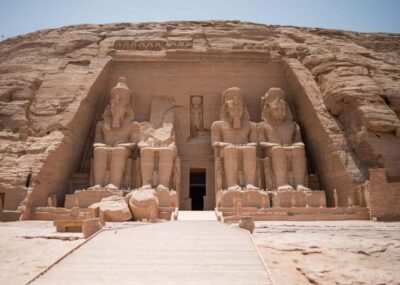
Abu Simbel Group Tour with Guide and Entrance Fees
Read our review →Browse the lists this tour appears in