
Reviewed · NILE CRUISES
4 Days Nile Cruise from Aswan to Luxor
The best part of this four-day Nile cruise is the way it links Egypt’s major river temples in one steady trip. You wake near the water, visit Philae, Kom Ombo, Edfu, and Luxor, then finish among royal tombs and giant columns on the West and East Banks.
I like the efficient route and the practical package. Three nights, meals, transfers, and an Egyptologist guide save you from arranging several separate tours. I also like that the group is capped at 15 people, small enough for a more manageable sightseeing day.
The main catch is cost control: entrance tickets are not included, and drinks aboard the cruise cost extra. The $450.45 price can be good value, but you need to add the admission fees before comparing it with other cruises.
Key points at a glance
- Philae begins the trip by motorboat: Reach the island temple dedicated to Isis by water, with about two hours for the visit.
- Kom Ombo and Edfu show two very different temples: Kom Ombo has its unusual double design, while Edfu preserves the form of a grand Egyptian temple unusually well.
- The final day is packed with famous sights: The Valley of the Kings, Colossi of Memnon, Hatshepsut Temple, and Karnak all appear before a late afternoon transfer.
- Guides add useful context: Ronda is listed for Philae and the High Dam, while Muhammad covers Kom Ombo, Edfu, Luxor, and the Valley of the Kings.
- The package handles the basics: Three nights, three breakfasts, three lunches, three dinners, transportation, and pickup or drop-off are included.
- Budget for extras: Entrance fees, bottled water, and other drinks are not included.
Why this Aswan to Luxor route works
This is a strong first introduction to Egypt because the route follows the Nile in a logical direction. You begin in Aswan, where the river feels broad and calm, then move north toward Luxor and its dense concentration of ancient sites.
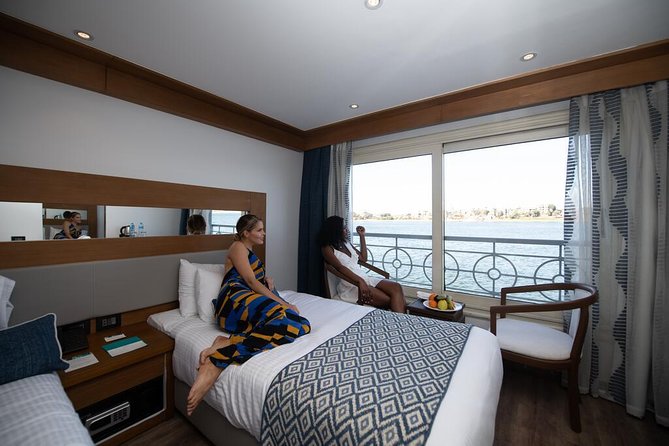
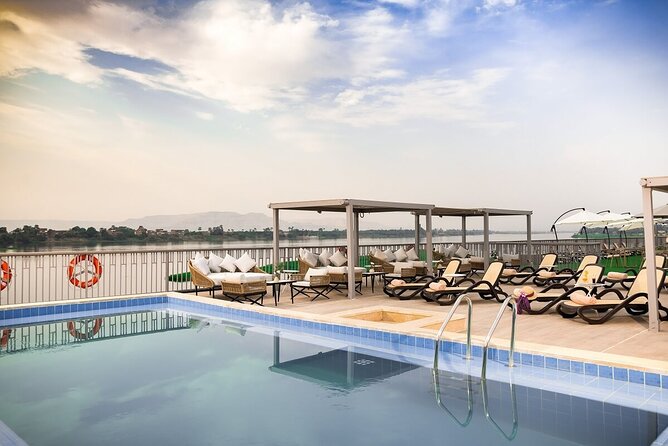
The boat gives the trip a useful rhythm. Instead of packing and unpacking for every town, you return to the same floating base after sightseeing. You also get stretches of Nile scenery between visits, a welcome break from stone walls, heat, and constant historical explanation.
The trip lasts about four days and includes three nights of accommodation. That makes it shorter than many longer Nile itineraries, but it still covers a lot of the classic sights. You should expect full sightseeing days rather than a slow, leisurely cruise.
The maximum group size is 15. That is worth noting because temple guides are easier to hear in a smaller group, and transfers tend to be less cumbersome than with a large coach party.
A few more days out in the Nile Valley to weigh up
- 4-Day 3-Night Nile Cruise from Aswan to Luxor&Abu Simbel+Balloon
★ 5.0 · 2,023 reviews - 4-Day 3-Night Nile Cruise from Aswan to Luxor including Abu Simbel, Air Balloon
★ 4.5 · 612 reviews - From Aswan: 4-Day Nile Cruise from Aswan to Luxor with Guide
★ 4.1 · 593 reviews
Day 1: Philae by boat and the Aswan High Dam
Your first transfer takes you from Aswan Airport, the train station, or an Aswan hotel to the cruise boat. The listed arrival transfer takes about 30 minutes, though the exact time depends on your pickup point and local traffic.
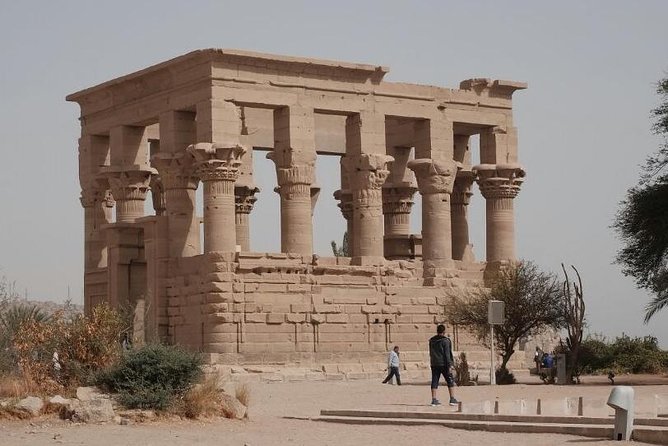
The first major visit is Philae Temple, reached by small motorboat. The water approach is part of the appeal. Rather than arriving beside a road, you see the temple from the river and approach the island in a way that suits its setting.
Philae was dedicated to Isis, one of ancient Egypt’s most important goddesses. The surviving temple complex reflects the Greco-Roman period, so its decoration differs in some ways from the earlier pharaonic sites you will see later.
Allow about two hours here. Your guide should help make sense of the reliefs, columns, and religious stories, but leave yourself time to simply look around. The motorboat ride and island setting give this stop a different feel from the large mainland temple compounds.
Admission to Philae is extra. The same applies to the High Dam, so keep a separate ticket budget for the first day.
The Aswan High Dam follows. Built in 1960, it was created to control the Nile floods and protect Egypt from destructive high water. It is a modern engineering site rather than an ancient monument, but it helps explain how present-day Egypt manages the river that made its civilization possible.
The stop lasts about an hour. If you are mainly interested in ancient temples, this may feel less exciting than Philae, but it gives useful modern context. The day is also relatively gentle compared with the packed final day.
Ronda is listed as the guide for Philae and the High Dam. That gives you a specific name to look for when confirming your sightseeing arrangements.
Day 2: Kom Ombo and its unusual double temple
Kom Ombo is one of the most distinctive stops on the cruise. The temple sits beside the Nile, and arriving by boat gives you a handsome view of the site before you walk through its remains.
The temple was dedicated to two gods: Sobek, the crocodile god, and Horus. Its plan reflects that double dedication. The structure is arranged as a near mirror, with parallel areas devoted to each deity.
That layout is the feature to watch for. At many temples, you follow one central religious route. At Kom Ombo, the symmetry helps you see how one complex could serve two divine cults at once.
The temple was begun during the Ptolemaic period and completed under Roman rule. Its condition is not as complete as Edfu’s, but the riverside position and paired design make it especially memorable.
The visit is scheduled for about one hour and 10 minutes. That is enough for an overview and a guided explanation, though not enough for an unhurried study of every inscription.
The ancient connection with crocodiles adds another layer. The temple was associated with Sobek, and there were crocodiles in the sacred setting, but there are no longer crocodiles in the river or the old sacred lake inside the complex.
Admission is extra. Since this is a regular cruise stop, the timing may be tied to the boat’s schedule. Listen carefully for the meeting time so you do not turn a short temple visit into a stressful return to the vessel.
Day 3: Edfu’s remarkably complete Temple of Horus
Edfu is often the architectural high point of the river journey. The Temple of Horus is a late construction from the Greco-Roman period, but its builders followed the traditional form of an Egyptian pharaoh’s temple.
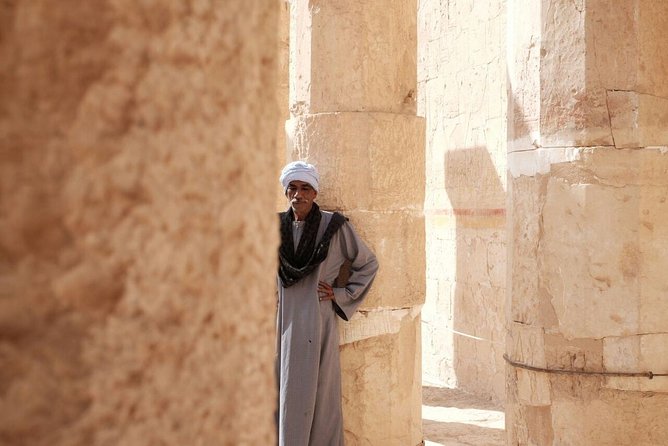
That makes Edfu unusually helpful. You can see the tall entrance pylons, broad courtyards, columns, and inner religious spaces in a far more complete condition than at many older sites. It gives you a clearer idea of what other Egyptian temples may have looked like before centuries of damage and reuse.
The temple sits in the center of modern Edfu. The town eventually grew around it, and houses once pressed close to the ancient complex. Your guide can help you understand the contrast between an active modern town and the huge ceremonial structure at its center.
Plan on about two hours. This is a place where a rushed visit would waste some of the value. Look up at the carved entrance, notice the scale of the columned spaces, and pay attention to the repeated images of gods and rulers.
Admission is not included. The tour includes transportation connected with the cruise, so you do not need to arrange your own way from the river stop.
The experience provider lists Muhammad as the guide for Kom Ombo, Edfu, Luxor, and the Valley of the Kings. His role covers several of the trip’s most information-heavy stops, so you can expect continuity in the explanations across the middle and final days.
More Nile cruises to weigh up:
- 4-Days Nile Cruise From Aswan To Luxor including Abu Simbel and Hot Air Balloon
★ 5.0 · 3,142 reviews - 4-Days Nile Cruise From Aswan To Luxor including Abu Simbel and Hot Air Balloon
★ 4.5 · 509 reviews - 4-Day 3-Night Nile Cruise from Aswan to Luxor – Private Tour
★ 5.0 · 369 reviews - 4 Days Nile Cruise from Aswan to Luxor including Abu Simbel and Hot Air Balloon
★ 4.5 · 356 reviews
Luxor Temple after the river journey
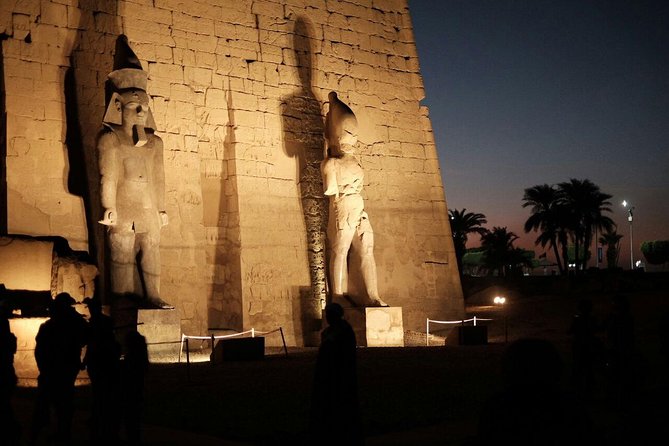
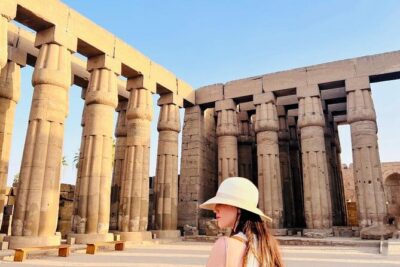
Luxor Temple is your first major stop in Luxor. It sits within the modern city, on the site of ancient Thebes, and its urban setting makes the visit feel different from the isolated river temples.
The temple is known for its tall columns, statues, and well-preserved sections. It was used by successive rulers and expanded over time, so you are not looking at one ruler’s single project. The site connects royal power, religious ceremony, and the ancient city that grew around it.
The scheduled visit lasts about two hours. That gives you time to take in the main court and columned areas without reducing the stop to a quick photo opportunity.
Luxor Temple is also a good place to notice how ancient and modern Luxor overlap. The temple is not hidden away from the city. You see the contrast directly, which helps you understand why Luxor is often described as an outdoor museum.
Admission is extra. A guide is particularly useful here because the site includes several building phases, and the meaning of the statues and processional spaces is not always obvious when you walk through alone.
Day 4: Tombs, royal stories, and Karnak
The final day begins with breakfast and checkout, followed by a drive to Luxor’s West Bank. This is the busiest part of the program, so you should be ready for a long morning and an afternoon that continues across the river.
The Valley of the Kings is the first major stop. New Kingdom pharaohs cut their tombs into the hills to protect royal burials and treasures. The valley is not about towering temples. Its importance is underground, in the decorated chambers and the changing burial plans of Egypt’s rulers.
The visit is scheduled for two hours. Entrance arrangements can vary by site rules and ticket type, and the general tour price does not cover admission. You should check exactly which tombs are included in the tickets you purchase, since entry to individual tombs can be handled separately.
Next comes the Colossi of Memnon, with about 40 minutes. These enormous statues are a quick but worthwhile stop. They once guarded the entrance to a large mortuary temple, much of which has disappeared.
The schedule lists admission here as free. You will likely have time for photographs and a short explanation before moving on.
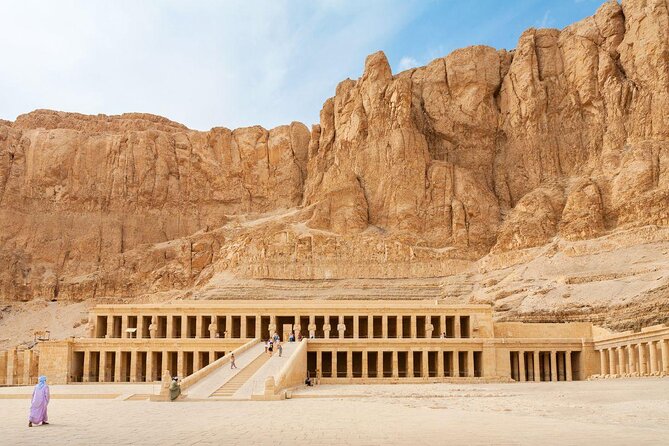
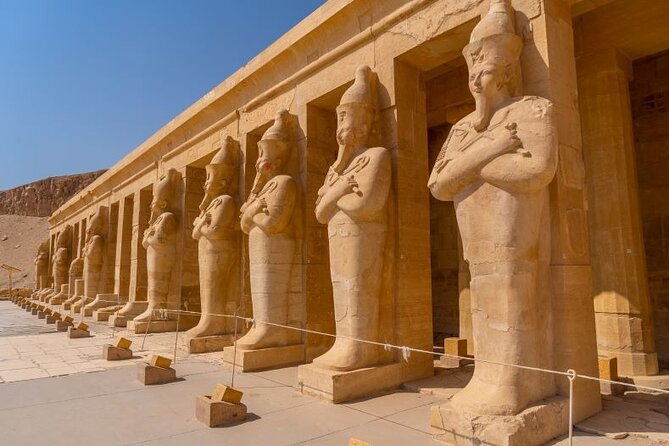
The Temple of Hatshepsut at Deir el Bahari follows. Hatshepsut was one of Egypt’s most important female rulers, and her mortuary temple is built into the cliffs in broad terraces. The design is very different from the enclosed temple spaces at Edfu or Kom Ombo.
The visit lasts about an hour. The story of Hatshepsut and her nephew is central to the explanation, so this is one of the stops where the guide’s storytelling matters as much as the stones.
The day’s description also mentions lunch at a local restaurant as optional. At the same time, the package lists three lunches as included, so confirm how the final-day meal is handled before departure. That small detail can affect both your timing and your spending.
After the West Bank, you return to the East Bank for Karnak Temple. Karnak is not a single building but a huge religious complex developed over roughly 2,000 years. The site covers about 63 acres, and its scale can be hard to grasp until you are walking between the massive columns and obelisks.
Allow about two hours. Karnak rewards patience, but it can also feel tiring after the Valley of the Kings and Hatshepsut Temple. Wear practical shoes, carry water, and keep some energy for the final transfer.
The tour ends with transport to a Luxor hotel, airport, or railway station, usually around 3:00 to 4:00 p.m. That finish is useful if you have a same-day onward plan, but you should avoid scheduling a tight connection. The exact end time can shift with sightseeing conditions and transfers.
What the $450.45 price really covers
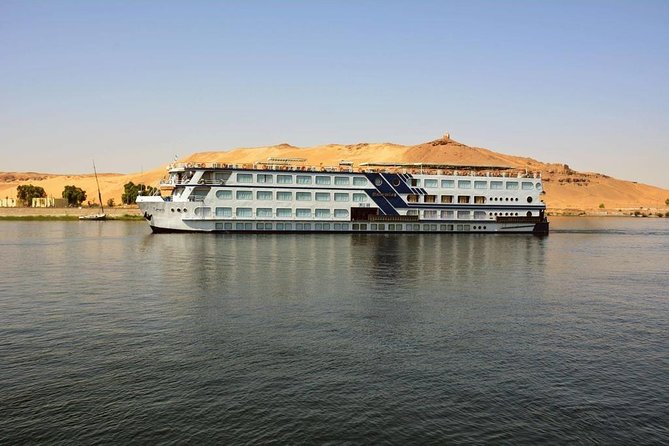
At $450.45 per person, the package is not simply a boat cabin and a sightseeing list. It includes three nights of accommodation, three breakfasts, three lunches, and three dinners, along with local taxes, handling charges, transportation, and a qualified Egyptologist guide.
Pickup and drop-off are offered for hotels, ports, airports, and the Aswan train station at the relevant points of the route. Air-conditioned vehicles and qualified drivers are included for the road portions, which is useful on the West Bank and for final transfers.
The value depends heavily on the entrance fees. Since admission to the listed sights is extra, compare the total cost rather than the advertised base price. Add tickets for Philae, the High Dam, Kom Ombo, Edfu, Luxor Temple, the Valley of the Kings, Hatshepsut Temple, and Karnak.
Drinks aboard the cruise are also not included. Bring that expense into your daily budget, especially because the itinerary includes several warm outdoor visits.
Vegetarian meals are available if requested at booking. The package lists three dinners, three lunches, and three breakfasts, but the final-day lunch is described as optional at a local restaurant. Ask for a clear explanation of the meal schedule before you pay.
Who should book this cruise?
I would suggest this trip to a first-time Egypt visitor who wants the main Nile sights without arranging every transfer independently. It is also a good fit if you prefer a small organized group, since the maximum is 15 people.
The route suits you if you like a strong sightseeing program with history at the center. You will see major temples, tombs, statues, and modern river engineering in four days, but you will not have much spare time for wandering in Aswan or Luxor.
It may not suit you if you want a quiet, slow cruise with long periods aboard ship. The final day is particularly full, and entrance fees can make the actual cost higher than the headline figure.
The current rating is 4.9 from 28 reviews, with 100 percent recommended. The strongest praise focuses on the guides, especially Ronda for Aswan and Muhammad for the later temples and tombs. Those names are useful when confirming who will lead each portion of your trip.
Should you book the 4-day Nile cruise?
Book it if you want an efficient river route, included transfers and meals, and a guide-led introduction to Egypt’s major sites. The combination of Philae, Edfu, Luxor, the Valley of the Kings, Hatshepsut Temple, and Karnak gives you a lot in a short time.
Before booking, price the entrance tickets and drinks, confirm the accommodation standard, and clarify the final-day lunch. If that full sightseeing pace suits you, the cruise offers a practical way to connect Aswan and Luxor without handling the logistics alone. Free cancellation is available up to 24 hours before the start time.
FAQ
How long is the Nile cruise?
The cruise lasts approximately four days and includes three nights of accommodation.
Where does the cruise begin?
The experience begins in Aswan. Pickup is offered from Aswan Airport, the train station, or Aswan hotels for the arrival transfer to the cruise.
Where does the cruise end?
The final transfer goes to a Luxor hotel, airport, or railway station, usually around 3:00 to 4:00 p.m. on Day 4.
Are entrance fees included?
No. Entrance fees to the listed sightseeing sites are not included in the tour price.
Are meals included?
The package includes three breakfasts, three lunches, and three dinners. The final-day lunch is also described as optional at a local restaurant, so confirm the exact meal arrangements before booking.
Are drinks included aboard the cruise?
No. Water and other drinks aboard the cruise are not included.
How large is the group?
The activity has a maximum of 15 people.
Just added in the Nile Valley
- Egypt 8 Days Cairo,Nile cruise,Luxor,Aswan from Cairo airport★ 5.0 · 79 reviews
- Private Tour: 7 Nights Pyramids & Nile Cruise +Flights from Cairo★ 4.5 · 157 reviews
- 8 Day Cairo Pyramids and Nile cruise and Alexandria All inclusive Private Tour★ 5.0 · 23 reviews
- 7 Days Egypt Tour Package to Cairo and Nile Cruise★ 5.0 · 62 reviews
- Private 6-Days Egypt Tour Package with Nile Cruise by Flights★ 4.0 · 59 reviews
- 6-Day Egypt Package, Nile Cruise from Aswan to Luxor by Flights★ 5.0 · 18 reviews
- Egypt in 9 Days from Saturday to Sunday including tours and Dahabeya Nile trip.★ 5.0 · 21 reviews
- From Cairo 4-Day Nile Cruise to Aswan by Flights& Hot Air Balloon★ 4.5 · 44 reviews
Nile Cruises, compared.
4-Days Nile Cruise From Aswan To Luxor including Abu Simbel and Hot Air Balloon
Read our review →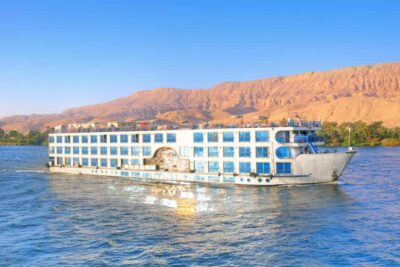
4-Day Nile Cruise from Aswan to Luxor with Guide
Read our review →Browse the lists this tour appears in