
Reviewed · ABU SIMBEL TOURS
4 Days 3 Nights from Aswan to Luxor Nile cruise+Abu simbel temple
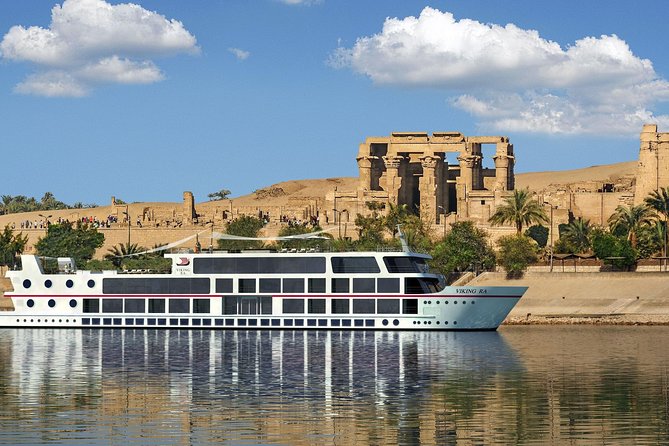
The best part of this four-day Nile cruise is the way it links Egypt’s major river temples without making you repack every night. You board in Aswan, sail north through Kom Ombo and Edfu, then finish among the great monuments of Luxor, with Abu Simbel added as a long but worthwhile side trip.
I like the private car transfers, which save time and fuss at the start and end, and I like the guide-led visits, especially in Aswan, where guides such as Doaa, Marwa, and Ahmed have earned praise for clear explanations and a friendly pace. The main drawback is the packed schedule, plus extra costs for entrance tickets, Philae’s motorboat, and tipping.
Key points before you book
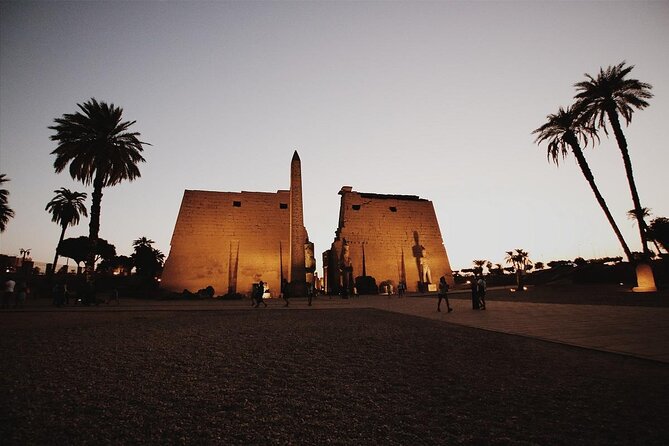
- Abu Simbel adds a major southern highlight: You spend about eight hours on this excursion with a small shared group and an English-speaking local guide.
- The cruise covers the classic temple route: Aswan, Kom Ombo, Edfu, Esna, and Luxor are connected by boat rather than a string of road transfers.
- You get a full Luxor finish: The final day includes the Valley of the Kings, Hatshepsut Temple, Colossi of Memnon, Karnak Temple, and Luxor Temple.
- Most sightseeing transport is private: Airport, train station, bus station, and tour transfers use an air-conditioned private car.
- The guide can shape the experience: Past guide assignments have included Doaa, Marwa, and Ahmed, with strong praise for their English, patience, subject knowledge, and photography.
- The advertised price is not all-inclusive: At $661.77 per person, the cruise, meals listed, guides, and transfers are covered, but site tickets and the Philae boat are not.
Why this Aswan to Luxor cruise works
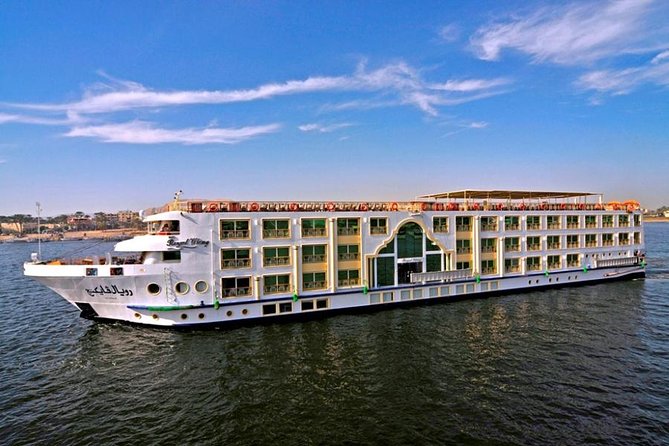
A Nile cruise is a practical way to see ancient Egypt. The river does the moving while you eat, rest, and watch the towns and fields pass by. On this route, you avoid arranging separate transport between Aswan, Kom Ombo, Edfu, and Luxor.
The four-day schedule is short, but it hits the major sights. You see Aswan’s modern engineering and ancient temples, make the long trip to Abu Simbel, stop at two important river temples, cross the Esna lock, and spend the final day at Luxor’s biggest attractions.
You should know what this trip is not. It is not a slow, unstructured cruise with long afternoons to yourself. The sightseeing is tightly arranged, and Abu Simbel takes most of one day. If you want a restful boat holiday first and a history tour second, this may feel rushed. If you want to cover the main Upper Egypt route in a compact period, the pace makes sense.
The package is described as a private tour, but Abu Simbel is specifically arranged as a small shared group with a local English-speaking guide. Your main transfers and sightseeing arrangements are private, so clarify the exact group setup before booking if that distinction matters to you.
More Abu Simbel tours in the Nile Valley:
- 4-Days Nile Cruise From Aswan To Luxor including Abu Simbel and Hot Air Balloon
★ 5.0 · 3,142 reviews - 4-Day 3-Night Nile Cruise from Aswan to Luxor&Abu Simbel+Balloon
★ 5.0 · 2,023 reviews - 4-Day 3-Night Nile Cruise from Aswan to Luxor including Abu Simbel, Air Balloon
★ 4.5 · 612 reviews
Day 1: Philae Temple and the High Dam in Aswan
Your arrival transfer begins at Aswan airport, train station, or bus station. A representative meets you and takes you by private air-conditioned car to the cruise ship. Check-in takes place after lunch, followed by the first sightseeing program.
The High Dam offers useful context for the Nile itself. It is not an ancient monument, but it changed Egypt’s control of the river and helped create Lake Nasser. Seeing it before Philae gives you a clear sense of how modern engineering reshaped the setting around several ancient sites.
Philae Temple is the star of the afternoon. The sanctuary is reached by motorboat, and that boat is not included in the price. It is worth checking the extra charge and payment arrangements before setting out, since the temple cannot be reached by road from the cruise dock.
The temple complex is associated with Isis and is known for its carved columns, gateways, and riverside setting. Your private guide should help you read the scenes and symbols rather than simply point out large stones. This is where the guide makes a real difference.
Doaa is especially associated with Aswan visits on this tour. The information supplied about her describes a clear English-speaking guide who explains details carefully, controls the pace, answers questions, and takes good photographs. Marwa has also guided Aswan visits, and Ahmed has been praised for bringing strong Egyptology training and passion to the monuments.
You spend the night in Aswan on the ship. Since check-in comes after lunch, confirm your arrival time carefully. A late arrival could make the first day feel compressed, particularly if you also want time to settle into your cabin.
Day 2: The long run to Abu Simbel and Kom Ombo
Abu Simbel is the day’s first major commitment. The excursion lasts about eight hours and uses a small shared group with an English-speaking guide. The package lists admission as free for this part of the program, but the rest of the tour clearly excludes entrance fees at the named historical sites, so ask the operator to confirm exactly what is covered for your date.
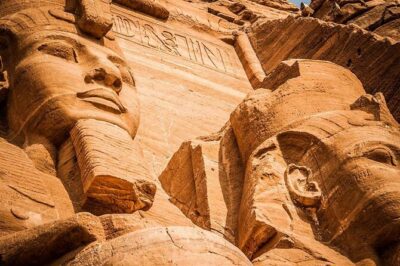
The temples of Abu Simbel are among Egypt’s most memorable sights. Their huge façades and the story of their relocation during the creation of Lake Nasser give the visit unusual weight. The long journey is the tradeoff. You will spend much of the day on the road, so this is not a light side trip squeezed into a spare hour.
I would book this departure for someone who places Abu Simbel near the top of the Egypt wish list. If you have only a short stay and want every hour on the Nile, the length of the excursion may feel costly in time. Here, the small-group format should give you a more focused visit than a large coach arrangement, though it is not the same as having your own private Abu Simbel guide.
After returning, you have lunch and the ship sails toward Kom Ombo. The temple visit includes the main sanctuary and the crocodile museum. Kom Ombo is unusual because it is dedicated to two sets of gods, with the plan and decoration reflecting that dual purpose.
The crocodile collection adds a different angle to the stop. It connects the ancient religious world with the crocodile’s importance along the Nile. The visit is usually shorter and more concentrated than the larger Luxor sites, which is helpful after the Abu Simbel day.
You return to the ship and continue toward Edfu, where you spend the night. This is a busy day with a great deal of travel, so treat the boat as your resting space rather than expecting a full program of leisure.
Day 3: Edfu, the horse carriage, and the Esna lock
After breakfast, a horse carriage takes you to Edfu Temple. The carriage is part of the stated plan, and it gives the visit a different feel from a standard private-car transfer. At the same time, you may prefer to know in advance how long the ride lasts and how the arrangement works locally.
Edfu is one of the best-preserved large temples in Egypt. Its scale, gateway, reliefs, and enclosed courtyards make it easier to picture how a working temple complex once operated. A guide is valuable here because the walls carry a great deal of information, and the layout can be hard to understand at first glance.
After the temple, you return to the cruise and continue toward Esna. The ship crosses the Esna lock before sailing on to Luxor. The lock is a small but interesting piece of the journey because it shows the Nile as a working transport route, not only as a backdrop for ruins.
The optional evening program is the sound and light show at Karnak Temple. It is not included as a required part of the tour, so decide based on your energy and budget. After Edfu and the lock, you may prefer a quiet evening on board. If you enjoy staged presentations and want to see Karnak after dark, it can add another layer to the Luxor stay.
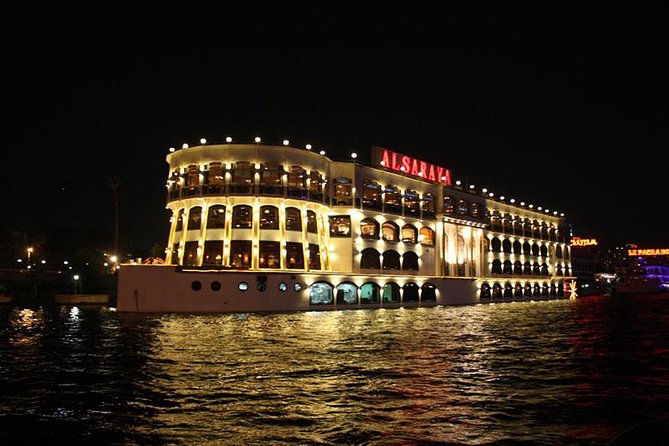
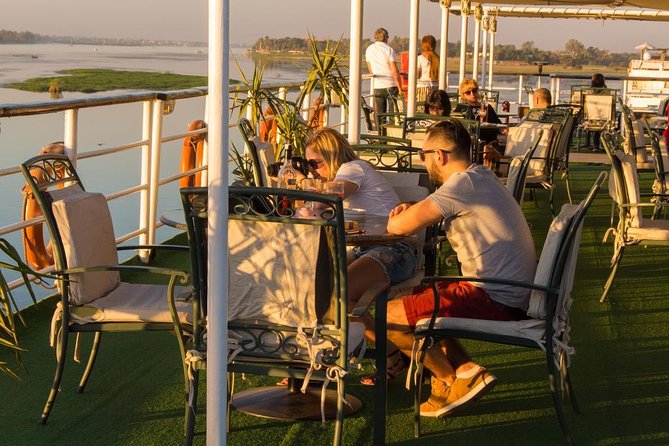
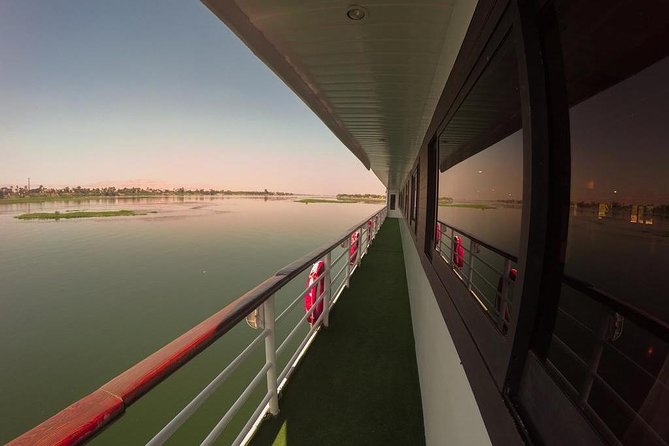
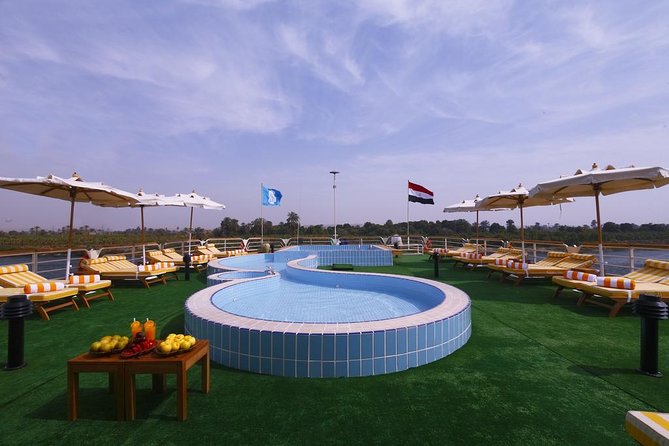
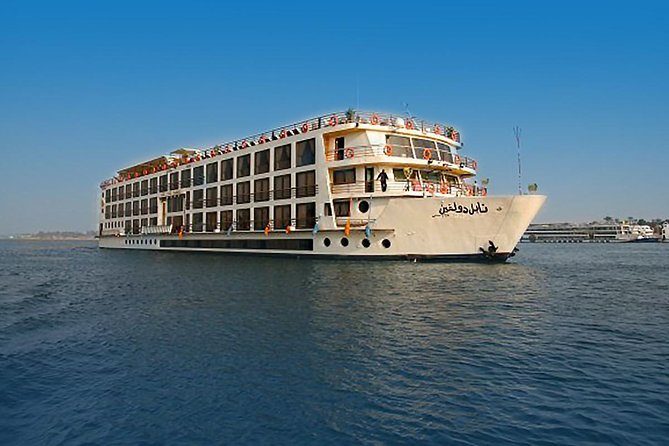
You spend the night in Luxor. The boat’s meals are included for the first three nights, and the available information describes clean surroundings, plentiful food, helpful staff, and small evening shows. Those details suggest a pleasant onboard routine, but the exact ship and its facilities are not specified, so you should not assume a particular cabin style or entertainment program.
More temple tours in the Nile Valley:
- Nile cruise between Aswan and Luxor: Sail the best temples in Egypt
★ 5.0 · 40 reviews - From Aswan: Abu Simbel Temple Day Trip with Hotel Pickup
★ 4.4 · 2,807 reviews - Luxor Day Tour: Valley of Kings & Queens & Hatchepsut Temples
★ 5.0 · 1,496 reviews - Luxor: Valley of the Kings and Hatshepsut Temple Day Tour
★ 4.4 · 1,404 reviews
Day 4: From the Valley of the Kings to Luxor Temple
After breakfast, you check out and begin the final sightseeing day. The west-bank program starts with the Valley of the Kings, followed by Hatshepsut Temple and the Colossi of Memnon. Lunch and a break come before the east-bank visits to Karnak Temple and Luxor Temple.
The Valley of the Kings is the emotional centerpiece for many people. The ticket arrangement matters here because entrance fees are excluded. The number of tombs available to enter can also vary by ticket type and current rules, so ask what your package covers before the day begins.
Your guide can help you understand why the valley was chosen for royal burials and how the painted chambers differ from one another. The setting is dry and exposed, and the day includes several major stops, so comfortable clothing, water, and sensible pacing matter. The tour information confirms the schedule but does not provide exact start times, so get the day’s timing from the local representative.
Hatshepsut Temple presents a different face of ancient Egypt. Its broad terraces and cliff setting contrast with the enclosed spaces of the Valley of the Kings. The site is also a chance to learn about Hatshepsut’s unusual position as a female ruler and the way royal power was shown through architecture and reliefs.
The Colossi of Memnon is a shorter stop. Two enormous seated statues mark what was once the approach to a temple complex. It works well as a brief photo and orientation stop between the larger west-bank sites.
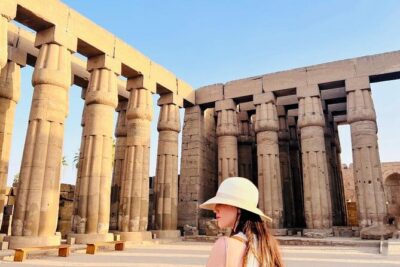
After lunch and a break, you cross to the east bank for Karnak Temple. Karnak is not one building but a huge religious complex developed over many centuries. The great columns, processional spaces, obelisks, and courtyards can blur together without a good explanation, so this is another point where guide quality matters.
The day finishes at Luxor Temple. Its position within modern Luxor makes it feel more connected to present-day life than the remote west-bank monuments. The combination of Karnak and Luxor Temple helps you see how the ancient ceremonial route worked across the city.
At the end, a private car transfers you to Luxor airport, train station, or bus station. If your onward departure is fixed, give the operator the exact details early and allow room for the full sightseeing program. The schedule is ambitious, and the final transfer comes after a long day.
The guides can shape the whole trip
The strongest praise attached to this experience concerns the guides, not the ship itself. Doaa is repeatedly described as attentive, clear, friendly, and comfortable to spend time with. Her English, historical explanations, careful pacing, and photography are all highlighted.
Marwa appears in connection with Aswan visits and is paired with Doaa in praise for professionalism and communication. Ahmed is described as a qualified Egyptologist who answered detailed questions and brought the monuments to life through passionate explanations.
That does not guarantee a particular guide on your departure. Names and assignments can change. It does tell you what to ask for: a private English-speaking guide who can adjust the level of detail to your group, explain the religious scenes at Philae and Edfu, and keep the pace manageable.
A guide who simply recites dates will make the temples blur together. A good one will explain why the sites were built, how they relate to one another, and what you are looking at when the wall carvings become crowded and hard to read.
What the $661.77 price really covers
At $661.77 per person, the price offers solid value if you want transport, a cruise base, meals, and guided sightseeing arranged together. It includes all air-conditioned car transfers, a private tour guide, three nights of full board on the cruise, and breakfast on the fourth day.
It does not include entrance fees for the historical places listed in the program. The motorboat to Philae is also extra, as are tips. These are not minor details in Egypt, where several major sights appear in a short period. Build a separate ticket and tipping budget before deciding that the advertised price is your final cost.
The value is strongest for someone who would otherwise have to arrange a hotel, river transport, road transfers, local guides, and Abu Simbel independently. The value is weaker for someone who already has accommodation in Luxor or prefers to buy each sight separately.
The package is booked, on average, 82 days ahead. That suggests you should not leave planning until the last minute if your dates are fixed, especially if you want a particular guide or need coordinated arrival and departure transfers.
Free cancellation is available up to 24 hours before the experience starts for a full refund. Changes made inside that 24-hour window are not accepted, and a minimum number of participants is required. If that minimum is not met, the provider offers another date or experience, or a full refund.
Who should choose this Nile cruise
I would choose this trip if you want the main Aswan to Luxor route in a short period, value private transfers, and are comfortable with early starts and full sightseeing days. It suits first-time Egypt visitors who want a guide to handle the complicated parts.
It also works well for families and small groups that want their own main guide and car. The comments about feeling safe, well looked after, and never confused about the daily plan are useful here, though the Abu Simbel portion remains shared.
I would hesitate if you dislike fixed schedules, long road trips, or extra charges at major monuments. I would also hesitate if your main goal is a quiet cruise with generous time on board. Abu Simbel is a major benefit, but it makes the second day especially demanding.
Should you book it?
Book this cruise if you want a compact, well-connected introduction to Upper Egypt and consider Abu Simbel essential. The route covers the right monuments, the private transfers reduce wasted time, and guides such as Doaa, Marwa, and Ahmed have shown the sort of warmth and clear teaching that can make ancient sites easier to understand.
Before paying, confirm the cruise ship, cabin details, exact entrance-ticket costs, Philae boat charge, Abu Simbel transport arrangements, and the guide assigned to your departure. If you accept the busy pace and budget for the exclusions, this is a strong four-day way to travel from Aswan to Luxor.
FAQ
How long is the Aswan to Luxor Nile cruise?
The experience lasts approximately four days and includes three nights on the Nile cruise.
What is included in the cruise package?
The package includes air-conditioned transfers, a private tour guide, three nights of full board on the cruise, and breakfast on the fourth day.
Is Abu Simbel included?
Yes. Abu Simbel is included as an approximately eight-hour excursion with a small shared group and a local English-speaking guide.
Are entrance tickets included?
No. Entrance fees for the historical sites listed in the program are excluded and must be paid separately.
Is the motorboat to Philae Temple included?
No. The motorboat to Philae Temple is an additional cost.
Which sights are visited in Aswan?
The Aswan program includes the High Dam and Philae Temple.
Which sights are visited in Luxor?
The Luxor program includes the Valley of the Kings, Hatshepsut Temple, Colossi of Memnon, Karnak Temple, and Luxor Temple.
Can I cancel for a full refund?
You can cancel up to 24 hours before the experience start time for a full refund. Cancellations or changes made less than 24 hours before the start time are not accepted for a refund.
More 4-Day Experiences in the Nile Valley
- From Aswan: 4-Day Nile Cruise from Aswan to Luxor with Guide
★ 4.1 · 593 reviews - 4-Day 3-Night Nile Cruise from Aswan to Luxor – Private Tour
★ 5.0 · 369 reviews - 4 Days Nile Cruise from Aswan to Luxor including Abu Simbel and Hot Air Balloon
★ 4.5 · 356 reviews - 4-Day 3-Night Nile Cruise from Aswan to Luxor With Balloon and Abu Simbel
★ 5.0 · 327 reviews
Just added in the Nile Valley
- Egypt 8 Days Cairo,Nile cruise,Luxor,Aswan from Cairo airport★ 5.0 · 79 reviews
- Private Tour: 7 Nights Pyramids & Nile Cruise +Flights from Cairo★ 4.5 · 157 reviews
- 8 Day Cairo Pyramids and Nile cruise and Alexandria All inclusive Private Tour★ 5.0 · 23 reviews
- 7 Days Egypt Tour Package to Cairo and Nile Cruise★ 5.0 · 62 reviews
- 6-Day Egypt Package, Nile Cruise from Aswan to Luxor by Flights★ 5.0 · 18 reviews
- Private 6-Days Egypt Tour Package with Nile Cruise by Flights★ 4.0 · 59 reviews
- Egypt in 9 Days from Saturday to Sunday including tours and Dahabeya Nile trip.★ 5.0 · 21 reviews
- From Cairo 4-Day Nile Cruise to Aswan by Flights& Hot Air Balloon★ 4.5 · 44 reviews
Abu Simbel Tours, compared.
4-Days Nile Cruise From Aswan To Luxor including Abu Simbel and Hot Air Balloon
Read our review →
Private Day Tour to Abu Simbel Temples from Aswan
Read our review →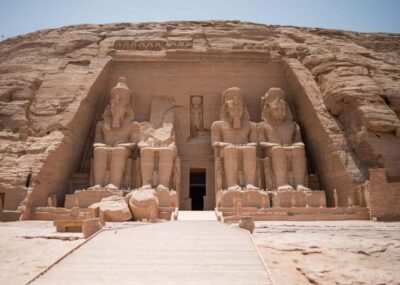
Abu Simbel Group Tour with Guide and Entrance Fees
Read our review →Browse the lists this tour appears in