
Reviewed · VALLEY OF THE KINGS TOURS
Marsa Alam: Valley of the Kings & Karnak Temples Luxor Tour
Luxor packs Egypt’s biggest ancient sights into one long day. From Marsa Alam, you cross the Eastern Desert, reach the Nile Valley, then visit three royal tombs, Hatshepsut’s cliff-side temple, the Colossi of Memnon, and Karnak before the return drive. The scale is impressive, but the road time is serious.
I like the clear West Bank to East Bank plan, and I like having an Egyptologist guide to explain the tomb paintings rather than leaving you to guess at them. Guides including Shaban, Ragab, and Doa have been especially praised for being polite, attentive, and able to explain the sites in German, Italian, English, French, or Arabic. The tradeoff is simple: this is a demanding day, with an early pickup and an evening arrival back in Marsa Alam.
Key points at a glance
- Three Valley of the Kings tombs: See decorated burial chambers, with Tutankhamun available as an optional paid add-on.
- Hatshepsut’s temple: Walk the broad terraces and colonnades beneath the cliffs of Deir el-Bahari.
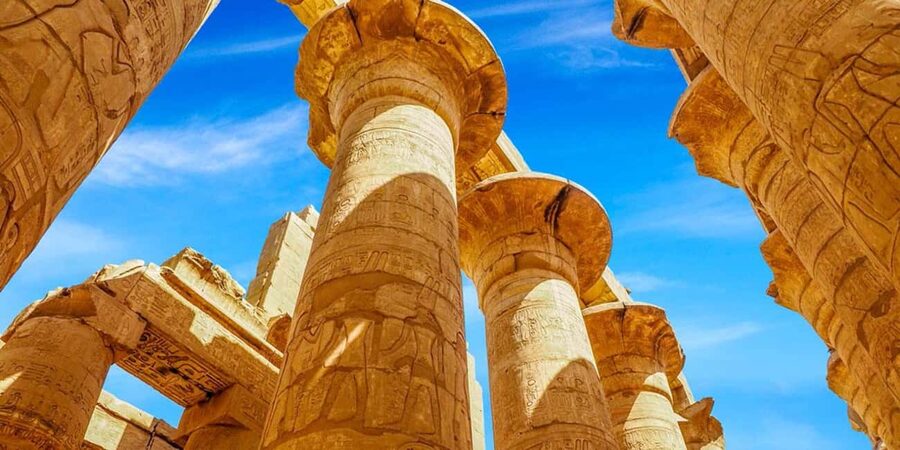
- Karnak after lunch: Enter the Great Hypostyle Hall, with its 134 huge columns, and see the sacred lake.
- Long but useful transport: The air-conditioned vehicle, onboard water, and hotel pickup make the desert crossing easier.
- Lunch and optional Nile cruise: Eat at a local Luxor restaurant, then consider the 20-minute cruise for 10 EUR in cash.
- Shopping stops: Optional FTS oils and traditional scarves are available, along with a stop for handmade figures.
Why this Marsa Alam to Luxor day matters
If you are staying on the Red Sea coast, Luxor is your best chance to see ancient Egypt on a grand scale without changing hotels. Marsa Alam is far from the Nile Valley, so this tour is not a quick outing. It is a full-day commitment built around the country’s most important pharaonic sites.
The route gives you both sides of ancient Thebes. On the West Bank, you visit the royal tombs and funerary monuments. On the East Bank, you see Karnak, a temple complex where worship, royal power, and state ceremony came together for nearly 2,000 years.
That division helps the day make sense. The West Bank is about death and the afterlife. Karnak is about the living religious center of ancient Luxor. A good guide can connect those ideas, and that is where guides such as Shaban, Ragab, and Doa add real value. You are not just walking from one ruin to the next.
More Temple Tours in Luxor
- Luxor Day Tour: Valley of Kings & Queens & Hatchepsut Temples
★ 5.0 · 1,496 reviews - Luxor: Valley of the Kings and Hatshepsut Temple Day Tour
★ 4.4 · 1,404 reviews - Hurghada: Luxor Tour with Valley of Kings, Karnak & Tut Tomb
★ 4.6 · 1,082 reviews
The desert road from Marsa Alam
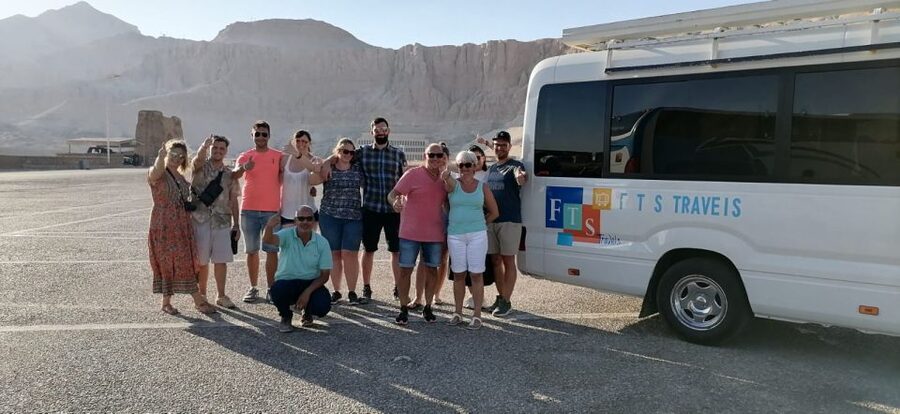
Expect an early morning pickup from your hotel in Marsa Alam or El Quseir. The drive crosses the Eastern Desert in an air-conditioned vehicle, with water or soft drinks available onboard. You should ask your hotel reception for a packed breakfast the day before, because the first meal included in the tour is lunch in Luxor.
The road time is the main practical issue. You will spend many hours in the vehicle, and the return journey comes after a busy day on your feet. Comfortable shoes matter, but so do sunglasses, water, patience, and a willingness to accept that Luxor cannot be properly seen at a leisurely pace from Marsa Alam.
Still, the transport solves a real problem. You do not need to arrange separate taxis, site tickets, or a guide once you arrive. Hotel pickup and drop-off are included when that option is selected, and transfers are available from Safaga or Marsa Alam.
Three tombs in the Valley of the Kings
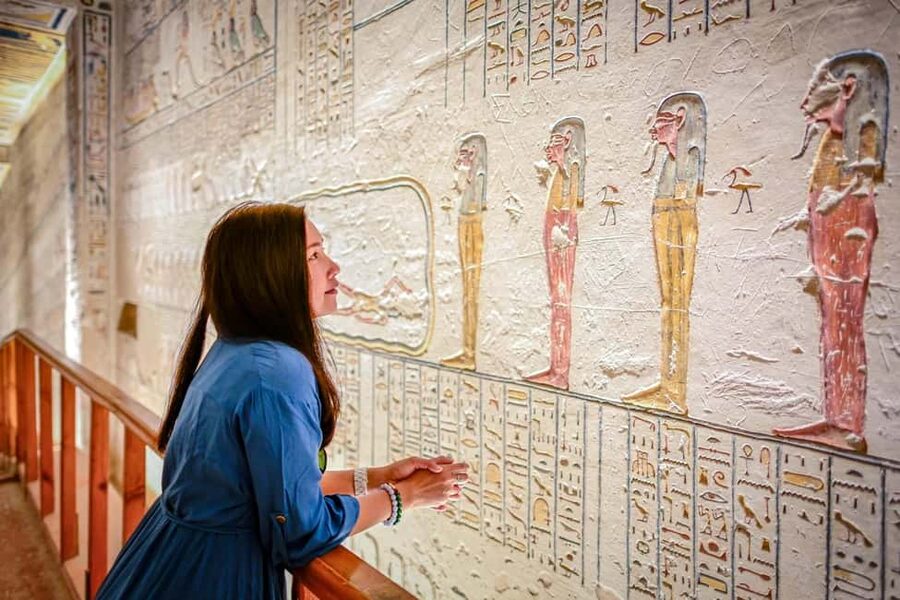
Your first major stop is the Valley of the Kings on Luxor’s West Bank. This dry valley became the burial ground for pharaohs who wanted their tombs hidden in the hills rather than displayed in large pyramids. Inside, the walls are covered with painted scenes, hieroglyphics, and religious texts intended to help the ruler reach the afterlife.
The tour includes entry to three decorated tombs. The exact tomb selection can vary, but the main point is that you get more than a single quick look. Each chamber has its own colors, symbols, and layout, and your guide can explain what you are seeing.
The tomb of Tutankhamun is not included in the standard entry. You can choose it as an add-on, so decide before the visit if the famous young pharaoh is a priority. Tutankhamun’s tomb is historically important, but the included tombs can offer more extensive decoration. Paying extra for Tutankhamun is best for visitors who specifically want to enter the chamber connected with the discovery of his burial goods.
The valley is not a museum with labels at every turn. Much of its meaning comes from your guide’s explanation. A guide who can point out the gods, burial scenes, and journey-of-the-dead imagery will make the painted walls easier to read. The guides praised for this tour include Shaban, who has led groups in German, and an Italian-speaking guide who provided detailed explanations in clear Italian.
Hatshepsut beneath the Deir el-Bahari cliffs
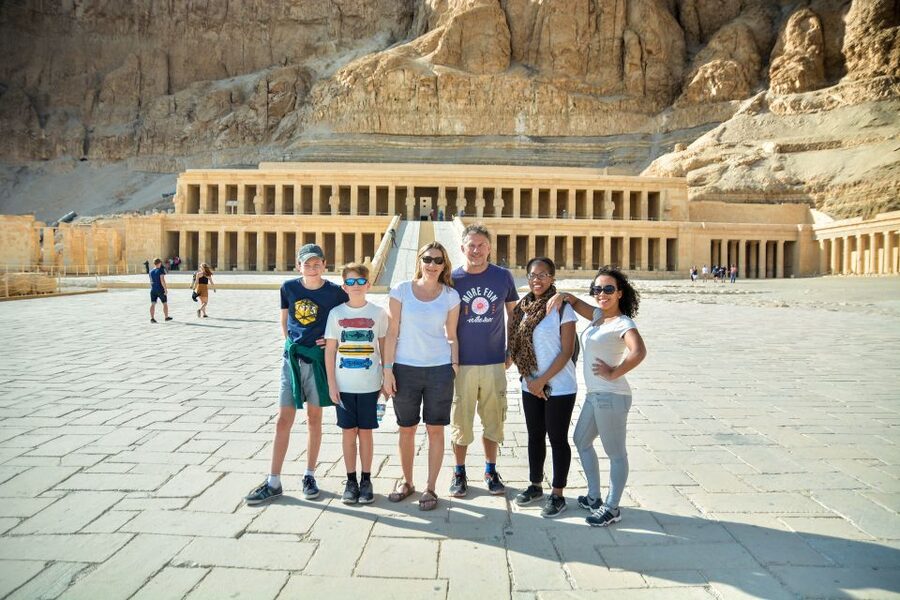
From the tombs, the tour continues to the Mortuary Temple of Hatshepsut. The temple rises in broad terraces against the cliffs of Deir el-Bahari, giving it a different feel from the underground tombs. Long lines, ramps, columns, and carved walls create a strong sense of order.
Hatshepsut ruled as pharaoh and remains one of ancient Egypt’s best-known female rulers. Her temple was designed to honor her, connect her with the gods, and reinforce her right to rule. The location is part of the drama. The cliffs form a natural backdrop behind the terraces, so the building and rock face read as one composition.
You will want to give this stop your attention rather than treating it as a photo break. Look at the reliefs, the repeated columns, and the way the temple draws you upward toward the cliffs. The open setting can also feel hot, especially after the Valley of the Kings, so a hat and sunglasses are useful even though they are not listed as required equipment.
More Valley of the Kings tours in Luxor:
- Hurghada: Luxor Valley of the Kings & Tutankhamun Tomb Trip
★ 4.7 · 13,208 reviews - Luxor Day Trip from Hurghada Small Group & Tutankhamun Tomb
★ 4.8 · 5,366 reviews - Small group Hurghada to Luxor, Valley of the Kings by Van
★ 4.5 · 2,470 reviews - Hurghada: Small-Group Luxor Highlights & Tut Tomb Day Tour
★ 4.6 · 928 reviews
The Colossi of Memnon in a quick stop
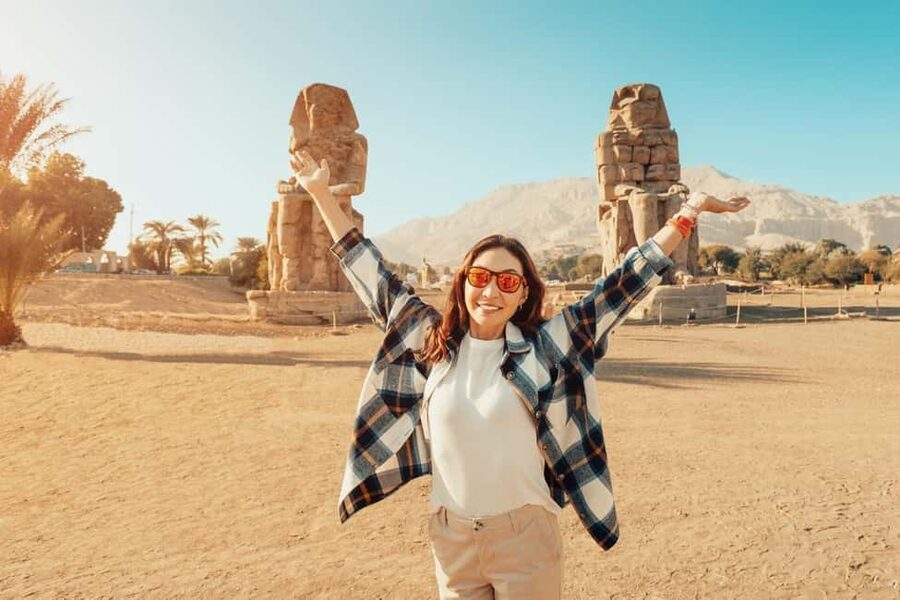
The two Colossi of Memnon are the last major remains of the temple built for Amenhotep III. These enormous seated statues have guarded the Theban Necropolis area for more than 3,400 years, though the temple that once surrounded them has largely disappeared.
This is a short stop compared with the Valley of the Kings or Karnak. That is fine. The statues work best as a quick look at the scale of ancient royal building, and they give you a chance to stretch your legs before lunch and the East Bank visits.
Your guide can also explain why these figures became famous in later periods and how ancient monuments were reused, damaged, or lost. Do not expect a full temple complex here. The appeal is the surviving pair of statues and the story of what is no longer visible.
Lunch and the optional Nile boat
After the West Bank visits, you eat lunch at a local restaurant in Luxor. The meal is described as Egyptian-style, and one reported arrangement included a buffet. Restaurant drinks are not included, so carry some Egyptian pounds or another accepted payment method for anything beyond the included meal.
There is also an optional 20-minute Nile cruise for 10 EUR, paid in cash onsite. This is not a substitute for a longer Nile cruise, but it can give you a short change of pace between the archaeological stops. If you are already tired or want more time at the monuments, you may prefer to skip it. If you enjoy seeing Luxor from the water, the extra cost is modest.
One practical point: the schedule is already tight because the return to Marsa Alam is long. A short cruise may fit comfortably, but the exact timing depends on the day’s pace and local conditions. Ask your guide when the option is offered.
Karnak and the 134-column hall
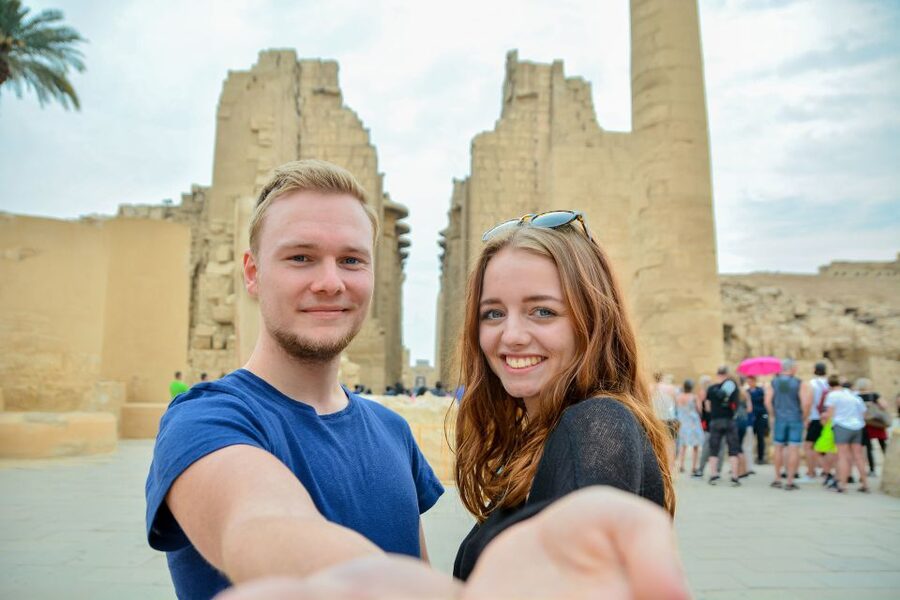
The East Bank visit reaches its high point at Karnak, the largest religious complex in Egypt. This was not built by one ruler in one burst. Pharaoh after pharaoh added gateways, courtyards, sanctuaries, columns, statues, and inscriptions over almost 2,000 years.
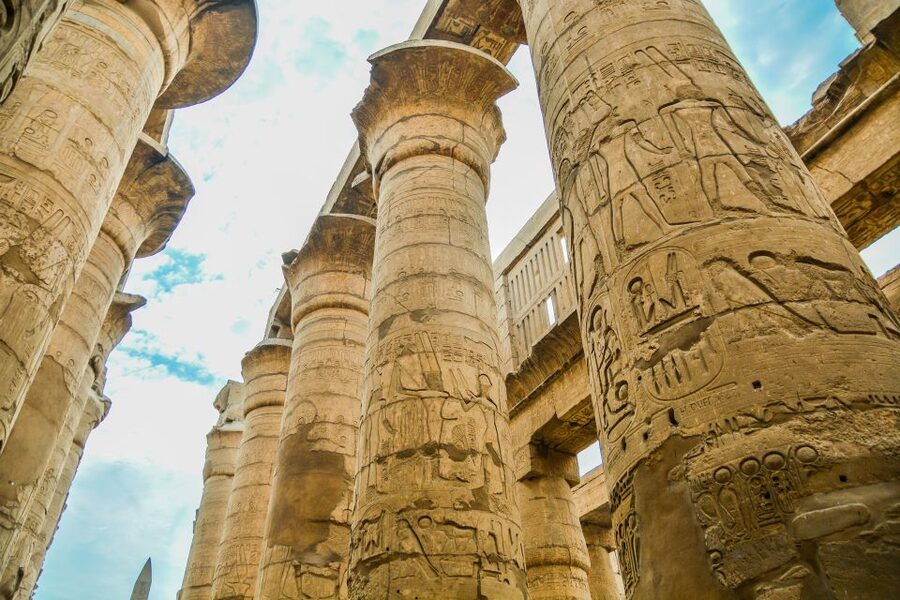
The Great Hypostyle Hall is the part most people remember. Its 134 towering columns once supported a roof, and the size of the space makes it easy to understand the power of the temple. Even with other people around, the columns create a strong feeling of enclosure and scale.
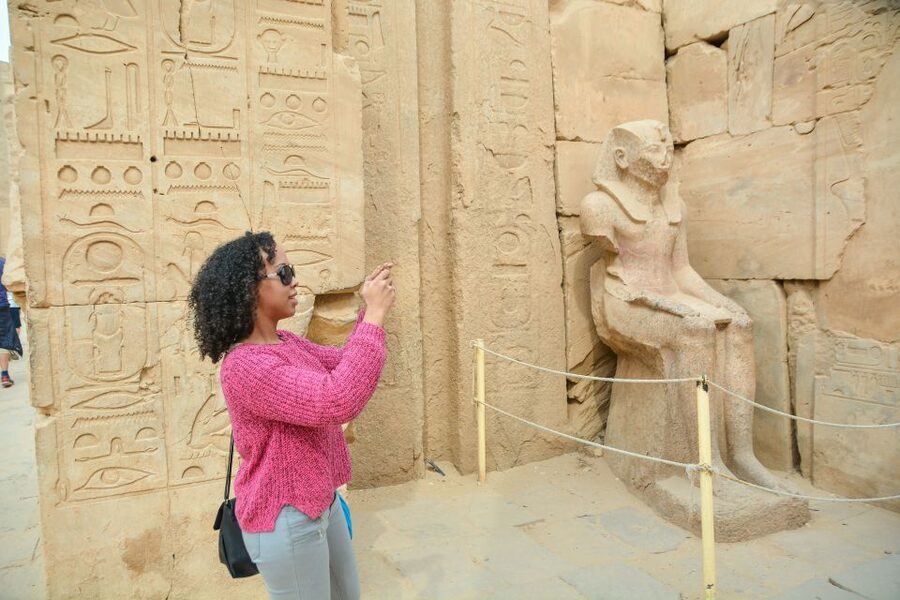
Karnak also includes the sacred lake and the Avenue of Sphinxes. You will see evidence of many building campaigns, which can make the complex feel confusing without a guide. This is one place where a clear explanation matters. Your guide can show you how different pharaohs changed the site and why the temple was not simply a single building.
Save some energy for Karnak. It comes late in a long day, and you may be tempted to hurry through. I would rather see fewer corners properly than rush across the whole complex. The temple is big enough that a little structure from your guide makes a major difference.
Guides, languages, and the human side of the day
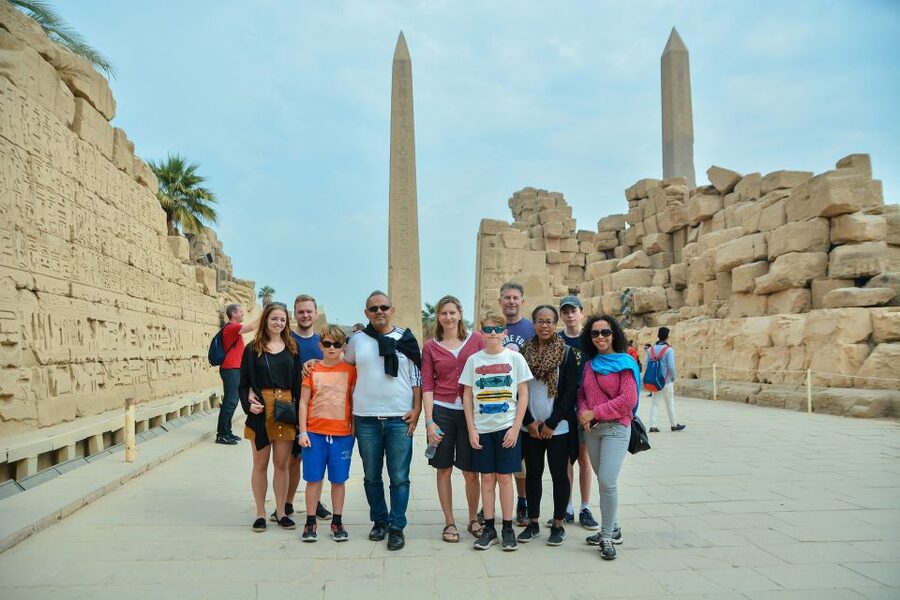
The guide is one of the strongest parts of this experience. Shaban has been praised for friendly service, strong German, and detailed stories about ancient Egypt. Ragab is described as attentive to individual needs, while Doa has been recommended for clear guiding. The available languages are Arabic, English, French, and German, with Italian also represented in the guiding team.
That range matters because ancient Egyptian sites can be difficult to understand from signs alone. You want someone who can explain the difference between a royal tomb and a mortuary temple, identify the major gods, and place each ruler in the larger story.
The personal care also matters on a long day. A guide who notices when the group needs a pause, answers questions, and keeps the route organized can make the road trip feel manageable. You should still confirm your preferred language and pickup details after booking, rather than assuming the same guide will be assigned every time.
Lunch, shopping, oils, and scarves
The tour includes a Luxor city tour and a stop where you can look at handmade figures. Traditional Egyptian scarves from Travel-Inspired Elegance by FTS are available as an add-on. FTS organic oils are also offered, including black seed, peppermint, French basil, rosemary, and geranium oils.
Treat these shopping stops as optional, not as part of the archaeological core. They may suit you if you want a practical souvenir or are curious about local products. If your main goal is tombs and temples, keep your shopping time controlled. The day is already full, and every extra stop can reduce time at the sites.
The oils are promoted for uses such as skin care, relaxation, focus, digestion, and hair care. You should check labels and use them according to the product instructions. The tour information does not establish medical treatment, so consider them souvenirs and personal-care products rather than a substitute for medical advice.
Is the $306 price good value?
At $306 per person, this is not a budget day trip. The price makes more sense when you count what is bundled: hotel pickup and drop-off when selected, the long-distance air-conditioned transfer, an Egyptologist guide, entry fees, lunch, onboard water or soft drinks, and a Luxor city tour.
You are also paying for convenience. Organizing the same day independently from Marsa Alam would mean finding transport, buying several site tickets, arranging a guide, and handling the return journey after visiting four major areas. The tour takes care of those moving parts.
The value depends heavily on your priorities. If Luxor is a once-in-a-lifetime goal and you do not want to spend a night in the Nile Valley, the cost can be reasonable. If you dislike long road days or prefer slow visits with time for every relief and chamber, staying overnight in Luxor may be a better travel plan, though that is a different arrangement.
At this price, I would confirm exactly what hotel transfer option you are selecting and whether your preferred add-ons are included. Tutankhamun’s tomb, the Nile cruise, oils, and scarves are not part of the basic package unless chosen separately.
Who should book this Luxor trip?
I would recommend it to you if you are staying in Marsa Alam or El Quseir, want to see the essential Luxor sights, and have only one free day. It suits first-time visitors who value a guide, included entries, and a planned route more than free time.
It also works well for families and mixed-language groups when a suitable guide is assigned. The air-conditioned vehicle, water, lunch, and hotel transfers remove several small burdens from a very long day.
I would hesitate if you have mobility limitations, strongly dislike early starts, or know that many hours on the road will spoil the experience for you. The itinerary includes walking at several large sites, outdoor heat, stairs or uneven ground may be present, and the return drive follows a demanding sightseeing schedule.
Should you book it?
Book this tour if you want the major sights of ancient Luxor from a Marsa Alam base and accept the long drive as the price of getting there. The combination of three royal tombs, Hatshepsut, Memnon, lunch, and Karnak gives you a strong first look at the city.
Before you commit, request your packed breakfast, send the required names and passport numbers, confirm your hotel pickup time, and decide if Tutankhamun’s tomb or the short Nile cruise matters to you. Bring comfortable shoes, sunglasses, snacks, and patience. With those basics handled, the day offers a lot for one ambitious journey.
FAQ
Where does the tour pick up?
Pickup is available from hotels in Marsa Alam and El Quseir. Transfers are also available from Safaga or Marsa Alam, depending on the selected option.
What sites are included?
The tour includes the Valley of the Kings, the Temple of Hatshepsut, the Colossi of Memnon, Karnak Temples, and a Luxor city tour. Entry fees to the visited sites are included.
Is Tutankhamun’s tomb included?
No. Entry to Tutankhamun’s tomb is an optional add-on that you can choose separately.
Is lunch included?
Yes. Lunch at a restaurant in Luxor is included. Drinks purchased at the restaurant are not included.
How much is the optional Nile cruise?
The optional cruise lasts 20 minutes and costs 10 EUR, paid in cash onsite.
What should I bring?
Bring your passport or ID card, comfortable shoes, and sunglasses. You should also request a packed breakfast from your hotel reception one day before the trip.
Just added in Luxor
- Private Trip To Luxor from Cairo by Plane★ 5.0 · 22 reviews
- Luxor Private Day Trip from Cairo by Plane★ 4.5 · 69 reviews
- Private Day Tour To Luxor from Cairo by Plane,Tours,Sailing Felucca,Camel&Lunch★ 5.0 · 45 reviews
- Private Day Tour To Luxor from Cairo by Plane★ 4.5 · 41 reviews
- Package 8 Days 7 Nights To Jewels of Egypt, Luxor & Aswan Tour★ 5.0 · 29 reviews
- Package Cairo & Alexandra & Luxor & Aswan★ 5.0 · 39 reviews
- Overnight Luxor Tours by train from Cairo with Hot Air Balloon and much more★ 5.0 · 29 reviews
- Private Luxor Day tour from Cairo by Flight★ 5.0 · 25 reviews
Valley of the Kings Tours, compared.

Luxor Valley of the Kings & Tutankhamun Tomb Trip
Read our review →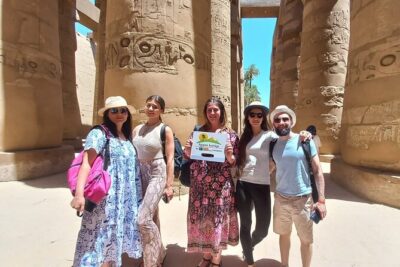
Small group Hurghada to Luxor, Valley of the Kings by Van
Read our review →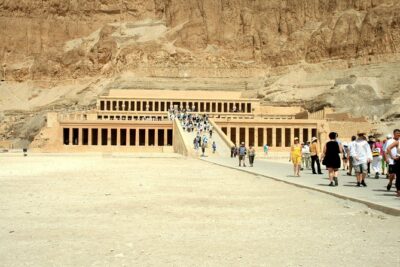
Luxor Day Tour: Valley of Kings & Queens & Hatchepsut Temples
Read our review →
Small-Group Luxor Highlights & Tut Tomb Day Tour
Read our review →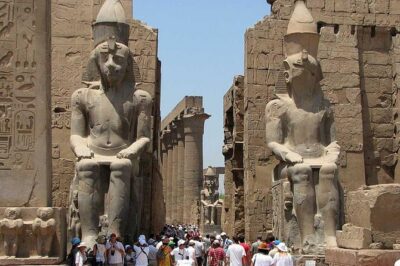
Valley of Kings, Hatchepsut Temple ,Karnak & Luxor-DayTour
Read our review →Browse the lists this tour appears in