
Reviewed · NILE CRUISES
7 Day Pyramids & Nile Cruise By Air
The big appeal here is simple: you get Cairo, Aswan, the Nile, and Luxor in one tightly arranged week. The trip moves by private vehicle, domestic flight, and cruise, so you spend less time solving Egypt’s transport puzzle and more time looking at pyramids, temples, and tombs.
I like the two Cairo nights before the cruise, which give you time for Giza and the Egyptian Museum, and I like the three-night Nile sailing, where the scenery changes slowly between major sites. The main drawback is pace. Seven days is enough for the highlights, but not enough for long, relaxed visits or much free time. Abu Simbel also makes Day 4 especially full, so confirm the exact schedule before booking.
Key points at a glance
- Giza and the Egyptian Museum on Day 2: See the Great Pyramid, Sphinx, Valley Temple, and one of the world’s major collections of Egyptian antiquities.
- Three nights on a five-star Nile cruise: Your boat acts as both hotel and transport between Aswan, Kom Ombo, Edfu, and Luxor.
- Abu Simbel included: The twin temples of Ramses II and Nefertari add a major southern-Egypt highlight to a short itinerary.
- Private handling from airport to airport: Meet-and-assist service, private transfers, domestic flights, and a private group reduce the usual confusion.
- A guide-led history lesson: Ask about guide assignments. Mena, Meyer, Alfred, George, John, and Marcos are among the guides praised in past feedback.
- Most major costs are bundled: Hotels, cruise, meals, sightseeing, entrance fees, bottled water, and internal flights are included, but not international airfare, visa, tips, or personal purchases.
Why this seven-day route works
Egypt can be hard to arrange on your own. Cairo is sprawling, Aswan and Luxor are far south, and the classic Nile route requires careful timing between airports, boats, temples, and hotels. This package handles that structure for you.
The plan is also sensibly divided. You begin in Cairo, fly south to Aswan, cruise north toward Luxor, then fly back to Cairo for departure. That avoids a long overland return and gives you a clear arc through ancient Egypt.
You will not be traveling with a large shared group. This is a private tour for your party, with a certified guide and private air-conditioned transfers. That matters in Egypt, where a good guide and a driver who knows the daily plan can save time and reduce friction.
The operator has also shown flexibility with custom requests. Some visitors added days in Cairo or extended their trips to places such as Alexandria and Hurghada. That does not mean an extension is part of this seven-day package, but it is worth asking if you want more time.
A few more days out in the Nile Valley to weigh up
- 7 Days Egypt Tour Package to Cairo and Nile Cruise
★ 5.0 · 62 reviews - 7 Days & 6 Nights by Flight Cairo Pyramids & Nile cruise Aswan To Luxor(Private)
★ 5.0 · 38 reviews - Incredible 7 Days Tour around Cairo, Luxor, and Hurghada
★ 5.0 · 117 reviews
Day 1: A gentle arrival in Cairo
On arrival at Cairo International Airport, a Journey to Egypt representative meets you before the immigration counters, holding a sign with your name. You then take a private air-conditioned vehicle to your Cairo hotel.
This is a useful service after a long international flight. You do not have to work out a taxi, find a driver, or explain your hotel address while tired. At the hotel, your guide reviews the holiday plan and confirms pickup times for the coming tours.
The first day includes no meal and only about 45 minutes of listed activity, so treat it as an arrival and orientation day. The hotel location can affect how the next day feels. One property mentioned in feedback was the Steigenberger in Giza, praised for its position near the pyramids but judged below expectations in other respects. Ask which hotel category and location apply to your booking.
Day 2: The Pyramids, Sphinx, and Egyptian Museum
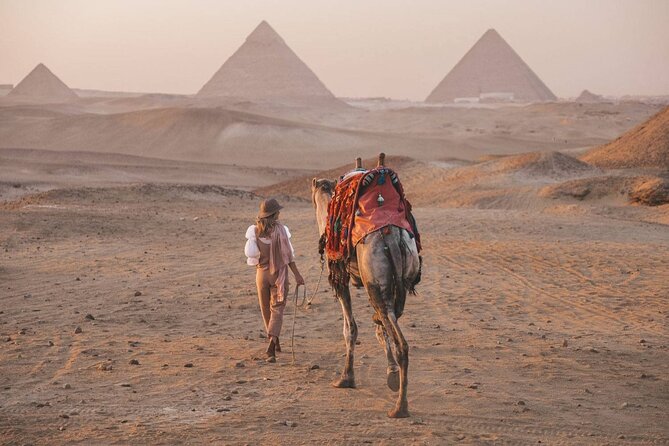
Day 2 packs in the classic Cairo sights. Your guide collects you from the hotel and takes you to the Giza Plateau, where the Great Pyramid of Cheops dominates the visit.
The Great Pyramid was built around 2551 to 2528 BC and originally rose to about 137 meters. The scale is hard to grasp from photographs. Your guide can give the blocks, construction, and royal purpose some context, while you get close enough to see the stone courses and the effect of time on the monument.
You continue to the panorama area for views of all three pyramids. This is the best point for broad photographs, and your guide can help organize the stop before you move to the Great Sphinx and Valley Temple.
The Sphinx is more than a quick photo stop. Look at the combination of a human head and lion’s body, then consider how the nearby Valley Temple fitted into the ancient funerary complex. The visit provides a useful link between the pyramids as royal tombs and the ceremonies carried out around them.
Lunch at a local Cairo restaurant is included. Afterward, you visit the Egyptian Museum, one of the world’s best-known collections of ancient Egyptian material. The itinerary does not specify the museum’s current galleries or which objects receive the most attention, so ask your guide how the visit will be organized.
This is a seven-hour day, and the heat, crowds, and sheer amount of material can make it tiring. I would wear sturdy shoes, carry the provided bottled water, and avoid treating every stop as a race for photographs. The value of a private guide is strongest here, since you can ask questions and spend a little more time on the objects that interest you.
Flying to Aswan and Philae Temple
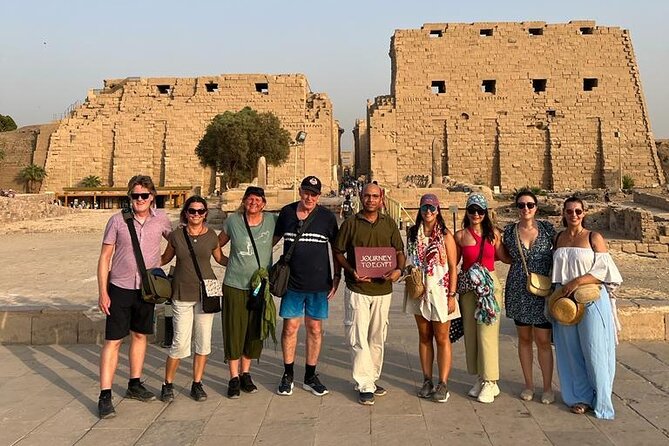
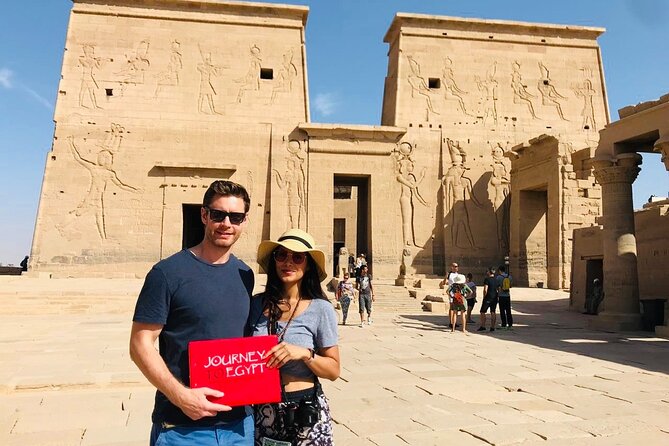
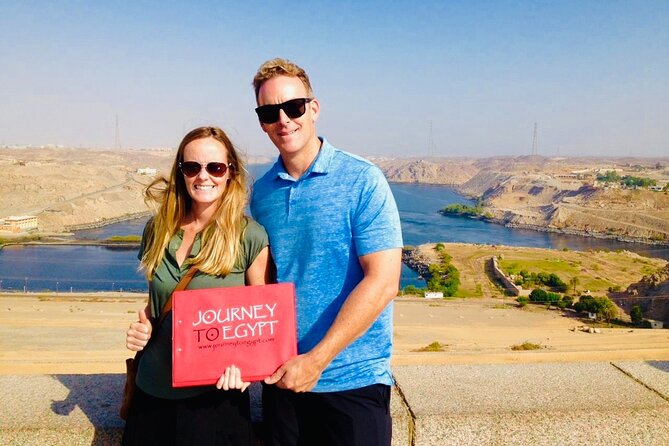
On Day 3, you fly from Cairo to Aswan. A representative meets you at the airport exit with your name, then takes you to the High Dam and Philae Temple before you board the Nile cruise.
The High Dam is important to the modern story of Egypt. Its construction changed the flow of the Nile and created the need to protect important ancient sites from floodwater. Philae is one of the clearest results of that effort.
Philae Temple is dedicated mainly to Isis and Hathor. Its island setting gives the visit a different feel from the desert monuments around Cairo, and the temple’s survival is tied directly to the relocation work carried out after the High Dam was built.
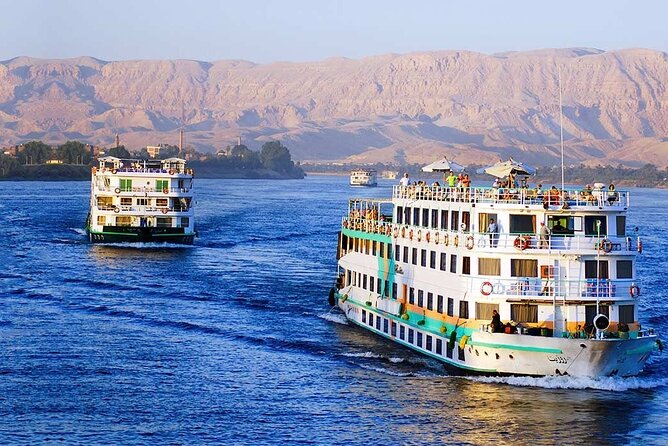
You board the cruise before lunch, with lunch and dinner served on board. The package includes three nights on a five-star cruise with full board, plus a felucca tour in Aswan and the listed excursions. The exact ship is not identified in the supplied details, so ask about the vessel, cabin type, and sailing schedule before paying.
The cruise changes the rhythm of the trip. Instead of packing and unpacking each night, you have a floating base while the Nile provides the view. It is the most restful part of the itinerary, although the sightseeing days remain active.
More Nile cruises to weigh up:
- 4-Days Nile Cruise From Aswan To Luxor including Abu Simbel and Hot Air Balloon
★ 5.0 · 3,142 reviews - 4-Day 3-Night Nile Cruise from Aswan to Luxor&Abu Simbel+Balloon
★ 5.0 · 2,023 reviews - 4-Day 3-Night Nile Cruise from Aswan to Luxor including Abu Simbel, Air Balloon
★ 4.5 · 612 reviews - From Aswan: 4-Day Nile Cruise from Aswan to Luxor with Guide
★ 4.1 · 593 reviews
Day 4: Abu Simbel and Kom Ombo
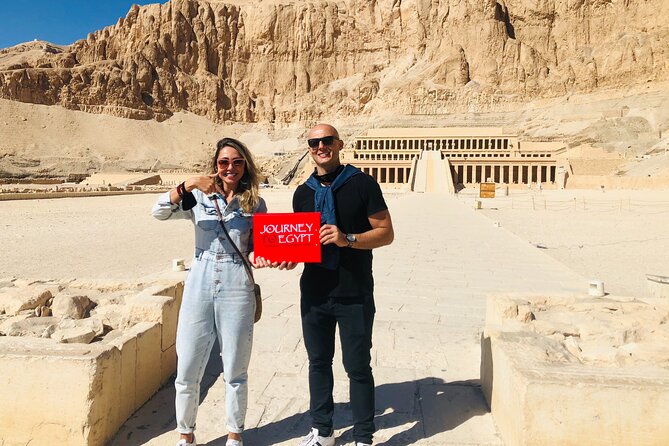
Day 4 brings Abu Simbel, the commanding temple complex built for Ramses II and Queen Nefertari. The façade of Ramses II’s temple is marked by four huge seated statues, each about 70 feet high.
The site’s modern story is almost as striking as its ancient one. Abu Simbel was dismantled and moved to higher ground to protect it from the waters created by the Aswan High Dam. That makes it a place where ancient ambition and modern engineering meet.
The schedule then places you on the cruise toward Kom Ombo. At Kom Ombo, you visit the Greco-Roman temple dedicated to Horus, described here as Haroeris, and Sobek, the crocodile god. The unusual double dedication gives the temple a different character from the royal monuments at Giza and Luxor.
The crocodile connection is not just decorative. You can see mummified crocodile remains, a reminder that these animals once lived along the Nile and were linked to local religious beliefs.
This is the day I would examine most closely before booking. Abu Simbel and Kom Ombo are both major stops, but fitting them into one day can make the schedule demanding. The supplied plan does not spell out the exact Abu Simbel transport or departure time, so ask for the detailed day-by-day timing. If you prefer slow mornings and long temple visits, this will feel compressed.
Day 5: Edfu, Karnak, and Luxor Temple
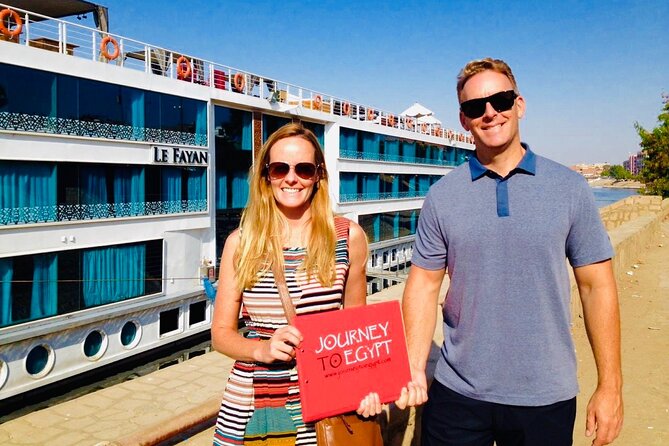
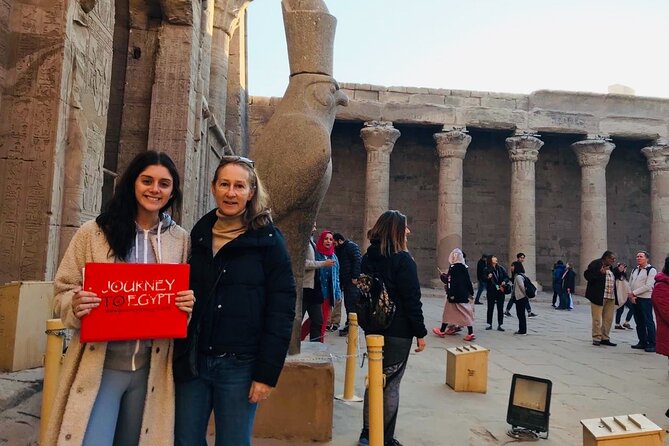
The cruise continues to Edfu, where you visit the Temple of Horus. Built in the Ptolemaic period, beginning around 230 BC under Ptolemy III, it is one of Egypt’s best-preserved temples.
The falcon-headed Horus was associated with the sky and kingship. The temple’s surviving walls and strong plan help you picture how worship worked, rather than seeing only scattered columns and fallen stones. Your guide can explain the scenes and inscriptions as you move through the complex.
After cruising to Luxor, the route shifts to the east bank of the Nile. Karnak is the major stop here. Generations of pharaohs added to the complex, using it to honor the gods and record their own names.
The Great Hypostyle Hall is the visual centerpiece. Its closely spaced columns rise roughly 80 feet, creating a forest of stone that can make the scale of the complex feel almost unreal. You then continue to Luxor Temple, with the statues of Ramses II, the courtyard, and the colonnade associated with Amenhotep III.
Day 5 combines a temple at Edfu with two major Luxor sites, so it is another full day. The advantage is that you see a large span of Egyptian history in one sweep. The cost is time on your feet, especially if you want to listen closely to the guide at every stop.
Day 6: The Valley of the Kings and Hatshepsut
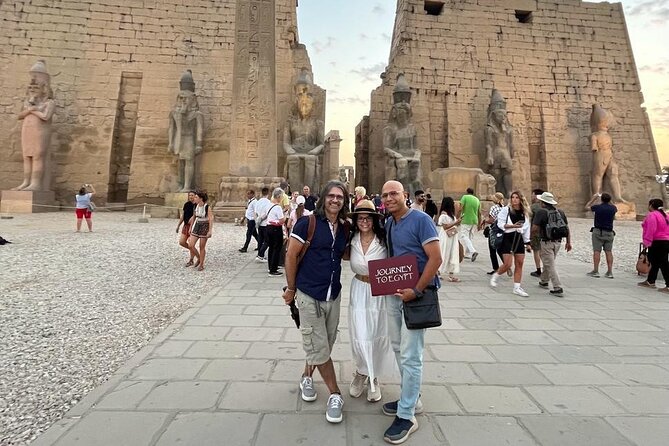
The final full sightseeing day crosses to Luxor’s west bank. You begin at the Colossi of Memnon, two enormous statues that once guarded the entrance to a temple complex.
The Temple of Hatshepsut is next. Built for one of ancient Egypt’s most successful female pharaohs, it is set against the cliffs and arranged in broad terraces. Its design differs from the more enclosed temple forms you see elsewhere, making it one of the most memorable stops on the route.
Then comes the Valley of the Kings, the burial ground of pharaohs and nobles for about 500 years beginning in the 16th century BC. The valley contains tombs connected with major rulers, including Tutankhamun.
Entry to Tutankhamun’s tomb requires an extra ticket. That cost is not included in the listed package, so decide in advance if the famous tomb matters to you. The tomb itself is not necessarily the largest or most elaborate in the valley, but its connection with the 1922 discovery by Howard Carter gives it unusual appeal.
The west-bank program lasts about five hours. Bring water, protect yourself from the sun, and listen to your guide’s advice about which tombs are open. The package includes the listed entrance fees, but extra tickets such as Tutankhamun’s are separate.
Day 7: Returning to Cairo and the airport
After breakfast, you fly from Luxor to Cairo and transfer to Cairo International Airport for your departure. The listed airport transfer takes about an hour.
This final connection is convenient, but it leaves little room for a delayed flight or an international departure scheduled too soon afterward. Give yourself a comfortable margin when choosing your flight home. The package includes the domestic flight and airport transfer, but your international airfare is separate.
What the $2,400 price really covers
At $2,400 per person, this is not a budget independent trip, but the package includes a substantial amount:
- Three nights in Cairo with daily breakfast
- Three nights on a five-star Nile cruise with full board
- Cairo to Aswan and Luxor to Cairo flights
- Private airport and hotel transfers
- A certified professional guide
- Entrance fees for listed sites
- Meals listed during tours, hotels, and cruise
- Bottled water during outings
- A camel ride at the pyramids
- A felucca tour in Aswan
- Meet-and-assist service on arrival and departure
You still pay for international flights, the Egyptian entry visa, optional tours, personal spending, tips, and cruise crew gratuities. Tutankhamun’s tomb is also listed as an extra ticket.
The strongest value comes from the time saved. Arranging these flights, transfers, admissions, guides, and cruise nights independently would take real effort, and mistakes could cost more than expected. You are paying for coordination as much as for accommodation.
The tradeoff is control. A packaged route sets your pace, and this one is brisk. If you want open afternoons, local buses, or several unplanned days, an independent trip or a longer custom itinerary may suit you better.
Guides, service, and the private-tour advantage
The most praised part of the operation is the human side: prompt communication, careful airport handling, flexible planning, and guides who stay available by WhatsApp during the trip.
Several guide names appear in strong feedback about the company, including Mena, Meyer, Alfred, George, John, and Marcos. You cannot assume a specific guide will be assigned, but you can ask about availability when booking. One especially useful detail is the praise for guides who adjusted timing to help avoid crowds and who could explain both ancient sites and Egyptian culture.
Private touring also helps families and first-time visitors. A family traveling with a two-year-old used the company for help with the route, and other groups added days or special stops. The supplied information says most people can participate, but it does not give detailed mobility guidance, so ask directly if you have specific access needs.
Tips for guides and cruise crew are not included. Carry small Egyptian pounds or another accepted payment method, and ask the operator what tipping practice they recommend for your exact group and ship.
Who should book this Egypt tour?
I would choose this package if you want the major ancient sites, prefer a guide-led experience, and do not want to manage Egypt’s internal transport. It works especially well for first-time visitors, families, couples, and anyone who values private transfers and a fixed plan.
I would hesitate if your priority is slow travel. Seven days gives you the headline sights, but Cairo, Abu Simbel, Luxor, and the Nile deserve more time than this schedule allows. An added Cairo night or extra Luxor time would make the experience easier, and the operator has handled custom extensions before.
You can cancel for a full refund up to six full days before the local start time. Cancellation two to six days ahead receives 50 percent, while cancellation within two days receives no refund. Changes follow the same cutoff rules, so do not wait until the last minute if your flights are uncertain.
Should you book it?
Book this tour if you want a well-organized first look at Egypt with the hardest logistics handled for you. The inclusion of Abu Simbel, Philae, Edfu, Kom Ombo, Karnak, Luxor Temple, and the Valley of the Kings gives the route real reach for one week.
Before paying, confirm the Cairo hotel, cruise ship, domestic flight times, Abu Simbel schedule, guide assignment, and extra-ticket costs. If those details suit you, $2,400 is a reasonable price for a private, guide-led trip that covers the essential Nile corridor without making you arrange every moving part yourself.
FAQ
How long is the tour?
The tour lasts approximately seven days, from arrival at Cairo International Airport on Day 1 through departure from Cairo on Day 7.
Are domestic flights included?
Yes. The package includes a domestic flight from Cairo to Aswan and a domestic flight from Luxor to Cairo.
How many nights are spent on the Nile cruise?
You spend three nights on a five-star Nile cruise. The cruise is listed on a full-board basis.
Are meals included?
Yes. The package includes daily breakfast in Cairo, meals on the cruise, and meals during the listed tours. The arrival day does not include a meal.
Is Abu Simbel included?
Yes. Abu Simbel is included in the sightseeing plan. Ask for the exact timing and transport details because Day 4 also includes Kom Ombo.
Are international airfare and the Egyptian visa included?
No. International airfare and the entry visa to Egypt are not included. Optional tours, personal spending, and tips for guides and cruise crew are also separate.
Just added in the Nile Valley
- Egypt 8 Days Cairo,Nile cruise,Luxor,Aswan from Cairo airport★ 5.0 · 79 reviews
- Private Tour: 7 Nights Pyramids & Nile Cruise +Flights from Cairo★ 4.5 · 157 reviews
- 8 Day Cairo Pyramids and Nile cruise and Alexandria All inclusive Private Tour★ 5.0 · 23 reviews
- 7 Days Egypt Tour Package to Cairo and Nile Cruise★ 5.0 · 62 reviews
- 6-Day Egypt Package, Nile Cruise from Aswan to Luxor by Flights★ 5.0 · 18 reviews
- Private 6-Days Egypt Tour Package with Nile Cruise by Flights★ 4.0 · 59 reviews
- Egypt in 9 Days from Saturday to Sunday including tours and Dahabeya Nile trip.★ 5.0 · 21 reviews
- From Cairo 4-Day Nile Cruise to Aswan by Flights& Hot Air Balloon★ 4.5 · 44 reviews
Nile Cruises, compared.
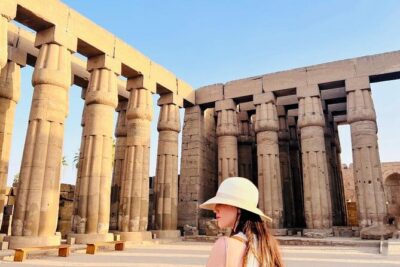
4-Days Nile Cruise From Aswan To Luxor including Abu Simbel and Hot Air Balloon
Read our review →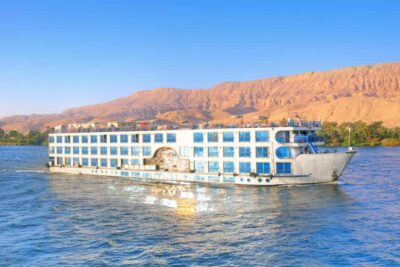
4-Day Nile Cruise from Aswan to Luxor with Guide
Read our review →Browse the lists this tour appears in