
Reviewed · EGYPT TOUR PACKAGES
3 Days Private Guided Cairo Tour Package
Cairo’s greatest strength is its range. In three days, this private tour takes you from the Great Pyramid and Sphinx to ancient Memphis, medieval mosques, Coptic churches, and the lanes of Khan el-Khalili. Your own guide and car make a major difference in a city where traffic and distances can eat up a day.
I like the way the plan reaches beyond the famous Giza Plateau, especially to the quieter pyramids at Saqqara and Dahshur. I also like the private format, which lets you adjust the pace and ask questions without following a large group. The drawback is that the first day is packed, and guide quality, lunch, and the exact order of visits can vary.
Key points to know before booking
- Three very full sightseeing days: The program covers ancient, Islamic, and Coptic Cairo with little wasted time.
- Private transport matters: You travel by private air-conditioned vehicle with a guide and driver, a useful setup for Cairo’s traffic and spread-out monuments.
- Dahshur adds real variety: The Bent Pyramid and other southern pyramid sites offer a different look at Egyptian building history than Giza alone.
- Strong guide experiences are possible: Habib, Ahmed Zaki, Ehab, Maged, Hossam, Mo Salah, and others have received particularly warm praise.
- Lunch is included, but expectations should be modest: Some past feedback praised the food, while other comments found lunch disappointing.
- Pyramid interiors cost extra: Entry fees are included for the planned visits, but going inside any pyramid is not.
Why this private Cairo plan works
At $150 per person, this is an unusually low price for three days of private guiding, private transport, entry fees, bottled water, and lunch. The value is strongest if you want Cairo’s major sights without spending time arranging taxis, negotiating routes, or figuring out which monument comes next.
You are not simply paying for admission. You are paying for a driver who knows the city, a guide who can explain what you are seeing, and a car that links sites spread across a large urban area. One past account described the driver and guide arrangement as especially helpful for saving time. That is exactly the point of this format.
The tour is also flexible in a way a large coach trip cannot be. Several past guests praised guides such as Habib, Ehab, Ahmed Hamed, Maged, Hossam, and Mo Salah for being friendly, clear, and willing to adjust the day. If a particular guide is important to you, ask about availability when booking rather than assuming you will receive a named person.
The main caution is the sheer amount of ground covered. Day one includes Giza, Memphis, Saqqara, Dahshur, and several additional tombs and pyramids. That is a lot of ancient stone in one day. You will see more than you could easily arrange alone, but you may prefer to shorten a stop rather than attempt every listed location at length.
More multi-day Egypt packages:
- Egypt Adventure Tour 9 Days
★ 5.0 · 114 reviews - Full Egypt, 8 days all inclusive
★ 5.0 · 96 reviews - 3 Days private guided Cairo travel package
★ 5.0 · 43 reviews
Day one: Giza, Memphis, Saqqara, and Dahshur
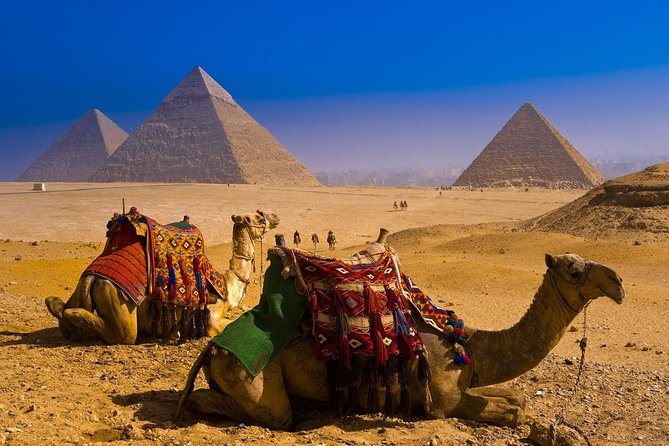
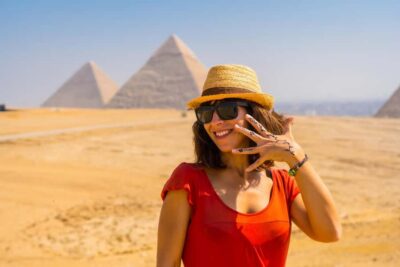
The opening day begins with the most famous sight in Egypt, the Giza Pyramids. The three main pyramids belong to Khufu, Khafre, and Menkaure, and the planned visit gives you roughly three hours for the plateau and Valley Temple area.
The Great Pyramid of Khufu is the headline attraction, but do not treat the other two as background scenery. Khafre’s Pyramid often appears taller because it sits on higher ground and retains some of its original outer casing near the top. Menkaure is smaller, yet its complex helps show that the Giza site was not just a row of isolated monuments. Each pyramid had temples, processional routes, and working spaces tied to royal burial.
The nearby Valley Temple is connected with Khafre. Its massive stonework and link to the Sphinx help you understand how the funeral complex operated. Entry into the pyramids is not included, so ask your guide which interior tickets are available if that matters to you. The exterior views and temple areas are included, but you should not assume that a standard ticket takes you inside.
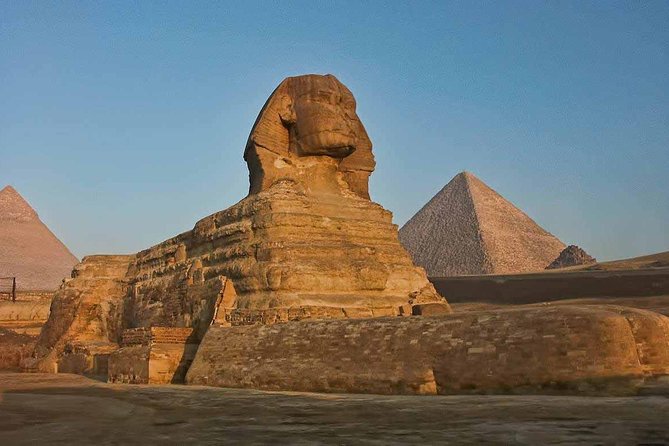
The Sphinx receives its own stop, though it is also part of the Giza visit. With a lion’s body and a royal head traditionally linked to Khafre, it is best seen with an explanation of its setting rather than as a quick photo stop. Allow time to look at the surrounding temple stones and the way the monument is cut into the bedrock.
From Giza, the route heads south to Memphis, the ancient capital associated with the earliest periods of Egyptian state power. The site includes a colossal statue of Ramses II and an alabaster sphinx. Memphis is less visually grand than Giza, but it gives the day historical depth. You are seeing the remains of a city that once directed much of Egypt, not just another pyramid field.
The small Sphinx of Memphis is a brief stop. Its date is generally placed between 1700 and 1400 BC, and the identity of the pharaoh it honors is unknown. That uncertainty is part of its interest, but do not expect a large site or a long visit.
Saqqara offers the day’s most important change in style. The Step Pyramid of Djoser is the earliest colossal stone building in Egypt, a six-tiered structure credited with a major step in pyramid design. The site is more than a single pyramid. It is a broad funerary complex, and two hours here gives your guide time to explain how the form developed.
The itinerary also names the pyramids of Teti and Unas. Teti’s pyramid is known for pyramid texts, while Unas’s complex includes a causeway leading toward the pyramid site. These monuments are less familiar to first-time visitors, but they reward attention because they show how royal burial practices changed after Djoser.
The Mastaba of Ti is another worthwhile Saqqara stop. Its wall scenes show ordinary activities and work, giving you a rare look at daily life rather than only royal ceremony. This is the kind of place where a good guide adds real value, since carved scenes can be easy to rush past without explanation.
Dahshur closes the ancient-sites portion of the day. The Bent Pyramid is the star, with its unusual change in angle partway up the structure. It looks different from the smooth, formal shape you expect from Giza and offers a useful lesson in experimentation during pyramid construction.
Dahshur also includes other pyramid sites linked to different dynasties, including the Black Pyramid associated with Amenemhat III. The area lies about 30 kilometers south of Giza, so the private vehicle is particularly useful here. This is a quieter and less concentrated visit than Giza, though the long day and driving time may leave you tired.
A practical point: the published day-one sequence lists many stops and individual time estimates. Treat those times as a guide, not a promise that every stop receives a full, uninterrupted visit. Ask your guide at the start which sites are priorities for you. If you want more time at Giza, you may need to accept a shorter visit at one of the smaller Saqqara monuments.
Day two: the museum, Saladin’s Citadel, and the old market
The second day shifts from pharaonic sites to Cairo’s central and medieval quarters. Begin with the Egyptian Museum, where about three hours allows a useful introduction to ancient Egyptian art and archaeology.
The collection includes royal treasures, mummies, jewelry, grave goods, bowls, toys, and objects from people whose names are no longer known. That mix matters. Egypt’s past is not only a story of kings and enormous monuments. Small household objects can tell you how people ate, worked, played, and prepared for death.
Your guide can help you avoid wandering without a plan. The museum is large, and three hours is enough for an overview but not every display. If you have a special interest in mummies, Tutankhamun, sculpture, or everyday objects, say so early. The Egyptian Museum is the kind of place where a focused route is better than trying to see everything.
Next comes the Citadel of Saladin, a medieval fortification that served as Cairo’s seat of government for nearly 700 years. The walls and position help explain how rulers controlled the city, while the site also gives you a break from the crowded streets below.
Inside the Citadel, you visit the Mosque of Muhammad Ali, often called the Alabaster Mosque. Its large interior and Ottoman design make a sharp contrast with the ancient temples and pyramids from day one. Dress respectfully and be prepared to remove your shoes if required at the entrance.
Khan el-Khalili finishes the day with a change of pace. This historic souq is a place to browse, shop, and watch Cairo life unfold around you. It is also a place where patience helps. Prices are part of the market experience, so compare items, ask questions, and do not feel obliged to buy at the first stall.
The private format is useful here because your guide can help you find the area and set a meeting point. Do not expect the market to feel like a quiet museum. It is active, crowded, and commercial, but it remains one of the best places on this program to experience Cairo as a living city rather than an archaeological site.
Day three: Coptic Cairo and Islamic Cairo
The last day focuses on religious history and old Cairo. Coptic Cairo occupies an area tied to some of the city’s earliest settlements, including the ancient route between the Nile and the Red Sea. The two-hour visit gives you time to see several buildings rather than making a single church stop.
The Hanging Church, formally associated with Saint Mary, is one of the main highlights. Its name comes from its position above the remains of the Roman fortress of Babylon. The setting is as important as the interior, since the surrounding area shows how different layers of Cairo grew together.
The Ben Ezra Synagogue adds another religious tradition to the day. Its presence helps you see Cairo’s long Jewish history alongside its Christian and Muslim monuments. Since opening hours and access can change, confirm the exact stops with your guide on the day.
The Mosque of Amr ibn al-As is another major visit. Originally built in 641 to 642 AD, it was the first mosque in Egypt and in Africa. The current building has changed over time, but the site connects directly with the founding of Fustat, an early capital that grew into greater Cairo.
The day then moves to the monumental Mosque-Madrassa of Sultan Hassan, built between 1356 and 1363 during the Mamluk period. Its scale is impressive, and its original role as both mosque and school gives your guide a chance to explain how religious education worked in medieval Cairo.
Al-Rifai Mosque, near the Citadel, provides a later contrast. It serves as a royal mausoleum for the family of Muhammad Ali Pasha, so the visit links religious architecture with Egypt’s modern royal past. Together, Sultan Hassan and Al-Rifai show how Cairo’s buildings reflect changing rulers, styles, and purposes.
This is a strong final day because it does not repeat the pyramid experience. You get churches, a synagogue, early Islamic architecture, Mamluk design, and a royal mausoleum. The drawback is that several religious sites require respectful clothing and careful behavior, and the sequence can feel demanding after two days of sightseeing.
A few more days out in Cairo to weigh up
- Cairo: 3-Day Siwa Oasis Tour, Safari, Camp & Historical Site
★ 4.9 · 80 reviews - 2 Nights 3 Days at Siwa Oases camp from Cairo
★ 4.6 · 43 reviews - From Cairo: 3-Day Siwa Oasis Tour with Salt Lake Swim
★ 4.9 · 39 reviews - Cairo: Bahariya Oasis & White Desert 3-Day Private Adventure
★ 4.5 · 36 reviews
Guides, drivers, and the private format
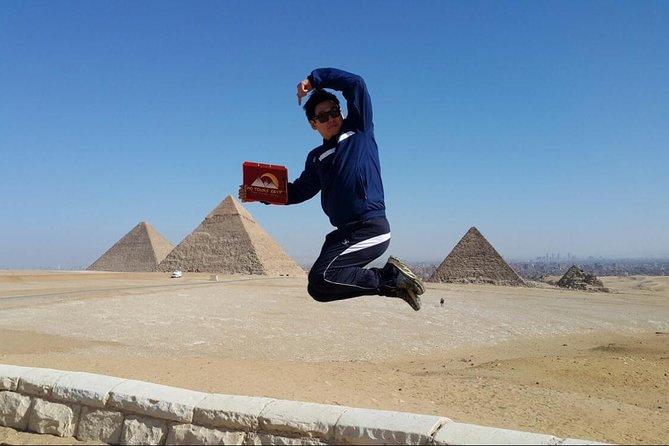
The human side of this experience matters as much as the monuments. Strong guide names associated with past bookings include Habib, Ahmed Zaki, Ahmed Hamed, Ehab, Maged Abdelazim Elbehairy, Hossam, Mo Salah, Manar Nabil, and Tonsi. Those names are not a guarantee of assignment, but they give you useful examples of the level of service you can request.
The best guide experiences described a friendly manner, clear English, historical explanations, humor, and flexibility. One guide was also praised for helping control costs and making the days feel comfortable. The private car and driver received similar approval, especially for clean vehicles, prompt pickup, snacks, and timing that suited the group.
Still, the experience is not uniform. One past account described an average guide who did not leave enough time at the main Giza pyramids, while another raised serious concerns about operator conduct. The sensible move is to confirm the day’s priorities, ask who your guide will be, and speak up if the schedule is moving too quickly.
Food, inclusions, and the real value of $150
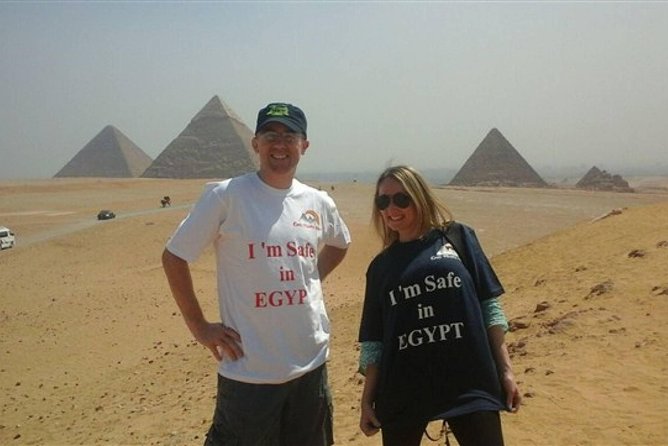
The price includes bottled water, lunch, entry fees for the planned visits, a tour guide, and transport by private air-conditioned vehicle. It does not include tips, personal purchases, or entry inside the pyramids.
At $150 per person, the package offers strong value for someone who wants the major sites handled in one booking. Group discounts may improve the price further. The private setup is especially useful for families, couples, or small groups that would rather not coordinate several taxis across Cairo.
Lunch is the weak point to watch. Some experiences included enjoyable local food, while other feedback described the lunch as disappointing. I would treat the meal as a useful convenience, not a reason to book the tour. If food matters greatly to you, ask what type of restaurant is planned and keep personal food choices flexible.
Free cancellation is available when you cancel at least 24 hours before the start time. Changes made inside that window are not accepted, and the amount paid is not refunded for a late cancellation.
Who should book this Cairo tour?
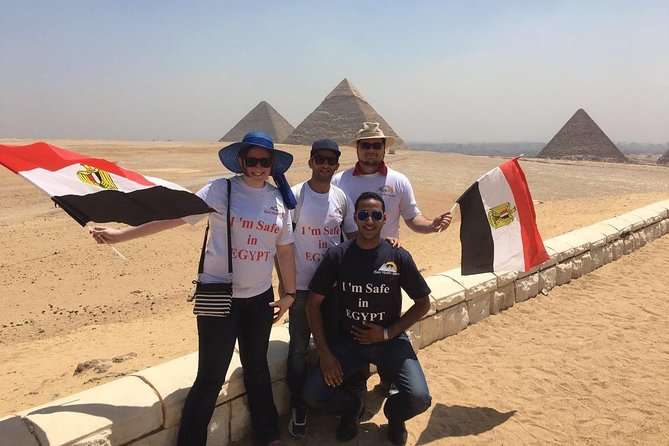
This package suits a first visit, especially if you want to see the pyramids but also care about Cairo’s churches, mosques, market, and museum. It is also a good fit for anyone who values a private car and guide more than a slow, independent schedule.
It may not suit you if you want long, quiet museum visits, extended photography stops, or a relaxed pace. Day one is ambitious, and the full plan can feel like a checklist if you do not agree on priorities in advance.
My verdict: a strong introduction with a busy first day
I would book this tour for a first Cairo visit if I wanted maximum coverage at a low price. The combination of Giza, Dahshur, Saqqara, the Egyptian Museum, Coptic Cairo, and medieval Cairo gives you a far better sense of the city than a pyramid-only outing.
Book it with two requests: ask for an experienced guide such as one of the highly praised names when possible, and identify your top three priorities before the first morning. If you can accept a packed schedule and variable lunch, the private transport and broad coverage make this a very practical introduction to Cairo.
FAQ
How long does the tour last?
The experience lasts approximately three days, with sightseeing scheduled across three separate days.
Is this a private tour?
Yes. Only your group participates, and the tour includes a private guide and transport by private air-conditioned vehicle.
Is hotel pickup available?
Pickup is offered as part of the experience.
Are entry fees included?
Entry fees are included for the planned visits. Entry inside any of the pyramids is not included.
Is lunch included?
Yes, lunch is included. The quality and type of meal can vary, so ask for details when arranging your booking.
What does the first day cover?
The first day covers the Great Sphinx, the Giza Pyramids, Memphis, Saqqara, Dahshur, the Step Pyramid of Djoser, the pyramids of Teti and Unas, and the Mastaba of Ti.
What does the second day cover?
The second day includes the Egyptian Museum, Cairo’s Citadel, the Mosque of Muhammad Ali, and Khan el-Khalili.
What does the third day cover?
The third day includes Coptic Cairo, the Mosque-Madrassa of Sultan Hassan, the Mosque of Amr ibn al-As, Al-Rifai Mosque, Ben Ezra Synagogue, and the Hanging Church.
Can I cancel for a full refund?
You can cancel for a full refund if you cancel at least 24 hours before the experience start time. Cancellations or changes made less than 24 hours before the start time are not refunded or accepted.
Just added in Cairo
- Private Dinner Cruise with Belly Dancing★ 5.0 · 48 reviews
- Fayoum 4×4 Safari Adventure, Sandboarding, Lunch, Felucca★ 5.0 · 71 reviews
- Private Half Day Tour to Islamic Cairo★ 5.0 · 19 reviews
- Private day trip to Cairo from Hurghada★ 5.0 · 139 reviews
- Private day tour visiting Coptic, Islamic Cairo, khan Elkhalili★ 5.0 · 39 reviews
- Private VAN Airport Transfer: Cairo Airport Transfer to anywhere in Cairo★ 4.5 · 49 reviews
- Private pickup & Transfer from & to cairo Airport★ 5.0 · 19 reviews
- Private Transfer – Cairo Airport Arrivals Hall to Hotel★ 5.0 · 147 reviews
Egypt Tour Packages, compared.
6 Days Hypnotic Cairo & Nile Cruise Tour Package
Read our review →
Our Exceptional 5 days Cairo, Luxor and Abu Simbel Tour Package
Read our review →
8-Day Tour of Cairo, Luxor and Aswan with Cruise
Read our review →
Egypt on Budget – 8 Days ( Cairo , Aswan , Nile Cruise – Luxor ) Sleeper Train
Read our review →
8-Day Private Egypt Tour with Flights and Nile Cruise
Read our review →
Browse the lists this tour appears in